


 Vorschau anzeigen
 Versenden
 Teilen
 Details anzeigen
 Leitfaden

 Herunterladen
 Ähnliche Objekte
 Röntgenaufnahme
 Diashow
 Q&A
Q&A Statistiken
Flash—November 22


 Weiterlesen
Die auf dieser Seite dargestellten Kunstwerke sind urheberrechtlich geschützt, was bedeutet, dass wir keine identische Reproduktion rechtmäßig erstellen oder verkaufen dürfen. Dieser Schutz wird durch internationale Abkommen wie die Berner Übereinkunft und durch nationale Gesetze, einschließlich derer, die von den US-Urheberrecht – Titel 17.
Diese Methode entspricht vollumfänglich den Urheberrechtsbestimmungen, da sie keine Kopie oder Vervielfältigung des geschützten Kunstwerks darstellt. Stattdessen handelt es sich um eine kreative Neuinterpretation – ein neues Gemälde, das vom Original inspiriert, aber nicht identisch mit ihm ist.
Giclée / Kunstdruck
Giclée- oder Leinwanddruck in Museumsqualität mit schneller Produktion und flexiblen Veredelungsoptionen. ( Handgemalte Reproduktion bestellen Zum digitalen Bild wechseln)




P118B €10

P118H €10

P118W €10

P438Z €10

P508JH €12

P508YH €12

P805H €10

P805Z €10

P919BZ €10

P919G €10

P919XJ €10

P959ZH €10

P968JZ €12

W106C €8

W218G €10

W218JH €8

W218Y €10

W307PJ €10

W316G €10

W316PJ €8

W316Y €10

W398PJ €8

W4111J €10

W500HY €15

W500JH €15

W692G €12

W849H €8

W940BG €15

W953PJ €8




Wählen Sie aus unseren vordefinierten Formaten, die den ursprünglichen Proportionen des Kunstwerks entsprechen.

Geben Sie die benötigte Breite und Höhe an, damit der Druck perfekt in Ihren Rahmen oder an Ihre Wand passt. Ein Druck kann nur beschnitten, aber niemals größer als das Originalbild angefertigt werden; daher verliert ein Format mit anderen Proportionen einen Teil des Bildes. Wir senden Ihnen ein digitales Mockup zur Freigabe, bevor wir den Druck ausführen. Das auf dieser Seite gezeigte Bild zeigt nicht den tatsächlichen Beschnitt – dies ist nur im Mockup ersichtlich.
Weltweiter Versand () innerhalb von 2 Wochen statt der üblichen 4/5 Wochen. (28 Oktober)

Kostenloser weltweiter Expressversand

Hochwertige Leinenleinwand

Umfassender Versicherungsschutz beim Versand

Zollgebühren-Rückerstattungsgarantie

Garantie für exakte Farbtreue

100 Tage Rückgaberecht (nur bei Mängeln)

100% Geld-zurück-Garantie

Mengenrabatt verfügbar
 Die Glasoption ist nur für Größen unter 110 cm verfügbar.

Flash—November 22
Giclée / Kunstdruck
Format der Reproduktion
-


Endpreis
€ 56
A Frozen Moment in Time: Unpacking Andy Warhol’s “Flash—November 22, 1963”
Andy Warhol's "Flash—November 22, 1963" isn’t simply an image; it’s a haunting echo of a nation’s collective trauma. Created in 1968, five years after the assassination of President John F. Kennedy, this series doesn’t attempt to *depict* the event itself, but rather to dissect and reflect upon its pervasive presence in the media landscape. The stark black and white photograph featured within the series—a man in a suit, gazing directly at the viewer—becomes a vessel for our own memories and anxieties surrounding that fateful day. It’s a face stripped of context, yet brimming with unspoken emotion, forcing us to confront not just the tragedy, but *how* we processed it. This deliberate ambiguity is precisely what elevates Warhol’s work beyond mere representation, transforming it into a profound meditation on grief and perception.The Power of Repetition and Mass Media
Warhol, having risen through the ranks of commercial illustration, possessed an acute understanding of mass production and its impact on perception. He wasn’t interested in creating a unique masterpiece destined for a museum; he was fascinated by replication, by the way images lose their power—and simultaneously gain new layers of meaning—through endless reproduction. “Flash—November 22, 1963" is part of a larger series of eleven screenprints, each drawing from campaign posters, news photographs, and advertisements circulating at the time. This deliberate repetition mirrors the relentless media coverage that saturated American homes in November 1963, creating a sense of overwhelming information and emotional fatigue. Warhol famously remarked, “Television has programmed everybody to feel so sad,” even if the feeling felt manufactured or imposed—a statement that encapsulates his core artistic concern: how visual culture shapes our experience of reality. The series’s impact stems from its mirroring of this pervasive media environment.Symbolism Within the Static
While appearing devoid of overt symbolism, the power of "Flash—November 22, 1963" lies in its deliberate ambiguity. The man’s suit and tie suggest authority and formality, perhaps representing the political establishment irrevocably altered by the assassination. His direct gaze challenges the viewer, demanding acknowledgement of the event’s lasting impact. The blurry background further emphasizes this sense of disorientation and loss of clarity—a visual metaphor for a nation struggling to make sense of an unthinkable act. Warhol's masterful technique—the repetitive screenprinting process—underscores this point; each print is identical, yet subtly imbued with the collective emotional response to the assassination. This repetition isn’t merely stylistic; it symbolizes the inescapable nature of trauma and memory.A Legacy of Pop Art and Cultural Commentary
Andy Warhol was a pivotal figure in the Pop Art movement, challenging traditional notions of artistic value and subject matter. He elevated everyday objects and images—soup cans, celebrities, news headlines—to the realm of high art, forcing viewers to reconsider their relationship with consumer culture and mass media. “Flash—November 22, 1963" exemplifies this approach, transforming a deeply personal tragedy into a commentary on the spectacle of grief and the power of visual communication. Warhol’s deliberate choice of imagery—a single photograph reproduced endlessly—reflects his broader artistic philosophy: to confront viewers with familiar images in unfamiliar contexts, prompting contemplation about their significance. Today, his work continues to resonate because it speaks to our contemporary obsession with celebrity, image, and the constant bombardment of information. A reproduction of this piece isn’t just an aesthetic addition to a space; it's a conversation starter, a reminder of a pivotal moment in history, and a testament to Warhol’s enduring artistic vision.- Artist: Andy Warhol
- Birth Year: 1928
- Death Year: 1987
- Birth City: Pittsburgh
- Birth Country: United States of America
- Useful Links:
- Flash—November 22, 1963 by Andy Warhol - National Gallery of Art
- Andy Warhol
- Andy Warhol
- Andy Warhol
Fragen & Antworten
Welches Format hat "Flash—November 22"?
"Flash—November 22" von Andy Warhol hat ein Quadratisch-Format. Das Format beschreibt die Proportionen der Komposition.
Welcher Raum eignet sich aufgrund der Farben von "Flash—November 22" von Andy Warhol am besten?
Aufgrund seiner Erdig Farben wird „Flash—November 22“ für ein Wohnbereich empfohlen.
Kann "Flash—November 22" heruntergeladen werden?
Für „Flash—November 22“ steht ein Download zur Verfügung: Die Download-Seite des Kunstwerks bietet hochauflösender digitaler Bild-Download.


Künstlerbiografie
Andy Warhol: Ein Leben in der Pop Art
Frühes Leben und Ausbildung
- Geboren: 6. August 1928, in Pittsburgh, Pennsylvania.
- Warhols frühe Kindheit war von einer schweren Krankheit geprägt – Sydenham’s Chorea (St. Vitus’ Tanz) –, die zu langen Krankenhausaufenthalten führte und sein Interesse an Kunst förderte.
- Er studierte Gestaltung am Carnegie Institute of Technology (jetzt Carnegie Mellon University) und schloss 1949 ab.
- Nach seinem Abschluss zog er nach New York City, um eine Karriere als Werbefillustrator zu verfolgen.
Kommerzielle Kunst und Anfängliche Karriere
- Anfangs arbeitete Warhol in der Magazinillustration und im Anzeigenwesen und erlangte mit seinen markanten Linienzeichnungen für Modemagazine Erfolg.
- Durch seine kommerzielle Arbeit entwickelte er ein tiefes Verständnis für Massenproduktion und visuelle Kommunikation, das seinen späteren künstlerischen Stil stark beeinflussen sollte.
- Seine frühen Werke konzentrierten sich oft auf Alltagsgegenstände und Konsumgüter, was die Themen vorausahndete, die er in der Pop Art erkunden würde.
Der Aufstieg der Pop Art
- In den 1960er Jahren wurde Warhol zu einer führenden Figur der Pop-Art-Bewegung, die traditionelle Vorstellungen von Kunst in Frage stellte.
- Die Pop Art nahm populäre Kultur – Werbung, Comicbücher und massenproduzierte Gegenstände – als legitimes Thema für künstlerischen Ausdruck an.
- Wichtige Werke dieser Zeit sind: Campbell’s Soup Cans (1962) und Marilyn Diptych (1962).
- Warhols Technik des Siebdrucks ermöglichte die Massenproduktion von Bildern, was den Konsumkultur widerspiegelte, die er darstellte.
Die Fabrik und künstlerische Produktion
- Warhol gründete “The Factory”, einen Studio-Raum, der zu einem Zentrum für Künstler, Musiker, Filmemacher und Prominente wurde.
- Die Fabrik war nicht nur ein Arbeitsplatz, sondern auch eine Szene: Sie förderte die Zusammenarbeit und Experimente über verschiedene künstlerische Disziplinen hinweg.
- Warhol nahm das Konzept von Kunst als Geschäft an und verwischte die Grenzen zwischen Hochkultur und Kommerzialismus.
- Er erkundete Themen wie Prominenz, Tod und Katastrophen in seinem Werk und nutzte Wiederholung und kräftige Farben, um auffällige visuelle Effekte zu erzeugen.
Wichtige Werke und künstlerischer Stil
- Bekannte Werke: Che Guevara, Nan Kempner, Mona Lisa, Flowers, Ummalben Albumcover.
- Warhols Stil ist durch den Einsatz von Siebdruck, kräftigen Farben und Wiederholung gekennzeichnet.
- Er entwendete oft Bilder aus der Populärkultur, die er in ikonische Kunstwerke verwandelte.
- Seine Porträts von Prominenten – Marilyn Monroe, Elvis Presley, Elizabeth Taylor – fangen die Faszination für Ruhm und Image in der amerikanischen Gesellschaft ein.
Vermächtnis und historische Bedeutung
- Warhols Werk hatte einen tiefgreifenden Einfluss auf die Kunstwelt, traditionelle Definitionen von Kunst in Frage gestellt und den Weg für neue künstlerische Bewegungen geebnet.
- Er war auch eine bedeutende kulturelle Figur: bevor die Gay Liberation Movement entstand, lebte er offen als Homosexueller.
- Seine Auseinandersetzung mit Konsumismus, Prominentenkultur und Massenmedien hallt bis heute nach.
- Warhols Einfluss ist in der zeitgenössischen Kunst, Mode, Musik und im Film zu sehen.
- Seine Werke werden in wichtigen Museen auf der ganzen Welt ausgestellt, darunter das Andy Warhol Museum in Pittsburgh.
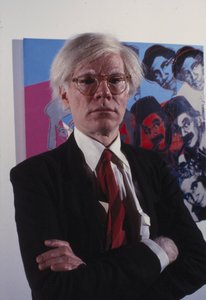
Andy Warhol
1928 - 1987 , Vereinigte Staaten von Amerika
Kurzinfos
- Bemerkenswerte Werke:
- Campbell’s Suppendosen
- Marilyn Diptych
- Che Guevara
- Blumen
- Velvet Underground Albumcover
- Geburtsdatum: 06. August 1928
- Geburtsort: Pittsburgh, USA
- Künstlerische Richtung: Pop Art
- Nationalität: Amerikanisch
- Todatum: 1987
- Vollständiger Name: Andy Warhol
Ähnliche Artikel

Pop Art: Wie Massenmedien und Konsumkultur das moderne Meisterwerk revolutionierten
Erfahren Sie alles über die Revolution der Pop Art durch Massenmedien und Warhol. Entdecken Sie jetzt die Ästhetik der Moderne!


