Vorschau anzeigen
 Versenden
 Teilen
 Details anzeigen

 Herunterladen
 Ähnliche Objekte
 Röntgenaufnahme
 Diashow
untitled (8662)


 Weiterlesen
Giclée / Kunstdruck
Giclée- oder Leinwanddruck in Museumsqualität mit schneller Produktion und flexiblen Veredelungsoptionen. ( Handgemalte Reproduktion bestellen Bild kaufen)




P118B $10

P118H $10

P118W $10

P438Z $10

P508JH $12

P508YH $12

P805H $10

P805Z $10

P919BZ $10

P919G $10

P919XJ $10

P959ZH $10

P968JZ $12

W106C $8

W218G $10

W218JH $8

W218Y $10

W307PJ $10

W316G $10

W316PJ $8

W316Y $10

W398PJ $8

W4111J $10

W500HY $15

W500JH $15

W692G $12

W849H $8

W940BG $15

W953PJ $8




Wählen Sie aus unseren vordefinierten Formaten, die den ursprünglichen Proportionen des Kunstwerks entsprechen.

Sie können Ihre eigenen Maße eingeben, um ein bestimmtes Format oder einen speziellen Platz einzupassen. Wenn das von Ihnen gewählte Format nicht den Proportionen des Originalbildes entspricht, werden wir das Kunstwerk entweder beschneiden oder das Bild mit einem gespiegelten oder einfarbigen Rand erweitern. Ein digitaler Entwurf wird Ihnen zur Genehmigung zugesandt, bevor die Produktion beginnt.
Bitte beachten Sie, dass die Vorschau auf dem Bildschirm nicht den tatsächlichen Zuschnitt oder die Erweiterung widerspiegelt. Nur der Entwurf zeigt die endgültige Komposition präzise an.
Obwohl Sondermaße verfügbar sind, empfehlen wir die Auswahl eines Maßes aus der vordefinierten Liste, um die ursprünglichen Proportionen zu bewahren.
Weltweiter Versand () innerhalb von 2 Wochen statt der üblichen 4/5 Wochen. (20 August)

Kostenloser weltweiter Expressversand

Hochwertige Leinenleinwand

Umfassender Versicherungsschutz beim Versand

Zollgebühren-Rückerstattungsgarantie

Garantie für exakte Farbtreue

60 Tage Rückgaberecht (nur bei Mängeln)

100% Geld-zurück-Garantie

Mengenrabatt verfügbar
 Die Glasoption ist nur für Größen unter 110 cm verfügbar.

untitled (8662)
Giclée / Kunstdruck
Format der Reproduktion
-


Gesamtpreis
$ 64
Sammlerstück-Beschreibung
A Snapshot of Domestic Surrealism
Andy Warhol's "untitled (8662)" presents a deceptively simple tableau—a woman seated in a bathtub, gazing outwards—yet it encapsulates the core tenets of Pop Art and Warhol’s singular vision for exploring the intersection between art and everyday life. Created around 1967, this silkscreen print exemplifies Warhol's masterful manipulation of repetition and appropriation, transforming familiar domestic imagery into an emblem of cultural fascination. The artwork’s muted palette—primarily shades of pale pink and beige—contrasts subtly with the bold red shower curtain, immediately establishing a visual tension that mirrors the psychological complexities inherent in the scene. As one gazes upon this piece, there is an immediate sense of being a voyeur to a private moment, a feeling that makes it such a captivating subject for modern interior curation.
The bathroom itself serves as more than just a setting; it functions symbolically as a space for introspection and contemplation. Traditionally, bathrooms have been associated with purification and vulnerability—a place where one sheds inhibitions and confronts oneself. Warhol’s woman, staring out from the tub, invites us to consider the boundary between the public persona and the private self. The presence of scattered bottles on the countertop and the starkness of the background elements ground the piece in a tangible reality, yet the flattened, almost dreamlike quality of the colors elevates it into the realm of domestic surrealism. It is this delicate balance between the mundane and the profound that allows the work to resonate so deeply with contemporary viewers.
The Revolutionary Silkscreen Process
To understand the impact of this work, one must appreciate Warhol’s revolutionary technique. Rather than painstakingly layering paint onto canvas like traditional artists, he utilized a silkscreen printing process—a method borrowed from commercial advertising—to achieve astonishing precision and scale. This process involved transferring an image onto a stencil, which was then pressed onto fabric or paper, resulting in multiple identical prints simultaneously. The flatness of the surface achieved through this technique deliberately rejects illusionistic depth, mirroring Warhol’s rejection of academic conventions and prioritizing visual impact over narrative complexity.
This deliberate choice speaks to Warhol’s fascination with mass production and his desire to democratize art by making it accessible to a wider audience. For collectors and designers, this aesthetic offers a unique versatility; the graphic nature of the silkscreen allows the piece to integrate seamlessly into various decor styles, from mid-century modern to ultra-contemporary minimalism. The way the bold red of the curtain interacts with the softer tones creates a focal point that can anchor an entire room, providing both a conversation starter and a sophisticated layer of color.
An Icon of Pop Art Heritage
As a leading figure in the Pop art movement, Warhol’s work explores the relationship between advertising, consumerism, mass media, and celebrity culture. "untitled (8662)" stands as a testament to his ability to take the "low" culture of everyday objects and elevate them to the status of "high" art. By utilizing imagery that feels intimately familiar—a bathtub, a shower curtain, toiletries—he bridges the gap between the museum gallery and the living room. This piece is not merely a reproduction of an image; it is a window into the 20th-century American psyche, reflecting the era's burgeoning consumerism and its obsession with the captured moment.
For those seeking to bring a piece of art history into their homes, this work offers more than just visual beauty. It provides an emotional connection to the legacy of Andy Warhol, one of the most influential artists of the modern era. Whether placed in a quiet study or as a bold statement in a vibrant living space, the painting continues to challenge our perceptions of what is ordinary, turning a simple moment of domesticity into an enduring icon of artistic brilliance.
Ähnliche Kunstwerke
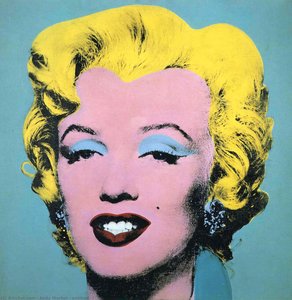


Über den Künstler
Andy Warhol: Ein Leben in der Pop Art
Frühes Leben und Ausbildung
- Geboren: 6. August 1928, in Pittsburgh, Pennsylvania.
- Warhols frühe Kindheit war von einer schweren Krankheit geprägt – Sydenham’s Chorea (St. Vitus’ Tanz) –, die zu langen Krankenhausaufenthalten führte und sein Interesse an Kunst förderte.
- Er studierte Gestaltung am Carnegie Institute of Technology (jetzt Carnegie Mellon University) und schloss 1949 ab.
- Nach seinem Abschluss zog er nach New York City, um eine Karriere als Werbefillustrator zu verfolgen.
Kommerzielle Kunst und Anfängliche Karriere
- Anfangs arbeitete Warhol in der Magazinillustration und im Anzeigenwesen und erlangte mit seinen markanten Linienzeichnungen für Modemagazine Erfolg.
- Durch seine kommerzielle Arbeit entwickelte er ein tiefes Verständnis für Massenproduktion und visuelle Kommunikation, das seinen späteren künstlerischen Stil stark beeinflussen sollte.
- Seine frühen Werke konzentrierten sich oft auf Alltagsgegenstände und Konsumgüter, was die Themen vorausahndete, die er in der Pop Art erkunden würde.
Der Aufstieg der Pop Art
- In den 1960er Jahren wurde Warhol zu einer führenden Figur der Pop-Art-Bewegung, die traditionelle Vorstellungen von Kunst in Frage stellte.
- Die Pop Art nahm populäre Kultur – Werbung, Comicbücher und massenproduzierte Gegenstände – als legitimes Thema für künstlerischen Ausdruck an.
- Wichtige Werke dieser Zeit sind: Campbell’s Soup Cans (1962) und Marilyn Diptych (1962).
- Warhols Technik des Siebdrucks ermöglichte die Massenproduktion von Bildern, was den Konsumkultur widerspiegelte, die er darstellte.
Die Fabrik und künstlerische Produktion
- Warhol gründete “The Factory”, einen Studio-Raum, der zu einem Zentrum für Künstler, Musiker, Filmemacher und Prominente wurde.
- Die Fabrik war nicht nur ein Arbeitsplatz, sondern auch eine Szene: Sie förderte die Zusammenarbeit und Experimente über verschiedene künstlerische Disziplinen hinweg.
- Warhol nahm das Konzept von Kunst als Geschäft an und verwischte die Grenzen zwischen Hochkultur und Kommerzialismus.
- Er erkundete Themen wie Prominenz, Tod und Katastrophen in seinem Werk und nutzte Wiederholung und kräftige Farben, um auffällige visuelle Effekte zu erzeugen.
Wichtige Werke und künstlerischer Stil
- Bekannte Werke: Che Guevara, Nan Kempner, Mona Lisa, Flowers, Ummalben Albumcover.
- Warhols Stil ist durch den Einsatz von Siebdruck, kräftigen Farben und Wiederholung gekennzeichnet.
- Er entwendete oft Bilder aus der Populärkultur, die er in ikonische Kunstwerke verwandelte.
- Seine Porträts von Prominenten – Marilyn Monroe, Elvis Presley, Elizabeth Taylor – fangen die Faszination für Ruhm und Image in der amerikanischen Gesellschaft ein.
Vermächtnis und historische Bedeutung
- Warhols Werk hatte einen tiefgreifenden Einfluss auf die Kunstwelt, traditionelle Definitionen von Kunst in Frage gestellt und den Weg für neue künstlerische Bewegungen geebnet.
- Er war auch eine bedeutende kulturelle Figur: bevor die Gay Liberation Movement entstand, lebte er offen als Homosexueller.
- Seine Auseinandersetzung mit Konsumismus, Prominentenkultur und Massenmedien hallt bis heute nach.
- Warhols Einfluss ist in der zeitgenössischen Kunst, Mode, Musik und im Film zu sehen.
- Seine Werke werden in wichtigen Museen auf der ganzen Welt ausgestellt, darunter das Andy Warhol Museum in Pittsburgh.
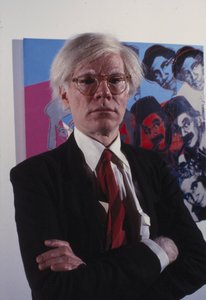
Andy Warhol
1928 - 1987 , Vereinigte Staaten von Amerika
Kurzinfos
- Bemerkenswerte Werke:
- Campbell’s Suppendosen
- Marilyn Diptych
- Che Guevara
- Blumen
- Velvet Underground Albumcover
- Geburtsdatum: 06. August 1928
- Geburtsort: Pittsburgh, USA
- Künstlerische Richtung: Pop Art
- Nationalität: Amerikanisch
- Todatum: 1987
- Vollständiger Name: Andy Warhol
Ähnliche Artikel

The Mass Media Muse: How Pop Art Redefined the Modern Masterpiece
Explore how Pop Art revolutionized the modern masterpiece by embracing mass media and consumer culture. Discover the profound impact of Warhol and Lichtenstein on contemporary art history and design through this expert-led deep dive into the era of the mass media muse.