


 Vorschau anzeigen
 Versenden
 Teilen
 Details anzeigen
 Leitfaden

 Herunterladen
 Ähnliche Objekte
 Röntgenaufnahme
 Diashow
 Statistiken
Alarm clock


 Weiterlesen
Giclée / Kunstdruck
Giclée- oder Leinwanddruck in Museumsqualität mit schneller Produktion und flexiblen Veredelungsoptionen. ( Handgemalte Reproduktion bestellen Zum digitalen Bild wechseln)




P118B €10

P118H €10

P118W €10

P438Z €10

P508JH €12

P508YH €12

P805H €10

P805Z €10

P919BZ €10

P919G €10

P919XJ €10

P959ZH €10

P968JZ €12

W106C €8

W218G €10

W218JH €8

W218Y €10

W307PJ €10

W316G €10

W316PJ €8

W316Y €10

W398PJ €8

W4111J €10

W500HY €15

W500JH €15

W692G €12

W849H €8

W940BG €15

W953PJ €8




Wählen Sie aus unseren vordefinierten Formaten, die den ursprünglichen Proportionen des Kunstwerks entsprechen.

Geben Sie die benötigte Breite und Höhe an, damit der Druck perfekt in Ihren Rahmen oder an Ihre Wand passt. Ein Druck kann nur beschnitten, aber niemals größer als das Originalbild angefertigt werden; daher verliert ein Format mit anderen Proportionen einen Teil des Bildes. Wir senden Ihnen ein digitales Mockup zur Freigabe, bevor wir den Druck ausführen. Das auf dieser Seite gezeigte Bild zeigt nicht den tatsächlichen Beschnitt – dies ist nur im Mockup ersichtlich.
Weltweiter Versand () innerhalb von 2 Wochen statt der üblichen 4/5 Wochen. (25 Oktober)

Kostenloser weltweiter Expressversand

Hochwertige Leinenleinwand

Umfassender Versicherungsschutz beim Versand

Zollgebühren-Rückerstattungsgarantie

Garantie für exakte Farbtreue

100 Tage Rückgaberecht (nur bei Mängeln)

100% Geld-zurück-Garantie

Mengenrabatt verfügbar
 Die Glasoption ist nur für Größen unter 110 cm verfügbar.

Alarm clock
Giclée / Kunstdruck
Format der Reproduktion
-


Endpreis
€ 56
A Moment Frozen in Time: The Mechanical Pulse of Léger
In the vast tapestry of early twentieth-century modernism, few artists captured the rhythmic, industrial heartbeat of a changing world as vibrantly as Fernand Léger. His 1914 work, Alarm Clock, serves as a profound window into a period where the boundaries between human life and the burgeoning machine age began to blur. At first glance, the painting presents a scene of unexpected narrative tension; a man, clad in a striking red and white striped shirt, sits atop a horse whose head is bowed in a moment of quietude or perhaps exhaustion. Yet, as the eye wanders through the composition, the presence of a clock on the periphery introduces a temporal weight, suggesting that even within this pastoral or communal gathering, the relentless march of time—and the mechanical precision it demands—is ever-present.
Léger’s unique approach to style and technique is on full display here, showcasing his transition from traditional influences toward what would become his signature Tubism. The painting avoids the soft, ethereal edges of Impressionism, opting instead for a more structured, almost sculptural application of form. The figures and the horse are rendered with a certain solidity, as if they were components of a larger, intricate mechanism. This technique does not merely depict a scene; it constructs one, using bold outlines and a deliberate sense of volume to celebrate the physicality of the subjects. For the discerning collector or interior designer, this piece offers a sophisticated interplay of geometry and life, making it a commanding focal point that brings a sense of structured energy to any curated space.
The historical context of 1914 adds a layer of poignant symbolism to the work. As Europe stood on the precipice of profound global upheaval, Léger was already experimenting with the integration of modern motifs into the human experience. The inclusion of the clock is not merely a decorative detail but a symbolic anchor, representing the encroaching industrial era that would soon redefine the very nature of labor and existence. There is an emotional duality at play: the warmth of the gathered crowd and the organic presence of the horse are juxtaposed against the cold, unyielding measurement of time. This tension creates a captivating psychological depth, inviting viewers to contemplate their own relationship with the modern world.
For those looking to adorn a home or gallery with a high-quality reproduction, Alarm Clock offers more than just visual beauty; it offers an intellectual journey. The painting’s ability to harmonize vibrant color—such as the energetic stripes of the rider's attire—with a grounded, rhythmic composition ensures that it complements both contemporary minimalist settings and more eclectic, classical interiors. It is a piece that speaks of movement, of the intersection between the organic and the mechanical, and of the enduring power of art to capture the fleeting essence of an era.
Fragen & Antworten
Wie stark ist der Kontrast in "Alarm clock" von Fernand Léger?
Der Kontrastwert von "Alarm clock" von Fernand Léger ist Balanced.
Wie ist die Farbkomposition von "Alarm clock" von Fernand Léger aufgebaut?
Die Farbkomposition von "Alarm clock" von Fernand Léger vereint einen Balanced Kontrast mit einer Strong Color Unity Harmonie.
Wann wurde "Alarm clock" geschaffen und welcher Stilrichtung lässt es sich zuordnen?
"Alarm clock" von Fernand Léger datiert aus dem Jahr 1914 und gehört zur Cubism.
Ähnliche Kunstwerke


Künstlerbiografie
frühes Leben und Ausbildung
Fernand Légér, ein französischer Maler, Bildhauer und Filmemacher, wurde am 4. Februar 1881 in Argentan, Orne, Niedergermanien geboren. Sein Vater züchtete Rinder, und Légér erhielt zunächst eine Ausbildung als Architekt von 1897 bis 1899. Er zog dann im Jahr 1900 nach Paris und unterstützte sich dort als Architektenzeichner.Künstlerische Entwicklung
Légers frühe Werke wurden vom Impressionismus beeinflusst, wie in Le Jardin de ma Mère (Mein Muttergarten) (1905) zu sehen ist. Nach dem Besuch der Schule für dekorative Künste und der Académie Julian begann er ab seinem 25. Lebensjahr ernsthaft als Maler zu arbeiten. Sein Stil entwickelte sich zu einer persönlichen Form des Kubismus, der von Kritikern als "Tubism" bezeichnet wurde, da er sich auf zylindrische Formen konzentrierte.Kubismus und die Puteaux-Gruppe
Im Jahr 1910 stellte Légér im Salon d’Automne zusammen mit Jean Metzinger und Henri Le Fauconnier aus. Er schloss sich der Puteaux-Gruppe an, auch bekannt als die Section d’Or (die Goldene Proportion), zusammen mit anderen Künstlern wie Francis Picabia und Marcel Duchamp.Krieg und seine Auswirkungen auf Légers Werk
Légers Erfahrungen im Ersten Weltkrieg hatten einen erheblichen Einfluss auf sein Werk. Während seiner Zeit an der Front produzierte er Skizzen von Artilleriegeschützen, Flugzeugen und Soldaten. Sein Gemälde Soldat mit Pfeife (1916) spiegelt diese Zeit wider.Spätere Werke und Vermächtnis
Légers Nachkriegszeitliche Arbeiten, die von glatten, maschinellen Formen geprägt waren, verknüpften ihn mit der Tradition der französischen figurativen Malerei. Seine "animierten Landschaften" von 1921 zeigten Figuren und Tiere in harmonischen, stromlinienförmigen Formen.- Fernand Légers Werke auf AllPaintingsStore
- Mehr über Fernand Légér auf Wikipedia
- Entdecken Sie das Musée National Fernand Légér (Frankreich) mit AllPaintingsStore
- Die Sitzende Frau (100 x 81 cm, Tubism)
- Maschinenelement (Kubismus)
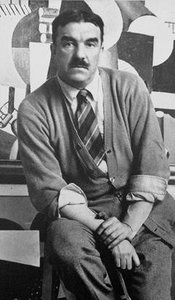
Fernand Léger
1881 - 1955 , Frankreich
Kurzinfos
- Beeinflusste Kunstrichtungen: ['Pop Art']
- Beeinflusste Künstler: ['Paul Cézanne']
- Bemerkenswerte Werke:
- Die Sitzende Frau
- Maschinenelement
- Der Große Umzug
- Die Stadt
- Geburtsdatum: 04. Februar 1881
- Geburtsort: Argentan, Frankreich
- Künstlerische Richtung: Kubismus, Tubismus
- Nationalität: Französisch
- Sterbedatum: 1955
- Vollständiger Name: Fernand Léger
- Von Kunstbewegungen Beeinflusst: ['Cézannismus']
- Von Künstlern Beeinflusst: ['Impressionismus']
Ähnliche Artikel

Modern Geometry & Machine Age Beauty: A Collector's Guide to the Cubist Vision of Fernand Léger
Explore the profound geometric mastery of Fernand Léger. Discover how his 'Tubism' and Machine Age aesthetics redefined modern art, offering timeless inspiration for discerning collectors seeking to integrate Cubist dynamism into sophisticated contemporary interiors.


