Vorschau anzeigen
 Versenden
 Teilen
 Details anzeigen

 Herunterladen
 Ähnliche Objekte
 Röntgenaufnahme
 Diashow
Mural


 Weiterlesen
Handgefertigte Ölreproduktion
Handgemaltes Ölgemälde auf Leinwand in Ihrer Wunschgröße und mit Rahmen, auf Bestellung von unseren Künstlern angefertigt. ( Druck kaufen Bild kaufen)




P118B $10

P118H $10

P118W $10

P438Z $10

P508JH $12

P508YH $12

P805H $10

P805Z $10

P919BZ $10

P919G $10

P919XJ $10

P959ZH $10

P968JZ $12

W106C $8

W218G $10

W218JH $8

W218Y $10

W307PJ $10

W316G $10

W316PJ $8

W316Y $10

W398PJ $8

W4111J $10

W500HY $15

W500JH $15

W692G $12

W849H $8

W940BG $15

W953PJ $8




Wählen Sie aus unseren vordefinierten Formaten, die den ursprünglichen Proportionen des Kunstwerks entsprechen.

Sie können Ihre eigenen Maße eingeben, um einen bestimmten Rahmen oder Platz auszufüllen. Wenn die gewählte Größe nicht den Proportionen des Originalbildes entspricht, werden wir das Kunstwerk entweder beschneiden oder das Gemälde durch zusätzliche, handgemalte Elemente erweitern. Ein digitales Mockup wird Ihnen zur Genehmigung zugesandt, bevor die Produktion beginnt.
Bitte beachten Sie, dass die Bildschirmvorschau nicht die tatsächliche Beschneidung oder Erweiterung widerspiegelt. Nur das Mockup zeigt die endgültige Komposition exakt an.
Obwohl Sondermaße verfügbar sind, empfehlen wir, eine Größe aus der vordefinierten Liste zu wählen, um die ursprünglichen Proportionen beizubehalten.
Nach der Bestellung wird das AllPaintingsStore.com-Team dem Kunden Anweisungen per E-Mail zusenden und eine Mockup-Vorschau bereitstellen.
Weltweiter Versand () in nur 3 bis 4 Wochen statt der üblichen 5 Wochen. (12 August). Keine Kompromisse bei der Qualität.

Kostenloser weltweiter Expressversand

Hochwertige Leinenleinwand

Umfassender Versicherungsschutz beim Versand

Zollgebühren-Rückerstattungsgarantie

Garantie für exakte Farbtreue

60 Tage Rückgaberecht (nur bei Mängeln)

100% Geld-zurück-Garantie

Mengenrabatt verfügbar
 Die Glasoption ist nur für Größen unter 110 cm verfügbar.

Mural
Art der Reproduktion
Format der Reproduktion
-


Gesamtpreis
$ 258
Beschreibung des Kunstwerks
Fernand Léger’s Mural: A Symphony of Form and Movement
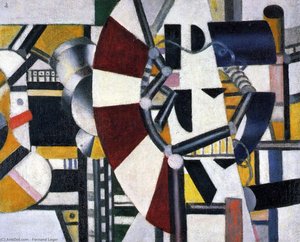
Fernand Léger's "Mural," completed in 1951, stands as an arresting embodiment of Cubist principles interwoven with a palpable fascination for the burgeoning machine age. Born Joseph Fernand Henri Léger in Argentan, Normandy, in 1881, Léger’s formative years amidst rural landscapes instilled a grounding appreciation for physicality that would later inform his groundbreaking artistic explorations. Rejecting the prevailing trend toward pure abstraction, Léger embarked on a daring endeavor to synthesize modernity – its relentless pace, its geometric precision – into a visual language simultaneously intellectually stimulating and emotionally resonant. This ambition propelled him from architectural studies towards painting in Paris around 1900, where he found patronage and collaborated with fellow avant-garde artists, establishing himself as a crucial voice within the Parisian artistic milieu.Cubist Foundations: Fragmented Perspectives
“Mural” exemplifies Léger’s unwavering commitment to Cubism's core tenets. Unlike Impressionists who sought to capture fleeting moments of light and color, Léger dissected subjects into fragmented planes—a technique pioneered by Picasso and Braque—presenting multiple viewpoints simultaneously. The resulting image isn’t a straightforward depiction but rather an orchestration of geometric shapes – cubes, cylinders, spheres – meticulously arranged to convey not just visual information but also the dynamism inherent in industrial processes. These forms overlap and intersect, creating a sense of instability and suggesting that reality itself is constantly shifting under scrutiny. Léger deliberately avoided smooth surfaces, favoring rough textures that mirrored the materiality of machines and reinforced the artwork’s connection to its historical context.The Palette of Industry: Color as Symbolic Gesture
Léger's color palette—primarily dominated by reds, yellows, and blues—is far from arbitrary; it serves as a deliberate symbolic gesture reflecting the industrial landscape of his time. Red signifies energy, passion, and perhaps even danger – mirroring the heat generated by factories and the urgency of technological advancement. Yellow embodies optimism and illumination, representing the promise of progress and highlighting Léger’s belief in the transformative power of innovation. Blues convey calmness and depth, hinting at the vastness of industrial spaces and subtly underscoring the artwork's contemplative quality despite its energetic composition. The careful selection of hues contributes significantly to the emotional impact of “Mural,” inviting viewers to contemplate both the beauty and complexity of the modern world.A Reflection of Postwar Anxiety
Created in 1951 shortly after World War II, "Mural" speaks to a broader cultural preoccupation with anxieties surrounding technological change and societal upheaval. Léger’s depiction of figures engaged in repetitive tasks—a motif recurring throughout his oeuvre—captures the pervasive sense of alienation experienced by many individuals during the postwar period. However, amidst this apprehension lies an undeniable affirmation of human creativity and resilience. The artwork's bold geometric forms and vibrant colors convey a defiant spirit, suggesting that despite facing daunting challenges, humanity can still find beauty and meaning in its surroundings. Léger’s vision transcends mere stylistic imitation; it embodies a profound engagement with the intellectual currents shaping the postwar era.Emotional Resonance: Capturing Movement and Rhythm
Ultimately, “Mural” succeeds in conveying an extraordinary emotional resonance—a palpable sense of movement and rhythm that draws viewers into its captivating visual universe. Léger’s masterful manipulation of perspective and texture creates a dynamic interplay between form and space, mirroring the ceaseless activity of industrial life. The artwork compels contemplation, prompting us to consider not only what we see but also how it feels. It's a testament to Léger’s ability to transform abstract concepts into emotionally charged images—a feat that continues to inspire artists and collectors alike. “Mural” remains an unforgettable masterpiece, securing its place as one of Fernand Léger’s most enduring achievements.Ähnliche Kunstwerke


Über den Künstler
frühes Leben und Ausbildung
Fernand Légér, ein französischer Maler, Bildhauer und Filmemacher, wurde am 4. Februar 1881 in Argentan, Orne, Niedergermanien geboren. Sein Vater züchtete Rinder, und Légér erhielt zunächst eine Ausbildung als Architekt von 1897 bis 1899. Er zog dann im Jahr 1900 nach Paris und unterstützte sich dort als Architektenzeichner.Künstlerische Entwicklung
Légers frühe Werke wurden vom Impressionismus beeinflusst, wie in Le Jardin de ma Mère (Mein Muttergarten) (1905) zu sehen ist. Nach dem Besuch der Schule für dekorative Künste und der Académie Julian begann er ab seinem 25. Lebensjahr ernsthaft als Maler zu arbeiten. Sein Stil entwickelte sich zu einer persönlichen Form des Kubismus, der von Kritikern als "Tubism" bezeichnet wurde, da er sich auf zylindrische Formen konzentrierte.Kubismus und die Puteaux-Gruppe
Im Jahr 1910 stellte Légér im Salon d’Automne zusammen mit Jean Metzinger und Henri Le Fauconnier aus. Er schloss sich der Puteaux-Gruppe an, auch bekannt als die Section d’Or (die Goldene Proportion), zusammen mit anderen Künstlern wie Francis Picabia und Marcel Duchamp.Krieg und seine Auswirkungen auf Légers Werk
Légers Erfahrungen im Ersten Weltkrieg hatten einen erheblichen Einfluss auf sein Werk. Während seiner Zeit an der Front produzierte er Skizzen von Artilleriegeschützen, Flugzeugen und Soldaten. Sein Gemälde Soldat mit Pfeife (1916) spiegelt diese Zeit wider.Spätere Werke und Vermächtnis
Légers Nachkriegszeitliche Arbeiten, die von glatten, maschinellen Formen geprägt waren, verknüpften ihn mit der Tradition der französischen figurativen Malerei. Seine "animierten Landschaften" von 1921 zeigten Figuren und Tiere in harmonischen, stromlinienförmigen Formen.- Fernand Légers Werke auf AllPaintingsStore
- Mehr über Fernand Légér auf Wikipedia
- Entdecken Sie das Musée National Fernand Légér (Frankreich) mit AllPaintingsStore
- Die Sitzende Frau (100 x 81 cm, Tubism)
- Maschinenelement (Kubismus)
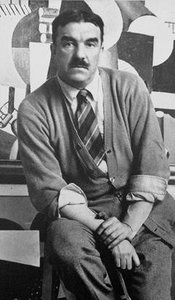
Fernand Léger
1881 - 1955 , Frankreich
Kurzinfos
- Beeinflusste Kunstrichtungen: ['Pop Art']
- Beeinflusste Künstler: ['Paul Cézanne']
- Bemerkenswerte Werke:
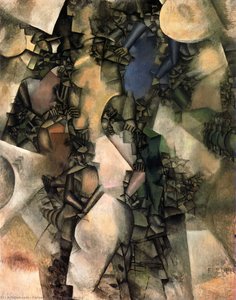
- Die Sitzende Frau
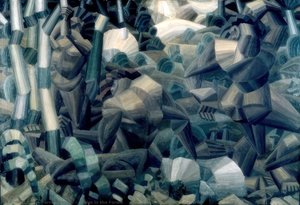
- Maschinenelement
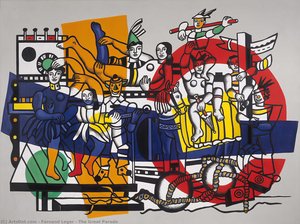
- Der Große Umzug
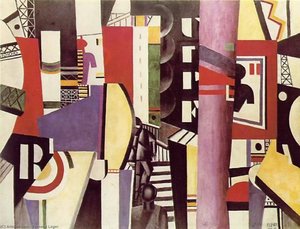
- Die Stadt
- Geburtsdatum: 04. Februar 1881
- Geburtsort: Argentan, Frankreich
- Künstlerische Richtung: Kubismus, Tubismus
- Nationalität: Französisch
- Sterbedatum: 1955
- Vollständiger Name: Fernand Léger
- Von Kunstbewegungen Beeinflusst: ['Cézannismus']
- Von Künstlern Beeinflusst: ['Impressionismus']
Ähnliche Artikel

The Energetic Canvas: Exploring Dynamic Composition in Art History & Contemporary Practice
Explore the history of dynamic composition in art, from Renaissance chiaroscuro to modern asymmetry. Learn how masterful artists used balance & symmetry – and what collectors should look for.

The Eloquence of Arrangement: Compositional Strategies in Western Art from the Renaissance to Modernism
Explore the evolution of compositional strategies in Western art! Discover how masters like Raphael & Zurbaran used perspective, proportion, and dynamic arrangement to create timeless masterpieces. Enhance your art appreciation today!

The Embodiment of Motion: Dynamic Composition & Energetic Expression in Art History
Explore the evolution of dynamic composition in art history – from chiaroscuro masters to abstract expressionism. Discover how artists like Kandinsky & Pollock embodied energy and movement on canvas. Expert insights for discerning collectors.

Crimson Threads of Narrative: Exploring Symbolism & Representation in Artworks Featuring the Red Dress
Explore the rich symbolism of the red dress in art history! From ancient power displays to iconic portraits like Cézanne’s 'Madame Cezanne', discover the cultural and artistic significance behind this captivating color. Expert analysis & insights.
John Singer Sargent: Die 25 Meisterwerke des Porträts – Kunst für Ihr Zuhause | AllPaintingsStore
Entdecken Sie die 25 Meisterwerke von John Singer Sargent! Tauchen Sie ein in die Welt der Porträtmalerei, des Impressionismus & der Belle Époque. Hochwertige Kunstdrucke & Reproduktionen für Ihr Zuhause – jetzt auf AllPaintingsStore.com!