


 Vorschau anzeigen
 Versenden
 Teilen
 Details anzeigen

 Herunterladen
 Ähnliche Objekte
 Röntgenaufnahme
 Diashow
Stalingrad


 Weiterlesen
Handgefertigte Ölreproduktion
Handgemaltes Ölgemälde auf Leinwand in Ihrer Wunschgröße und mit Rahmen, auf Bestellung von unseren Künstlern angefertigt. ( Druck bestellen Bild kaufen)




P118B $10

P118H $10

P118W $10

P438Z $10

P508JH $12

P508YH $12

P805H $10

P805Z $10

P919BZ $10

P919G $10

P919XJ $10

P959ZH $10

P968JZ $12

W106C $8

W218G $10

W218JH $8

W218Y $10

W307PJ $10

W316G $10

W316PJ $8

W316Y $10

W398PJ $8

W4111J $10

W500HY $15

W500JH $15

W692G $12

W849H $8

W940BG $15

W953PJ $8




Wählen Sie aus unseren vordefinierten Formaten, die den ursprünglichen Proportionen des Kunstwerks entsprechen.

Sie können Ihre eigenen Maße eingeben, um einen bestimmten Rahmen oder Platz auszufüllen. Wenn die gewählte Größe nicht den Proportionen des Originalbildes entspricht, werden wir das Kunstwerk entweder beschneiden oder das Gemälde durch zusätzliche, handgemalte Elemente erweitern. Ein digitales Mockup wird Ihnen zur Genehmigung zugesandt, bevor die Produktion beginnt.
Bitte beachten Sie, dass die Bildschirmvorschau nicht die tatsächliche Beschneidung oder Erweiterung widerspiegelt. Nur das Mockup zeigt die endgültige Komposition exakt an.
Obwohl Sondermaße verfügbar sind, empfehlen wir, eine Größe aus der vordefinierten Liste zu wählen, um die ursprünglichen Proportionen beizubehalten.
Nach der Bestellung wird das AllPaintingsStore.com-Team dem Kunden Anweisungen per E-Mail zusenden und eine Mockup-Vorschau bereitstellen.
Weltweiter Versand () in nur 3 bis 4 Wochen statt der üblichen 5 Wochen. (24 August). Keine Kompromisse bei der Qualität.

Kostenloser weltweiter Expressversand

Hochwertige Leinenleinwand

Umfassender Versicherungsschutz beim Versand

Zollgebühren-Rückerstattungsgarantie

Garantie für exakte Farbtreue

60 Tage Rückgaberecht (nur bei Mängeln)

100% Geld-zurück-Garantie

Mengenrabatt verfügbar
 Die Glasoption ist nur für Größen unter 110 cm verfügbar.

Stalingrad
Art der Reproduktion
Format der Reproduktion
-


Gesamtpreis
$ 258
Beschreibung des Kunstwerks
A Vision of Mechanized Conflict: The Soul of Stalingrad
In the vast landscape of twentieth-century modernism, few works capture the intersection of human tragedy and industrial power as viscerally as Fernand Léger’s Stalingrad. Created in 1954, this masterpiece transcends a mere historical chronicle of one of World War II's most devastating sieges; it serves as a profound meditation on the collision between man and machine. To gaze upon this canvas is to enter a world where the boundaries between organic life and mechanical force blur, creating an experience that is not merely seen through the eyes, but felt within the chest. Léger invites the viewer into a space where the echoes of battle are rendered through a language of pure, unadulterated form.
The artwork stands as a striking embodiment of Naïve Art, a movement that deliberately rejected the polished academic conventions of the past in favor of direct observation and raw emotional honesty. Rather than seeking to replicate the photographic reality of the Soviet battlefield, Léger utilizes a simplified visual vocabulary. He employs bold, decisive lines and flattened planes that strip away the illusion of depth, forcing the viewer to confront the essential geometry of conflict. This technique, heavily influenced by his fascination with industrial aesthetics, transforms the chaos of war into a structured, rhythmic composition of circles, squares, and triangles.
The Rhythm of the Machine Age
Léger’s technical mastery lies in his ability to imbue static shapes with an incredible sense of dynamism. By avoiding traditional shading and the subtle blending of colors, he relies instead on a vibrant palette of primary hues to drive the narrative forward. This lack of chiaroscuro creates a high-contrast environment where every element—from the jagged fragments of destroyed architecture to the silhouettes of advancing vehicles—pops with an urgent, electric energy. The artist’s signature linear style mirrors the relentless, grinding pace of mechanized warfare, where the movement of tanks and the trajectory of artillery become part of a larger, unstoppable mechanical dance.
This aesthetic choice serves a deeper symbolic purpose. In Stalingrad, the machine is not merely a tool of destruction but a central protagonist. Léger explores the complex relationship between humanity and technology, questioning whether the advancements of the industrial age have become inseparable from our capacity for violence. The geometric precision of the vehicles and weaponry contrasts sharply with the desperate human struggle, creating a tension that is both intellectually stimulating and emotionally harrowing. For the collector or designer, this piece offers a sophisticated dialogue between the structured beauty of abstraction and the profound weight of historical memory.
A Legacy of Resilience and Form
To understand the impact of this work, one must consider the historical gravity of its subject. The Siege of Stalingrad was a period of unimaginable hardship, characterized by starvation, bombardment, and an iron will to endure. Léger captures this atmosphere of desperation and determination with remarkable acuity. Amidst the debris of a shattered city, he portrays a landscape where the remnants of civilization are being reshaped by the forces of modern combat. The painting does not offer a literal or sanitized representation; instead, it offers a psychological portrait of a world in flux.
For those seeking to adorn a space with art that commands attention and provokes thought, Stalingrad is an incomparable choice. It brings a sense of historical depth and avant-garde strength to any interior, acting as a focal point that bridges the gap between mid-century modernism and contemporary emotional expression. Owning a high-quality reproduction of this work means possessing a fragment of art history—a piece that celebrates the resilience of the human spirit even when caught within the gears of an indifferent, mechanical age.
Ähnliche Kunstwerke


Über den Künstler
frühes Leben und Ausbildung
Fernand Légér, ein französischer Maler, Bildhauer und Filmemacher, wurde am 4. Februar 1881 in Argentan, Orne, Niedergermanien geboren. Sein Vater züchtete Rinder, und Légér erhielt zunächst eine Ausbildung als Architekt von 1897 bis 1899. Er zog dann im Jahr 1900 nach Paris und unterstützte sich dort als Architektenzeichner.Künstlerische Entwicklung
Légers frühe Werke wurden vom Impressionismus beeinflusst, wie in Le Jardin de ma Mère (Mein Muttergarten) (1905) zu sehen ist. Nach dem Besuch der Schule für dekorative Künste und der Académie Julian begann er ab seinem 25. Lebensjahr ernsthaft als Maler zu arbeiten. Sein Stil entwickelte sich zu einer persönlichen Form des Kubismus, der von Kritikern als "Tubism" bezeichnet wurde, da er sich auf zylindrische Formen konzentrierte.Kubismus und die Puteaux-Gruppe
Im Jahr 1910 stellte Légér im Salon d’Automne zusammen mit Jean Metzinger und Henri Le Fauconnier aus. Er schloss sich der Puteaux-Gruppe an, auch bekannt als die Section d’Or (die Goldene Proportion), zusammen mit anderen Künstlern wie Francis Picabia und Marcel Duchamp.Krieg und seine Auswirkungen auf Légers Werk
Légers Erfahrungen im Ersten Weltkrieg hatten einen erheblichen Einfluss auf sein Werk. Während seiner Zeit an der Front produzierte er Skizzen von Artilleriegeschützen, Flugzeugen und Soldaten. Sein Gemälde Soldat mit Pfeife (1916) spiegelt diese Zeit wider.Spätere Werke und Vermächtnis
Légers Nachkriegszeitliche Arbeiten, die von glatten, maschinellen Formen geprägt waren, verknüpften ihn mit der Tradition der französischen figurativen Malerei. Seine "animierten Landschaften" von 1921 zeigten Figuren und Tiere in harmonischen, stromlinienförmigen Formen.- Fernand Légers Werke auf AllPaintingsStore
- Mehr über Fernand Légér auf Wikipedia
- Entdecken Sie das Musée National Fernand Légér (Frankreich) mit AllPaintingsStore
- Die Sitzende Frau (100 x 81 cm, Tubism)
- Maschinenelement (Kubismus)
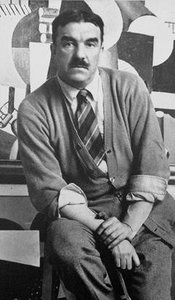
Fernand Léger
1881 - 1955 , Frankreich
Kurzinfos
- Beeinflusste Kunstrichtungen: ['Pop Art']
- Beeinflusste Künstler: ['Paul Cézanne']
- Bemerkenswerte Werke:
- Die Sitzende Frau
- Maschinenelement
- Der Große Umzug
- Die Stadt
- Geburtsdatum: 04. Februar 1881
- Geburtsort: Argentan, Frankreich
- Künstlerische Richtung: Kubismus, Tubismus
- Nationalität: Französisch
- Sterbedatum: 1955
- Vollständiger Name: Fernand Léger
- Von Kunstbewegungen Beeinflusst: ['Cézannismus']
- Von Künstlern Beeinflusst: ['Impressionismus']
Ähnliche Artikel

Modern Geometry & Machine Age Beauty: A Collector's Guide to the Cubist Vision of Fernand Léger
Explore the profound geometric mastery of Fernand Léger. Discover how his 'Tubism' and Machine Age aesthetics redefined modern art, offering timeless inspiration for discerning collectors seeking to integrate Cubist dynamism into sophisticated contemporary interiors.

The Essence of Naïve Art: A Professional Guide to Unfiltered Creativity and Aesthetic Sincerity
Explore the profound beauty of Naïve Art. Discover its unique characteristics, historical significance, and how this unfiltered, sincere aesthetic can elevate professional interior design through high-quality, hand-painted reproductions.


