Vorschau anzeigen
 Versenden
 Teilen
 Details anzeigen

 Herunterladen
 Ähnliche Objekte
 Röntgenaufnahme
 Diashow
The staircase


 Weiterlesen
Handgefertigte Ölreproduktion
Handgemaltes Ölgemälde auf Leinwand in Ihrer Wunschgröße und mit Rahmen, auf Bestellung von unseren Künstlern angefertigt. ( Zum Druck wechseln Zum Bild wechseln)




P118B $10

P118H $10

P118W $10

P438Z $10

P508JH $12

P508YH $12

P805H $10

P805Z $10

P919BZ $10

P919G $10

P919XJ $10

P959ZH $10

P968JZ $12

W106C $8

W218G $10

W218JH $8

W218Y $10

W307PJ $10

W316G $10

W316PJ $8

W316Y $10

W398PJ $8

W4111J $10

W500HY $15

W500JH $15

W692G $12

W849H $8

W940BG $15

W953PJ $8




Wählen Sie aus unseren vordefinierten Formaten, die den ursprünglichen Proportionen des Kunstwerks entsprechen.

Sie können Ihre eigenen Maße eingeben, um einen bestimmten Rahmen oder Platz auszufüllen. Wenn die gewählte Größe nicht den Proportionen des Originalbildes entspricht, werden wir das Kunstwerk entweder beschneiden oder das Gemälde durch zusätzliche, handgemalte Elemente erweitern. Ein digitales Mockup wird Ihnen zur Genehmigung zugesandt, bevor die Produktion beginnt.
Bitte beachten Sie, dass die Bildschirmvorschau nicht die tatsächliche Beschneidung oder Erweiterung widerspiegelt. Nur das Mockup zeigt die endgültige Komposition exakt an.
Obwohl Sondermaße verfügbar sind, empfehlen wir, eine Größe aus der vordefinierten Liste zu wählen, um die ursprünglichen Proportionen beizubehalten.
Nach der Bestellung wird das AllPaintingsStore.com-Team dem Kunden Anweisungen per E-Mail zusenden und eine Mockup-Vorschau bereitstellen.
Weltweiter Versand () in nur 3 bis 4 Wochen statt der üblichen 5 Wochen. (11 August). Keine Kompromisse bei der Qualität.

Kostenloser weltweiter Expressversand

Hochwertige Leinenleinwand

Umfassender Versicherungsschutz beim Versand

Zollgebühren-Rückerstattungsgarantie

Garantie für exakte Farbtreue

60 Tage Rückgaberecht (nur bei Mängeln)

100% Geld-zurück-Garantie

Mengenrabatt verfügbar
 Die Glasoption ist nur für Größen unter 110 cm verfügbar.

The staircase
Art der Reproduktion
Format der Reproduktion
-


Gesamtpreis
$ 258
Beschreibung des Kunstwerks
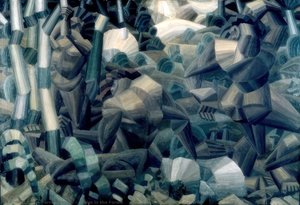
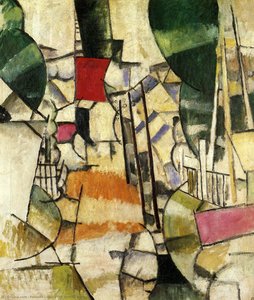
A Bold Embrace of Industrial Rhythm: Exploring Fernand Léger’s “The Staircase”
Fernand Léger's "The Staircase," painted in 1913, isn’t merely a depiction of an architectural element; it’s a declaration of artistic intent—a defiant assertion that abstraction could simultaneously honor the burgeoning industrial landscape and retain a palpable connection to human experience. This striking canvas embodies the core tenets of Léger's groundbreaking approach to modern art, marking him as one of the pioneers of Constructivism and influencing generations of artists who followed.The Style and Technique: Geometric Precision Meets Organic Flow
Léger’s stylistic signature is instantly recognizable: a masterful blend of geometric abstraction and simplified organic forms. The painting utilizes bold blocks of color—primarily crimson red, sapphire blue, and lemon yellow—to create an arresting visual impact. These hues aren't applied haphazardly; rather, they are meticulously arranged according to principles of constructive art, prioritizing clarity and rhythm over illusionistic realism. Thick, textured brushstrokes contribute to a palpable physicality, mirroring the materiality of industrial structures while simultaneously conveying a sense of movement and dynamism. Léger’s technique deliberately eschews traditional blending methods, favoring instead layering colors to build up surface texture and emphasizing contours—a deliberate rejection of Impressionism's focus on fleeting light effects.Historical Context: The Dawn of Mechanization
“The Staircase” emerged during a period of profound transformation in Europe – the early years of the 20th century witnessed an unprecedented surge in industrial production and urbanization. Léger’s artistic response to this era reflects the anxieties and aspirations of his time. Constructivism, championed by artists like Vladimir Tatlin and Aleksandr Rodchenko, sought to liberate art from representational constraints and embrace the language of machine forms as a symbol of progress and rationality. Léger wasn't simply documenting the industrial world; he was actively engaging with its ideological implications—celebrating its efficiency and order while simultaneously acknowledging its dehumanizing potential. The painting’s composition deliberately avoids depicting human figures prominently, prioritizing instead geometric shapes that convey a sense of stability and repetition – mirroring the repetitive patterns found in factories and urban environments.Symbolism Beyond Form: Cups as Vessels of Humanity
Despite Léger's commitment to abstraction, “The Staircase” is imbued with subtle symbolic resonance. The scattered cups throughout the scene serve as an intriguing counterpoint to the dominant geometric forms. These vessels represent not just objects but also containers of human activity—meals shared, conversations held, moments of respite amidst the relentless pace of industrial life. Léger’s inclusion of these domestic elements underscores his belief that abstraction shouldn't preclude engagement with human emotion and experience; it should rather serve as a framework for exploring the relationship between humanity and technology. The bowl positioned at the base of the image further reinforces this theme, symbolizing nourishment and grounding—a reminder that even in a world dominated by machines, human needs and desires remain paramount.Emotional Impact: A Quiet Assertion of Optimism
Ultimately, “The Staircase” transcends its formal qualities to convey a surprisingly optimistic vision of the future. While acknowledging the challenges posed by industrialization, Léger’s bold use of color and rhythmic composition communicates a conviction that humanity can adapt to change without sacrificing beauty or vitality. The painting's subdued palette—dominated by reds, blues and yellows—creates an atmosphere of calm contemplation, inviting viewers to consider the enduring values of human connection and artistic expression amidst the clamor of modernity. It’s a testament to Léger’s ability to distill complex ideas into powerfully evocative imagery – a timeless masterpiece that continues to inspire awe and admiration.Ähnliche Kunstwerke



Über den Künstler
frühes Leben und Ausbildung
Fernand Légér, ein französischer Maler, Bildhauer und Filmemacher, wurde am 4. Februar 1881 in Argentan, Orne, Niedergermanien geboren. Sein Vater züchtete Rinder, und Légér erhielt zunächst eine Ausbildung als Architekt von 1897 bis 1899. Er zog dann im Jahr 1900 nach Paris und unterstützte sich dort als Architektenzeichner.Künstlerische Entwicklung
Légers frühe Werke wurden vom Impressionismus beeinflusst, wie in Le Jardin de ma Mère (Mein Muttergarten) (1905) zu sehen ist. Nach dem Besuch der Schule für dekorative Künste und der Académie Julian begann er ab seinem 25. Lebensjahr ernsthaft als Maler zu arbeiten. Sein Stil entwickelte sich zu einer persönlichen Form des Kubismus, der von Kritikern als "Tubism" bezeichnet wurde, da er sich auf zylindrische Formen konzentrierte.Kubismus und die Puteaux-Gruppe
Im Jahr 1910 stellte Légér im Salon d’Automne zusammen mit Jean Metzinger und Henri Le Fauconnier aus. Er schloss sich der Puteaux-Gruppe an, auch bekannt als die Section d’Or (die Goldene Proportion), zusammen mit anderen Künstlern wie Francis Picabia und Marcel Duchamp.Krieg und seine Auswirkungen auf Légers Werk
Légers Erfahrungen im Ersten Weltkrieg hatten einen erheblichen Einfluss auf sein Werk. Während seiner Zeit an der Front produzierte er Skizzen von Artilleriegeschützen, Flugzeugen und Soldaten. Sein Gemälde Soldat mit Pfeife (1916) spiegelt diese Zeit wider.Spätere Werke und Vermächtnis
Légers Nachkriegszeitliche Arbeiten, die von glatten, maschinellen Formen geprägt waren, verknüpften ihn mit der Tradition der französischen figurativen Malerei. Seine "animierten Landschaften" von 1921 zeigten Figuren und Tiere in harmonischen, stromlinienförmigen Formen.- Fernand Légers Werke auf AllPaintingsStore
- Mehr über Fernand Légér auf Wikipedia
- Entdecken Sie das Musée National Fernand Légér (Frankreich) mit AllPaintingsStore
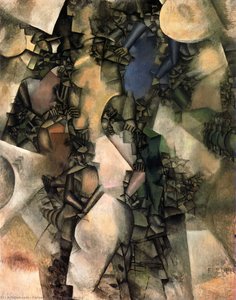
- Die Sitzende Frau (100 x 81 cm, Tubism)
- Maschinenelement (Kubismus)

Fernand Léger
1881 - 1955 , Frankreich
Kurzinfos
- Beeinflusste Kunstrichtungen: ['Pop Art']
- Beeinflusste Künstler: ['Paul Cézanne']
- Bemerkenswerte Werke:
- Die Sitzende Frau
- Maschinenelement
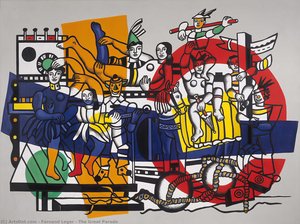
- Der Große Umzug
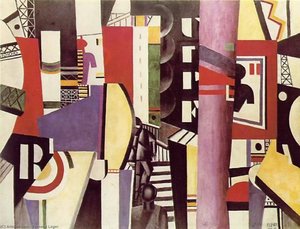
- Die Stadt
- Geburtsdatum: 04. Februar 1881
- Geburtsort: Argentan, Frankreich
- Künstlerische Richtung: Kubismus, Tubismus
- Nationalität: Französisch
- Sterbedatum: 1955
- Vollständiger Name: Fernand Léger
- Von Kunstbewegungen Beeinflusst: ['Cézannismus']
- Von Künstlern Beeinflusst: ['Impressionismus']
Ähnliche Artikel

Neo-Abstract Art Trend Forecast: High-Impact Geometric Compositions for Contemporary Commercial Interiors
Elevate commercial interiors with Neo-Abstract art. Discover how high-impact geometric compositions and custom oil reproductions provide scalable, sophisticated design solutions for hotels, restaurants, and corporate spaces. Expert procurement for large-scale hospitality projects.

Modern Geometry & Machine Age Beauty: A Collector's Guide to the Cubist Vision of Fernand Léger
Explore the profound geometric mastery of Fernand Léger. Discover how his 'Tubism' and Machine Age aesthetics redefined modern art, offering timeless inspiration for discerning collectors seeking to integrate Cubist dynamism into sophisticated contemporary interiors.