


 Vorschau anzeigen
 Versenden
 Teilen
 Details anzeigen

 Herunterladen
 Ähnliche Objekte
 Röntgenaufnahme
 Diashow
The terrace


 Weiterlesen
Handgefertigte Ölreproduktion
Handgemaltes Ölgemälde auf Leinwand in Ihrer Wunschgröße und mit Rahmen, auf Bestellung von unseren Künstlern angefertigt. ( Druck bestellen Bild kaufen)




P118B $10

P118H $10

P118W $10

P438Z $10

P508JH $12

P508YH $12

P805H $10

P805Z $10

P919BZ $10

P919G $10

P919XJ $10

P959ZH $10

P968JZ $12

W106C $8

W218G $10

W218JH $8

W218Y $10

W307PJ $10

W316G $10

W316PJ $8

W316Y $10

W398PJ $8

W4111J $10

W500HY $15

W500JH $15

W692G $12

W849H $8

W940BG $15

W953PJ $8




Wählen Sie aus unseren vordefinierten Formaten, die den ursprünglichen Proportionen des Kunstwerks entsprechen.

Sie können Ihre eigenen Maße eingeben, um einen bestimmten Rahmen oder Platz auszufüllen. Wenn die gewählte Größe nicht den Proportionen des Originalbildes entspricht, werden wir das Kunstwerk entweder beschneiden oder das Gemälde durch zusätzliche, handgemalte Elemente erweitern. Ein digitales Mockup wird Ihnen zur Genehmigung zugesandt, bevor die Produktion beginnt.
Bitte beachten Sie, dass die Bildschirmvorschau nicht die tatsächliche Beschneidung oder Erweiterung widerspiegelt. Nur das Mockup zeigt die endgültige Komposition exakt an.
Obwohl Sondermaße verfügbar sind, empfehlen wir, eine Größe aus der vordefinierten Liste zu wählen, um die ursprünglichen Proportionen beizubehalten.
Nach der Bestellung wird das AllPaintingsStore.com-Team dem Kunden Anweisungen per E-Mail zusenden und eine Mockup-Vorschau bereitstellen.
Weltweiter Versand () in nur 3 bis 4 Wochen statt der üblichen 5 Wochen. (24 August). Keine Kompromisse bei der Qualität.

Kostenloser weltweiter Expressversand

Hochwertige Leinenleinwand

Umfassender Versicherungsschutz beim Versand

Zollgebühren-Rückerstattungsgarantie

Garantie für exakte Farbtreue

60 Tage Rückgaberecht (nur bei Mängeln)

100% Geld-zurück-Garantie

Mengenrabatt verfügbar
 Die Glasoption ist nur für Größen unter 110 cm verfügbar.

The terrace
Art der Reproduktion
Format der Reproduktion
-


Gesamtpreis
$ 258
Beschreibung des Kunstwerks
A Symphony of Geometry: Rediscovering Fernand Léger’s The Terrace
To step into the world of Fernand Léger is to abandon the soft, dappled light of the past and embrace a reality that pulses with the rhythmic, metallic hum of a city in motion. His masterpiece, The Terrace, painted around 1949, serves as a breathtaking window into this era of profound transformation. At first glance, the composition appears deceptively simple, yet it is brimming with a geometric abstraction that captures the very soul of the machine age. The viewer is met with a focused gaze—a woman’s presence amidst a complex interplay of circles and angular shapes—reflecting the vibrant energy and relentless dynamism characteristic of mid-century urban life. It is an artwork that does not merely sit upon the canvas; it vibrates with the heartbeat of a twentieth century caught in the throes of rapid industrialization.
Léger’s technical mastery lies in his ability to translate the mechanical rhythms of progress into a tactile, visual language. Eschewing the traditional pursuit of illusion, he championed a method rooted in Constructivism, prioritizing the raw power of form over mere representation. In The Terrace, this is achieved through a bold use of color and texture. Primary yellows and deep blues are applied with thick, impasto strokes, creating a surface that possesses a palpable physicality. This heavy application of paint rejects the delicate conventions of classical art, favoring instead an expressive gesture that mirrors the strength and movement of industrial machinery. For the collector or interior designer, this textured approach offers a commanding presence, making it a centerpiece capable of injecting structural depth and modern vitality into any sophisticated space.
Symbolism and the Pulse of Modernity
Beyond its striking aesthetic, the painting is rich with philosophical meaning. The prominent circles that dance throughout the composition are far more than decorative motifs; they serve as symbols of unity and cyclical movement. These rounded forms echo the repetitive patterns found in industrial processes, suggesting a sense of timelessness even amidst the depiction of contemporary life. A subtle inclusion of a clock further anchors the work to the concept of temporal flow, reminding us of the precision and structured pace of the modern world. Léger masterfully weaves these elements together to create a visual manifesto—a celebration of how humanity seeks to find harmony within the monumental scale of technological advancement.
For those seeking to curate an environment of inspiration, The Terrace offers an unparalleled emotional impact. It evokes a sense of structured optimism and the beauty found in order and strength. Whether displayed in a minimalist gallery setting or as a bold statement in a contemporary living space, this reproduction brings with it the legacy of a man who saw the beauty in the bolt, the gear, and the girder. It is an invitation to look past the organic chaos of nature and find wonder in the engineered elegance of our modern existence.
Ähnliche Kunstwerke


Über den Künstler
frühes Leben und Ausbildung
Fernand Légér, ein französischer Maler, Bildhauer und Filmemacher, wurde am 4. Februar 1881 in Argentan, Orne, Niedergermanien geboren. Sein Vater züchtete Rinder, und Légér erhielt zunächst eine Ausbildung als Architekt von 1897 bis 1899. Er zog dann im Jahr 1900 nach Paris und unterstützte sich dort als Architektenzeichner.Künstlerische Entwicklung
Légers frühe Werke wurden vom Impressionismus beeinflusst, wie in Le Jardin de ma Mère (Mein Muttergarten) (1905) zu sehen ist. Nach dem Besuch der Schule für dekorative Künste und der Académie Julian begann er ab seinem 25. Lebensjahr ernsthaft als Maler zu arbeiten. Sein Stil entwickelte sich zu einer persönlichen Form des Kubismus, der von Kritikern als "Tubism" bezeichnet wurde, da er sich auf zylindrische Formen konzentrierte.Kubismus und die Puteaux-Gruppe
Im Jahr 1910 stellte Légér im Salon d’Automne zusammen mit Jean Metzinger und Henri Le Fauconnier aus. Er schloss sich der Puteaux-Gruppe an, auch bekannt als die Section d’Or (die Goldene Proportion), zusammen mit anderen Künstlern wie Francis Picabia und Marcel Duchamp.Krieg und seine Auswirkungen auf Légers Werk
Légers Erfahrungen im Ersten Weltkrieg hatten einen erheblichen Einfluss auf sein Werk. Während seiner Zeit an der Front produzierte er Skizzen von Artilleriegeschützen, Flugzeugen und Soldaten. Sein Gemälde Soldat mit Pfeife (1916) spiegelt diese Zeit wider.Spätere Werke und Vermächtnis
Légers Nachkriegszeitliche Arbeiten, die von glatten, maschinellen Formen geprägt waren, verknüpften ihn mit der Tradition der französischen figurativen Malerei. Seine "animierten Landschaften" von 1921 zeigten Figuren und Tiere in harmonischen, stromlinienförmigen Formen.- Fernand Légers Werke auf AllPaintingsStore
- Mehr über Fernand Légér auf Wikipedia
- Entdecken Sie das Musée National Fernand Légér (Frankreich) mit AllPaintingsStore
- Die Sitzende Frau (100 x 81 cm, Tubism)
- Maschinenelement (Kubismus)
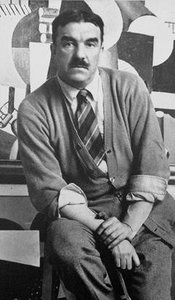
Fernand Léger
1881 - 1955 , Frankreich
Kurzinfos
- Beeinflusste Kunstrichtungen: ['Pop Art']
- Beeinflusste Künstler: ['Paul Cézanne']
- Bemerkenswerte Werke:
- Die Sitzende Frau
- Maschinenelement
- Der Große Umzug
- Die Stadt
- Geburtsdatum: 04. Februar 1881
- Geburtsort: Argentan, Frankreich
- Künstlerische Richtung: Kubismus, Tubismus
- Nationalität: Französisch
- Sterbedatum: 1955
- Vollständiger Name: Fernand Léger
- Von Kunstbewegungen Beeinflusst: ['Cézannismus']
- Von Künstlern Beeinflusst: ['Impressionismus']
Ähnliche Artikel

Neo-Abstract Art Trend Forecast: High-Impact Geometric Compositions for Contemporary Commercial Interiors
Elevate commercial interiors with Neo-Abstract art. Discover how high-impact geometric compositions and custom oil reproductions provide scalable, sophisticated design solutions for hotels, restaurants, and corporate spaces. Expert procurement for large-scale hospitality projects.

Modern Geometry & Machine Age Beauty: A Collector's Guide to the Cubist Vision of Fernand Léger
Explore the profound geometric mastery of Fernand Léger. Discover how his 'Tubism' and Machine Age aesthetics redefined modern art, offering timeless inspiration for discerning collectors seeking to integrate Cubist dynamism into sophisticated contemporary interiors.


