Vorschau anzeigen
 Versenden
 Teilen
 Details anzeigen

 Herunterladen
 Ähnliche Objekte
 Röntgenaufnahme
 Diashow
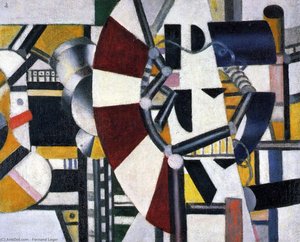
The tug


 Weiterlesen
Handgefertigte Ölreproduktion
Handgemaltes Ölgemälde auf Leinwand in Ihrer Wunschgröße und mit Rahmen, auf Bestellung von unseren Künstlern angefertigt. ( Druck bestellen Bild kaufen)




P118B $10

P118H $10

P118W $10

P438Z $10

P508JH $12

P508YH $12

P805H $10

P805Z $10

P919BZ $10

P919G $10

P919XJ $10

P959ZH $10

P968JZ $12

W106C $8

W218G $10

W218JH $8

W218Y $10

W307PJ $10

W316G $10

W316PJ $8

W316Y $10

W398PJ $8

W4111J $10

W500HY $15

W500JH $15

W692G $12

W849H $8

W940BG $15

W953PJ $8




Wählen Sie aus unseren vordefinierten Formaten, die den ursprünglichen Proportionen des Kunstwerks entsprechen.

Sie können Ihre eigenen Maße eingeben, um einen bestimmten Rahmen oder Platz auszufüllen. Wenn die gewählte Größe nicht den Proportionen des Originalbildes entspricht, werden wir das Kunstwerk entweder beschneiden oder das Gemälde durch zusätzliche, handgemalte Elemente erweitern. Ein digitales Mockup wird Ihnen zur Genehmigung zugesandt, bevor die Produktion beginnt.
Bitte beachten Sie, dass die Bildschirmvorschau nicht die tatsächliche Beschneidung oder Erweiterung widerspiegelt. Nur das Mockup zeigt die endgültige Komposition exakt an.
Obwohl Sondermaße verfügbar sind, empfehlen wir, eine Größe aus der vordefinierten Liste zu wählen, um die ursprünglichen Proportionen beizubehalten.
Nach der Bestellung wird das AllPaintingsStore.com-Team dem Kunden Anweisungen per E-Mail zusenden und eine Mockup-Vorschau bereitstellen.
Weltweiter Versand () in nur 3 bis 4 Wochen statt der üblichen 5 Wochen. (15 August). Keine Kompromisse bei der Qualität.

Kostenloser weltweiter Expressversand

Hochwertige Leinenleinwand

Umfassender Versicherungsschutz beim Versand

Zollgebühren-Rückerstattungsgarantie

Garantie für exakte Farbtreue

60 Tage Rückgaberecht (nur bei Mängeln)

100% Geld-zurück-Garantie

Mengenrabatt verfügbar
 Die Glasoption ist nur für Größen unter 110 cm verfügbar.

The tug
Art der Reproduktion
Format der Reproduktion
-


Gesamtpreis
$ 258
Beschreibung des Kunstwerks
A Symphony of Shapes: Exploring Fernand Léger’s “The Tug”
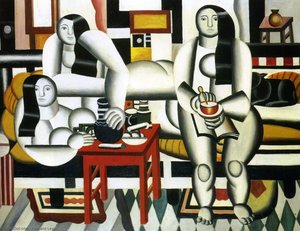
Fernand Léger's "The Tug," completed in 1924, stands as an emblem of Naïve Art—a movement that deliberately rejected academic conventions to embrace a raw, intuitive approach to artistic expression. Born Joseph Fernand Henri Léger in Argentan, Normandy, France, in 1881, Léger’s formative years instilled within him a profound appreciation for the tangible world – specifically, the rhythms of rural life and the physicality of agricultural labor. This grounding experience would later inform his groundbreaking stylistic innovations, propelling him to become one of the most influential artists of the early twentieth century.- Style & Technique: Léger’s distinctive style is characterized by geometric abstraction—a deliberate simplification of forms into basic shapes like circles, squares, and triangles. He eschewed illusionistic perspective, opting instead for a flattened surface that emphasizes compositional unity. The painting utilizes bold colors – predominantly oranges and yellows – applied with thick impasto technique, creating palpable textural surfaces that convey movement and energy.
- Historical Context: “The Tug” emerged during the burgeoning Machine Age, mirroring anxieties about industrialization alongside an optimistic fascination with technological progress. Léger’s artistic vision responded directly to this cultural milieu, translating its dynamism into visual terms.
Decoding Symbolism: Form Meets Function
Beyond mere stylistic considerations, Léger imbued “The Tug” with symbolic resonance. The prominent orange hues evoke associations with warmth, vitality, and the sun—representing not only physical illumination but also spiritual optimism. Furthermore, the repetitive geometric shapes – particularly triangles – convey stability and structural integrity, juxtaposed against the implied movement of the depicted tugboat. These elements collectively communicate a message about harnessing power and embracing progress while maintaining an awareness of fundamental principles.- Compositional Dynamics: Léger’s masterful arrangement of shapes contributes to the painting's overall impact. The central tugboat dominates the visual field, anchoring the composition while simultaneously drawing the viewer’s eye across the expanse of color and form.
Emotional Resonance: Capturing the Spirit of Modernity
“The Tug” transcends its formal qualities to evoke a palpable emotional response. The energetic brushstrokes convey a sense of exhilaration—a celebration of technological advancement and an affirmation of human creativity. Simultaneously, the painting’s simplified aesthetic invites contemplation, prompting viewers to consider the broader implications of industrial society and its transformative influence on human experience.- Legacy & Influence: Léger's pioneering approach to abstraction profoundly impacted subsequent generations of artists, establishing Naïve Art as a significant counterpoint to prevailing artistic trends. His unwavering commitment to capturing the essence of modernity continues to inspire contemporary creatives seeking innovative ways to express their vision.
A Reproduction Worthy of Distinction: Bringing Léger’s Vision Home
A high-quality reproduction of “The Tug” offers an exceptional opportunity to experience Léger's artistic genius firsthand. Selecting a print crafted with archival inks and utilizing canvas stretched taut ensures that the painting’s vibrant colors and textural surfaces are faithfully preserved—allowing collectors and interior designers alike to appreciate the enduring beauty and intellectual depth of this seminal work.Ähnliche Kunstwerke




Über den Künstler
frühes Leben und Ausbildung
Fernand Légér, ein französischer Maler, Bildhauer und Filmemacher, wurde am 4. Februar 1881 in Argentan, Orne, Niedergermanien geboren. Sein Vater züchtete Rinder, und Légér erhielt zunächst eine Ausbildung als Architekt von 1897 bis 1899. Er zog dann im Jahr 1900 nach Paris und unterstützte sich dort als Architektenzeichner.Künstlerische Entwicklung
Légers frühe Werke wurden vom Impressionismus beeinflusst, wie in Le Jardin de ma Mère (Mein Muttergarten) (1905) zu sehen ist. Nach dem Besuch der Schule für dekorative Künste und der Académie Julian begann er ab seinem 25. Lebensjahr ernsthaft als Maler zu arbeiten. Sein Stil entwickelte sich zu einer persönlichen Form des Kubismus, der von Kritikern als "Tubism" bezeichnet wurde, da er sich auf zylindrische Formen konzentrierte.Kubismus und die Puteaux-Gruppe
Im Jahr 1910 stellte Légér im Salon d’Automne zusammen mit Jean Metzinger und Henri Le Fauconnier aus. Er schloss sich der Puteaux-Gruppe an, auch bekannt als die Section d’Or (die Goldene Proportion), zusammen mit anderen Künstlern wie Francis Picabia und Marcel Duchamp.Krieg und seine Auswirkungen auf Légers Werk
Légers Erfahrungen im Ersten Weltkrieg hatten einen erheblichen Einfluss auf sein Werk. Während seiner Zeit an der Front produzierte er Skizzen von Artilleriegeschützen, Flugzeugen und Soldaten. Sein Gemälde Soldat mit Pfeife (1916) spiegelt diese Zeit wider.Spätere Werke und Vermächtnis
Légers Nachkriegszeitliche Arbeiten, die von glatten, maschinellen Formen geprägt waren, verknüpften ihn mit der Tradition der französischen figurativen Malerei. Seine "animierten Landschaften" von 1921 zeigten Figuren und Tiere in harmonischen, stromlinienförmigen Formen.- Fernand Légers Werke auf AllPaintingsStore
- Mehr über Fernand Légér auf Wikipedia
- Entdecken Sie das Musée National Fernand Légér (Frankreich) mit AllPaintingsStore
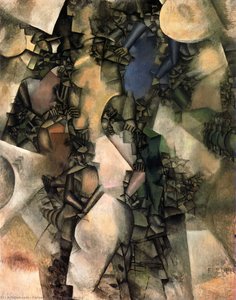
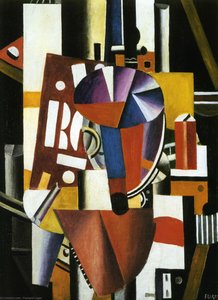
- Die Sitzende Frau (100 x 81 cm, Tubism)
- Maschinenelement (Kubismus)
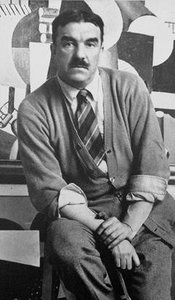
Fernand Léger
1881 - 1955 , Frankreich
Kurzinfos
- Beeinflusste Kunstrichtungen: ['Pop Art']
- Beeinflusste Künstler: ['Paul Cézanne']
- Bemerkenswerte Werke:
- Die Sitzende Frau
- Maschinenelement
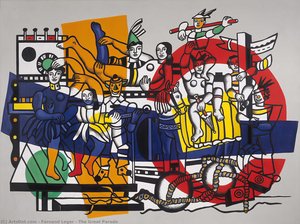
- Der Große Umzug
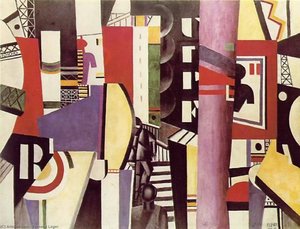
- Die Stadt
- Geburtsdatum: 04. Februar 1881
- Geburtsort: Argentan, Frankreich
- Künstlerische Richtung: Kubismus, Tubismus
- Nationalität: Französisch
- Sterbedatum: 1955
- Vollständiger Name: Fernand Léger
- Von Kunstbewegungen Beeinflusst: ['Cézannismus']
- Von Künstlern Beeinflusst: ['Impressionismus']