


 Vorschau anzeigen
 Versenden
 Teilen
 Details anzeigen
 Leitfaden

 Herunterladen
 Ähnliche Objekte
 Röntgenaufnahme
 Diashow
 Statistiken
The Ox Cart
 Oil On Canvas
- WallArt
- Baroque Landscape
 1638
1638 61.0 x 88.0 cm
 Louvre
 Weiterlesen
Giclée / Kunstdruck
Giclée- oder Leinwanddruck in Museumsqualität mit schneller Produktion und flexiblen Veredelungsoptionen. ( Handgemalte Reproduktion bestellen Zum digitalen Bild wechseln)




P118B €10

P118H €10

P118W €10

P438Z €10

P508JH €12

P508YH €12

P805H €10

P805Z €10

P919BZ €10

P919G €10

P919XJ €10

P959ZH €10

P968JZ €12

W106C €8

W218G €10

W218JH €8

W218Y €10

W307PJ €10

W316G €10

W316PJ €8

W316Y €10

W398PJ €8

W4111J €10

W500HY €15

W500JH €15

W692G €12

W849H €8

W940BG €15

W953PJ €8




Wählen Sie aus unseren vordefinierten Formaten, die den ursprünglichen Proportionen des Kunstwerks entsprechen.

Geben Sie die benötigte Breite und Höhe an, damit der Druck perfekt in Ihren Rahmen oder an Ihre Wand passt. Ein Druck kann nur beschnitten, aber niemals größer als das Originalbild angefertigt werden; daher verliert ein Format mit anderen Proportionen einen Teil des Bildes. Wir senden Ihnen ein digitales Mockup zur Freigabe, bevor wir den Druck ausführen. Das auf dieser Seite gezeigte Bild zeigt nicht den tatsächlichen Beschnitt – dies ist nur im Mockup ersichtlich.
Weltweiter Versand () innerhalb von 2 Wochen statt der üblichen 4/5 Wochen. (27 Oktober)

Kostenloser weltweiter Expressversand

Hochwertige Leinenleinwand

Umfassender Versicherungsschutz beim Versand

Zollgebühren-Rückerstattungsgarantie

Garantie für exakte Farbtreue

100 Tage Rückgaberecht (nur bei Mängeln)

100% Geld-zurück-Garantie

Mengenrabatt verfügbar
 Die Glasoption ist nur für Größen unter 110 cm verfügbar.

The Ox Cart
Giclée / Kunstdruck
Format der Reproduktion
-


Endpreis
€ 56
The Ox Cart: A Window into Dutch Brazil
Frans Post’s “The Ox Cart,” painted in 1638, isn't merely a depiction of rural labor; it’s a pivotal moment in art history – the earliest known sustained visual record of the Americas created by a European artist. More than just a landscape, this painting offers a poignant glimpse into the complex realities of Dutch colonial Brazil, a world both familiar and profoundly alien to the viewers of 17th-century Holland. Post’s decision to focus on this humble scene – an ox cart traversing a dusty road – speaks volumes about his artistic vision and his role as a chronicler of a nascent empire.
The painting, now housed in the Louvre Museum, immediately draws the eye with its subdued palette dominated by earthy browns, ochres, and muted greens. This isn’t the vibrant, idealized depiction often associated with colonial art; instead, Post employs a tonal approach reminiscent of Dutch masters like Rembrandt, creating an atmosphere of quiet contemplation and subtle melancholy. The light is diffused, casting long shadows that emphasize the ruggedness of the landscape and the weariness of its inhabitants. Notice how the artist skillfully uses texture – the rough bark of the trees, the uneven surface of the road, the folds in the clothing of the figures – to ground the scene in a tangible reality.
A Pioneer’s Perspective: Frans Post and the New World
Frans Janszoon Post (1612-1680) stands as an extraordinary figure. Born into a family with deep artistic roots, he defied convention by choosing to dedicate his career entirely to depicting the landscapes of Brazil – a region then under Dutch control. This was a radical departure from the prevailing artistic trends of the time, which typically favored portraits and genre scenes. Post’s decision stemmed from a commission by Prince Johan Maurits van Nassau-Siegen, who tasked him with documenting the new colony for posterity. His journey wasn't simply geographical; it represented a profound cultural exchange – a European artist attempting to understand and represent an entirely different world.
Crucially, Post didn’t merely paint what he saw. He synthesized his observations with the artistic conventions of his homeland, creating a hybrid style that is both distinctly Dutch and uniquely Brazilian. He meticulously rendered the local flora and fauna – the towering trees, the dense undergrowth, the occasional bird – but always within the framework of established European landscape painting techniques. This blending of influences—the realism of Dutch masters combined with the exoticism of the New World—is what makes Post’s work so compelling.
Symbolism and Colonial Reality
The central image, the ox cart itself, is laden with symbolic weight. It represents not just transportation but also labor, sustenance, and the fundamental rhythms of colonial life. The figures engaged in various tasks – tending to the animals, carrying goods – are rendered with a quiet dignity that suggests their essential role within this nascent society. However, there’s an underlying sense of hardship and isolation. The vastness of the landscape, coupled with the limited interaction between the figures, hints at the challenges faced by those living on the fringes of European expansion.
Furthermore, Post's choice to include individuals of African descent within the scene is significant. This was a deliberate inclusion, reflecting the reality of colonial Brazil’s diverse population and challenging prevailing notions of racial hierarchy. It’s important to note that this wasn’t a romanticized portrayal; rather, it offered a nuanced glimpse into the social fabric of the colony – a world where European ambition intersected with indigenous traditions and enslaved labor.
A Masterpiece of Observation and Imagination
“The Ox Cart” is more than just a painting; it's a historical document, an artistic statement, and a poignant meditation on the complexities of colonialism. Post’s meticulous attention to detail, his masterful use of light and shadow, and his ability to capture both the beauty and the hardship of Brazilian life combine to create a work of enduring power. It stands as a testament to his pioneering spirit and his profound understanding of the human condition – a window into a world long gone, yet still remarkably relevant today.
Fragen & Antworten
Welche Druckgröße wird für "The Ox Cart" von Frans Post empfohlen?
Für "The Ox Cart" wird ein Druckformat von Medium empfohlen. Weitere Größen sind im gleichen Seitenverhältnis verfügbar.
Welches Format hat "The Ox Cart"?
Das Format von „The Ox Cart“ ist Landscape. Dies ist hilfreich bei der Planung, wo eine Reproduktion platziert werden soll.
Für welche Verwendung wird ein Druck von "The Ox Cart" empfohlen?
Die empfohlene Verwendung für "The Ox Cart" von Frans Post ist Reflective. Es kann jedoch auch für andere Zwecke genutzt werden.
Ähnliche Kunstwerke


Künstlerbiografie
Frans Post: Pionier der brasilianischen Landschaftsmalerei
- Geboren: Haarlem, Niederlande (1612)
- Gestorben: 1680
Frans Janszoon Post war ein bedeutender Maler innerhalb der niederländischen Goldzeit und wird als der erste europäische Künstler gefeiert, der Landschaften Amerikas dokumentierte, insbesondere die von Niederländisch-Brasilien. Seine einzigartige Perspektive und künstlerischen Beiträge bieten wertvolle Einblicke in das koloniale Zeitalter und seine Auswirkungen auf Europa und Südamerika.
Frühes Leben und Ausbildung
Geboren 1612 in Haarlem, Niederlande, stammte Frans Post aus einer Familie mit künstlerischen Verbindungen. Sein Vater, Jan Janszoon Post, war ein angesehener Glasmaler, der in Leiden ausgebildet wurde, während sein älterer Bruder, Pieter Post, als Architekt des niederländischen Klassizismus hervorstach. Über Posts frühes Leben vor seiner Reise nach Brasilien ist wenig gesichert. Es ist jedoch sehr wahrscheinlich, dass er seine anfängliche künstlerische Ausbildung sowohl von seinem Vater als auch von seinem Bruder erhielt. Er war Zeitgenosse von Frans Hals und teilte die Haarlemer Kunstszene mit bekannten Landschaftsmalern wie Jacob & Salomon van Ruysdael, Adriaen & Isaac van Ostade und Pieter de Molijn. Es wird allgemein angenommen, obwohl es keine formellen Aufzeichnungen in der Zunft gibt, dass Pieter de Molijn sein Meister war. Der Ausbruch einer Pest in Haarlem mag Posts Abreise nach Brasilien motiviert haben.
Die brasilianische Periode (1637-1644) und künstlerische Innovation
Im Jahr 1637 begab sich Post auf Einladung von Gouverneur Johan Maurits van Nassau-Siegen auf eine transformative Reise nach Niederländisch-Brasilien, das im nordöstlichen Teil Südamerikas liegt. Dieser Zeitraum bis 1644 erwies sich als entscheidend für Posts künstlerisches Erbe. Er erhielt Aufträge von Frederick Henry, Prinz von Orange, was die frühe Anerkennung seines Talents demonstrierte. Während dieser Zeit produzierte er zahlreiche Skizzen und Radierungen sowie etwa sechs fertiggestellte Gemälde zwischen 1637 und 1640. Diese brasilianischen Werke ähneln in Bezug auf Komposition und Technik den Landschaften, die seine Haarlemer Zeitgenossen bevorzugten. Wolfgang Stechow beschrieb Posts Stil berühmt als „die alte Flasche gefüllt mit neuem Wein“, wobei er eine Mischung aus vertrauten Elementen mit neuen Themen hervorhob.
- Hauptmerkmale der brasilianischen Werke:
- Darstellung spezifischer, erkennbarer Orte in Niederländisch-Brasilien.
- Wiedergabe der lokalen Topographie und Gebäude.
- Einbeziehung brasilianischer Vegetation und gelegentlicher Wildtiere (möglicherweise inspiriert von dem Naturforscher Georg Marggraf).
- Ein ausgeprägter grauer Himmel, der oft die Hälfte der Leinwand einnimmt und zu einer düsteren Atmosphäre beiträgt.
Rückkehr in die Niederlande und künstlerische Transformation
Nach seiner Rückkehr in die Niederlande trat Post 1646 der Haarlemer Zunft St. Lukas bei und bekleidete von 1656-7 und 1658 Ämter. Sein künstlerischer Stil erfuhr nach seiner Zeit in Brasilien eine deutliche Entwicklung. Während seine früheren brasilianischen Werke den Realismus und die detaillierte Beobachtung betonten, umfassten seine späteren Gemälde einen eher fantasievollen und idealisierten Ansatz.
- Wandel im Stil:
- Helle Farben und exotische Elemente wurden eingearbeitet.
- Landschaften wurden offener und ressourcenreicher, was ein Gefühl der Eroberung widerspiegelte.
- Größerer Schwerpunkt auf Tiefe und Perspektive mit üppigerer Flora und blauerem Himmel.
- Die Verwendung von tiefblauen Farbtönen, möglicherweise aufgrund von Pigmentabbau, erzeugte auffällige Kontraste.
Vermächtnis und historische Bedeutung
Frans Post produzierte im Laufe seines Lebens etwa 140 Gemälde, von denen etwa die Hälfte datiert sind, was eine nachvollziehbare Entwicklung seines künstlerischen Stils ermöglicht. Seine Arbeit hat immense historische Bedeutung, da sie wertvolle visuelle Dokumente über Niederländisch-Brasilien liefert. Über ihre ästhetischen Qualitäten hinaus bieten Posts Gemälde Einblicke in die Landschaft, Siedlungen und das tägliche Leben dieser Zeit. Obwohl die späteren Jahre von persönlichen Schwierigkeiten geprägt waren, darunter möglicherweise eine Alkoholabhängigkeit, bleibt Frans Post eine einzigartige Figur in der Kunstgeschichte – der bahnbrechende europäische Künstler, der die Landschaften Amerikas in den Fokus Europas lenkte und so die Wahrnehmung der Neuen Welt für immer veränderte.

Frans Post
1612 - 1680 , Niederlande
Kurzinfos
- Bemerkenswerte Werke:
- Das Zuhause eines Labradors in Brasilien
- Aussicht auf Olinda
- Eine brasilianische Landschaft
- Vila de Ipojuca
- Geburtsdatum: 1612
- Geburtsort (Stadt Und Land): Haarlem, Niederlande
- Künstler, Die Diesen Künstler Beeinflussten:
- Pieter de Molijn
- Jacob van Ruysdael
- Salomon van Ruysdael
- Künstlerische Bewegung Oder Stil: Dutch Golden Age
- Nationalität: Niederländisch
- Sterbedatum: 1680
- Vollständiger Name: Frans Post
Ähnliche Artikel

Chiaroscuro and Character: A Definitive Guide to Light and Shadow in the Dutch Baroque Era
Explore the dramatic mastery of the Dutch Baroque era. Discover how masters like Rembrandt used chiaroscuro to transform everyday life into timeless art. An expert guide for collectors and enthusiasts seeking to understand the profound interplay of light and shadow.

Golden Light & Dutch Skies: The Timeless Magic of Dutch Golden Age Landscapes
Discover the breathtaking beauty of Dutch Golden Age landscapes. Explore the mastery of light, chiaroscuro, and 17th-century realism through an expert art history lens, celebrating the enduring legacy of the Dutch Masters for discerning collectors and art lovers.
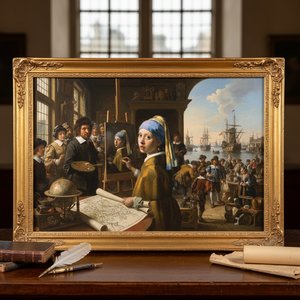
Golden Age Reflections: Dutch Baroque Painting & Cultural Innovation
Explore the Dutch Golden Age of painting! Discover key artists like Vermeer & ter Borch, their innovative techniques, and the rich cultural context behind these Baroque masterpieces. Learn about collecting & appreciating this iconic art period.

Drama in Nature: The Captivating Grandeur of Baroque Landscapes and the Art of Emotional Spectacle
Explore the breathtaking drama of Baroque landscapes. From Rubens's grand vistas to the mastery of chiaroscuro, discover how 17th-century artists transformed nature into a theatrical stage of emotion and light. A deep dive for true art enthusiasts.
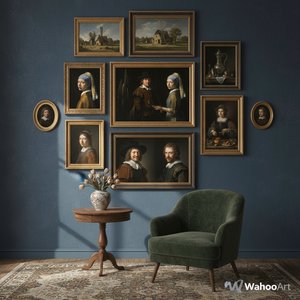
Die 10 Meisterwerke der niederländischen Barockmalerei – Kunst für Ihr Zuhause | AllPaintingsStore
Entdecken Sie die 10 prägendsten Meisterwerke der niederländischen Barockmalerei! Von Rembrandt bis Vermeer – erleben Sie Kunstgeschichte, Techniken & Emotionen. Hochwertige Reproduktionen für Ihr Zuhause auf AllPaintingsStore.com.

