Gemälde kaufen Bild kaufen
 Versenden
 Teilen
 Details anzeigen
 Zu Favoriten hinzufügen

 Herunterladen
 Ähnliche Objekte
 Röntgenaufnahme
 Diashow anzeigen
Dark


 Weiterlesen
Giclée / Kunstdruck
Giclée- oder Leinwanddruck in Museumsqualität mit schneller Produktion und flexiblen Veredelungsoptionen.




P118B $10

P118H $10

P118W $10

P438Z $10

P508JH $12

P508YH $12

P805H $10

P805Z $10

P919BZ $10

P919G $10

P919XJ $10

P959ZH $10

P968JZ $12

W106C $8

W218G $10

W218JH $8

W218Y $10

W307PJ $10

W316G $10

W316PJ $8

W316Y $10

W398PJ $8

W4111J $10

W500HY $15

W500JH $15

W692G $12

W849H $8

W940BG $15

W953PJ $8




Wählen Sie aus unseren vordefinierten Größen, die den ursprünglichen Proportionen des Kunstwerks entsprechen.

Sie können Ihre eigenen Maße eingeben, um ein bestimmtes Format oder einen speziellen Platz einzupassen. Wenn das von Ihnen gewählte Format nicht den Proportionen des Originalbildes entspricht, werden wir das Kunstwerk entweder beschneiden oder das Bild mit einem gespiegelten oder einfarbigen Rand erweitern. Ein digitaler Entwurf wird Ihnen zur Genehmigung zugesandt, bevor die Produktion beginnt.
Bitte beachten Sie, dass die Vorschau auf dem Bildschirm nicht den tatsächlichen Zuschnitt oder die Erweiterung widerspiegelt. Nur der Entwurf zeigt die endgültige Komposition präzise an.
Obwohl Sondermaße verfügbar sind, empfehlen wir die Auswahl eines Maßes aus der vordefinierten Liste, um die ursprünglichen Proportionen zu bewahren.
Weltweiter Versand () innerhalb von 2 Wochen statt der üblichen 4/5 Wochen. (21 Juli)

Kostenloser weltweiter Expressversand

Hochwertige Leinenleinwand

Umfassender Versicherungsschutz beim Versand

Zollsteuer-Rückerstattungsgarantie

Garantie für echte Farbtreue

60-Tage-Rückgaberecht (nur bei Mängeln)

100% Geld-zurück-Garantie

Mengenrabatt verfügbar
 Die Glasoption ist nur in Größen unter 110 cm verfügbar.

Dark
Giclée / Kunstdruck
Größe der Reproduktion
-


Endpreis aller Optionen
-
Beschreibung des Sammlerstücks
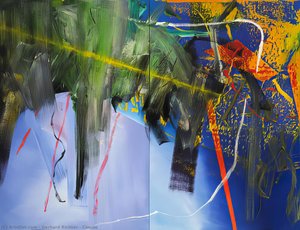
A Study in Controlled Chaos: Exploring Gerhard Richter’s “Dark”
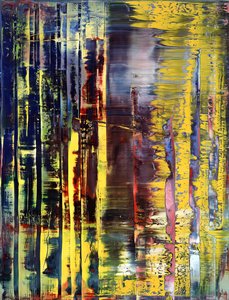
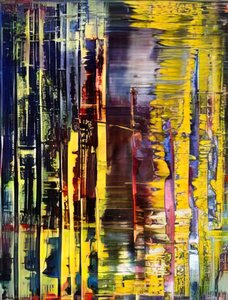
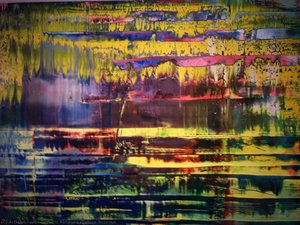
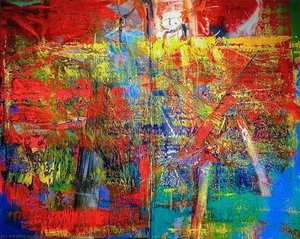
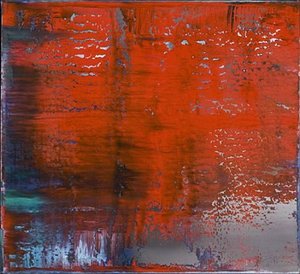
Gerhard Richter's "Dark," painted in 1968, is not merely an abstract composition; it’s a carefully constructed meditation on memory, displacement, and the very nature of perception. This close-up view reveals a canvas saturated with vibrant hues – bold reds and oranges battling against cooler blues – all rendered through Richter's signature technique of layered brushstrokes and subtly blurred surfaces. The painting immediately evokes a sense of unease, a feeling amplified by the deliberate ambiguity at its core. It’s a work born from a specific historical moment: Germany in the turbulent years following World War II, a nation grappling with the aftermath of unimaginable destruction and profound moral questions.
- Abstract Expressionism Revisited: While firmly rooted in the abstract expressionist movement, Richter's approach transcends simple imitation. He doesn’t employ the raw emotionality often associated with artists like Pollock; instead, he channels a more controlled, almost clinical energy into his work.
- Technique and Texture: The painting’s surface is a complex tapestry of applied paint – thick impasto in areas contrasted by thinner washes. Richter's use of glazing techniques creates an illusion of depth and luminosity, while the deliberate blurring introduces an element of uncertainty, mirroring the fragmented nature of memory itself.
The Weight of History
Richter’s personal history profoundly informs “Dark.” Born in Dresden in 1932, he experienced firsthand the instability and trauma of a nation divided. His childhood was shaped by displacement – his family repeatedly relocated during the war – an experience that instilled within him a deep-seated sense of disorientation. This biographical context is crucial to understanding the painting’s emotional resonance. The intense colors, particularly the reds and oranges, can be interpreted as echoes of the fires and destruction that ravaged Germany during the conflict, while the blues represent a yearning for peace and stability – a desire perhaps never fully realized.
The blurred areas within the composition are not accidental; they actively disrupt our ability to grasp a definitive image. This technique subtly suggests the fallibility of memory, the way in which experiences can be distorted or obscured over time. Richter masterfully utilizes this ambiguity to invite viewers into a dialogue with the work, prompting them to confront their own interpretations and emotional responses.
Symbolism and Emotional Impact
"Dark" resists easy categorization or definitive interpretation. The title itself suggests a preoccupation with shadow – not just literal darkness, but also the hidden aspects of human experience. The painting’s power lies in its ability to evoke a profound sense of melancholy and introspection. It's a work that demands attention, inviting viewers to contemplate themes of loss, uncertainty, and the enduring impact of historical trauma.
- Color as Emotion: Richter’s masterful use of color is central to the painting’s emotional impact. The vibrant reds and oranges convey passion, intensity, and perhaps even a hint of danger, while the blues offer a counterpoint of calm and reflection.
- The Blur – A Key Element: The blurred areas are not simply stylistic choices; they represent the subjective nature of perception and the difficulty of accessing objective truth.
A Masterpiece of Controlled Ambiguity
Gerhard Richter’s “Dark” is a testament to his extraordinary skill as an artist and his profound understanding of human psychology. This painting, created in 1968, remains a powerful example of abstract expressionism's ability to convey complex emotions and ideas through the manipulation of color, texture, and form. A hand-painted reproduction offers a unique opportunity to experience this captivating artwork firsthand, bringing Richter’s vision into your space and inviting contemplation for years to come.
Ähnliche Kunstwerke


Biografie des Künstlers
**frühes Leben und Ausbildung**
Gerhard Richter, ein renommierter deutscher visueller Künstler, wurde am 9. Februar 1932 in einem Krankenhaus in Dresden-Neustadt, Dresden, Sachsen, geboren. Er wuchs in Reichenau, Niederschlesien (heute Bogatynia, Polen), und Waltersdorf (Zittauer Gebirge) im oberen Lusatianenländischen Land auf. Richards Vater, Horst Richter, war Mathematik- und Physikstudent an der Technischen Hochschule in Dresden.**Künstlerische Karriere**
Richter begann seine künstlerische Reise als Geselle für einen Schaukunstmaler und studierte später an der Dresdner Kunstakademie. Seine frühen Arbeiten wurden von den Stilen von Picasso und Jean Arp beeinflusst, was sich in seinen abstrakten und fotorealistischen Gemälden zeigt. Im Jahr 1957 arbeitete Richter als Meisterschüler an der Akademie und nahm Aufträge für das damalige Staatliche Gebiet der DDR entgegen.**Bekannte Werke und Leistungen**
* Abstraktes Bild (2012) erzielte einen Rekordverkaufspreis für ein Gemälde eines lebenden Künstlers von 34 Millionen Dollar (£21 Millionen). * Domplatz, Mailand (Kathedralplatz, Mailand) (1968) wurde in New York für 37,1 Millionen Dollar (£24,4 Millionen) verkauft. * Abstraktes Bild (2015) wurde bei der Sotheby's Contemporary Evening Sale für 44,52 Millionen Dollar (£30,4 Millionen) versteigert.**Künstlerischer Stil und Bewegung**
Richards Werke zeichnen sich durch ihre Vielseitigkeit aus, die abstrakte und fotorealistische Stile verbindet. Zusammen mit Sigmar Polke führte er den Begriff Kapitalistischer Realismus, einen Anti-Stil der Kunst, der die bildliche Kürze des Werbebildes übernimmt.**Privatleben**
Richter heiratete Marianne Eufinger im Jahr 1957 und hatte eine Tochter. Später heiratete er Isa Genzken im Jahr 1982 und Sabine Moritz im Jahr 1995, mit der er zwei Söhne und eine Tochter hatte. **Hinweis:** Dieser Artikel basiert auf den bereitgestellten Informationen und ist möglicherweise keine umfassende Biografie. Für detailliertere Informationen besuchen Sie bitte die verlinkten Quellen.
Gerhard Richter
1932 - , Deutschland
Kurzinfos
- Bemerkenswerte Werke:
- Abstraktes Bild (2012)
- Domplatz, Mailand (1968)
- S. mit Kind (1995)
- Geburtsdatum: 09. Februar 1932
- Geburtsort (Stadt, Land): Dresden, Deutschland
- Künstler Oder Bewegungen, Die Von Diesem Künstler Beeinflusst Wurden: ['Zeitgenössische Maler']
- Künstler, Die Diesen Künstler Beeinflussten:
- Pablo Picasso
- Jean Arp
- Künstlerische Bewegung/Stil:
- Abstrakte Kunst
- Fotorealismus
- Nationalität: Deutsch
- Vollständiger Name: Gerhard Richter
Ähnliche Artikel

Kazimir Malevich: Die 25 Meisterwerke des Suprematismus für Ihr Zuhause | AllPaintingsStore
Entdecken Sie die 25 Meisterwerke von Kazimir Malevich! Tauchen Sie ein in die Welt des Suprematismus, abstrakter Kunst & geometrischer Formen. Hochwertige Kunstdrucke und Reproduktionen auf AllPaintingsStore.com – für Ihr Zuhause.

Caput Mortuum in der Meistermalerei: Die 10 berühmtesten Gemälde & ihre dunkle Schönheit
Entdecken Sie die düstere Schönheit von Caput Mortuum! Unsere Top 10 berühmter Gemälde – von Rembrandt bis Goya – erzählen Geschichten voller Leidenschaft & Tiefe. Hochwertige Kunst Reproduktionen für Ihr Zuhause auf
Jorge José Castillo Casalderrey: A Spanish Abstract Expressionist's Evolving Vision
Explore the captivating world of Jorge José Castillo Casalderrey, a leading Spanish Abstract Expressionist. Discover his unique style, market value & legacy. Expert insights for discerning collectors.
Henri Matisse: Die 25 Meisterwerke des Farbgenies – Kunst für Ihr Zuhause | AllPaintingsStore
Entdecken Sie die 25 Meisterwerke von Henri Matisse! Tauchen Sie ein in die Welt des Fauvismus, der leuchtenden Farben und ikonischen Formen. Kunstreproduktionen & Inspiration für Ihr Zuhause – exklusiv auf AllPaintingsStore.com.
Expressionismus: Die 10 Meisterwerke, die eine Kunstepoche prägten | AllPaintingsStore
Entdecken Sie die 10 prägendsten Meisterwerke des Expressionismus! Von Munchs Schrei bis Kandinskys Abstraktionen – erfahren Sie die Geschichten berühmter Maler und ihre emotionale Farbgebung. Kunstreproduktionen in Museumsqualiät auf AllPaintingsStore.com.