


 Vorschau anzeigen
 Versenden
 Teilen
 Details anzeigen

 Herunterladen
 Ähnliche Objekte
 Röntgenaufnahme
 Diashow
Galatea
 Tempera
- WallArt
- Symbolist Painting
 1880
1880- 19th Century
 85.0 x 66.0 cm
 Weiterlesen
Giclée / Kunstdruck
Giclée- oder Leinwanddruck in Museumsqualität mit schneller Produktion und flexiblen Veredelungsoptionen. ( Handgemalte Reproduktion bestellen Bild kaufen)




P118B $10

P118H $10

P118W $10

P438Z $10

P508JH $12

P508YH $12

P805H $10

P805Z $10

P919BZ $10

P919G $10

P919XJ $10

P959ZH $10

P968JZ $12

W106C $8

W218G $10

W218JH $8

W218Y $10

W307PJ $10

W316G $10

W316PJ $8

W316Y $10

W398PJ $8

W4111J $10

W500HY $15

W500JH $15

W692G $12

W849H $8

W940BG $15

W953PJ $8




Wählen Sie aus unseren vordefinierten Formaten, die den ursprünglichen Proportionen des Kunstwerks entsprechen.

Sie können Ihre eigenen Maße eingeben, um ein bestimmtes Format oder einen speziellen Platz einzupassen. Wenn das von Ihnen gewählte Format nicht den Proportionen des Originalbildes entspricht, werden wir das Kunstwerk entweder beschneiden oder das Bild mit einem gespiegelten oder einfarbigen Rand erweitern. Ein digitaler Entwurf wird Ihnen zur Genehmigung zugesandt, bevor die Produktion beginnt.
Bitte beachten Sie, dass die Vorschau auf dem Bildschirm nicht den tatsächlichen Zuschnitt oder die Erweiterung widerspiegelt. Nur der Entwurf zeigt die endgültige Komposition präzise an.
Obwohl Sondermaße verfügbar sind, empfehlen wir die Auswahl eines Maßes aus der vordefinierten Liste, um die ursprünglichen Proportionen zu bewahren.
Weltweiter Versand () innerhalb von 2 Wochen statt der üblichen 4/5 Wochen. (22 August)

Kostenloser weltweiter Expressversand

Hochwertige Leinenleinwand

Umfassender Versicherungsschutz beim Versand

Zollgebühren-Rückerstattungsgarantie

Garantie für exakte Farbtreue

60 Tage Rückgaberecht (nur bei Mängeln)

100% Geld-zurück-Garantie

Mengenrabatt verfügbar
 Die Glasoption ist nur für Größen unter 110 cm verfügbar.

Galatea
Giclée / Kunstdruck
Format der Reproduktion
-


Gesamtpreis
$ 64
Sammlerstück-Beschreibung
A Vision of Ethereal Sorrow: Unveiling Moreau’s Galatea
In the twilight of the nineteenth century, as the world grappled with the cold precision of scientific rationalism, Gustave Moreau offered a sanctuary of dreams. His 1880 masterpiece, Galatea, serves as a profound gateway into the Symbolist movement, a period where the canvas became a mirror for the subconscious rather than a window to the physical world. This monumental work does not merely depict a mythological figure; it captures a fleeting, spiritual state of being. The painting invites the viewer to step away from the tangible and enter a realm where the boundaries between life, death, and myth dissolve into a luminous, melancholic haze.
At the heart of this evocative composition lies the tragic beauty of Galatea, the sea-nymph of legend. Moreau draws inspiration from Ovid’s Metamorphoses, specifically the tale of the Cyclops Polyphemus and his unrequited longing. Yet, in Moreau's hands, the narrative transcends classical storytelling to become a meditation on vulnerability and resurrection. The figure of Galatea, appearing in a state of profound distress or perhaps suspended between worlds, is surrounded by an atmosphere of heavy, sacred stillness. The presence of other figures—shadowy observers that haunt the periphery—adds a layer of psychological tension, suggesting a cosmic drama unfolding just beyond the reach of human understanding.
The Alchemy of Light and Texture
To behold Galatea is to witness Moreau’s unparalleled mastery of technique. Eschewing the rapid, broken brushstrokes of his Impressionist contemporaries, Moreau employed a meticulous approach characterized by the layering of translucent glazes. This method creates an otherworldly luminosity, as if the light itself were trapped beneath the surface of the paint. The texture of the work is a study in contrasts: the porcelain-smooth skin of the nymph juxtaposed against the rugged, organic details of the surrounding landscape and flora. Such precision lends a tactile reality to the fantastical elements, making the dream feel disturbingly present.
The artist’s use of color is equally deliberate, favoring jewel-toned pigments that shimmer with an internal glow. This opulence is not merely decorative; it serves a symbolic purpose, elevating the scene from a mere mythological illustration to a sacred icon. For the discerning collector or interior designer, this painting offers more than just visual splendor; it provides a focal point of immense depth. A high-quality reproduction of this piece brings with it an air of intellectual sophistication and a sense of quiet mystery, making it an ideal centerpiece for spaces designed for contemplation, such as a private library, a formal study, or a curated gallery wall.
A Legacy of Symbolism and Emotional Resonance
The historical significance of Galatea cannot be overstated. As a cornerstone of French Symbolism, the painting reflects the late Victorian era's deep-seated anxieties regarding mortality and spiritual renewal. By weaving together pagan mythology with subtle echoes of Christian iconography—reminiscent of the Virgin Mary—Moreau created a complex tapestry of meaning that continues to resonate with modern sensibilities. The artwork speaks to the universal human experience of longing, loss, and the search for transcendence.
For those seeking to adorn their surroundings with art that inspires profound thought, Moreau’s Galatea stands as an eternal testament to the power of the imagination. It is a work that demands slow looking, rewarding the observer with new layers of meaning upon every encounter. Whether viewed as a historical relic or a contemporary masterpiece of emotional expression, this painting remains a breathtaking achievement in the annals of art history, offering a timeless elegance that transcends the decades.
Ähnliche Kunstwerke


Über den Künstler
**frühes Leben und Ausbildung**
Gustav Moreau, ein französischer Künstler, wurde am 6. April 1826 in Paris geboren. Er erhielt eine traditionelle akademische Ausbildung in der Malerei an der École des Beaux-Arts und zeigte von frühester Kindheit eine Begabung für Zeichnen.**Die Symbolismusbewegung**
Moreaus Werk, das durch allegorische und mythologische Themen geprägt ist, machte ihn zu einem führenden Symbolistenmaler, insbesondere in den 1890er Jahren. Seine Kunst (und der Symbolismus im Allgemeinen) verlor an Beliebtheit, wurde aber seit den 1960er Jahren neu bewertet und Moreau gilt heute als einer der wichtigsten Symbolistenmaler.**Bekannte Werke und Ausstellungen**
* Salomé im Gefängnis (Gemälde von 'Gustav Moreau') ist ein bemerkenswertes Beispiel für seine Arbeit und zeigt seine Meisterschaft im Symbolismus. * Das Selbstporträt (Gemälde von 'Gustav Moreau') ist eine weitere kraftvolle Darstellung des Künstlers selbst.**Musée Gustave Moreau**
Das Nationalmuseum Gustave Moreau (Musée Gustave Moreau Paris, Frankreich) in Paris ist dem Werk Moreaus gewidmet und beherbergt über 1.200 Gemälde, Aquarelle und Zeichnungen. Das Museum ist ein Zeugnis seines künstlerischen Erbes.**Vermächtnis und Einfluss**
Moreaus Einfluss auf die Symbolismusbewegung ist unbestreitbar. Er lehrte an der École des Beaux-Arts und beeinflusste namhafte Künstler wie Henri Matisse und Georges Rouault. Seine zurückgezogene Art hat seinen Einfluss auf die Kunstwelt nicht gemindert.- Entdecken Sie mehr über das Leben und Werk von Gustav Moreau auf AllPaintingsStore.com
- Erkunden Sie das Nationalmuseum Gustave Moreau und seine beeindruckende Sammlung von Kunstwerken auf Musée Gustave Moreau Paris, Frankreich
- Erfahren Sie mehr über die Symbolismusbewegung und ihre Bedeutung für die Kunstgeschichte auf die Symbolismus-Kunstbewegung
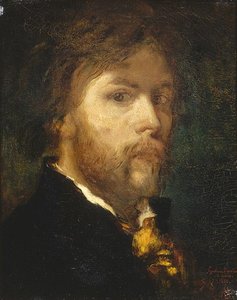
Gustave Moreau
1826 - 1898 , Frankreich
Kurzinfos
- Beeinflusste Künstler:
- Henri Matisse
- Georges Rouault
- Bemerkenswerte Werke:
- Salomé im Gefängnis
- Selbstporträt
- Jupiter und Semele
- Orpheus
- Die Erscheinung
- Geburtsdatum: 6. April 1826
- Geburtsort: Paris, Frankreich
- Künstlerische Einflüsse:
- Eugène Delacroix
- Michelangelo
- Leonardo da Vinci
- Künstlerischer Stil: Symbolismus
- Nationalität: Französisch
- Sterbedatum: 1898
- Vollständiger Name: Gustave Moreau
Ähnliche Artikel
Gustav Klimt: Die 25 Meisterwerke des Wiener Jugendstils | AllPaintingsStore
Entdecken Sie die 25 ikonischsten Gemälde von Gustav Klimt! Tauchen Sie ein in die Welt der Wiener Secession, des Jugendstils und der goldenen Phase. Hochwertige Reproduktionen & Inspiration für Ihr Zuhause auf AllPaintingsStore.com.

Gustave Moreau: Der Enigmatische Visionär des Symbolismus und Wegbereiter moderner Fantasy-Kunst
Entdecken Sie das faszinierende Werk Gustave Moreaus, des wichtigsten Vertreters des Symbolismus! Analysen, Biografien und Einblicke in seine mythologischen Gemälde. Jetzt lesen!

Beyond Reality: A Definitive Guide to the Dreamlike World of Symbolist Painting
Explore the evocative world of Symbolist painting. Discover how masters like Gustave Moreau rejected realism to capture dreams, myths, and the subconscious through fine art history and expert analysis.

The Enduring Legacy of Oil on Canvas: Technique, History & Aesthetic Impact
Explore the rich history & techniques of oil painting – from Renaissance masters to Impressionism. Discover pigments, layering methods, and why this timeless medium endures. Expert insights for artists & art enthusiasts.

The Enduring Power of Painting: A Historical & Contemporary Exploration of Form and Emotion
Explore the rich history & enduring techniques of oil painting with AllPaintingsStore. Discover masterpieces, learn about art collecting, and find authentic handmade reproductions crafted by skilled artists.


