


 Vorschau anzeigen
 Versenden
 Teilen
 Details anzeigen
 Leitfaden

 Herunterladen
 Ähnliche Objekte
 Röntgenaufnahme
 Diashow
 Statistiken
No. 16

 Weiterlesen
Die auf dieser Seite dargestellten Kunstwerke sind urheberrechtlich geschützt, was bedeutet, dass wir keine identische Reproduktion rechtmäßig erstellen oder verkaufen dürfen. Dieser Schutz wird durch internationale Abkommen wie die Berner Übereinkunft und durch nationale Gesetze, einschließlich derer, die von den US-Urheberrecht – Titel 17.
Als respektvolle und rechtlich einwandfreie Alternative bieten wir individuelle, handgemalte Kunstwerke an, die vom Original inspiriert sind. Unsere geschickten und professionellen Künstler studieren sorgfältig den Stil, die Stimmung und das künstlerische Wesen des Originals, um ein neues, einzigartiges Werk zu schaffen, das dasselbe Gefühl hervorruft – während es zugleich eine eigenständige Originalschöpfung bleibt.
Diese Methode entspricht vollumfänglich den Urheberrechtsbestimmungen, da sie keine Kopie oder Vervielfältigung des geschützten Kunstwerks darstellt. Stattdessen handelt es sich um eine kreative Neuinterpretation – ein neues Gemälde, das vom Original inspiriert, aber nicht identisch mit ihm ist.
Handgefertigte Ölreproduktion
Handgemaltes Ölgemälde auf Leinwand in Ihrer Wunschgröße und mit Rahmen, auf Bestellung von unseren Künstlern angefertigt. ( Zum Druck wechseln Zum digitalen Bild wechseln)




P118B €10

P118H €10

P118W €10

P438Z €10

P508JH €12

P508YH €12

P805H €10

P805Z €10

P919BZ €10

P919G €10

P919XJ €10

P959ZH €10

P968JZ €12

W106C €8

W218G €10

W218JH €8

W218Y €10

W307PJ €10

W316G €10

W316PJ €8

W316Y €10

W398PJ €8

W4111J €10

W500HY €15

W500JH €15

W692G €12

W849H €8

W940BG €15

W953PJ €8




Wählen Sie aus unseren vordefinierten Formaten, die den ursprünglichen Proportionen des Kunstwerks entsprechen.

Geben Sie die Breite und die Höhe an, die Sie für Ihren Rahmen oder Ihre Wand benötigen. Da dieses Werk handgemalt ist, kann der Künstler bei einer anderen Form etwas mehr um das Bild herum malen oder etwas abschneiden – Sie entscheiden. Wir senden Ihnen ein digitales Mockup zur Freigabe, bevor mit dem Malen begonnen wird. Das auf dieser Seite gezeigte Bild stellt nicht das tatsächliche Ergebnis dar – dies tut nur das Mockup.
Nach der Bestellung wird das AllPaintingsStore.com-Team dem Kunden Anweisungen per E-Mail zusenden und eine Mockup-Vorschau bereitstellen.
Weltweiter Versand () in nur 3 bis 4 Wochen statt der üblichen 5 Wochen. (27 Oktober). Keine Kompromisse bei der Qualität.

Kostenloser weltweiter Expressversand

Hochwertige Leinenleinwand

Umfassender Versicherungsschutz beim Versand

Zollgebühren-Rückerstattungsgarantie

Garantie für exakte Farbtreue

100 Tage Rückgaberecht (nur bei Mängeln)

100% Geld-zurück-Garantie

Mengenrabatt verfügbar
 Die Glasoption ist nur für Größen unter 110 cm verfügbar.

No. 16
Art der Reproduktion
Format der Reproduktion
-


Endpreis
€ 227
A Symphony in Color: Exploring Mark Rothko’s No. 16
Mark Rothko's "No. 16," painted in 1958, stands as an emblem of Abstract Expressionism and a testament to the artist’s profound engagement with existential concerns. Held at MoMA (Museum of Modern Art), this monumental canvas—measuring approximately 270.8 cm x 297.8 cm—immediately commands attention with its deceptively simple yet emotionally resonant composition. The painting's core is dominated by a vast expanse of cadmium yellow, punctuated by a horizontal stripe of muted pink on the left side. A subtle sliver of emerald green resides at the upper right corner, adding an unexpected chromatic counterpoint to the dominant hues.Style and Technique: Layers of Color and Texture
Rothko’s technique—characterized as “color field painting”—rejects traditional representational art in favor of conveying emotion through pure color. He achieved this effect by applying thin layers of oil paint onto canvas, meticulously blending colors to create seamless gradations that seem to dissolve into one another. The surface is remarkably matte, devoid of brushstrokes or visible texture—a deliberate choice designed to minimize visual distractions and allow the colors themselves to speak for themselves. This approach prioritizes perceptual experience over intellectual analysis, inviting viewers to immerse themselves in a meditative contemplation of color and form.Historical Context: Amidst the Turbulent Years of Abstract Expressionism
“No. 16” emerged during the apex of Abstract Expressionism—a movement that flourished in New York City between the late 1940s and mid-1950s. Artists like Jackson Pollock, Willem de Kooning, and Barnett Newman sought to liberate painting from the constraints of illusionistic representation, exploring spontaneous gesture and expressive color as vehicles for conveying psychological states. Rothko’s work aligns closely with this aesthetic sensibility, reflecting a broader cultural preoccupation with confronting anxieties about existence and grappling with questions of spirituality and transcendence. The painting was created in response to the pervasive sense of unease that gripped America during the Cold War era—a period marked by ideological conflict and heightened fears of nuclear annihilation.Symbolism: Beyond Representation – An Invitation to Inner Reflection
While Rothko vehemently denied any intention to imbue his paintings with symbolic meaning, scholars have interpreted “No. 16” as embodying profound spiritual resonances. The yellow stripe is often associated with warmth, optimism, and divine illumination—representing the promise of redemption amidst darkness. Simultaneously, it evokes memories of childhood, symbolizing innocence and vulnerability. The pink hue may symbolize compassion and empathy—a reminder of humanity’s capacity for kindness and understanding. Ultimately, Rothko's intention was to create a space for contemplation—encouraging viewers to confront their own inner landscapes and engage in a dialogue with the sublime.Emotional Impact: A Profound Resonance of Color and Silence
“No. 16” possesses an undeniable emotional power that transcends mere visual stimulation. Its expansive scale envelops the viewer, fostering a sense of solitude and introspection—drawing them into a realm beyond rational thought. The muted colors generate a palpable stillness—creating an atmosphere conducive to meditative reflection. As viewers gaze upon this masterpiece, they experience not just beauty but also vulnerability—acknowledging the inevitability of mortality while simultaneously embracing the transformative potential of artistic contemplation. It remains a powerfully evocative artwork that continues to inspire awe and provoke profound emotional responses decades after its creation.Fragen & Antworten
Welche Druckgröße wird für "No. 16" von Mark Rothko empfohlen?
Die empfohlene Druckgröße für "No. 16" von Mark Rothko ist Large.
Welche Farbpalette und welche Stimmung vereint "No. 16"?
Die Vivid-Palette von "No. 16" von Mark Rothko harmoniert mit seinem Calm emotionalen Tonfall. Farbe ist eine der Arten und Weisen, wie ein Werk Gefühle vermittelt.
Welcher Raum passt farblich zu "No. 16" von Mark Rothko?
Aufgrund seiner Vivid-Palette wird "No. 16" von Mark Rothko für ein Hotel Lobby empfohlen; die Farbstimmung ist einer der Gründe für diese Empfehlung.
Ähnliche Kunstwerke


Künstlerbiografie
frühes Leben und Einflüsse
Mark Rothko (Marcus Rothkowitz), ein renommierter amerikanischer Künstler, wurde am 25. September 1903 in Dwinisk, Lettland, geboren. Seine Familie immigrierte als Kind, gerade zehn Jahre alt, in die Vereinigten Staaten. Diese kulturelle Veränderung beeinflusste später seinen künstlerischen Stil.künstlerische Entwicklung
Rothkos frühe Werke waren durch den **abstrakten Expressionismus** geprägt, einen Stil, der die Prozesshaftigkeit der Kunstschaffung betonte und nicht das Endprodukt. Seine Gemälde, wie No. 18 (1948) und Untitled (1948), zeigten seinen einzigartigen Ansatz für Farbe und Form.- **Farbfeld:** Rothkos Verwendung von kräftigen, rechteckigen Farbflächen, oft in scharfem Kontrast zueinander, erzeugte ein Gefühl von Tiefe und Emotion.
- **Organische Struktur:** Seine Gemälde wirkten lebendig, als wären die Farben lebendige Wesen.
Bemerkenswerte Werke und Ausstellungen
- No. 10 (1950), ein Gemälde, das einen bedeutenden Wandel in Rothkos Stil markierte, befindet sich heute im Besitz der Museum of Modern Arts.
- Die Seagram-Muralen, eine Reihe von Gemälden, die für das Restaurant Four Seasons angefertigt wurden, zeigten Rothkos Fähigkeit, seinen Stil an verschiedene Umgebungen anzupassen.
- No. 3 (1950), ein Gemälde, das Rothkos Verwendung von kräftigen, rechteckigen Farbflächen veranschaulicht.
Spätes Leben und Vermächtnis
Rothkos Leben war von Kämpfen mit psychischen Problemen und einer turbulenten Ehe geprägt. Er starb am 25. Februar 1970 im Alter von 66 Jahren. Trotz seiner Herausforderungen hinterließ Rothko einen unauslöschlichen Eindruck in der Kunstwelt. Ochre and Red on Red (Farbfeld), ein Gemälde, das Rothkos einzigartigen Ansatz für Farbe zeigt, befindet sich in der Sammlung von AllPaintingsStore.com. Mark Rothkos Wikipedia-Seite bietet weitere Einblicke in sein Leben und seinen künstlerischen Stil.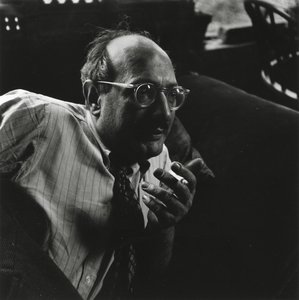
Mark Rothko
1903 - 1970 , Lettland
Kurzinfos
- Beeinflusste Künstler: ['Minimalistische Kunst']
- Bemerkenswerte Werke:
- Nr. 18 (1948)
- Nr. 10 (1950)
- Seagram-Wandbilder
- Nr. 3 (1950)
- Einflüsse:
- Surrealismus
- Marxistische Philosophie
- Geburtsdatum: 25. September 1903
- Geburtsort: Daugavpils, Lettland
- Künstlerische Bewegung: Abstrakter Expressionismus
- Nationalität: Amerikanisch
- Todatum: 25. Februar 1970
- Vollständiger Name: Mark Rothko / Marcus Rothkowitz


