Vorschau anzeigen
 Versenden
 Teilen
 Details anzeigen

 Herunterladen
 Ähnliche Objekte
 Röntgenaufnahme
 Diashow
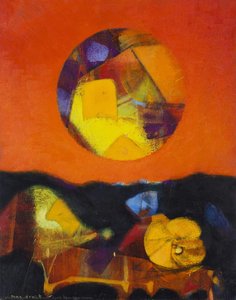
Composition, lune et soleil


 Weiterlesen
Giclée / Kunstdruck
Giclée- oder Leinwanddruck in Museumsqualität mit schneller Produktion und flexiblen Veredelungsoptionen. ( Handgemalte Reproduktion bestellen Bild kaufen)




P118B $10

P118H $10

P118W $10

P438Z $10

P508JH $12

P508YH $12

P805H $10

P805Z $10

P919BZ $10

P919G $10

P919XJ $10

P959ZH $10

P968JZ $12

W106C $8

W218G $10

W218JH $8

W218Y $10

W307PJ $10

W316G $10

W316PJ $8

W316Y $10

W398PJ $8

W4111J $10

W500HY $15

W500JH $15

W692G $12

W849H $8

W940BG $15

W953PJ $8




Wählen Sie aus unseren vordefinierten Formaten, die den ursprünglichen Proportionen des Kunstwerks entsprechen.

Sie können Ihre eigenen Maße eingeben, um ein bestimmtes Format oder einen speziellen Platz einzupassen. Wenn das von Ihnen gewählte Format nicht den Proportionen des Originalbildes entspricht, werden wir das Kunstwerk entweder beschneiden oder das Bild mit einem gespiegelten oder einfarbigen Rand erweitern. Ein digitaler Entwurf wird Ihnen zur Genehmigung zugesandt, bevor die Produktion beginnt.
Bitte beachten Sie, dass die Vorschau auf dem Bildschirm nicht den tatsächlichen Zuschnitt oder die Erweiterung widerspiegelt. Nur der Entwurf zeigt die endgültige Komposition präzise an.
Obwohl Sondermaße verfügbar sind, empfehlen wir die Auswahl eines Maßes aus der vordefinierten Liste, um die ursprünglichen Proportionen zu bewahren.
Weltweiter Versand () innerhalb von 2 Wochen statt der üblichen 4/5 Wochen. (19 August)

Kostenloser weltweiter Expressversand

Hochwertige Leinenleinwand

Umfassender Versicherungsschutz beim Versand

Zollgebühren-Rückerstattungsgarantie

Garantie für exakte Farbtreue

60 Tage Rückgaberecht (nur bei Mängeln)

100% Geld-zurück-Garantie

Mengenrabatt verfügbar
 Die Glasoption ist nur für Größen unter 110 cm verfügbar.

Composition, lune et soleil
Giclée / Kunstdruck
Format der Reproduktion
-


Gesamtpreis
$ 64
Sammlerstück-Beschreibung
A Dance Between Celestial and Concrete: Exploring Max Ernst's "Composition, lune et soleil"
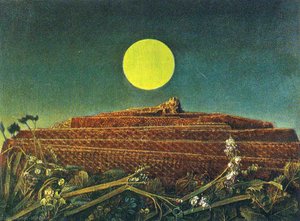
Max Ernst’s “Composition, lune et soleil” is not merely a depiction of the moon and sun; it’s an invitation to contemplate the uneasy relationship between humanity and the cosmos. Painted by one of the most significant figures of 20th-century art, this work embodies Ernst's signature surrealist approach – a deliberate disruption of conventional reality driven by intellectual curiosity and a profound sense of unease. The painting immediately captivates with its stark contrast: the luminous orb of the moon, positioned on the left, confronts the assertive presence of the sun dominating the central space. Below this celestial drama unfolds a sprawling cityscape, a testament to human ambition and perhaps, a subtle commentary on our dominion over the natural world.
Surrealist Techniques and Ernst’s Vision
- Technique: Ernst masterfully employs techniques honed during his diverse artistic explorations. The painting showcases a blend of meticulous detail in rendering the cityscape – buildings stretching across the canvas with varying degrees of realism – juxtaposed with the almost dreamlike quality of the celestial bodies. This deliberate tension is characteristic of Surrealist art, aiming to bypass rational thought and tap into the subconscious.
- Oil on Canvas: The medium itself contributes to the work’s impact. Oil paint allows for rich color saturation and a smooth blending – essential for capturing the ethereal glow of the moon and sun while maintaining the solidity of the urban landscape.
- Collage Elements (Implied): While not explicitly visible, it's highly probable that Ernst utilized collage techniques in his preparatory stages, incorporating found images or textures to further destabilize the viewer’s perception. This aligns with his broader experimentation with various artistic methods.
Symbolism and the Dualities of Existence
The placement of the moon and sun is laden with symbolic weight. Traditionally, these celestial bodies represent opposing forces – light versus darkness, masculine versus feminine, order versus chaos. In “Composition, lune et soleil,” their proximity suggests a precarious balance, a constant negotiation between these fundamental dualities. The cityscape below further amplifies this tension; the towering buildings represent human civilization’s attempt to impose order on an inherently chaotic world. The two orbs within the scene – clearly representing the moon and sun – add another layer of complexity, hinting at a deeper connection between the earthly realm and the vastness of space.
Historical Context: The Rise of Surrealism
Created during the interwar period, “Composition, lune et soleil” reflects the burgeoning influence of Surrealism. Emerging in the aftermath of World War I, Surrealist artists sought to challenge the prevailing rationalism and materialism of Western society. Inspired by the theories of Sigmund Freud – particularly his exploration of dreams and the unconscious – they aimed to unlock a new mode of artistic expression rooted in irrationality, fantasy, and automatic processes. Ernst was a key figure in this movement, constantly pushing boundaries and experimenting with techniques like frottage and decalcomania to achieve unexpected results. This painting stands as a testament to his commitment to exploring the hidden depths of the human psyche and challenging conventional notions of reality.
Emotional Impact and Artistic Legacy
"Composition, lune et soleil" evokes a powerful sense of wonder and unease. The juxtaposition of the serene beauty of the celestial bodies with the imposing presence of the city creates a compelling visual paradox. It’s a painting that invites contemplation – prompting questions about our place in the universe, our relationship to nature, and the enduring tension between human ambition and the forces beyond our control. Max Ernst's work continues to resonate today, demonstrating his profound understanding of the human condition and his ability to translate complex ideas into visually arresting art.


Über den Künstler
Max Ernst: Ein Leben im Surrealismus
Frühes Leben und Ausbildung
- Geboren: 1. April 1891 in Brühl, Deutschland.
- Ernsts Vater, Philipp Ernst, war Lehrer für Gehörlose und Amateurmaler, der Maxes frühes Interesse an Kunst förderte.
- Von 1909 studierte er Philosophie, Kunstgeschichte, Literatur, Psychologie und Psychiatrie an der Universität Bonn.
- Dieser vielfältige akademische Hintergrund beeinflusste seine späteren künstlerischen Erkundungen maßgeblich.
Künstlerische Entwicklung & Einflüsse
- Ein einschneidendes Ereignis war die Sonderbund-Ausstellung in Köln (1912), wo er Werke von Pablo Picasso, Vincent van Gogh, und Paul Gauguin entdeckte.
- Im Jahr 1914 lernte er Hans Arp kennen, der eine lebenslange Freundschaft schloss, die seine künstlerische Reise maßgeblich prägte.
- Der Erste Weltkrieg hatte einen tiefgreifenden Einfluss auf Ernst; seine Erfahrungen als Soldat führten zu Enttäuschung und einer kritischen Sicht auf die Gesellschaft.
- Er ließ sich von den Schriften Sigmund Freuds beeinflussen und erkundete Themen des Unterbewusstseins in seiner Kunst.
Dada & Surrealismus
- Nach dem Ersten Weltkrieg wurde Ernst eine Schlüsselfigur der Kölner Dada-Gruppe, die sich gegen traditionelle künstlerische Konventionen aussprach.
- Er entwickelte innovative Techniken wie Frottage (Erhitzen von Bleistift auf texturierte Oberflächen) und Grattage (Abkratzen von Farbe, um darunterliegende Schichten freizulegen).
- In den 1920er Jahren trat er der Surrealistischen Bewegung in Paris bei und arbeitete mit Künstlern wie Paul Éluard zusammen.
- Seine Werke dieser Zeit erforschten traumhafte Bilder und psychologische Themen.
Wichtige Werke & Techniken
- Frottage: Eine Technik zur Erzeugung von Texturen und unerwarteten Bildern, die in vielen seiner Werke zu sehen ist.
- Collage: Ernst verwendete häufig Collage, um disparate Elemente zu kombinieren und surreale Kompositionen zu schaffen.
- Bekannte Werke:
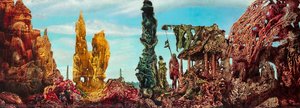
- Die gesamte Stadt
- Euclides
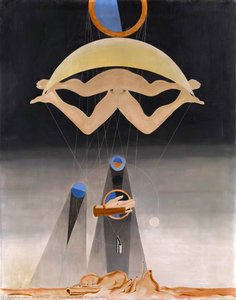
- Von diesem sollen nichts wissen
- Wald und Taube
- Seine Gemälde zeigen oft symbolische Bilder, darunter Vögel (insbesondere seinen Pseudonym Loplop), Landschaften und verstörende Gegenüberstellungen.
Spätes Leben & Vermächtnis
- Ernst zog während des Zweiten Weltkriegs in die Vereinigten Staaten, wo er weiter malte und mit neuen Techniken experimentierte.
- Nach dem Krieg kehrte er nach Frankreich zurück und blieb bis zu seinem Tod am 1. April 1976 in Paris aktiv.
- Historische Bedeutung: Max Ernsts Beiträge zu Dada und Surrealismus waren bahnbrechend. Er stellte künstlerische Normen in Frage, erforschte das Unterbewusstsein und entwickelte innovative Techniken, die Künstler bis heute inspirieren.
- Er gilt als eine der wichtigsten und einflussreichsten Figuren der Kunst des 20. Jahrhunderts.
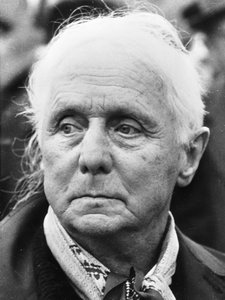
Max Ernst
1891 - 1976 , Deutschland
Kurzinfos
- Artistic Movement Or Style: Dadaismus & Surrealismus
- Artists Who Influenced This Artist:
- Pablo Picasso
- Vincent van Gogh
- Paul Gauguin
- Sigmund Freud
- Date Of Birth: 1. April 1891
- Date Of Death: 1. April 1976
- Full Name: Max Ernst
- Nationality: Deutsch
- Notable Artworks:
- Die gesamte Stadt
- Euclides
- Wald und Taube
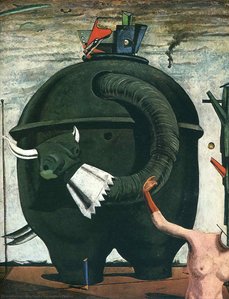
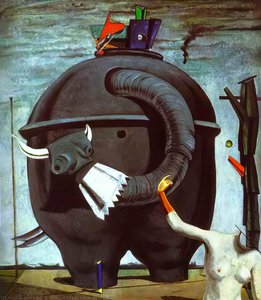
- Der Elefant Celebes
- Place Of Birth (City And Country): Brühl, Deutschland
Ähnliche Artikel

Decoding Dalí: The Paranoiac-Critical Method and Surrealist Symbols Explained
Master the complexities of Salvador Dalí's work. Explore the Paranoiac-Critical Method, decode iconic Surrealist symbols, and understand the psychological depth behind his technical brilliance in this expert art history guide designed for students and collectors.