Vorschau anzeigen
 Versenden
 Teilen
 Details anzeigen

 Herunterladen
 Ähnliche Objekte
 Röntgenaufnahme
 Diashow
Ohne Titel

 Weiterlesen
Giclée / Kunstdruck
Giclée- oder Leinwanddruck in Museumsqualität mit schneller Produktion und flexiblen Veredelungsoptionen. ( Handgemalte Reproduktion bestellen Bild kaufen)




P118B $10

P118H $10

P118W $10

P438Z $10

P508JH $12

P508YH $12

P805H $10

P805Z $10

P919BZ $10

P919G $10

P919XJ $10

P959ZH $10

P968JZ $12

W106C $8

W218G $10

W218JH $8

W218Y $10

W307PJ $10

W316G $10

W316PJ $8

W316Y $10

W398PJ $8

W4111J $10

W500HY $15

W500JH $15

W692G $12

W849H $8

W940BG $15

W953PJ $8




Wählen Sie aus unseren vordefinierten Formaten, die den ursprünglichen Proportionen des Kunstwerks entsprechen.

Sie können Ihre eigenen Maße eingeben, um ein bestimmtes Format oder einen speziellen Platz einzupassen. Wenn das von Ihnen gewählte Format nicht den Proportionen des Originalbildes entspricht, werden wir das Kunstwerk entweder beschneiden oder das Bild mit einem gespiegelten oder einfarbigen Rand erweitern. Ein digitaler Entwurf wird Ihnen zur Genehmigung zugesandt, bevor die Produktion beginnt.
Bitte beachten Sie, dass die Vorschau auf dem Bildschirm nicht den tatsächlichen Zuschnitt oder die Erweiterung widerspiegelt. Nur der Entwurf zeigt die endgültige Komposition präzise an.
Obwohl Sondermaße verfügbar sind, empfehlen wir die Auswahl eines Maßes aus der vordefinierten Liste, um die ursprünglichen Proportionen zu bewahren.
Weltweiter Versand () innerhalb von 2 Wochen statt der üblichen 4/5 Wochen. (19 August)

Kostenloser weltweiter Expressversand

Hochwertige Leinenleinwand

Umfassender Versicherungsschutz beim Versand

Zollgebühren-Rückerstattungsgarantie

Garantie für exakte Farbtreue

60 Tage Rückgaberecht (nur bei Mängeln)

100% Geld-zurück-Garantie

Mengenrabatt verfügbar
 Die Glasoption ist nur für Größen unter 110 cm verfügbar.

Ohne Titel
Giclée / Kunstdruck
Format der Reproduktion
-


Gesamtpreis
$ 64
Sammlerstück-Beschreibung
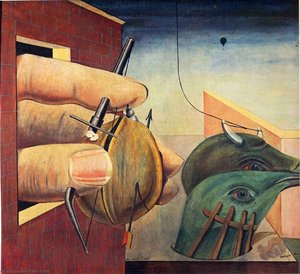
A Surrealist Echo: Unpacking Max Ernst’s “Ohne Titel”
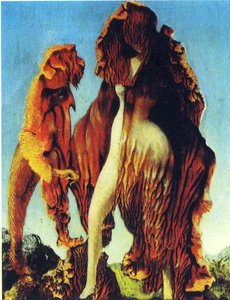
Max Ernst's "Ohne Titel" – often referred to as "Personnages or Le Chapeau Rouge" – isn’t merely a painting; it’s an invitation into the labyrinthine depths of the subconscious. Created in 1949, this remarkable etching and aquatint, rendered in vibrant color on Japanese paper, embodies the core tenets of Surrealism while simultaneously hinting at the artist's lifelong fascination with chance, memory, and the evocative power of imagery. It’s a piece that rewards repeated viewing, revealing new layers of meaning with each encounter. Ernst, born in Brühl, Germany, in 1891, was a restless spirit who rejected conventional artistic paths, forging his own unique trajectory through experimentation and intellectual exploration – a path deeply intertwined with the burgeoning Surrealist movement. His early years were marked by a rejection of academic art, leading him to embrace Dadaism before ultimately finding resonance within the more psychologically-oriented Surrealism championed by André Breton.The Alchemy of Chance: Technique and Process
At first glance, “Ohne Titel” appears chaotic – a swirling vortex of greens, reds, yellows, and blacks colliding across the page. However, this apparent disorder is meticulously orchestrated. Ernst employed a technique he termed "collage," layering aquatint and etching plates to create a complex matrix of tonal variations. The process involved applying ink to the plate, then covering it with wax before exposing it to light through a photographic negative. This created areas of varying density, which would subsequently be etched – resulting in the final image. Crucially, Ernst embraced chance within this controlled system. He often left portions of the plate unworked, allowing the etching process itself to introduce unexpected textures and patterns. The result is a mesmerizing interplay between deliberate design and serendipitous discovery—a testament to Ernst’s belief that true creativity arises from the collision of intention and accident. The use of Japanese paper adds an element of subtle elegance and texture, further enhancing the artwork's visual richness.Symbolic Landscapes: Unveiling Hidden Meanings
While devoid of recognizable figures or objects, “Ohne Titel” is profoundly symbolic. The dominant greens evoke a sense of primal nature, hinting at both fertility and decay – a recurring motif in Ernst’s work. The vibrant reds and yellows suggest energy, passion, and perhaps even danger. The fragmented forms, resembling distorted human shapes or abstract landscapes, are deliberately ambiguous, inviting the viewer to project their own experiences and emotions onto the scene. Some art historians interpret these figures as echoes of childhood memories, while others see them as representations of the anxieties and uncertainties of a rapidly changing world. The title itself – “Ohne Titel” – underscores the artwork’s inherent openness, suggesting that its meaning is not fixed but rather emerges from the interaction between the viewer and the image. The inclusion of "Personnages or Le Chapeau Rouge" hints at both human figures and a flamboyant hat, adding another layer of visual intrigue.A Window into the Unconscious: Context and Legacy
“Ohne Titel” was created during a period of intense artistic experimentation and intellectual ferment – the aftermath of World War II and the rise of Cold War anxieties. Surrealism, with its emphasis on dreams, irrationality, and the exploration of the unconscious mind, provided a powerful framework for grappling with these turbulent times. Ernst’s work reflects this broader cultural context, offering a glimpse into the psychological landscape of a generation struggling to make sense of a world shattered by violence and uncertainty. His innovative techniques – including frottage (rubbing textures onto paper) and decalcomania (transferring ink from one surface to another) – became hallmarks of Surrealist art, influencing countless artists who followed in his footsteps. “Ohne Titel” stands as a prime example of Ernst’s enduring legacy—a testament to the power of imagination and the transformative potential of artistic experimentation.A Timeless Resonance: Emotional Impact and Aesthetic Appeal
Ultimately, "Ohne Titel" transcends its technical complexities to offer a deeply resonant emotional experience. The swirling colors, fragmented forms, and ambiguous imagery create a sense of unease, mystery, and profound beauty. It’s a piece that lingers in the mind long after it has been viewed, prompting reflection on themes of memory, identity, and the nature of reality. Its vibrant palette and intricate textures make it equally captivating as a standalone artwork or as part of a carefully curated interior design scheme. The work's inherent ambiguity ensures its continued relevance, inviting viewers to engage with it on a personal level and discover their own unique interpretations. It’s a powerful reminder that art can be both intellectually stimulating and emotionally evocative—a true testament to the genius of Max Ernst.Ähnliche Kunstwerke



Über den Künstler
Max Ernst: Ein Leben im Surrealismus
Frühes Leben und Ausbildung
- Geboren: 1. April 1891 in Brühl, Deutschland.
- Ernsts Vater, Philipp Ernst, war Lehrer für Gehörlose und Amateurmaler, der Maxes frühes Interesse an Kunst förderte.
- Von 1909 studierte er Philosophie, Kunstgeschichte, Literatur, Psychologie und Psychiatrie an der Universität Bonn.
- Dieser vielfältige akademische Hintergrund beeinflusste seine späteren künstlerischen Erkundungen maßgeblich.
Künstlerische Entwicklung & Einflüsse
- Ein einschneidendes Ereignis war die Sonderbund-Ausstellung in Köln (1912), wo er Werke von Pablo Picasso, Vincent van Gogh, und Paul Gauguin entdeckte.
- Im Jahr 1914 lernte er Hans Arp kennen, der eine lebenslange Freundschaft schloss, die seine künstlerische Reise maßgeblich prägte.
- Der Erste Weltkrieg hatte einen tiefgreifenden Einfluss auf Ernst; seine Erfahrungen als Soldat führten zu Enttäuschung und einer kritischen Sicht auf die Gesellschaft.
- Er ließ sich von den Schriften Sigmund Freuds beeinflussen und erkundete Themen des Unterbewusstseins in seiner Kunst.
Dada & Surrealismus
- Nach dem Ersten Weltkrieg wurde Ernst eine Schlüsselfigur der Kölner Dada-Gruppe, die sich gegen traditionelle künstlerische Konventionen aussprach.
- Er entwickelte innovative Techniken wie Frottage (Erhitzen von Bleistift auf texturierte Oberflächen) und Grattage (Abkratzen von Farbe, um darunterliegende Schichten freizulegen).
- In den 1920er Jahren trat er der Surrealistischen Bewegung in Paris bei und arbeitete mit Künstlern wie Paul Éluard zusammen.
- Seine Werke dieser Zeit erforschten traumhafte Bilder und psychologische Themen.
Wichtige Werke & Techniken
- Frottage: Eine Technik zur Erzeugung von Texturen und unerwarteten Bildern, die in vielen seiner Werke zu sehen ist.
- Collage: Ernst verwendete häufig Collage, um disparate Elemente zu kombinieren und surreale Kompositionen zu schaffen.
- Bekannte Werke:
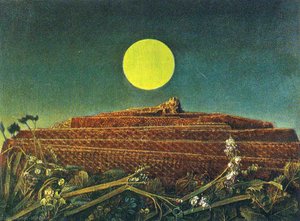
- Die gesamte Stadt
- Euclides
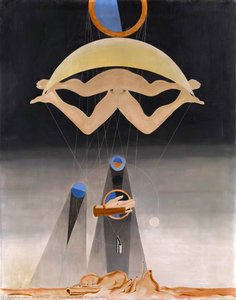
- Von diesem sollen nichts wissen
- Wald und Taube
- Seine Gemälde zeigen oft symbolische Bilder, darunter Vögel (insbesondere seinen Pseudonym Loplop), Landschaften und verstörende Gegenüberstellungen.
Spätes Leben & Vermächtnis
- Ernst zog während des Zweiten Weltkriegs in die Vereinigten Staaten, wo er weiter malte und mit neuen Techniken experimentierte.
- Nach dem Krieg kehrte er nach Frankreich zurück und blieb bis zu seinem Tod am 1. April 1976 in Paris aktiv.
- Historische Bedeutung: Max Ernsts Beiträge zu Dada und Surrealismus waren bahnbrechend. Er stellte künstlerische Normen in Frage, erforschte das Unterbewusstsein und entwickelte innovative Techniken, die Künstler bis heute inspirieren.
- Er gilt als eine der wichtigsten und einflussreichsten Figuren der Kunst des 20. Jahrhunderts.

Max Ernst
1891 - 1976 , Deutschland
Kurzinfos
- Artistic Movement Or Style: Dadaismus & Surrealismus
- Artists Who Influenced This Artist:
- Pablo Picasso
- Vincent van Gogh
- Paul Gauguin
- Sigmund Freud
- Date Of Birth: 1. April 1891
- Date Of Death: 1. April 1976
- Full Name: Max Ernst
- Nationality: Deutsch
- Notable Artworks:
- Die gesamte Stadt
- Euclides
- Wald und Taube
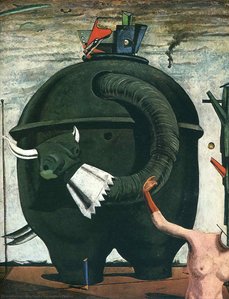
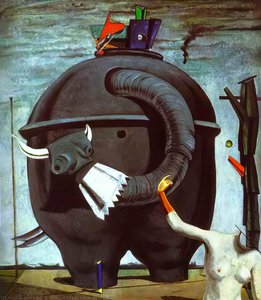
- Der Elefant Celebes
- Place Of Birth (City And Country): Brühl, Deutschland
Ähnliche Artikel

Expressionist Abstraction: A Procurement Guide to Bold Colors and Emotional Impact for Modern Hotel Interiors
Elevate hospitality spaces with Expressionist Abstraction. A professional procurement guide for hotel designers on sourcing bold, large-scale abstract oil paintings to create impactful, high-end modern interiors through reliable bulk-order art solutions.

Strategic Sourcing of Premium Abstract Art for High-Impact Commercial Interiors and Large-Scale Hotel Projects
Streamline your commercial art procurement with our expert guide to sourcing premium abstract art for hotel and large-scale projects. Discover professional solutions for custom sizing, multi-panel layouts, and reliable bulk ordering designed for hospitality designers.