


 Vorschau anzeigen
 Versenden
 Teilen
 Details anzeigen
 Leitfaden

 Herunterladen
 Ähnliche Objekte
 Röntgenaufnahme
 Diashow
 Statistiken
Oze


 Weiterlesen
Giclée / Kunstdruck
Giclée- oder Leinwanddruck in Museumsqualität mit schneller Produktion und flexiblen Veredelungsoptionen. ( Handgemalte Reproduktion bestellen Zum digitalen Bild wechseln)




P118B €10

P118H €10

P118W €10

P438Z €10

P508JH €12

P508YH €12

P805H €10

P805Z €10

P919BZ €10

P919G €10

P919XJ €10

P959ZH €10

P968JZ €12

W106C €8

W218G €10

W218JH €8

W218Y €10

W307PJ €10

W316G €10

W316PJ €8

W316Y €10

W398PJ €8

W4111J €10

W500HY €15

W500JH €15

W692G €12

W849H €8

W940BG €15

W953PJ €8




Wählen Sie aus unseren vordefinierten Formaten, die den ursprünglichen Proportionen des Kunstwerks entsprechen.

Geben Sie die benötigte Breite und Höhe an, damit der Druck perfekt in Ihren Rahmen oder an Ihre Wand passt. Ein Druck kann nur beschnitten, aber niemals größer als das Originalbild angefertigt werden; daher verliert ein Format mit anderen Proportionen einen Teil des Bildes. Wir senden Ihnen ein digitales Mockup zur Freigabe, bevor wir den Druck ausführen. Das auf dieser Seite gezeigte Bild zeigt nicht den tatsächlichen Beschnitt – dies ist nur im Mockup ersichtlich.
Weltweiter Versand () innerhalb von 2 Wochen statt der üblichen 4/5 Wochen. (27 Oktober)

Kostenloser weltweiter Expressversand

Hochwertige Leinenleinwand

Umfassender Versicherungsschutz beim Versand

Zollgebühren-Rückerstattungsgarantie

Garantie für exakte Farbtreue

100 Tage Rückgaberecht (nur bei Mängeln)

100% Geld-zurück-Garantie

Mengenrabatt verfügbar
 Die Glasoption ist nur für Größen unter 110 cm verfügbar.

Oze
Giclée / Kunstdruck
Format der Reproduktion
-


Endpreis
€ 56
The Enduring Presence of 'Oze'
To gaze upon Nicholas Roerich’s 'Oze' is to encounter not merely a portrait, but a vivid tableau steeped in the rich tapestry of Russian life at the turn of the 20th century. The painting immediately draws the viewer into an intimate moment, centering on an elderly woman whose very presence seems imbued with stories whispered across generations. Her attire—the vibrant, colorful striped dress contrasted by the deep hue of her red shawl—speaks volumes about cultural richness and enduring tradition. Roerich masterfully captures the dignity inherent in age, presenting a figure who walks with a quiet authority, supported perhaps by the visible canes and sheltered beneath an umbrella.
A Study in Light and Narrative Depth
Technically, the work showcases Roerich’s remarkable ability to imbue his subjects with palpable dimensionality. The composition guides the eye across the figure against the stark white background, creating a sense of both isolation and profound focus. It is not just the woman who commands attention; it is the atmosphere surrounding her. Every element—the drape of the fabric, the gesture toward the viewer, the placement of the props like the canes—contributes to a narrative depth that suggests a moment suspended in time. One senses the weight of history resting lightly upon her shoulders, yet also the resilience of the human spirit.
Symbolism and the Spirit of Place
Roerich’s art is rarely purely decorative; it is always deeply resonant with cultural and spiritual undertones. The old woman in 'Oze' can be interpreted as a symbol of memory itself—a living repository of culture, tradition, and resilience. The bright colors against the muted background might suggest the enduring vibrancy of the soul despite the passage of years. For collectors and designers alike, this piece offers more than mere ornamentation; it offers a connection to a romanticized yet deeply human past, evoking feelings of nostalgia, warmth, and timeless grace.
Bringing the Masterpiece Home
Owning a reproduction of 'Oze' is an opportunity to integrate a piece of evocative history into your personal sanctuary. Whether placed in a grand hall where its narrative power can be appreciated, or within a more intimate drawing-room setting, this artwork serves as a captivating focal point. The quality of a hand-painted reproduction allows the viewer to appreciate the texture and luminosity that Roerich achieved with such skill. It is an investment not just in art, but in a feeling—the enduring warmth of human connection and cultural continuity.
Fragen & Antworten
Wirken die Farben von "Oze" eher kräftig oder sanft?
Die Farbsättigung von „Oze“ ist Balanced. Die Intensität beschreibt, wie kräftig die Farben wirken.
Wer hat "Oze" geschaffen und in welchem Jahr?
Nikolai Konstantinowitsch Roerich schuf „Oze“ im Jahr 1912.
Wofür wird eine Reproduktion von "Oze" von Nikolai Konstantinowitsch Roerich empfohlen?
Die empfohlene Verwendung eines Drucks von „Oze“ ist Statement.
Ähnliche Kunstwerke


Künstlerbiografie
Nicholas Roerich: Leben, Kunst und Vermächtnis
Frühes Leben und Ausbildung
- Nikolai Konstantinowitsch Roerich wurde am 9. Oktober 1874 in Sankt Petersburg, Russland, geboren.
- Sein Vater, ein baltischer Deutscher Notar, und seine Mutter, eine russische Frau, förderten von frühester Kindheit sein Interesse an den Künsten.
- Roerich studierte sowohl Jura als auch Kunst gleichzeitig und nahm 1893 am St. Petersburger Universität und der Kaiserlichen Akademie der Künste auf.
- Er erhielt 1897 den Titel „Künstler“ und das Jurastudium im Folgejahr.
Künstlerische Bestrebungen und Einflüsse
- Roerichs künstlerische Entwicklung wurde maßgeblich von Russischer Symbolismus, einer Bewegung, die Spiritualität und emotionale Tiefe betonte, beeinflusst.
- Er engagierte sich in der „Weltkunst“-Gesellschaft von Sergei Diaghilew und war von 1910 bis 1916 deren Präsident.
- Seine frühen Arbeiten zeigten eine Faszination für Archäologie und Bühnenbild, was zu Kooperationen bei Produktionen für die Ballets Russes führte.
- Er ließ sich auch von apokryphen und mittelalterlichen sektiererischen Schriften wie dem Dovenbuch beeinflussen.
Zusammenarbeit mit den Ballets Russes
- Roerichs Bühnenbilder für die Ballets Russes wurden hoch gelobt, insbesondere seine Arbeit an Alexander Borodins Fürst Igor (1909) und Igor Strawinskys Das Ritus des Frühlings (1913).
- Seine Bühnenbilder vereinten historische Forschung mit fantasievoller Kunst und schufen visuell beeindruckende Produktionen.
- Diese Zusammenarbeit etablierte ihn als eine führende Figur im Theaterdesign im frühen 20. Jahrhundert.
Künstlerische Entwicklung und Themen
- Roerichs Gemälde entwickelten sich weiter und integrierten zunehmend mystische und spirituelle Themen, die seine wachsende Interesse an der Theosophie und den östlichen Religionen widerspiegelten.
- Seine Serie Architektonische Studien (1904–1905) demonstrierte sein architektonisches Können und sein Engagement für den Erhalt des kulturellen Erbes.
- Wiederkehrende Motive in seiner Arbeit sind majestätische Landschaften, antike Städte und religiöse Figuren wie St. Pantaleimon und Kuan Yin.
- Er stellte oft die Himalaya-Region dar, die für ihn eine tiefe spirituelle Bedeutung hatte.
Wichtige Errungenschaften und Anerkennung
- Roerich war ein engagierter Verfechter des Schutzes von Kunst und Architektur in Kriegszeiten.
- Seine Bemühungen führten zur Schaffung des Roerich-Pakt (1935), eines internationalen Vertrags zum Schutz kultureller Objekte, für die er mehrere Nominierungen für den Friedensnobelpreis erhielt.
- Er reiste weite Teile Zentralasiens ab und führte archäologische Forschungen durch und dokumentierte alte Kulturen.
- Seine Werke sind in bedeutenden Museumssammlungen auf der ganzen Welt zu sehen, darunter die Staatliche Astrakhan-Gemäldegalerie.
Historische Bedeutung und Vermächtnis
- Nicholas Roerichs Einfluss auf die russische Kunst und Kultur ist unermesslich.
- Er schloss die Lücke zwischen künstlerischem Ausdruck und spiritueller Erforschung und beeinflusste Generationen von Künstlern und Denkern.
- Sein Engagement für den Schutz des kulturellen Erbes ist auch heute noch relevant und unterstreicht die Bedeutung des Schutzes unseres gemeinsamen Erbes.
- Roerichs Vermächtnis erstreckt sich über seine Gemälde hinaus; er wird als visionärer Künstler, Gelehrter und Humanitär in Erinnerung behalten.

Nikolai Konstantinowitsch Roerich
1874 - 1947 , Russland
Kurzinfos
- Beeinflusste Künstler: ['Helena Blavatsky']
- Beeinflusste Richtungen:
- Russische Kunst
- Spirituelle Kunst
- Bemerkenswerte Werke:
- St. Pantaleimon der Heiler
- Kuan Yin
- Architektonische Studien
- Ballets Russes (Fürst Igor)
- Geburtsdatum: 9. Oktober 1874
- Geburtsort: Sankt Petersburg, Russland
- Künstlerische Richtung: Symbolismus, Russischer Symbolismus
- Nationalität: Russisch
- Sterbedatum: 13. Dezember 1947
- Vollständiger Name: Nikolai Konstantinowitsch Rerich
Ähnliche Artikel

Mastering the Brush: The Timeless Secrets of Old Master Oil Painting Techniques
Explore the profound secrets of classical oil painting. From the delicate mastery of glazing to the dramatic depth of chiaroscuro, discover the timeless techniques used by Old Masters to create enduring, museum-quality masterpieces that capture light and emotion.

Öl auf Leinwand: Eine historische und technische Erkundung eines zeitlosen künstlerischen Mediums
Entdecken Sie die faszinierende Welt der Ölmalerei! Von historischen Techniken bis zur modernen Anwendung – wir bieten Expertenwissen, Restaurierungstipps und hochwertige Reproduktionen. Jetzt informieren!

Victor Vasnetsov: Myth, Nationalism & the Revival of Russian Fairy Tale Painting
Explore the captivating world of Victor Vasnetsov, a co-founder of Russian folklorist painting. Discover his iconic works, influence on national identity, and lasting legacy in this expert guide.

The Enduring Legacy of Oil on Canvas: Technique, History & Aesthetic Impact
Explore the rich history & techniques of oil painting – from Renaissance masters to Impressionism. Discover pigments, layering methods, and why this timeless medium endures. Expert insights for artists & art enthusiasts.
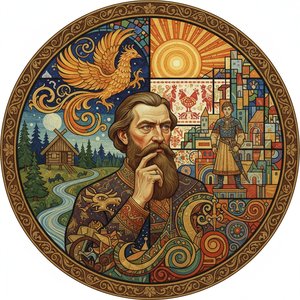
Ivan Bilibin: A Synthesis of Folklore, Modernism & National Identity in Russian Illustration
Explore the enchanting world of Ivan Bilibin, a master Russian illustrator who synthesized folklore, Art Nouveau & national identity. Discover his iconic fairy tale illustrations and legacy with AllPaintingsStore.


