


 Vorschau anzeigen
 Versenden
 Teilen
 Details anzeigen

 Herunterladen
 Ähnliche Objekte
 Röntgenaufnahme
 Diashow
Two angels and two devils
 Acrylic
- WallArt
- Early Renaissance
 1469
1469 43.0 x 351.0 cm
 Weiterlesen
Giclée / Kunstdruck
Giclée- oder Leinwanddruck in Museumsqualität mit schneller Produktion und flexiblen Veredelungsoptionen. ( Handgemalte Reproduktion bestellen Bild kaufen)




P118B $10

P118H $10

P118W $10

P438Z $10

P508JH $12

P508YH $12

P805H $10

P805Z $10

P919BZ $10

P919G $10

P919XJ $10

P959ZH $10

P968JZ $12

W106C $8

W218G $10

W218JH $8

W218Y $10

W307PJ $10

W316G $10

W316PJ $8

W316Y $10

W398PJ $8

W4111J $10

W500HY $15

W500JH $15

W692G $12

W849H $8

W940BG $15

W953PJ $8




Wählen Sie aus unseren vordefinierten Formaten, die den ursprünglichen Proportionen des Kunstwerks entsprechen.

Sie können Ihre eigenen Maße eingeben, um ein bestimmtes Format oder einen speziellen Platz einzupassen. Wenn das von Ihnen gewählte Format nicht den Proportionen des Originalbildes entspricht, werden wir das Kunstwerk entweder beschneiden oder das Bild mit einem gespiegelten oder einfarbigen Rand erweitern. Ein digitaler Entwurf wird Ihnen zur Genehmigung zugesandt, bevor die Produktion beginnt.
Bitte beachten Sie, dass die Vorschau auf dem Bildschirm nicht den tatsächlichen Zuschnitt oder die Erweiterung widerspiegelt. Nur der Entwurf zeigt die endgültige Komposition präzise an.
Obwohl Sondermaße verfügbar sind, empfehlen wir die Auswahl eines Maßes aus der vordefinierten Liste, um die ursprünglichen Proportionen zu bewahren.
Weltweiter Versand () innerhalb von 2 Wochen statt der üblichen 4/5 Wochen. (24 August)

Kostenloser weltweiter Expressversand

Hochwertige Leinenleinwand

Umfassender Versicherungsschutz beim Versand

Zollgebühren-Rückerstattungsgarantie

Garantie für exakte Farbtreue

60 Tage Rückgaberecht (nur bei Mängeln)

100% Geld-zurück-Garantie

Mengenrabatt verfügbar
 Die Glasoption ist nur für Größen unter 110 cm verfügbar.

Two angels and two devils
Giclée / Kunstdruck
Format der Reproduktion
-


Gesamtpreis
$ 64
Sammlerstück-Beschreibung
A Pioneering Vision of Spiritual Drama: Paolo Uccello’s “Two Angels and Two Devils”
Paolo Uccello's "Two Angels and Two Devils," completed in 1469, stands as a cornerstone of Early Renaissance art—a testament to his revolutionary approach to perspective and an embodiment of the period’s fascination with theological narratives. More than just a depiction of biblical figures, this painting represents a profound exploration of moral duality and the human struggle between good and evil, skillfully rendered through meticulous observation and innovative artistic techniques. Giorgio Vasari famously recounted Uccello's obsessive dedication to mastering linear perspective, spending countless hours studying mathematical principles to achieve an unprecedented illusion of depth within his canvases—a pursuit that cemented his legacy as a true innovator.The Anatomy of Perspective: Uccello’s Mathematical Breakthrough
Uccello wasn’t merely interested in portraying beauty; he sought to represent reality itself with astonishing accuracy. His meticulous calculations and diagrams, documented in his own treatise “Lives of the Most Excellent Painters,” Sculptors, and Architects, demonstrate a commitment to scientific rigor rarely seen at the time. He painstakingly constructed a stage-like setting—a dining room adorned with furniture, beds, couches, and a landscape backdrop—to illustrate the principles of aerial perspective. This technique cleverly simulates atmospheric haze, reducing color intensity and blurring distant objects, creating an immersive experience for the viewer that transcends mere visual representation. The artist’s deliberate framing contributes to this illusion, guiding the eye towards a central vanishing point – a pivotal element in conveying spatial realism.Symbolism Within Sacred Narrative
The composition itself is laden with symbolic significance. The two angels, positioned on the left side of the painting, represent divine grace and righteousness—their flowing robes and majestic wings convey an aura of serenity and spiritual authority. Their posture exudes calm contemplation, reflecting the virtues associated with God’s benevolent influence. Conversely, the devils dominate the right side, embodying temptation and darkness. Their grotesque features and twisted postures underscore their opposition to angelic ideals, symbolizing evil's insidious intrusion into human affairs. The central figure—a man lying on a bed—represents humanity caught between these opposing forces—a poignant reminder of the ongoing battle for moral fortitude.A Window Into Florentine Renaissance Thought
“Two Angels and Two Devils” reflects the broader intellectual climate of Florence during Uccello’s era – a period marked by burgeoning humanist scholarship alongside fervent religious devotion. The painting exemplifies the Renaissance preoccupation with reconciling faith and reason, mirroring the philosophical debates surrounding Augustine's theology and its influence on artistic interpretation. Uccello’s masterful use of color—particularly the vibrant reds and blues—further enhances the dramatic impact of the scene, capturing not only visual beauty but also conveying emotional intensity. It is a piece that invites contemplation on themes of morality, spirituality, and the human condition – enduring legacies of Uccello's artistic vision.A Legacy Enduring Through Reproduction
Today, reproductions of “Two Angels and Two Devils” continue to inspire admiration for their technical brilliance and profound symbolic depth. AllPaintingsStore offers exceptional quality prints that allow collectors and interior designers alike to experience the captivating artistry of Paolo Uccello firsthand—bringing a masterpiece of Early Renaissance art into homes around the world.Ähnliche Kunstwerke


Über den Künstler
frühes Leben und Ausbildung
Paolo Uccello, geboren Paolo di Dono, war ein angesehener italienischer Maler und Mathematiker aus Florenz. Er war bekannt für seine bahnbrechende Arbeit an der visuellen Perspektive in der Kunst. Geboren im Jahr 1397, ist das frühe Leben von Uccello nicht gut dokumentiert, aber es ist bekannt, dass er ab 1412 bis 1416 die berühmte Bildhauerin Lorenzo Ghiberti als Lehrling hatte.Karriere und bedeutende Werke
Uccellos Karriere erstreckte sich über vier Jahrzehnte, in denen er zahlreiche Kunstwerke produzierte, darunter Gemälde, Fresken und Altäre. Zu seinen bekanntesten Werken gehören:- Geburt der Jungfrau (Frührenaissance, Öl), ein Gemälde, das seine Verwendung der Perspektive zur Schaffung eines Gefühls von Tiefe demonstriert.
- Fresken San Miniato al Monte 03 (Frührenaissance, Öl), eine Fresko, die seine innovative Verwendung von Farbe und Licht demonstriert.
- Anbetung des Kindes (Frührenaissance, Öl), ein Gemälde mit einer detaillierten und naturalistischen Darstellung der menschlichen Form.
- Studio di Cavaliere (Frührenaissance, Öl), ein Selbstporträt, das seine selbstbewusste Verwendung autonomer Themen in der Kunst demonstriert.
Einfluss und Vermächtnis
Uccellos Werk hatte einen bedeutenden Einfluss auf die Entwicklung der Renaissancekunst. Seine Verwendung der Perspektive und sein Schwerpunkt auf die Schaffung eines Gefühls von Tiefe in seinen Gemälden beeinflussten zahlreiche Künstler, darunter Albrecht Dürer, der ebenfalls für seine bahnbrechende Arbeit im Bereich der Perspektive bekannt war. Wichtige Kunstbewegungen:- Die Frührenaissancekunstbewegung
- Italienische Renaissance
- Spätes Gotik
- Paolo Uccello (1397-1475)
- Albrecht Dürer (1471-1528)
- Lorenzo Ghiberti (1379-1455)
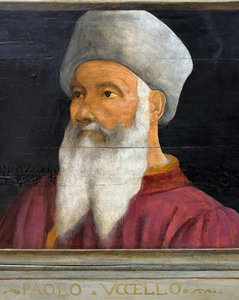
Paolo Uccello
1397 - 1475 , Italien
Kurzinfos
- Beeinflusste Künstler: ['Albrecht Dürer']
- Bemerkenswerte Werke:
- Schlacht von San Romano
- Geburt der Jungfrau
- St. Georg und Drache
- Geburtsdatum: 1397
- Geburtsort: Pratovecchio, Italien
- Künstlerische Bewegung: Frührenaissance
- Künstlerische Einflüsse:
- Lorenzo Ghiberti
- Donatello
- Nationalität: Italienisch
- Todatum: 1475
- Vollständiger Name: Paolo Uccello
Ähnliche Artikel

Italian Renaissance Art: A Procurement Guide to Timeless Masterpieces for High-End Hotel Interiors
A professional procurement guide for hotel designers seeking Italian Renaissance masterpieces. Discover how to utilize chiaroscuro, custom oil reproductions, and large-scale murals to elevate hospitality interiors with timeless, high-impact classical art.


