- Startseite

- Ölgemälde-Reproduktion
- Paul Cézanne
- Cottaages

 Preview
 Versenden
 Teilen
 Details anzeigen

 Herunterladen
 Ähnliche Objekte
 Röntgenaufnahme
 Diashow anzeigen
Cottaages


 Weiterlesen
Handgefertigte Öl-Reproduktion
Handgemaltes Ölgemälde auf Leinwand in Ihrer Wunschgröße und mit Rahmen, auf Bestellung von unseren Künstlern angefertigt. ( Switch to Print Switch to Image)




P118B $10

P118H $10

P118W $10

P438Z $10

P508JH $12

P508YH $12

P805H $10

P805Z $10

P919BZ $10

P919G $10

P919XJ $10

P959ZH $10

P968JZ $12

W106C $8

W218G $10

W218JH $8

W218Y $10

W307PJ $10

W316G $10

W316PJ $8

W316Y $10

W398PJ $8

W4111J $10

W500HY $15

W500JH $15

W692G $12

W849H $8

W940BG $15

W953PJ $8




Wählen Sie aus unseren vordefinierten Größen, die den ursprünglichen Proportionen des Kunstwerks entsprechen.

Sie können Ihre eigenen Maße eingeben, um einen bestimmten Rahmen oder Platz auszufüllen. Wenn die gewählte Größe nicht den Proportionen des Originalbildes entspricht, werden wir das Kunstwerk entweder beschneiden oder das Gemälde durch zusätzliche, handgemalte Elemente erweitern. Ein digitales Mockup wird Ihnen zur Genehmigung zugesandt, bevor die Produktion beginnt.
Bitte beachten Sie, dass die Bildschirmvorschau nicht die tatsächliche Beschneidung oder Erweiterung widerspiegelt. Nur das Mockup zeigt die endgültige Komposition exakt an.
Obwohl Sondermaße verfügbar sind, empfehlen wir, eine Größe aus der vordefinierten Liste zu wählen, um die ursprünglichen Proportionen beizubehalten.
Nach der Bestellung wird das AllPaintingsStore.com-Team dem Kunden Anweisungen per E-Mail zusenden und eine Mockup-Vorschau bereitstellen.
Weltweiter Versand () in nur 3 bis 4 Wochen statt der üblichen 5 Wochen. (28 Juli). Keine Kompromisse bei der Qualität.

Kostenloser weltweiter Expressversand

Hochwertige Leinenleinwand

Umfassender Versicherungsschutz beim Versand

Zollsteuer-Rückerstattungsgarantie

Garantie für echte Farbtreue

60-Tage-Rückgaberecht (nur bei Mängeln)

100% Geld-zurück-Garantie

Mengenrabatt verfügbar
 Die Glasoption ist nur in Größen unter 110 cm verfügbar.

Cottaages
Art der Reproduktion
Größe der Reproduktion
-


Endpreis aller Optionen
$ 258
Beschreibung des Kunstwerks
A Moment Frozen in Time: Paul Cézanne’s “Cottaages”
Paul Cézanne's "Cottages" (circa 1885) isn’t merely a depiction of two humble houses; it’s a profound meditation on the essence of place, memory, and the very act of seeing. Painted in watercolor on cardboard – a medium he favored for its immediacy and luminous quality – the scene unfolds with an almost unsettling stillness, capturing a fleeting moment within the Provençal countryside near his beloved home at Jas de Bouffan. The houses themselves, simple structures with a characteristic red roof, are not rendered with photographic precision but rather imbued with Cézanne’s intensely personal vision. They stand as anchors in a landscape that feels both familiar and subtly transformed, inviting us to step into a world where observation becomes an act of creation.The Language of Form: Cézanne's Revolutionary Approach
Cézanne was a pivotal figure in the transition from Impressionism to modern art, and “Cottaages” exemplifies this shift dramatically. He moved beyond simply capturing the fleeting effects of light and color – a hallmark of his predecessors – and instead focused on distilling the underlying structure of objects. Notice how he breaks down the forms of the houses into geometric shapes: sharp angles, flattened planes, and overlapping volumes. This isn’t an attempt to create a realistic representation but rather to capture the *essence* of the buildings through their fundamental components. He employs a technique known as “alla prima,” applying paint directly to the surface in loose, expressive strokes, avoiding meticulous detail or preparatory sketches. The result is a vibrant, almost sculptural quality that feels both immediate and deeply considered. The use of watercolor lends itself beautifully to this approach, allowing for subtle gradations of color and a sense of atmospheric depth.Symbolism and the Provençal Landscape
The choice of subject matter – two modest cottages – is laden with symbolic weight. Cézanne frequently depicted rural scenes in Provence, his homeland, viewing them as a source of profound inspiration and spiritual connection. These humble dwellings represent more than just buildings; they embody a simpler way of life, rooted in tradition and the rhythms of nature. The placement of the houses within the landscape suggests a sense of harmony and balance, reflecting Cézanne’s belief that art should strive to capture the underlying order of the universe. The muted palette – dominated by ochres, greens, and blues – evokes the earthy tones of the Provençal countryside, creating a tranquil and contemplative atmosphere. The absence of strong diagonals or dramatic contrasts further reinforces this sense of serenity.A Bridge Between Worlds: Cézanne’s Legacy
“Cottaages” is often considered a crucial bridge between Impressionism and Cubism, movements that would profoundly shape the course of 20th-century art. Artists like Picasso and Matisse were deeply influenced by Cézanne's exploration of form and his radical departure from traditional perspective. His emphasis on geometric simplification paved the way for Cubist artists who sought to deconstruct objects into their fundamental shapes. Yet, “Cottaages” remains a distinctly personal work, reflecting Cézanne’s unique vision and his deep connection to the landscape he loved. It's a testament to the power of observation, the beauty of simplicity, and the enduring legacy of one of art history’s most innovative figures. Reproductions of this captivating artwork offer a window into Cézanne’s world, bringing a touch of Provençal tranquility to any space.Ähnliche Kunstwerke


Biografie des Künstlers
frühes Leben und Einflüsse
Paul Cézanne, ein französischer Post-Impressionist-Maler, wurde am 19. Januar 1839 in Aix-en-Provence, Frankreich, geboren. Sein frühes Leben war geprägt von einer starken Verbindung zu seiner Familie’s Bankgeschäft, das ihm finanzielle Sicherheit verschaffte. Dies ermöglichte es ihm, sich ohne finanziellen Druck auf seine künstlerischen Bestrebungen zu konzentrieren. Les Nabis, Neo-Impressionismus und Symbolismus beeinflussten Cézannes frühe Arbeit, die sich durch seinen Schwerpunkt auf geometrische Formen und eine reduzierte Farbpalette auszeichnete. Sein Interesse an den Werken von Paul Gauguin und Georges Seurat festigte seinen Post-Impressionismusstil.Künstlerischer Stil und Techniken
Cézannes innovative Verwendung von Farbflächen und kleinen, sich wiederholenden Pinselstrichen schuf komplexe Felder, die seine intensive Beschäftigung mit den Motiven widerspiegelten. Sein oft explorativer Ansatz in der Kunst führte zur Entwicklung einer neuen bildlichen Sprache, die die zugrunde liegende Struktur von Objekten in einer Komposition betonte.- Schlüsselmerkmale:
- Geometrische Formen und Facetten
- Reduzierte Farbpalette
- Betonung der konstruktiven Essenz der physischen Welt
- Mehrere Perspektiven und Simultaneität
- Einflussreiche Werke:
- The Pond at Jas de Bouffan (1880)
- Portrait of Emile Zola (1866)
- Wald (1892)
- Museen mit Cézannes Werken:
- Musée Marmottan Monet in Paris, Frankreich
- The Museum of Fine Arts in Houston, Vereinigte Staaten
Vermächtnis und Einfluss
Cézannes bahnbrechende Arbeit im Post-Impressionismus ebnete den Weg für verschiedene Avantgarde-Bewegungen, darunter Kubismus, Fauvismus und Surrealismus. Sein Einfluss ist in den Werken von Pablo Picasso, Henri Matisse und Georges Braque zu sehen. Cézannes Vermächtnis inspiriert weiterhin Künstler und Kunstinteressierte gleichermaßen und festigt seinen Platz als eine zentrale Figur in der Geschichte der modernen Kunst.- Verwandte Kunstbewegungen:
- Betrachten Sie Cézannes Werke:
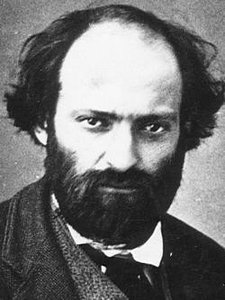
Paul Cézanne
1839 - 1906 , Frankreich
Kurzinfos
- Beeinflusste Künstler:
- Paul Gauguin
- Georges Seurat
- Bemerkenswerte Werke:
- Der Teich in Jas de Bouffan
- Porträt von Émile Zola
- Wald
- Mont Sainte-Victoire
- Geburtsdatum: 19. Januar 1839
- Geburtsort: Aix-en-Provence, Frankreich
- Künstlerische Bewegung: Postimpressionismus
- Nationalität: Französisch
- Sterbedatum: 1906
- Vollständiger Name: Paul Cézanne
- Von Ihm Beeinflusste Künstler:
- Pablo Picasso
- Henri Matisse
- Georges Braque
Ähnliche Artikel
Postimpressionismus: Die 10 Meisterwerke, die eine Ära prägten –
Entdecken Sie die 10 Meisterwerke des Postimpressionismus! Van Gogh, Cézanne & Co. – ihre Geschichten, Techniken und zeitlose Schönheit. Kunstdrucke in Museumsqualiät auf . Jetzt entdecken!

Henri Moret: Capturing the Essence of Brittany's Light – A Study in Post-Impressionist Landscape Painting
Explore the captivating landscapes of Henri Moret, a master of Post-Impressionism. Discover his unique style, key works, and legacy in our expert guide. Learn about collecting Moret's art & its investment potential.

Impressionismus Meisterwerke: Die Top 10 Kunstwerke für Ihr Zuhause | AllPaintingsStore
Entdecken Sie die Top 10 Meisterwerke des Impressionismus! Von Monet bis Renoir – erfahren Sie die Geschichten hinter berühmten Gemälden, Techniken & Farben. Hochwertige Kunstdrucke auf AllPaintingsStore.com.

Jenseits des Impressionismus: Die emotionale Tiefe der postimpressionistischen Malerei
Entdecken Sie die emotionale Tiefe des Postimpressionismus! Analysieren Sie Cézanne, van Gogh, Gauguin & Seurat. Expertenwissen über Kunstgeschichte und Einfluss auf die Moderne.

Ernest Lawson: Ein Pionier des amerikanischen Impressionismus und seine Vision der ländlichen Landschaft
Entdecken Sie das Werk von Ernest Lawson, einem Pionier des amerikanischen Impressionismus! Erfahren Sie mehr über seinen einzigartigen Stil, seine Verbindung zur Natur und sein Vermächtnis in der Kunstgeschichte. Jetzt lesen!