


 Vorschau anzeigen
 Versenden
 Teilen
 Details anzeigen

 Herunterladen
 Ähnliche Objekte
 Röntgenaufnahme
 Diashow
Timpanist


 Weiterlesen
Giclée / Kunstdruck
Giclée- oder Leinwanddruck in Museumsqualität mit schneller Produktion und flexiblen Veredelungsoptionen. ( Handgemalte Reproduktion bestellen Bild kaufen)




P118B $10

P118H $10

P118W $10

P438Z $10

P508JH $12

P508YH $12

P805H $10

P805Z $10

P919BZ $10

P919G $10

P919XJ $10

P959ZH $10

P968JZ $12

W106C $8

W218G $10

W218JH $8

W218Y $10

W307PJ $10

W316G $10

W316PJ $8

W316Y $10

W398PJ $8

W4111J $10

W500HY $15

W500JH $15

W692G $12

W849H $8

W940BG $15

W953PJ $8




Wählen Sie aus unseren vordefinierten Formaten, die den ursprünglichen Proportionen des Kunstwerks entsprechen.

Sie können Ihre eigenen Maße eingeben, um ein bestimmtes Format oder einen speziellen Platz einzupassen. Wenn das von Ihnen gewählte Format nicht den Proportionen des Originalbildes entspricht, werden wir das Kunstwerk entweder beschneiden oder das Bild mit einem gespiegelten oder einfarbigen Rand erweitern. Ein digitaler Entwurf wird Ihnen zur Genehmigung zugesandt, bevor die Produktion beginnt.
Bitte beachten Sie, dass die Vorschau auf dem Bildschirm nicht den tatsächlichen Zuschnitt oder die Erweiterung widerspiegelt. Nur der Entwurf zeigt die endgültige Komposition präzise an.
Obwohl Sondermaße verfügbar sind, empfehlen wir die Auswahl eines Maßes aus der vordefinierten Liste, um die ursprünglichen Proportionen zu bewahren.
Weltweiter Versand () innerhalb von 2 Wochen statt der üblichen 4/5 Wochen. (23 August)

Kostenloser weltweiter Expressversand

Hochwertige Leinenleinwand

Umfassender Versicherungsschutz beim Versand

Zollgebühren-Rückerstattungsgarantie

Garantie für exakte Farbtreue

60 Tage Rückgaberecht (nur bei Mängeln)

100% Geld-zurück-Garantie

Mengenrabatt verfügbar
 Die Glasoption ist nur für Größen unter 110 cm verfügbar.

Timpanist
Giclée / Kunstdruck
Format der Reproduktion
-


Gesamtpreis
$ 64
Sammlerstück-Beschreibung
A Symphony of Form and Feeling: Exploring Paul Klee’s ‘Timpanist’
Paul Klee's 'Timpanist', painted sometime between 1937 and 1940, stands as a testament to the artist’s singular vision—a mesmerizing blend of Expressionism and Cubism that transcends mere representation to convey profound emotional resonance. More than just depicting an instrument musician, Klee crafted a visual poem, inviting viewers into a realm where geometric precision dances with spontaneous gesture, mirroring the very essence of musical performance itself.Style & Technique: Bridging Two Movements
Klee’s stylistic approach wasn't simply about combining two influential artistic movements; it was about forging an entirely new aesthetic vocabulary. He skillfully harnessed the Cubist fragmentation—the dismantling of objects into interlocking planes—to create a foundational structure for his composition. However, unlike the rigid geometric formalism often associated with Cubism, Klee injected vibrant expressive lines and washes of color that pulsate with feeling. This technique – primarily watercolor or gouache applied in layered washes – lends an ethereal quality to the artwork, capturing not just visual form but also intangible atmosphere. The resulting surface texture subtly suggests a process of organic growth, mirroring the artist’s belief in art as a conduit for inner experience.Composition & Color Palette: Rhythm and Resonance
The painting's vertical orientation immediately establishes a sense of stability while simultaneously directing the eye upwards towards the central figure—a stylized representation of the timpanist. This musician is rendered in bold black lines against a backdrop of creamy beige and crimson hues, creating a striking contrast that underscores his importance within the overall composition. Geometric shapes – rectangles, circles, and elongated curves – dominate the visual landscape, mirroring the rhythmic structure of music. The deliberate use of color isn’t merely decorative; it's integral to conveying emotion. Warm reds and yellows clash with cooler blues and greens, generating a dynamic interplay that evokes feelings of energy and contemplation simultaneously.Symbolism & Conceptual Depth: Beyond Representation
‘Timpanist’ operates on multiple levels of symbolic interpretation. The eye positioned within the rectangular torso serves as a potent emblem of observation—a gaze outward towards the world while simultaneously acknowledging inner awareness. Furthermore, the curving lines representing limbs or musical instruments symbolize movement and rhythm, mirroring the musician's role in orchestrating sound. Klee’s masterful manipulation of form and color isn’t intended to depict reality but rather to communicate abstract concepts – harmony, tension, and contemplation—much like a composer strives to convey emotion through musical notes.Historical Context & Legacy: Echoes of Leonardo
Klee's artistic explorations resonated deeply with the intellectual currents of his time, paralleling Leonardo da Vinci’s influence on the art world. Like Da Vinci, Klee pursued an uncompromising commitment to scientific observation combined with imaginative creativity—a duality that fueled his groundbreaking stylistic innovations. His ‘Paul Klee Notebooks,’ meticulously documenting his artistic process and theoretical reflections, stand as a cornerstone of modern art history, demonstrating Klee's profound understanding of the relationship between art and science. Today, Paul Klee’s legacy continues to inspire artists globally, cementing his place as one of the most influential figures in 20th-century visual culture. Explore other art movements and artists on our timeline: AllPaintingsStore Art Movements TimelineÄhnliche Kunstwerke


Über den Künstler
Paul Klee: Ein Leben in Farbe und Form
Frühes Leben und Ausbildung
- Paul Klee wurde am 18. Dezember 1879 in Münchenbuchsee, Schweiz, geboren.
- Sein Vater war Musiklehrer deutscher Herkunft, seine Mutter eine Schweizer Sängerin, was ihm schon früh eine Wertschätzung für die Künste vermittelte.
- Klee begann zunächst mit dem Zeichnen, gab diese jedoch schließlich auf zugunsten expressiverer Formen auf.
- Er studierte von 1898 bis 1901 an der Akademie der Bildenden Künste in München.
Künstlerische Entwicklung und Einflüsse
- In seinen frühen Werken waren Einflüsse des Jugendstils und Symbolismus zu sehen, aber er begann schnell, seinen einzigartigen Stil zu entwickeln.
- Eine entscheidende Reise nach Tunesien im Jahr 1914 hatte einen tiefgreifenden Einfluss auf seine Verwendung von Farbe und Abstraktion – das Licht und die Atmosphäre inspirierten eine Verschiebung hin zu kräftigeren Farbschemata.
- Er war stark von Bewegungen wie Expressionismus, Kubismus und Surrealismus beeinflusst, obwohl er sich nie vollständig mit einer einzelnen davon identifizierte.
- Sein Interesse an Musik informierte seinen künstlerischen Ansatz stark, indem er oft Malerei als Komponieren musikalischer Stücke verglich.
Die Bauhaus-Jahre und darüber hinaus
- Von 1931 bis 1933 lehrte Klee an der einflussreichen Bauhaus-Schule für Kunst, Design und Architektur neben Wassily Kandinsky.
- Diese Zeit war geprägt von einer Blüte seiner abstrakten Werke, in denen er sich mit Farbtheorie und formalen Beziehungen auseinandersetzte.
- Mit dem Aufstieg des Nationalsozialismus in Deutschland wurde Klee 1933 aufgrund seiner „degenerierten“ Kunst aus der Bauhaus entlassen.
- Er kehrte nach die Schweiz zurück und setzte seine Arbeit als Maler fort, sein Gesundheitszustand verschlechterte sich jedoch während dieser Zeit.
Wichtige Themen und künstlerischer Stil
- Klees Werk ist durch eine spielerische, aber tiefgründige Erforschung von Farbe, Linie und Form gekennzeichnet.
- Er verwendete oft kindliche Bilder und verspielte Kompositionen, die mit symbolischen Bedeutungen aufgeladen waren.
- Wiederkehrende Themen sind Gärten, Landschaften, Porträts und abstrakte Anordnungen.
- Seine „Paul Klee Notizen“, veröffentlicht posthum, enthüllen seine umfangreichen theoretischen Untersuchungen zu Farbe und Design.
Vermächtnis und historische Bedeutung
- Paul Klee starb am 29. Juni 1940 in Muralto, Schweiz.
- Er gilt als einer der wichtigsten Künstler des 20. Jahrhunderts, der die Lücke zwischen figurativer und abstrakter Kunst schloss.
- Seine innovative Verwendung von Farbe und seine theoretischen Schriften inspirieren bis heute Künstler und Designer.
- Klees Werk wird weltweit von Sammlern und Museen begehrt, wodurch er einen festen Platz in der modernen Kunstgeschichte einnimmt.
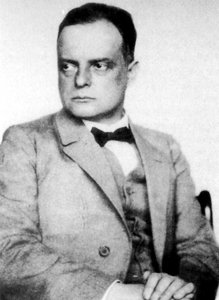
Paul Klee
1879 - 1940 , Schweiz
Kurzinfos
- Bemerkenswerte Werke:
- Hamamet (1914)
- Rotgrün und Violett-Gelbe Rhythmen
- Wolken über Bor (1940)
- Geschwister (1930)
- Geburtsdatum: 18. Dezember 1879
- Geburtsort: Münchenbuchsee, Schweiz
- Künstlerische Richtung: Expressionismus, Kubismus, Surrealismus
- Nationalität: Schweizer-Deutscher Künstler
- Todatum: 29. Juni 1940
- Vollständiger Name: Paul Klee
Ähnliche Artikel

Paul Klee: Die 25 Meisterwerke des Abstrakten – Kunst für Ihr Zuhause | AllPaintingsStore
Entdecken Sie die 25 Meisterwerke von Paul Klee! Tauchen Sie ein in seine abstrakte Welt, voller Expressionismus und Bauhaus-Einflüsse. Hochwertige Kunst für Ihr Zuhause – jetzt bei AllPaintingsStore entdecken!

Geometrische Abstraktion: Die 10 Meisterwerke, die Kunstgeschichte prägten | AllPaintingsStore.com
Entdecken Sie die 10 Meisterwerke der geometrischen Abstraktion! Von Kandinsky bis Mondrian – erleben Sie die Geschichte, Farben & Formen dieser revolutionären Kunstrichtung. Hochwertige Kunstreproduktionen auf AllPaintingsStore.com
Paul Cézanne: Die 25 Meisterwerke des Impressionismus | AllPaintingsStore
Entdecken Sie die 25 Meisterwerke von Paul Cézanne! Tauchen Sie ein in die Welt des Impressionismus und Postimpressionismus. Erfahren Sie mehr über seine Stillleben, Landschaften & berühmten Gemälde – jetzt hochwertige Kunstdrucke auf AllPaintingsStore.com.

Die 10 legendärsten Aquarellwerke der Kunstgeschichte – Meisterwerke für Ihr Zuhause
Entdecken Sie die 10 legendärsten Aquarellwerke der Kunstgeschichte! Von Turner bis Monet – erleben Sie die Geschichten, Techniken & Farben dieser Meisterwerke. Finden Sie hochwertige Kunstdrucke auf AllPaintingsStore.com und gestalten Sie Ihr Zuhause mit zeitloser Eleganz.

Abstrakter Expressionismus: Die 10 Meisterwerke, die eine Kunstbewegung prägten |
Entdecken Sie die 10 Meisterwerke des Abstrakten Expressionismus! Von Jackson Pollock bis Mark Rothko – erfahren Sie die Geschichten hinter ikonischen Gemälde und finden Sie hochwertige Reproduktionen für Ihr Zuhause. Jetzt bei entdecken!


