


 Vorschau anzeigen
 Versenden
 Teilen
 Details anzeigen

 Herunterladen
 Ähnliche Objekte
 Röntgenaufnahme
 Diashow
The familiar objects private


 Weiterlesen
Giclée / Kunstdruck
Giclée- oder Leinwanddruck in Museumsqualität mit schneller Produktion und flexiblen Veredelungsoptionen. ( Handgemalte Reproduktion bestellen Bild kaufen)




P118B $10

P118H $10

P118W $10

P438Z $10

P508JH $12

P508YH $12

P805H $10

P805Z $10

P919BZ $10

P919G $10

P919XJ $10

P959ZH $10

P968JZ $12

W106C $8

W218G $10

W218JH $8

W218Y $10

W307PJ $10

W316G $10

W316PJ $8

W316Y $10

W398PJ $8

W4111J $10

W500HY $15

W500JH $15

W692G $12

W849H $8

W940BG $15

W953PJ $8




Wählen Sie aus unseren vordefinierten Formaten, die den ursprünglichen Proportionen des Kunstwerks entsprechen.

Sie können Ihre eigenen Maße eingeben, um ein bestimmtes Format oder einen speziellen Platz einzupassen. Wenn das von Ihnen gewählte Format nicht den Proportionen des Originalbildes entspricht, werden wir das Kunstwerk entweder beschneiden oder das Bild mit einem gespiegelten oder einfarbigen Rand erweitern. Ein digitaler Entwurf wird Ihnen zur Genehmigung zugesandt, bevor die Produktion beginnt.
Bitte beachten Sie, dass die Vorschau auf dem Bildschirm nicht den tatsächlichen Zuschnitt oder die Erweiterung widerspiegelt. Nur der Entwurf zeigt die endgültige Komposition präzise an.
Obwohl Sondermaße verfügbar sind, empfehlen wir die Auswahl eines Maßes aus der vordefinierten Liste, um die ursprünglichen Proportionen zu bewahren.
Weltweiter Versand () innerhalb von 2 Wochen statt der üblichen 4/5 Wochen. (25 August)

Kostenloser weltweiter Expressversand

Hochwertige Leinenleinwand

Umfassender Versicherungsschutz beim Versand

Zollgebühren-Rückerstattungsgarantie

Garantie für exakte Farbtreue

60 Tage Rückgaberecht (nur bei Mängeln)

100% Geld-zurück-Garantie

Mengenrabatt verfügbar
 Die Glasoption ist nur für Größen unter 110 cm verfügbar.

The familiar objects private
Giclée / Kunstdruck
Format der Reproduktion
-


Gesamtpreis
$ 64
Sammlerstück-Beschreibung
A Silent Confrontation with Reality
The Familiar Objects Private, painted in 1928 by the Belgian master René Magritte, stands as a profound invitation to contemplate the very nature of perception and the elusive boundaries between what we see and what truly exists. At first glance, the composition appears deceptively simple: a horizontal arrangement of five men standing in a row against a dark, undefined backdrop. Yet, as the viewer lingers, an unsettling juxtaposition emerges. Each man’s face is obscured by an everyday, commonplace item—a banana, a bowl, a vase, a wine glass, and an apple. This hallmark of Magritte's Surrealist approach immediately disrupts the viewer's sense of normalcy, transforming a formal portrait into a dreamlike inquiry into identity and the hidden layers of the subconscious mind. The genesis of such haunting imagery often lies in the shadows of personal history. Magritte’s early life was marked by the tragic suicide of his mother, an event that instilled within him an enduring preoccupation with veiled truths and the unsettling realization that appearances can deceive. In this painting, the way the objects mask the human countenance mirrors the artist's lifelong fascination with what remains unseen. By placing ordinary items in such illogical contexts, Magritte challenges the viewer to look beyond the surface of reality, suggesting that the most familiar elements of our lives may actually be masks for a deeper, more mysterious existence.Mastery of Technique and Muted Elegance
The technical execution of this piece is characterized by a meticulous, almost clinical precision. Eschewing the expressive, heavy brushstrokes found in much of the era's more emotive art, Magritte employed oil on canvas to achieve a smooth, polished surface that emphasizes the solidity of form. This deliberate avoidance of impasto allows the objects—the curve of the apple or the translucency of the wine glass—to appear startlingly real, which only heightens the surrealist impact of their placement. The lighting is diffused and even, casting no harsh shadows, which contributes to a sense of stillness and a dreamlike, suspended atmosphere. The color palette is masterfully restrained, dominated by somber shades of grey, brown, and black that lend the work an austere, almost funerary dignity. However, Magritte punctuates this monochromatic world with subtle, strategic pops of color: the bright yellow of the banana, the cool blue of the bowl, and the vibrant red of the apple. These small chromatic accents act as focal points, drawing the eye across the horizontal plane of the figures and preventing the composition from receding into total darkness. For the collector or interior designer, this balanced palette offers a sophisticated way to introduce intellectual depth and a touch of avant-garde intrigue into a curated space.An Enduring Legacy for the Modern Collector
Beyond its visual strikingness, The Familiar Objects Private functions as a philosophical dialogue. It explores themes of alienation and the absurdity of everyday life, making it a timeless piece that resonates with the complexities of the modern human condition. The way the figures are dressed in formal suits and ties adds a layer of societal critique, suggesting a uniformity of identity that is being disrupted by the surreal elements. This tension between the structured, civilized world and the chaotic, irrational mind is what gives the painting its enduring emotional impact. For those seeking to adorn a home or gallery with a high-quality reproduction, this artwork offers more than mere decoration; it provides a conversation piece that invites contemplation. Whether placed in a minimalist contemporary setting or a classic study, Magritte’s work brings an air of intellectual mystery and sophisticated surrealism. It is a piece for the discerning eye—one that appreciates the beauty of precision, the power of symbolism, and the profound magic found in the most familiar of objects.Ähnliche Kunstwerke


Über den Künstler
frühes Leben und künstlerische Anfänge
René François Ghislain Magritte, ein renommierter belgischer Surrealist, wurde am 21. November 1898 in Lessines, Provinz Hainaut, Belgien, geboren. Sein frühes Leben ist bisweilen rätselhaft und wenig bekannt. Es ist jedoch dokumentiert, dass er 1910 Zeichenunterricht nahm.Künstlerische Entwicklung und Einflüsse
Magrittes künstlerischer Stil entwickelte sich im Laufe der Jahre erheblich weiter und wurde von verschiedenen Strömungen wie Impressionismus, Futurismus und Kubismus beeinflusst. Seine frühesten Gemälde, die aus etwa 1915 stammen, waren **im Stil des Impressionismus**. Von 1916 bis 1918 studierte er an der Académie Royale des Beaux-Arts in Brüssel unter Constant Montald.Surrealistische Periode und bemerkenswerte Werke
Im Jahr 1926 schuf Magritte seine erste surrealistische Malerei, "Der verlorene Jockey (Le jockey perdu)", das den Beginn seiner Verbindung mit der Surrealistenbewegung markierte. Seine Werke sind durch nachdenkliche Bilder gekennzeichnet, die oft alltägliche Gegenstände in ungewöhnlichen Kontexten darstellen und Betrachter dazu auffordern, ihre Wahrnehmung von Realität zu hinterfragen.- "Les Amants" (1927-1928), eine Reihe von Gemälden mit Personen, deren Gesichter durch Stoffe verhüllt sind, wird vermutet, von der Geschichte des Todes seiner Mutter inspiriert zu sein.
- "Die Liebenden", ein weiteres ikonisches Werk, zeigt ein Paar, das sich küsst, wobei ihre Gesichter von weißen Stoffen bedeckt sind, und lädt den Betrachter ein, über Liebe und Identität nachzudenken. (Verfügbar als handgefertigte Ölgemälde-Reproduktion oder Druck auf Leinwand unter AllPaintingsStore.com)
Spätere Jahre und Vermächtnis
Magrittes Werke wurden in den Vereinigten Staaten 1936 und erneut in zwei retrospektiven Ausstellungen, eine im Museum of Modern Art im Jahr 1965 und die andere im Metropolitan Museum of Art im Jahr 1992, gezeigt. Er blieb dem politischen Linken verpflichtet, befürwortete aber die künstlerische Autonomie. Bekannte Museen, in denen Magrittes Werke ausgestellt sind:- Musées royaux des beaux-arts de Belgique, Brüssel, Belgien (Entdecken Sie die Meisterwerke der Musées royaux des beaux-aarts de belgique unter AllPaintingsStore.com)
- Magritte Museum, Teil der Musées royaux des beaux-arts de Belgique, das die weltweit größte Sammlung von Magrittes Werken beherbergt.
Fazit
René Magrittes Vermächtnis als surrealistischer Meister hält an, wobei seine nachdenklichen Bilder weiterhin inspirieren und faszinieren. Seine Werke, die durch ihre einzigartige Mischung aus Gewöhnlichem und Unerwartetem gekennzeichnet sind, gelten als Eckpfeiler der Surrealistenkunst. Mehr über René Magritte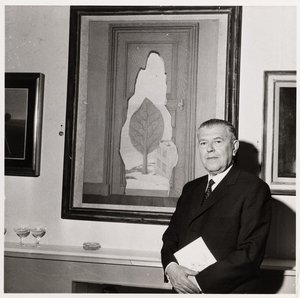
René Magritte
1898 - 1967 , Belgien
Kurzinfos
- Beeinflusste Künstler:
- Impressionismus
- Futurismus
- Kubismus
- Bemerkenswerte Werke:
- Der verlorene Jockey
- Les Amants
- Die menschliche Bedingung
- Zeit erstarrt
- Geburtsdatum: 21. November 1898
- Geburtsort: Lessines, Belgien
- Künstlerischer Stil: Surrealismus
- Nationalität: Belgisch
- Sterbedatum: 1967
- Vollständiger Name: René Magritte
Ähnliche Artikel

The Treachery of Images: Decoding René Magritte’s Surrealist Philosophy and the Paradox of Representation
Explore the profound mystery of René Magritte’s 'The Treachery of Images.' Dive into an expert analysis of his Surrealist philosophy, the paradox of representation, and how he challenged reality through the interplay of language and visual perception.

Surrealismus: Die 10 Meisterwerke, die eine Kunstbewegung prägten |
Entdecken Sie die 10 prägendsten Meisterwerke des Surrealismus! Von Dalí bis Magritte – erfahren Sie die Geschichten hinter ikonischen Gemälde und lassen Sie sich von traumhaften Welten inspirieren. Hochwertige Art Reproduktionen auf .

The Treachery of Images: Decoding René Magritte’s Surrealist Vision and the Paradox of Representation
Delve into the profound mysteries of René Magritte’s Surrealism. Explore an expert analysis of 'The Treachery of Images,' decoding the philosophical paradoxes and visual subversions that redefined modern art history for collectors and connoisseurs alike.

Surrealist Expression: Unlocking the Power of Dreams and the Subconscious through Art History
Explore the profound depths of Surrealism. From Dalí’s dreamscapes to Magritte’s enigmas, master the history of the subconscious mind through our expert art guide and discover museum-quality oil reproductions of the world's most iconic surrealist masterpieces.

Dreamscapes & Disrupted Realities: Exploring Surrealism's Enduring Influence
Explore the fascinating world of Surrealism! Discover its origins, key artists like Dalí & Magritte, and enduring influence on art & culture. Expert insights & high-quality reproductions at AllPaintingsStore.


