


 Vorschau anzeigen
 Versenden
 Teilen
 Details anzeigen

 Herunterladen
 Ähnliche Objekte
 Röntgenaufnahme
 Diashow
Purgatory

 Weiterlesen
Handgefertigte Ölreproduktion
Handgemaltes Ölgemälde auf Leinwand in Ihrer Wunschgröße und mit Rahmen, auf Bestellung von unseren Künstlern angefertigt. ( Druck bestellen Bild kaufen)




































Wählen Sie aus unseren vordefinierten Formaten, die den ursprünglichen Proportionen des Kunstwerks entsprechen.

Sie können Ihre eigenen Maße eingeben, um einen bestimmten Rahmen oder Platz auszufüllen. Wenn die gewählte Größe nicht den Proportionen des Originalbildes entspricht, werden wir das Kunstwerk entweder beschneiden oder das Gemälde durch zusätzliche, handgemalte Elemente erweitern. Ein digitales Mockup wird Ihnen zur Genehmigung zugesandt, bevor die Produktion beginnt.
Bitte beachten Sie, dass die Bildschirmvorschau nicht die tatsächliche Beschneidung oder Erweiterung widerspiegelt. Nur das Mockup zeigt die endgültige Komposition exakt an.
Obwohl Sondermaße verfügbar sind, empfehlen wir, eine Größe aus der vordefinierten Liste zu wählen, um die ursprünglichen Proportionen beizubehalten.
Nach der Bestellung wird das AllPaintingsStore.com-Team dem Kunden Anweisungen per E-Mail zusenden und eine Mockup-Vorschau bereitstellen.
Weltweiter Versand () in nur 3 bis 4 Wochen statt der üblichen 5 Wochen. (22 August). Keine Kompromisse bei der Qualität.

Kostenloser weltweiter Expressversand

Hochwertige Leinenleinwand

Umfassender Versicherungsschutz beim Versand

Zollgebühren-Rückerstattungsgarantie

Garantie für exakte Farbtreue

60 Tage Rückgaberecht (nur bei Mängeln)

100% Geld-zurück-Garantie

Mengenrabatt verfügbar
 Die Glasoption ist nur für Größen unter 110 cm verfügbar.

Purgatory
Art der Reproduktion
Format der Reproduktion
-


Gesamtpreis
$ 608
Beschreibung des Kunstwerks
Botticelli's Vision of Purgatory: A Detailed Study
The preparatory drawing for Botticelli’s depiction of Purgatory stands as a remarkable testament to the artist’s meticulous observation and masterful execution—a window into the creative process behind one of Renaissance art’s most iconic images. Executed in pen and ink on paper, this study transcends mere technical demonstration; it embodies Botticelli's signature style, infused with humanist ideals and steeped in theological contemplation. It offers invaluable insight into how he envisioned Dante Alighieri’s harrowing journey through the afterlife, capturing not just the visual elements but also the profound spiritual atmosphere of purgatorial torment.Composition and Spatial Arrangement
Botticelli’s compositional strategy prioritizes conveying a sense of hierarchy and movement within the confines of a relatively small surface area. The drawing depicts Purgatory as a layered landscape—a tiered structure ascending towards heaven—populated by figures engaged in various stages of purification. At the uppermost level, a group of saints observes the scene below, symbolizing divine judgment and guiding souls toward salvation. Central to the composition is a monumental edifice adorned with intricate architectural details, representing purgatorial purgatories where penitents confront their sins and strive for redemption. Below this dominant structure sprawl undulating plains populated by tormented souls—a chaotic yet purposeful arrangement designed to communicate the arduous process of spiritual cleansing. The artist skillfully utilizes perspective to create depth and convey the overwhelming scale of purgatory’s expanse.Technique: Linearity and Shading – Botticelli's Signature Style
Botticelli’s technique is characterized by an unwavering commitment to linear precision—a hallmark of Florentine disegno, or drawing—combined with subtle shading to achieve remarkable realism. The artist employs hatching and cross-hatching extensively to render form and volume, capturing the textures of drapery, stone, and flesh with astonishing accuracy. Fine lines delineate anatomical features and clothing folds, demonstrating Botticelli’s profound understanding of human anatomy gleaned from his studies at Vesuvian Medical School. Furthermore, he skillfully manipulates tonal variations—ranging from pale grey to darker shades—to simulate light and shadow, creating a palpable sense of atmosphere and conveying the emotional intensity of the scene. The meticulous attention to detail reflects Botticelli's belief in disegno as the foundation for painting, ensuring that any subsequent fresco would possess an unparalleled level of expressive power.Historical Context: Dante’s Inferno and Renaissance Theology
Botticelli’s drawing emerged from a fervent intellectual climate dominated by Dante Alighieri’s *Inferno*, published in 1308—a seminal work of medieval literature that profoundly influenced artistic sensibilities. Dante's depiction of Hell captivated the imagination of artists and intellectuals alike, prompting them to explore themes of morality, sin, and divine retribution. Botticelli’s commission to depict Purgatory for Lorenzo de Medici—the Magnificent—underscored the importance of humanist ideals within Florentine culture. The Renaissance preoccupation with classical antiquity fueled a renewed interest in human anatomy and proportion, informing Botticelli's artistic endeavors. Moreover, theological considerations shaped his interpretation of purgatorial torment—representing not merely physical suffering but also spiritual purification through repentance and contrition.Symbolism: Flames, Architecture, and Divine Guidance
The drawing is replete with symbolic imagery reflecting Dante’s theological framework. The dominant presence of flames symbolizes the purifying fire that consumes sins and expels impurities from souls destined for heaven. These flames are depicted as swirling vortices—a visual metaphor for the turbulent process of spiritual transformation. Architectural elements—particularly the edifice at the center—represent purgatorial purgatories governed by divine justice, where penitents confront their transgressions and strive to attain redemption. The saints observing the scene embody divine compassion and guidance—representing God’s benevolent intervention in humanity's struggle for salvation. Botticelli’s masterful use of symbolism elevates his drawing beyond mere visual representation, transforming it into a profound meditation on faith, morality, and the ultimate destiny of humankind.Emotional Impact: A Momentary Glimpse Into Dante’s Journey
Ultimately, Botticelli’s preparatory study succeeds in capturing the emotional core of Dante’s *Divine Comedy*. The drawing conveys a palpable sense of solemnity—reflecting the gravity of purgatorial torment and the seriousness of spiritual contemplation. Yet, amidst the depiction of suffering, there exists an underlying current of hope—expressed through the luminous saints and the upward trajectory of the architectural structure—affirming the belief in divine mercy and the possibility of eternal salvation. This drawing serves as a poignant reminder that Botticelli’s artistic vision transcended mere technical skill; it embodied a deep engagement with humanist ideals and theological convictions—resulting in an enduring masterpiece that continues to inspire awe and contemplation centuries later.Ähnliche Kunstwerke


Über den Künstler
frühes Leben und Ausbildung
Sandro Botticelli, geboren Alessandro di Mariano di Vanni Filipepi um 1445, war eine zentrale Figur im frühen italienischen Frührenaissance der Malerei. Zunächst posthumig vernachlässigt, wurde Botticellis Werk im späten 19. Jahrhundert von den Präraffaeliten revitalisiert und führte zu einer Neubewertung seiner künstlerischen Beiträge. Botticelli wurde in Florenz, Italien, geboren und lebte sein ganzes Leben im selben Viertel. Seine Familie, darunter sein Vater Mariano di Vanni d’Amedeo Filipepi, war in verschiedene Berufe involviert, was sie mit Künstlern in Kontakt brachte. Giorgio Vasari berichtete, dass Botticelli zunächst als Goldschmied ausgebildet wurde.Künstlerischer Stil und bemerkenswerte Werke
Botticellis Werk ist durch elegante Linearität gekennzeichnet, die die Lücke zwischen der späten italienischen Gotik und dem frühen Frührenaissance schließt. Seine berühmtesten Werke, die Geburt des Venus und Primavera, werden in der Uffizialleerie in Florenz ausgestellt, die eine bedeutende Sammlung seiner Kunst beherbergt. * die Geburt des Venus (ansicht auf AllPaintingsStore) * Primavera (Sandro Botticellis Kunst erkunden auf AllPaintingsStore) * Mystische Geburt (Nationalgalerie, London), datiert 1501, ist das einzige Werk von Botticelli mit einem klaren Datum.Vermächtnis und Einfluss
Botticellis Stil entwickelte sich in den 1490er Jahren zu einem persönlicheren Ansatz und unterschied sich von Zeitgenossen wie Leonardo da Vinci und dem aufkommenden Hochrenaissance-Stil. Sein Werk wurde als bedeutende Beiträge zur italienischen Renaissance Kunstbewegung anerkannt. * Die italienische Renaissance Kunstbewegung * Sandro Botticelli auf Wikipedia- Bekannte Künstler der italienischen Renaissance umfassen Sandro Botticelli, Leonardo da Vinci, Michelangelo und Tizian.
- Die Uffizialleerie in Florenz beherbergt eine bedeutende Sammlung von Botticellis Kunst.
- Botticellis Werk wurde als eine zentrale Figur im frühen italienischen Frührenaissance der Malerei anerkannt.
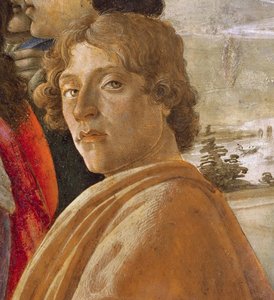
Sandro Botticelli
1445 - 1510 , Italien
Kurzinfos
- Beeinflusste Künstler: ['Präraffaeliten']
- Bemerkenswerte Werke:
- Die Geburt der Venus
- Primavera
- Mystische Geburt
- Einflussreiche Künstler:
- Fra Angelico
- Paolo Uccello
- Geburtsdatum: ca. 1445
- Geburtsort: Florenz, Italien
- Künstlerische Bewegung: Frührenaissance
- Nationalität: Italienisch
- Sterbedatum: 1510
- Vollständiger Name: Sandro Botticelli
Ähnliche Artikel

Sandro Botticelli: Die 25 Meisterwerke des Renaissance-Genies – Kunst für Ihr Zuhause
Entdecken Sie die 25 schönsten Meisterwerke von Sandro Botticelli! Erleben Sie die Renaissance-Kunst mit 'Geburt der Venus', 'Primavera' & mehr. Hochwertige Reproduktionen für Ihr Zuhause – jetzt auf AllPaintingsStore.com!
Dante Gabriel Rossetti: Die 25 Meisterwerke des Präraffelitismus | AllPaintingsStore
Entdecken Sie die 25 schönsten Gemälde von Dante Gabriel Rossetti! Tauchen Sie ein in die Welt der Präraffeliten, symbolistischer Kunst & viktorianischer Romantik. Hochwertige Reproduktionen für Ihr Zuhause – jetzt bei AllPaintingsStore.com!
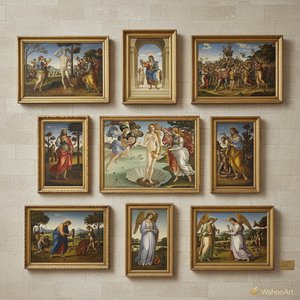
Frührenaissance: Die 10 Meisterwerke, die eine Epoche prägten – Kunst für Ihr Zuhause
Entdecken Sie die 10 prägendsten Meisterwerke der Frührenaissance! Von Giotto bis Botticelli – erleben Sie Kunstgeschichte hautnah. Hochwertige Reproduktionen für Ihr Zuhause auf .

The Nuances of Graphite: Exploring Emotional Depth & Technical Mastery in Pencil Drawing
Explore the captivating world of graphite drawing! Discover its rich history, master essential techniques like chiaroscuro, and learn how artists evoke emotion through this timeless medium. Expert insights for art enthusiasts.

Mastering the Line: A Comprehensive Expert Guide to Technical Precision and Expressive Depth in Drawing
Elevate your artistic practice with this expert guide to mastering the line. Discover advanced techniques in graphite, charcoal, and contour drawing designed for art students seeking technical precision and expressive depth in their fine art studies.


