


 In echtem Maßstab anzeigen
 Versenden als Grußkarte
 Teilen
 Details anzeigen
 Leitfaden

 Herunterladen
 Ähnliche Objekte
 Röntgenaufnahme
 Diashow
 Besucherstatistiken
Christ at the Column
 Öl auf Leinwand
- Wandkunst
- Barock
 1607
1607- Frühe Neuzeit
 134.0 x 175.0 cm
 Musée des Beaux-Arts
 Mehr anzeigen
Handgefertigte Ölreproduktion
Handgemaltes Ölgemälde auf Leinwand in Ihrer Wunschgröße und mit Rahmen, auf Bestellung von unseren Künstlern angefertigt. ( Zum Druck wechseln Zum digitalen Bild wechseln)




P118B $10

P118H $10

P118W $10

P438Z $10

P508JH $12

P508YH $12

P805H $10

P805Z $10

P919BZ $10

P919G $10

P919XJ $10

P959ZH $10

P968JZ $12

W106C $8

W218G $10

W218JH $8

W218Y $10

W307PJ $10

W316G $10

W316PJ $8

W316Y $10

W398PJ $8

W4111J $10

W500HY $15

W500JH $15

W692G $12

W849H $8

W940BG $15

W953PJ $8




Wählen Sie aus unseren vordefinierten Formaten, die den ursprünglichen Proportionen des Kunstwerks entsprechen.

Sie können Ihre eigenen Maße eingeben, um einen bestimmten Rahmen oder Platz auszufüllen. Wenn die gewählte Größe nicht den Proportionen des Originalbildes entspricht, werden wir das Kunstwerk entweder beschneiden oder das Gemälde durch zusätzliche, handgemalte Elemente erweitern. Ein digitales Mockup wird Ihnen zur Genehmigung zugesandt, bevor die Produktion beginnt.
Bitte beachten Sie, dass die Bildschirmvorschau nicht die tatsächliche Beschneidung oder Erweiterung widerspiegelt. Nur das Mockup zeigt die endgültige Komposition exakt an.
Obwohl Sondermaße verfügbar sind, empfehlen wir, eine Größe aus der vordefinierten Liste zu wählen, um die ursprünglichen Proportionen beizubehalten.
Nach der Bestellung wird das AllPaintingsStore.com-Team dem Kunden Anweisungen per E-Mail zusenden und eine Mockup-Vorschau bereitstellen.
Weltweiter Versand () in nur 3 bis 4 Wochen statt der üblichen 5 Wochen. (22 September). Keine Kompromisse bei der Qualität.

Kostenloser weltweiter Expressversand

Hochwertige Leinenleinwand

Vollständiger Versicherungsschutz beim Versand

Zollgebühren-Rückerstattungsgarantie

Garantie für exakte Farbtreue

100-tägiges Rückgaberecht (nur bei Mängeln)

100% Geld-zurück-Garantie

Angebot für Mengenrabatt
 Die Glasoption ist nur für Größen unter 110 cm verfügbar.

Christ at the Column
Reproduktionsmedium
Format der Reproduktion
-


Gesamtpreis
$ 308
Christ at the Column: A Moment of Profound Suffering Illuminated by Caravaggio’s Genius
Caravaggio's *Christ at the Column*, painted in 1607, transcends mere depiction; it embodies a visceral confrontation with human suffering—a cornerstone of Baroque art and an enduring testament to Michelangelo Merisi da Caravaggio’s unparalleled artistic vision. This monumental oil on canvas (134 x 175 cm), currently residing in the Musée des Beaux-Arts in Rouen, France, isn't simply a historical record; it’s an invitation to contemplate the darkest recesses of faith and experience alongside Christ himself. The painting captures the agonizing prelude to his flagellation—a pivotal scene fraught with vulnerability and impending sacrifice—and continues to captivate audiences centuries later.Compositional Mastery & Dramatic Lighting: The Language of Emotion
The artwork's compositional brilliance lies in its simplicity, yet it achieves an astonishing level of dramatic impact. Caravaggio centers the figure of Christ at the column’s core, bathed in an ethereal light source that emanates from unseen origins. Surrounding him are three figures—Nicodemus, John the Apostle, and Joseph of Arimathea—each rendered with meticulous anatomical detail and imbued with palpable emotion. The background is subtly blurred, creating depth without distracting from the central drama—a masterful application of tenebrism, Caravaggio’s signature technique. This extreme contrast between light and dark isn't merely aesthetic; it serves as a conduit for psychological tension, mirroring Christ’s internal torment and amplifying the viewer’s empathy.The Baroque Style & Artistic Innovation: Rejecting Renaissance Idealization
*Christ at the Column* stands firmly within the Baroque stylistic framework—a deliberate rejection of the idealized forms championed by the Renaissance. Caravaggio prioritized emotional resonance over classical beauty, embracing realism to an unprecedented degree. He eschewed polished surfaces and perfected anatomical accuracy, portraying figures with raw emotion and physical imperfections—a revolutionary departure from prevailing artistic conventions. The painting’s muted palette—dominated by browns, reds, and subtle highlights—further intensifies the somber mood and directs the eye toward Christ's suffering—a deliberate choice that underscores Caravaggio’s commitment to conveying profound psychological truths.Historical Context & Commission: Reflecting Counter-Reformation Zeal
This artwork emerged from a fervent spiritual climate—the Counter-Reformation—where Catholic fervor demanded artistic expressions capable of stirring piety and devotion. Commissioned by the di Franco family for a chapel in San Domenico Maggiore in Naples, *Christ at the Column* exemplifies this era’s preoccupation with conveying religious narratives through powerful visual storytelling. Alongside its counterpart, *Flagellation of Christ*, also housed in Naples, it represents a concerted effort to inspire faith and evoke emotional engagement—a testament to Caravaggio's ability to capture the essence of human experience within the confines of biblical iconography. The artist’s turbulent life—marked by violence and exile—undoubtedly fueled his capacity for portraying such profound psychological depth.Symbolism & Emotional Resonance: An Invitation to Contemplation
Beyond its literal depiction, *Christ at the Column* is rich in symbolic significance. The column itself symbolizes imprisonment and suffering—a visual metaphor for Christ’s ordeal—while the bound hands represent powerlessness and vulnerability. The figures surrounding Christ embody diverse responses to his plight—ranging from detached observation to fervent anticipation—reflecting the multifaceted nature of human faith and compassion. Caravaggio's masterful use of light and shadow compels viewers to confront uncomfortable truths about mortality and sacrifice, fostering a contemplative engagement with themes central to Christian theology.- For collectors: A reproduction of this work adds a powerful statement piece to any collection, capturing the dramatic intensity of Baroque art.
- For interior designers: The painting’s monochromatic palette and emotional depth can create a focal point in spaces seeking warmth and contemplation.
- For art lovers: *Christ at the Column* offers a profound meditation on faith, suffering, and the enduring power of artistic innovation—a masterpiece that continues to inspire awe and reverence.
Michelangelo Merisi da Caravaggio: A Revolutionary Voice in Baroque Painting
Michelangelo Merisi da Caravaggio (also Michele Angelo Merigi or Amerighi da Caravaggio; 29 September 1571 – 18 July 1610), known mononymously as Caravaggio, was an Italian painter active in Rome for most of his artistic life. During the final four years of his life, he moved between Naples, Malta, and Sicily. His paintings have been characterized by art critics as combining a realistic observation of the human state, both physical and emotional, with a dramatic use of lighting—a technique that profoundly influenced Baroque painting. Caravaggio trained as a painter in Milan before moving to Rome when he was in his twenties. He developed a considerable name as an artist and as a violent, touchy and provocative man. He killed Ranuccio Tommasoni in a brawl, which led to a death sentence for murder and forced him to flee to Naples. There he again established himself as one of the most prominent Italian painters of his generation. He travelled to Malta and on to Sicily in 1607 and pursued a papal pardon for his sentence. In 1609, he returned to Naples, where he was involved in a violent clash; his face was disfigured, and rumours of his death circulated. He died in 1610 under uncertain circumstances while on his way from Naples to Rome. Reports stated that he died of a fever, but suggestions have been made that he was murdered or that he died of lead poisoning.\nCaravaggio's innovations inspired Baroque painting, but the latter incorporated the drama of his chiaroscuro without the psychological realism. The style evolved and fashions changed, and Caravaggio fell out of favour. In the 20th century, interest in his work revived, and his importance to the development of Western art was reevaluated. The 20th-century art historian André Berne-Joffroy stated: \"What begins in the work of Caravaggio is, quite simply, modern painting.\"\n\n== Early Life ===\nCaravaggio was born in Milan, where his father, Fermo Merixio, was a household administrator and architect-decorator to the marquess of Caravaggio, a town 35 km (22 mi) to the east of Milan and south of Bergamo. In 1576 the family moved to Caravaggio to escape a plague that ravaged Milan, and Caravaggio's father and grandfather both died there on the same day in 1577. It is assumed that the artist grew up in Caravaggio, but his family kept up connections with the Sforzas and the powerful Colonna family, who were allied by marriage with the Sforzas and destined to play a major role later in Caravaggio's life.\n\n== Training ===\nCaravaggio began his artistic training in Milan under Simone Peterzano, a former pupil of Titian. He absorbed the fundamentals of Renaissance technique but already hinted at a rebellious spirit that would soon shatter conventional norms. His apprenticeship provided a solid foundation, yet it was in Rome, arriving around 1592, that Caravaggio truly found his voice, though not without initial struggle and hardship.\n\n== Career ===\nCaravaggio quickly established himself as an artist in Rome, attracting the patronage of influential figures such as Cardinal Francesco Maria del Monte. He developed a considerable name as an artist and as a violent, touchy and provocative man. He killed Ranuccio Tommasoni in a brawl, which ledÄhnliche Kunstwerke


Biografie des Künstlers
Michelangelo Merisi da Caravaggio: Leben und Vermächtnis
Frühes Leben und Ausbildung (1571-1592)
- Michelangelo Merisi da Caravaggio, bekannt als einfach nur Caravaggio, wurde 1571 in Mailand geboren.
- Seine Familie zog aufgrund einer verheerenden Pest, die Mailand heimsuchte, in die Stadt Caravaggio.
- Nach dem Tod seines Vaters und Großvaters im Jahr 1577 lebte Caravaggios Mutter mit ihren fünf Kindern in Armut.
- Im Jahr 1584 begann er eine vierjährige Lehre bei Simone Peterzano, einem Maler, der Schüler von Tizian gewesen war. Diese grundlegende Ausbildung vermittelte ihm die Techniken der Renaissance-Malerei.
Künstlerische Karriere und Stil (1592-1610)
- Caravaggios künstlerische Karriere blühte in Rom, wo er um 1592 eintraf. Zunächst hatte er Schwierigkeiten, Anerkennung zu finden, etablierte sich aber schnell mit seinem innovativen Stil.
- Seine herausragendste Eigenschaft war seine meisterhafte Verwendung von Chiaroscuro, dem dramatischen Kontrast zwischen Licht und Dunkelheit. Diese Technik, oft als Tenebrism bezeichnet, wurde zu einer Markenzeichen der Barockmalerei.
- Er lehnte idealisierte Formen ab und setzte stattdessen auf realistische Darstellungen, indem er oft gewöhnliche Menschen als Modelle für religiöse Figuren verwendete.
- Caravaggios Gemälde sind bekannt für ihre intensive emotionale Realität und dramatische Erzählweise.
Wichtige Werke
- Die Wahrsagerin (1594): Ein frühes Werk, das seinen realistischen Stil und seine Detailgenauigkeit zeigt.
- Das Abendmahl zu Emmaus (1601-1602): Eine kraftvolle Darstellung der biblischen Szene, die seine Meisterschaft im Chiaroscuro und seine emotionale Intensität demonstriert.
- Heiliger Franz von Assisi in Ekstase (1594): Veranschaulicht seine Fähigkeit, spirituelle Erfahrungen durch realistische Bilder auszudrücken.
- Die Absetzung Christi (ca. 1602): Eine dramatische Komposition, die Verrat und Gefangennahme Jesu hervorhebt.
- David mit dem Kopf des Goliath (ca. 1610): Ein psychologisch komplexes Porträt des biblischen Helden.
Einflüsse und künstlerische Entwicklung
- Caravaggio war von den Werken der Renaissance-Meister wie Tizian, Leonardo da Vinci und Michelangelo beeinflusst, die er während seiner Ausbildung studierte.
- Er ging vom vorherrschenden Manierismus ab und übernahm einen direkteren und naturalistischen Ansatz in der Malerei.
- Seine Verwendung von Licht und Schatten wurde von künstlerischen Traditionen sowie dem im römischen Theater üblichen Bühnenlicht inspiriert.
Wichtige Leistungen und historische Bedeutung
- Caravaggio revolutionierte die Barockmalerei mit seinem dramatischen Realismus, seiner innovativen Verwendung von Chiaroscuro und seinen emotional aufgeladenen Kompositionen.
- Er inspirierte eine Generation von Künstlern, die sogenannten “Caravaggisti” oder “Schattenmalern”, die seinen Stil in ganz Europa übernahmen. Bekannte Anhänger sind Peter Paul Rubens, Jusepe de Ribera und Gerrit van Honthorst.
- Sein Werk stellte künstlerische Konventionen in Frage und ebnete den Weg für einen moderneren Ansatz in der Malerei.
- Trotz eines turbulenten Privatlebens, das von Gewalt und rechtlichen Schwierigkeiten geprägt war, bleibt Caravaggios künstlerisches Vermächtnis tiefgreifend und dauerhaft.
Spätes Leben und Tod
- Im Jahr 1606 floh Caravaggio aus Rom, nachdem er in einer Schlägerei einen Mann getötet hatte. Er verbrachte die nächsten Jahre damit, zwischen Neapel, Malta und Sizilien zu wandern.
- Er suchte eine päpstliche Amnestie, wurde aber weiterhin mit rechtlichen Schwierigkeiten und persönlichen Konflikten konfrontiert.
- Caravaggio starb 1610 in Porto Ercole, Italien, unter mysteriösen Umständen. Der Todesursache ist bis heute umstritten, wobei Theorien von Fieber bis Vergiftung reichen.
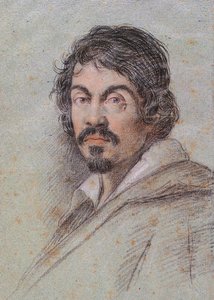
Karavaggio
1571 - 1610 , Spanien
Eckdaten zum Künstler
- Beeinflusste Künstler:
- Peter Paul Rubens
- Jusepe de Ribera
- Gerrit van Honthorst
- Bemerkenswerte Werke:
- Die Wahrsagerin
- Das Abendmahl zu Emmaus
- Heiliger Franziskus in Ekstase
- Die Absetzung Christi
- David mit dem Kopf des Goliath
- Geburtsdatum: 1571
- Geburtsort: Mailand, Spanien
- Künstlerische Bewegung: Barockmalerei
- Künstlerische Einflüsse:
- Simone Peterzano
- Tizian
- Leonardo da Vinci
- Michelangelo
- Nationalität: Italienisch
- Todatum: 1610
- Vollständiger Name: Michelangelo Merisi da Caravaggio
Verwandte Artikel

Barock Meisterwerke: Die 10 prägendsten Kunstwerke für Ihr Zuhause |
Entdecken Sie die 10 prägendsten Meisterwerke des Barock! Caravaggio, Rembrandt & Co. – Erfahren Sie die Geschichten hinter ikonischen Gemälde und finden Sie hochwertige Kunst Reproduktionen für Ihr Zuhause auf .

Chiaroscuro and Soul: A Definitive Guide to the Drama and Emotion of Italian Baroque Masterpieces
Embark on a sophisticated journey through Italian Baroque art. Discover the dramatic interplay of light and emotion in Caravaggio’s masterpieces and explore how to bring this timeless grandeur into your collection with expert art insights.

Barocke Meisterwerke: Die 10 Gemälde, die eine Epoche prägten | AllPaintingsStore
Entdecken Sie die 10 prägendsten Meisterwerke des Barock! Von Caravaggio bis Rembrandt – erleben Sie die Dramatik, Pracht & Emotionen dieser Epoche. Hochwertige Reproduktionen auf AllPaintingsStore.com.

The Visceral Stage: Exploring Dramatic Narratives & Emotional Intensity in Baroque Art
Explore the dramatic world of Baroque art! Discover iconic masters like Caravaggio & Rembrandt, their techniques, and the movement's lasting impact. Expert insights for collectors & enthusiasts at AllPaintingsStore.

The Dramatic Flourish: Exploring the Baroque Movement's Enduring Legacy in Art History
Explore the dramatic world of Baroque art! Discover iconic artists like Caravaggio & Rubens, defining techniques, and its lasting impact on art history. Expert insights for collectors & enthusiasts at AllPaintingsStore.


