


 Vorschau anzeigen
 Versenden
 Teilen
 Details anzeigen

 Herunterladen
 Ähnliche Objekte
 Röntgenaufnahme
 Diashow
Mourning


 Weiterlesen
Giclée / Kunstdruck
Giclée- oder Leinwanddruck in Museumsqualität mit schneller Produktion und flexiblen Veredelungsoptionen. ( Handgemalte Reproduktion bestellen Bild kaufen)




P118B $10

P118H $10

P118W $10

P438Z $10

P508JH $12

P508YH $12

P805H $10

P805Z $10

P919BZ $10

P919G $10

P919XJ $10

P959ZH $10

P968JZ $12

W106C $8

W218G $10

W218JH $8

W218Y $10

W307PJ $10

W316G $10

W316PJ $8

W316Y $10

W398PJ $8

W4111J $10

W500HY $15

W500JH $15

W692G $12

W849H $8

W940BG $15

W953PJ $8




Wählen Sie aus unseren vordefinierten Formaten, die den ursprünglichen Proportionen des Kunstwerks entsprechen.

Sie können Ihre eigenen Maße eingeben, um ein bestimmtes Format oder einen speziellen Platz einzupassen. Wenn das von Ihnen gewählte Format nicht den Proportionen des Originalbildes entspricht, werden wir das Kunstwerk entweder beschneiden oder das Bild mit einem gespiegelten oder einfarbigen Rand erweitern. Ein digitaler Entwurf wird Ihnen zur Genehmigung zugesandt, bevor die Produktion beginnt.
Bitte beachten Sie, dass die Vorschau auf dem Bildschirm nicht den tatsächlichen Zuschnitt oder die Erweiterung widerspiegelt. Nur der Entwurf zeigt die endgültige Komposition präzise an.
Obwohl Sondermaße verfügbar sind, empfehlen wir die Auswahl eines Maßes aus der vordefinierten Liste, um die ursprünglichen Proportionen zu bewahren.
Weltweiter Versand () innerhalb von 2 Wochen statt der üblichen 4/5 Wochen. (22 August)

Kostenloser weltweiter Expressversand

Hochwertige Leinenleinwand

Umfassender Versicherungsschutz beim Versand

Zollgebühren-Rückerstattungsgarantie

Garantie für exakte Farbtreue

60 Tage Rückgaberecht (nur bei Mängeln)

100% Geld-zurück-Garantie

Mengenrabatt verfügbar
 Die Glasoption ist nur für Größen unter 110 cm verfügbar.

Mourning
Giclée / Kunstdruck
Format der Reproduktion
-


Gesamtpreis
$ 64
Sammlerstück-Beschreibung
Umberto Boccioni’s ‘Mourning’: A Futurist Lament
Umberto Boccioni's 1910 painting, “Mourning,” is not simply a depiction of grief; it’s a visceral embodiment of the Futurist movement’s radical rejection of traditional artistic representation. This stark black and white image, featuring three central figures amidst a field of delicate flowers, immediately confronts the viewer with an unsettling tableau – a scene saturated with loss and rendered with a deliberate, almost violent energy. The photograph captures a moment frozen in time, yet vibrates with the dynamism that defined Boccioni’s artistic vision. The composition itself is deliberately fractured, mirroring the shattered emotional state of those depicted, and reflecting the Futurist desire to capture not just appearances but the *feeling* of movement and disruption.
Subject Matter and Composition
- Central Figures: Three individuals dominate the scene. One raises their hands to their face in a gesture of profound sorrow, while another holds what appears to be a deceased body – a poignant symbol of death and loss. The third figure mirrors this action, further intensifying the sense of mourning.
- Peripheral Figures: Two additional individuals are subtly placed at the edges, adding to the overall feeling of isolation and suggesting that grief is often experienced within a larger context of shared suffering.
- Floral Backdrop: The inclusion of flowers provides a jarring juxtaposition against the somber subject matter. This deliberate contrast elevates the work beyond a straightforward depiction of mourning, hinting at themes of beauty persisting even in the face of devastation – a common Futurist preoccupation with finding new forms of expression amidst chaos.
Technique and Style: The Language of Futurism
Boccioni’s technique is characterized by bold, fragmented brushstrokes and a flattened perspective— hallmarks of the Futurist style. He sought to represent not a static image but rather the *impression* of movement and disruption. Lines are deliberately broken and overlapping, creating a sense of instability and conveying the raw emotion of the scene. The monochromatic palette further amplifies this effect, stripping away any distractions and focusing attention on the stark forms and dramatic gestures. This approach reflects the Futurist fascination with speed, technology, and the dynamism of modern life – themes powerfully expressed through the distortion of form and space.
Historical Context and Symbolism
Created in 1910, “Mourning” emerged during a period of intense social and political upheaval in Italy. The Futurist movement was born out of a desire to break free from the perceived stagnation of traditional art and embrace the energy of the industrial age. Boccioni’s work reflects this broader cultural shift, using themes of death and loss as a means of exploring larger questions about modernity, progress, and humanity's place in a rapidly changing world. The act of holding the deceased bodies can be interpreted as a symbolic representation of confronting mortality – a central concern for many artists during this era.
Emotional Impact and Artistic Significance
"Mourning" is more than just a historical artifact; it’s a profoundly moving work that continues to resonate with viewers today. Boccioni's masterful manipulation of form, space, and emotion creates a powerful and unsettling experience. This painting stands as a testament to the Futurist movement's revolutionary spirit and its enduring influence on 20th-century art. A hand-painted reproduction offers an unparalleled opportunity to bring this iconic work into your home or office, allowing you to contemplate its complex themes and appreciate Boccioni’s groundbreaking artistic vision.
Ähnliche Kunstwerke


Über den Künstler
frühe Jahre und Ausbildung
umberto boccioni, ein bedeutender italienischer Maler und Bildhauer, wurde am 19. Oktober 1882 in Reggio Calabria, Italien, geboren. Durch den Job seines Vaters wurde es zu häufigen Umzügen durch Italien, was Boccionis frühes Leben beeinflusste. Mit 15 Jahren ließ er sich in Catania, Sizilien, nieder, wo er seine Schulausbildung beendete. Später zog er nach Rom, um an der Accademia di Belle Arti di Roma's scuola libera del nudo und unter Giovanni Mataloni, einem Künstler im Stil der Libertät für Plakate, zu studieren.Die Futuristenbewegung
Boccionis innovativer Ansatz zur Form und zum Zerfall von Masse hatte einen erheblichen Einfluss auf die Kunstwelt. Er wurde zum Haupttheoretiker der Futuristenbewegung und unterschrieb das Manifesto dei Pittori Futuristi ("Manifest der futuristischen Maler") im Jahr 1910. Seine Werke werden von vielen öffentlichen Kunstmuseen besichert, darunter eine umfangreiche Retrospektive im Metropolitan Museum of Art in New York City im Jahr 1988.Bedeutende Werke und Vermächtnis
- Dynamik eines menschlichen Körpers (Futurismus, Öl auf Leinwand), ein Gemälde, das Boccionis einzigartigen Stil zeigt.
- Dimensionale Formen eines Pferdes (40 x 40 cm, Futurismus, Öl auf Leinwand), ein weiteres Beispiel für seinen innovativen Ansatz zur Form.
- Einzigartige Formen der Kontinuität im Raum (Futurismus, Bronze), eine Skulptur, die seinen Zerfall von fester Masse demonstriert.
Relevante Links von AllPaintingsStore.com
- Gemälde von 'umberto boccioni' | umberto boccioni:dynamik eines menschlichen Körpers (Futurismus, Öl auf Leinwand,)
- Gemälde von 'umberto boccioni' | umberto boccioni:dimensionale Formen eines Pferdes (40 x 40 cm, Futurismus, Öl auf Leinwand,)
- Gemälde von 'umberto boccioni' | umberto boccioni:Löwen (Futurismus, Öl auf Leinwand,)
Wikipedia: umberto boccioni
umberto boccioni, ein einflussreicher italienischer Maler und Bildhauer. Er half, die revolutionäre Ästhetik der Futuristenbewegung als einer ihrer Hauptfiguren zu gestalten. Anmerkung: Dieser Artikel ist eine Übersetzung aus dem Italienischen, aber zu Analysezwecken wurde er ins Englische übersetzt. Die ursprüngliche Frage war auf Italienisch gestellt.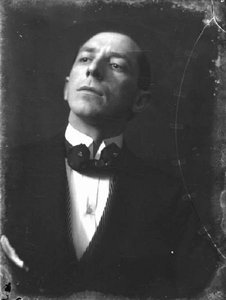
Umberto Boccioni
1882 - 1916 , Italien
Kurzinfos
- Beeinflusste Künstler:
- Giovanni Mataloni
- Giacomo Balla
- Bemerkenswerte Werke:
- Dynamismus eines Menschen
- Einzigartige Formen im Raum
- Die Stadt erhebt sich
- Dimensionale Pferdeformen
- Geburtsdatum: 19. Oktober 1882
- Geburtsort: Reggio Calabria, Italien
- Künstlerische Bewegung: Futurismus
- Nationalität: Italienisch
- Sterbedatum: 1916
- Vollständiger Name: Umberto Boccioni
- Von Künstlern Beeinflusst:
- Divisionismus
- Kubismus
Ähnliche Artikel

Timeless Contrast: A Professional Guide to Black and White Photography for Large-Scale Hotel Decor
A professional guide for hotel designers on utilizing black and white photography for large-scale decor. Learn to master scale, texture, and monochrome contrast to create impactful, high-end hospitality environments through efficient, bulk art procurement solutions.


