Mastering Formal Composition: An Expert Guide to Structured & Balanced Artworks for Interior Professionals
Master formal composition with our expert guide for interior designers. Learn to utilize balance, symmetry, and geometric harmony through high-quality oil reproductions and large-scale murals to elevate hotel and corporate environments with professional precision.
The sense of balance or equilibrioception is the perception of balance and spatial orientation. It helps prevent humans and nonhuman animals from falling over when standing or moving. Equilibrioception is the result of a number of sensory systems wor...
In the high-stakes world of hospitality design, where every visual element must contribute to a cohesive atmosphere of luxury and stability, the concept of balance serves as the invisible foundation of excellence. To understand composition is to understand the psychological impact of equilibrium. When we speak of balance in art, we are discussing more than mere centeredness; we are exploring the delicate tension between weight and lightness, much like the equilibrioception that allows a guest to feel grounded within a grand hotel lobby. A well-composed piece provides a sense of spatial orientation, preventing the visual "vertigo" that can arise from chaotic or unstructured environments.
True mastery lies in the ability to manipulate asymmetrical balance, a technique famously utilized by Piet Mondrian in his Composition with Red, Yellow, and Blue. By placing a large, vibrant square against smaller, more muted forms, an artist creates a dynamic yet serene equilibrium that guides the eye without overwhelming it. For the procurement professional, recognizing these principles is essential when selecting works that must anchor a room. Whether through the heavy, monumental presence of a classical figure or the light, geometric precision of a modern abstraction, the goal remains the same: to instill a sense of profound order and tranquility that resonates with the architectural soul of the space.
Architectural Precision: Implementing Geometric Harmony in Large-Scale Spaces
The Legacy of Palladio and the Birth of Classical Architecture in England Before Inigo Jones arrived on British shores, architectural ambition was largely dictated by Gothic sensibilities—pointed arches dominating cathedrals and palaces alike. The pr...
For the designer tasked with furnishing expansive corporate corridors or grand hotel suites, art must function as an extension of the architecture itself. This requires a deep appreciation for geometric harmony—the use of structured lines and mathematical proportions to create a sense of permanence. We see this most clearly in the legacy of Palladian architecture, where the principles of symmetry and proportion were used to embody humanist ideals of beauty. When integrating art into such environments, the composition should mirror the structural integrity of the building, utilizing straight lines, grids, and calculated intervals to reinforce the room's physical boundaries.
The application of these principles can be seen in the works of Paul Klee, where structural elements and geometric shapes create a rhythmic, organized landscape. In large-scale installations, such as our custom-engineered wall murals and ceiling frescoes, this precision is paramount. A mural that lacks structural consideration can disrupt the flow of a room, whereas a well-composed fresco can elevate a ceiling into a window of classical reason. By treating the canvas as an architectural component, designers can use art to define boundaries, direct movement, and create a sense of monumental scale that feels both intentional and inevitable.
From Baroque to Abstract: Analyzing Compositional Strategies in Masterworks
Introduction To step into the world of Nicolas Poussin is to leave the chaotic whims of emotion behind and enter a realm of profound intellectual clarity. As you wander through this curated selection of his top twenty-five masterpieces, you are not m...
The history of Western art offers a vast library of compositional strategies, ranging from the dramatic tension of the Baroque to the intellectual clarity of French Classicism. To navigate this landscape, one must look beyond the subject matter to the underlying disegno—the primacy of line and structure. In the works of Nicolas Poussin, we encounter an architecturally structured universe where every gesture and shadow is placed with the precision of a master strategist. His canvases do not merely depict scenes; they compose visual philosophies, using heavy, monumental figures to create a stage for philosophical contemplation.
Contrast this with the transition seen in artists like Carlo Maratta, who moved away from the flamboyant textures of the High Baroque toward a more refined, classicizing style. This shift toward clarity and restrained emotionalism provides a blueprint for modern interior curation. Even in the radical departure of the De Stijl movement, where representational art was abandoned for pure abstraction, the pursuit of fundamental balance remained the guiding light. For the professional decorator, understanding these varying approaches—from the dynamic tension of the Baroque to the minimalist serenity of Mondrian—allows for a more sophisticated selection process, ensuring that each commissioned piece or reproduction serves its specific functional and aesthetic purpose within the design scheme.
Strategic Placement: Using Multi-Panel Sets and Murals to Define Interior Flow
A Timeless Dialogue: The Soul of Mougins Nestled within the sun-drenched, medieval heart of Provence, the Mougins Museum of Classic Art serves as a profound sanctuary where the echoes of antiquity meet the vibrant pulse of modernity. To step into thi...
In contemporary hospitality design, the challenge often lies in managing "dead" wall space or navigating complex architectural transitions like staircases and wide foyers. This is where the multi-panel trend becomes a powerful tool for the designer. By splitting a single, cohesive image across three, four, or five panels, we can create a sense of movement that follows the natural flow of human traffic. These group set paintings allow for a modern, rhythmic aesthetic that breaks up the monotony of long corridors while maintaining a unified visual narrative through seamless color and brushstroke continuity.
Beyond multi-panel works, the use of large-format murals offers an unparalleled opportunity to transform a space's identity. Much like the architectural harmony found in the Mougins Museum of Classic Art, where ancient motifs meet modern vision, a well-placed mural can bridge different eras and styles within a single property. Whether it is a reproduction of a Renaissance ceiling or a custom-designed abstract landscape, these large-scale works act as anchors for the entire interior concept. They provide the "visual weight" necessary to balance heavy furniture or high ceilings, ensuring that the art does not merely sit upon the wall but actively participates in the definition of the room's volume.
Curating for Impact: Selecting Structured Artworks for Hospitality and Corporate Environments
Applied aesthetics is the application of the branch of philosophy of aesthetics to cultural constructs. In a variety of fields, artifacts (whether physical or abstract) are created that have both practical functionality and aesthetic affectation. In ...
The final stage of professional curation is the synthesis of aesthetic ambition with operational reality. For procurement managers and hotel designers, the selection process must balance artistic impact with durability, scale, and budget. The goal is to select works that offer a "sanctuary of order" in an increasingly fragmented world. This involves choosing pieces that possess a clear hierarchy of focus—works that can be viewed from a distance to establish a room's theme, yet reveal intricate hand-painted textures and depth upon closer inspection.
When commissioning custom reproductions or selecting from our extensive catalog, consider the applied aesthetics of the space. A corporate lobby may require the intellectual rigor and stability found in Poussin’s classical compositions to project authority, while a boutique hotel lounge might benefit from the soft, light-drenched elegance of Neo-Classical works like those of John William Godward. By focusing on structured, balanced artworks, designers can ensure that their selections provide a lasting sense of prestige and permanence. At AllPaintingsStore.com, we specialize in providing this level of professional reliability, offering everything from bespoke oil reproductions to large-scale architectural solutions, all designed to meet the exacting standards of the global hospitality and corporate sectors.
Vom AllPaintingsStore.com Redaktionsteam
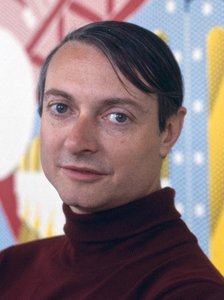
Roy Lichtenstein
b. 1923 · Manhattan, Vereinigte Staaten von Amerika
Roy Lichtenstein (1923-1997) war eine einflussreiche amerikanische Pop-Art-Figur, bekannt für seine ikonischen Gemälde im Stil von Comic-Büchern, die Konsumismus und Fine Art erforschen. Entdecken Sie 'Whaam!', 'Drowning Girl' …
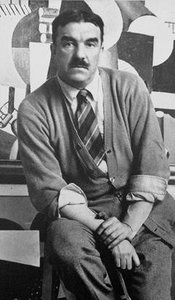
Erkunden Sie die Kunst von Fernand Léger (1881-1955), einem Pionier des Kubismus und der 'Tubism'. Entdecken Sie seine mutigen, figurativen Gemälde, die das moderne Leben, Maschinen und die …
Immerse yourself in the geometric silence of Laurent Vionnet. Explore our curated list of 25 iconic minimalist masterpieces, perfect for modern decor inspiration. Find museum-quality art reproductions and timeless structuralist works. Discover all masterpieces on AllPaintingsStore.com.
Elevate hospitality interiors with premium geometric art. Our professional guide for designers explores Cubism and abstraction, offering high-volume, hand-painted oil reproductions, custom multi-panel sets, and seamless bulk procurement for hotels and corporate spaces.
Discover how geometric abstraction and Cubist-inspired compositions can elevate your home decor. Learn expert tips on balancing bold shapes, textures, and colors to create a sophisticated, modern sanctuary with professional art curation insights.
Entdecken Sie die 10 Meisterwerke der geometrischen Abstraktion! Von Kandinsky bis Mondrian – erleben Sie die Geschichte, Farben & Formen dieser revolutionären Kunstrichtung. Hochwertige Kunstreproduktionen auf AllPaintingsStore.com
AAtelier-ConciergeOnline · antwortet innerhalb einer Minute
Hallo! Ich kann Ihnen dabei helfen, ein Kunstwerk auszuwählen, eine Bestellung zu verfolgen oder Fragen zur Garantie zu beantworten. Wie kann ich Ihnen heute behilflich sein?


 Sense of balance
 Five Classical Heads
 Mastering the Classics: The 25 Greatest Paintings by Nicolas Poussin
 Mougins Museum of Classic Art