The Visual Language of Abstraction
Abstract art functions as a visual language that moves away from literal representation to focus on the pure relationship between color and form. Rather than depicting a recognizable subject like a person or a landscape, these works utilize lines, curves, and shapes to express ideas, movement, or emotion. This shift toward abstraction emerged in Europe during the 19th century as artists sought to address fundamental changes in technology, science, and philosophy. It created a continuum of expression, ranging from slight alterations of reality to total abstraction, where the shape derives its meaning entirely from its own presence.
This movement finds a historical echo in the early development of non-objective art, where artists began to strip away the necessity of a subject. Just as modern abstraction seeks to communicate through pure form, the early pioneers of the 20th century began to move away from verisimilitude to explore the spiritual and the unconscious. Today, understanding this language allows a collector to appreciate how a simple line or a sudden change in color can carry as much weight as a detailed portrait.
Geometric Precision and Structural Order
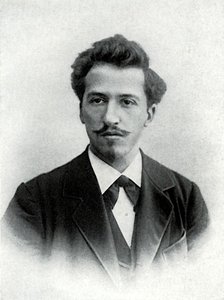
Geometric abstraction is defined by the use of precise, regular, and often mathematically defined shapes such as squares, triangles, and circles. These forms introduce a rigid, structural presence to a composition, often reminiscent of human-made objects like buildings or machines. In the works of Piet Mondrian, such as Composition with Red, Yellow, Blue and Black, we see a radical approach to construction through horizontal and vertical lines. These lines are not merely decorative; they are constructed with an awareness of harmony and rhythm, seeking to establish a sense of order within the frame.
The pursuit of this mathematical clarity has deep roots in the history of pattern. For centuries, Islamic art utilized complex geometric patterns to visually connect spirituality with science and art. This historical use of geometry to represent cosmic order finds a direct parallel in the 20th-century drive toward Neo-Suprematism. Both eras utilize the precision of the shape to move beyond the chaos of the physical world, providing a sense of stability and intellectual clarity to the viewer.
Organic Rhythms and Biomorphic Flow
 Henri Matisse
. French Fauvist known for vibrant, non-naturalistic colors and expressive cut-paper collages that transformed his later years of illness.
In contrast to the rigidity of geometry, organic shapes—often referred to as biomorphic shapes—are irregular and rounded. These forms mimic the flowing, growing patterns found in nature, such as leaves, clouds, or the musculature of the human body. They offer a calming, natural rhythm that feels intuitive rather than calculated. Artists like Henri Matisse explored this through his paper cut-outs, where he arranged colored shapes to create new compositions that felt alive and spontaneous, effectively drawing directly in color to capture movement.
This emulation of "germinal forces" echoes the philosophical shifts of the early 20th century, particularly the ideas of Henri Bergson, who championed intuition and the unpredictable novelty of life over strict logic. Just as nature avoids perfect symmetry, organic abstraction seeks to capture the unpredictable energy of growth. This makes biomorphic works particularly effective in environments where a sense of fluidity and life is required to balance the hard edges of modern architecture.
The Tension Between Order and Spontaneity
 Shapes in Tension
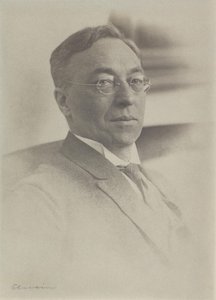
, Wassily Kandinsky
The most compelling abstract compositions often exist at the intersection of geometric and organic forms. Wassily Kandinsky’s Shapes in Tension is a primary example, where intricate patterns, fine lines, and dots coexist with various shapes to create a sense of dynamic energy. This tension prevents a work from becoming purely decorative, instead forcing the eye to navigate a complex field of visual information. This interplay can range from the controlled, lyrical abstraction of the post-war period to the more aggressive, gestural movements of action painting.
This dialogue between the planned and the spontaneous is a recurring theme in art history. The tension seen in Kandinsky’s work mirrors the historical shift from the structured, utopian visions of Constructivism toward the more expressive, emotive responses of the mid-20th century. When these two forces meet, the artwork achieves a unique vibration, balancing the intellectual satisfaction of order with the visceral impact of movement.
Scale and Composition in Large-Format Works
The physical scale of an abstract work fundamentally alters how the viewer interacts with its shapes. In the tradition of Abstract Expressionism, many artists utilized large canvases to create an "all-over" effect, where the entire surface is treated with equal importance. This approach removes the traditional focal point, drawing the viewer into the work and making the canvas feel like an arena of action. Whether through the thick, impasto textures of a hand-painted oil or the smooth, expansive fields of color, scale dictates the emotional weight of the abstraction.
This emphasis on the totality of the surface finds its roots in the way monumental art has historically commanded space. From the grand frescoes of the Renaissance to the massive canvases of the New York School, scale has been used to overwhelm or envelop the viewer. For the modern collector, selecting the appropriate scale is a matter of understanding how a large-format piece will dominate a room or how a smaller, more intimate work will invite close, meditative study.
Integrating Abstraction into Architectural Spaces
Abstract art is a versatile tool for interior design, capable of defining the mood of a professional or residential space. Geometric pieces provide a sense of structure and sophistication, making them ideal for corporate environments or minimalist modern homes. Organic works, conversely, can soften a room, introducing a sense of warmth and natural rhythm to spaces dominated by glass, steel, and concrete. The choice between a hard-edge geometric print and a fluid, lyrical oil painting can change the entire atmosphere of a hallway or a boardroom.
This functional application of art has been a constant throughout history, from the decorative motifs in ancient architecture to the integrated murals of the 20th century. Today, the ability to customize art—whether through a digital mockup to test a color palette or through a multi-panel "split" layout for a wide wall—allows for a seamless integration of form and function. Whether you are furnishing a hotel lobby or a private gallery, the selection of shape is the foundation of the space's visual identity.
For those looking to acquire high-quality, hand-painted reproductions or custom commissions, AllPaintingsStore.com offers a wide range of styles, from geometric precision to organic expression, tailored to your specific architectural needs.