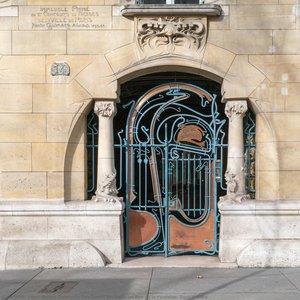
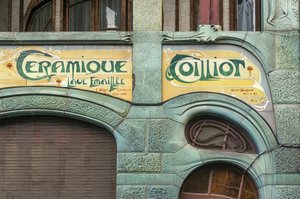
The Belle Époque (French pronunciation: [bɛlepɔk]) (French for 'Beautiful Era') was a period of French and European history that began after the end of the Franco-Prussian War in 1871 and continued until the outbreak of World War I in 1914. Occurring...
The term Belle Époque, or "Beautiful Era," is a retrospective label, a nostalgic lens applied to the years between 1871 and 1914. It describes a period of European stability and optimism that followed the heavy shadows of the Franco-Prussian War and the internal tremors of the Paris Commune. For those living through it, particularly in the French Third Republic, the era was defined by an unprecedented expansion of scientific discovery, colonial reach, and economic prosperity. This was a time when the reconstruction of Paris, led by the sweeping urban reforms of Baron Haussmann, created wide boulevards and green spaces that invited a new kind of public life.
This sense of progress was not merely political or economic; it was deeply felt in the very air of the cities. The arrival of electricity, the expansion of railway networks connecting European spa towns like Vichy and Biarritz, and the grand spectacles of the 1889 and 1900 Universal Expositions in Paris fostered a belief in an unstoppable forward march of civilization. Yet, beneath this veneer of prosperity, there were clear contradictions. While the bourgeoisie paraded through restaurants like Maxim's, large portions of the urban population lived in much harsher realities. The era was as much about the tension between newfound luxury and enduring poverty as it was about light and progress.
Today, we look back at this period not just for its technological leaps, but for the way it established a cultural standard of elegance that still informs our concept of a "Golden Age." When we examine the works of this era, we are looking at the peak of a world that believed beauty and progress could exist in perfect harmony.
A Rebellion in Line: The Organic Spirit of Art Nouveau
The Genesis of Art Nouveau: A Rebellion Against Industrial Rigidity 10 Iconic Masterpieces That Defined the Art Nouveau Movement Introduction Imagine stepping into the heart of the Belle Époque , a period where the rigid, mechanical geometry of the i...
As the nineteenth century drew to a close, a profound sense of exhaustion settled over the artistic community. The industrial age had brought with it mass production and a mechanical rigidity that many felt stripped the world of its soul. Artists found themselves trapped by the heavy weight of Neoclassim and the Gothic Revival, styles that looked backward toward historical imitation rather than forward toward truth. In response, Art Nouveau emerged as a philosophical rebellion. It was a search for a visual language that could reconnect the human spirit with the rhythms of the living world, rejecting the straight, sterile lines of the machine in favor of the organic.
The hallmark of this movement was the whiplash line—a long, sinuous, and energetic curve that mimicked the sudden movement of a plant stem or a flowing vine. This was not mere decoration; it was an attempt to capture vitality. By utilizing modern materials like iron, glass, and ceramics, designers sought to dissolve the boundaries between the man-made and the natural. Whether in the delicate wings of a dragonfly or the undulating petals of a flower, the movement embraced asymmetry and dynamism. It was a deliberate effort to bring the beauty of nature into the functional objects of everyday life, from jewelry by René Lalique to the glassware of Émile Gallé.
This rebellion against industrial rigidity finds a modern echo in our current era of digital perfection. Just as the artists of the 1890s sought authenticity amidst the rise of mass production, contemporary collectors often seek out the tactile, human element found in hand-painted oil reproductions. The visible brushstroke and the physical depth of paint on canvas offer a connection to the artist's hand that a digitalprint simply cannot replicate.
Lights of Montmartre: Parisian Nightlife and the Graphic Revolution
Introduction To step into the world of Henri de Toulouse-Lautrec is to descend into the flickering gaslight and velvet shadows of late 19th-century Montmartre. It is an invitation to a Paris that lived loudly, dangerously, and beautifully amidst the ...
In the heart of Montmartre, the Belle Époque found its most visceral expression within the flickering gaslight of the cabarets. Venues like the Moulin Rouge, the Folies Bergère, and the Casino de Paris were the stages for a new kind of celebrity culture. This was a world of movement and color, inhabited by legendary performers such as La Goulue, Jane Avril, and Mistinguett. The energy of the Can-can dance and the bohemian atmosphere of the Montmartre nightlife provided a raw, unpolished counterpoint to the more formal social circles of the Parisian elite.
This era also witnessed a revolution in graphic design, driven by the rise of poster advertising. Artists like Jules Chéret and Henri de Toulouse-Lautrec transformed the streets of Paris into an open-air gallery. Chéret’s posters, such as his depictions of Spanish dancers, used bold colors and fluid forms to capture the public's attention. Toulouse-Lautrec, meanwhile, utilized the influence of Japanese woodblock prints to create works that captured both the electric energy of the dance halls and the quiet melancholy of the performers behind the scenes. His lithographs were not just advertisements; they were psychological portraits of a world in motion.
The way we consume visual media today carries a distant memory of this graphic revolution. The modern poster and digital advertisement are the descendants of Chéret’s vibrant lithographs, yet the fundamental goal remains unchanged: to capture the eye through composition and color. For those who wish to bring this historical energy into a contemporary home, a high-quality reproduction of a Toulouse-Lautrecprint can serve as a powerful focal point, reintroducing that sense of Parisian movement to a modern wall.
Iron, Glass, and Grace: The Architecture of Modernity
A Jewel of Modernism: The Enchanted World of Casa Lis Nestled within the ancient, sun-drenched city walls of Salamanca, Spain, the Museo Art Nouveau y Art Déco – Casa Lis stands as a breathtaking testament to an era of unparalleled elegance. To appro...
The architectural landscape of the Belle Époque was defined by a daring embrace of new technologies. The structural possibilities offered by iron and glass allowed architects to move away from heavy, load-bearing masonry toward lighter, more open forms. In Brussels, Victor Horta pioneered this approach with the Hôtel Tassel, where the boundaries between structure and ornament began to blur. This style soon spread to Paris, most notably in the work of Hector Guimard, whose organic, ironwork entrances for the Paris Métro became synonymous with the city's modern identity.
This architectural language was not limited to France. In Italy, the Stile Liberty brought a similar sense of floral grace to urban centers, while in Spain, the Modernisme Catalan movement flourished. Even in the more industrial parts of Europe, the use of glass and ceramics allowed for the creation of spaces that felt as though they were growing from the earth rather than being constructed upon it. The goal was often a "total work of art," where every element—from the window frame to the ceiling fresco—contributed to a unified, organic whole.
We see this architectural legacy in the way we approach interior design today. The contemporary desire for "biophilic" design—integrating natural elements into built environments—is a direct continuation of the Art Nouveau mission. When we choose art that features botanical motifs or flowing lines, we are participating in that same historical effort to harmonize our living spaces with the natural world.
The Tropical Belle Époque: Brazil’s Era of Prosperity
The Brazilian Belle Époque, also known as the Tropical Belle Époque or Golden Age, is the South American branch of the French Belle Époque movement (1871–1914), based on the Impressionist and Art Nouveau artistic movements. It occurred between 1870 a...
While the cultural epicenter was often thought to be Paris, the spirit of the Belle Époque crossed oceans, finding a unique and prosperous expression in Brazil. Known as the Tropical Belle Époque, this period coincided with the immense wealth generated by the rubber cycle in the Amazon and the coffee boom in the southeast. In cities like Manaus and Belém, the influx of capital allowed for a radical transformation. These "Paris of the Tropics" were among the most modernized cities in the world, boasting electricity, running water, and grand European-style theaters like the Amazon Theatre in Manaus.
The architecture of this era in Brazil reflected a deep aspiration toward European sophistication. In Belém, markets and palaces were built to mirror the grandeur of French urbanism, while in Rio de Janeiro, major urban reforms sought to sanitize and embellish the city center. This was an era of intense cosmopolitanism, where the local elite dressed in Parisian fashions and attended opera houses designed by European architects. It was a period of profound economic growth that fundamentally reshaped the Brazilian landscape.
The parallels between the French and Brazilian Belle Époques lie in the way economic shifts can trigger sudden cultural flowering. Just as the prosperity of Paris fueled the Art Nouveau movement, the wealth of the rubber and coffee trades allowed Brazil to establish its own distinct artistic identity. Today, studying these regional variations reminds us that the "Golden Age" was not a single event, but a global phenomenon of aspiration and change.
From Glasgow to Kyiv: Regional Expressions of a Global Movement
Ukrainian Art Nouveau, also known as Ukrainian Architectural Modern (UAM; Ukrainian: Український архітектурний модерн, Неоукраїнський стиль), is an architectural style which emerged during the first decade of the 20th century in connection with the r...
Art Nouveau was never a monolithic style; it adapted its vocabulary to suit the local traditions and national identities of different regions. In Great Britain, the movement evolved from the Arts and Crafts tradition into what became known as the Modern Style. Figures like Charles Rennie Mackintosh in Glasgow introduced a more restrained, geometric approach, characterized by the iconic "Mackintosh rose." This version of the movement emphasized craftsmanship and a cleaner, more structured elegance.
In Eastern Europe, the movement took on even more distinct forms. Ukrainian Art Nouveau emerged in the early 20th century, blending European modernism with the rich traditions of Ukrainian folk architecture and church construction. Architects like Vasyl Krychevsky utilized local motifs to create a style that was both contemporary and deeply rooted in national heritage. Similarly, in Austria, the Vienna Secession sought to break away from academic tradition, creating a sophisticated, often highly stylized version of modernism.
These regional variations demonstrate how art can act as a vessel for identity. Whether it is the Celtic-influenced lines of the Glasgow School or the folk-inspired structures in Ukraine, Art Nouveau provided a way for different cultures to participate in a global conversation while maintaining their unique voices. This reminds us that even within a globalized world, the most enduring art is often that which remains grounded in its specific history and landscape.
The Fading Glow: The Transition from Belle Époque to Art Deco
Every era of profound optimism eventually meets its conclusion. For the Belle Époque, the outbreak of World War I in 1914 acted as a definitive break with the nineteenth century. The organic, flowing, and often highly ornamental language of Art Nouveau began to feel too much like a relic of a lost world. As the twentieth century progressed, the aesthetic preference shifted toward the more streamlined, geometric, and industrial elegance of Art Deco.
The transition was not an overnight disappearance but a gradual evolution. The complexity of the whiplash line gave way to the structured symmetry of the machine age. While Art Nouveau looked to the forest and the vine, Art Deco looked to the skyscraper and the streamlined locomotive. However, the underlying impulse remained similar: a desire to find beauty in the modern world and to use new materials to express the spirit of the age. The transition marked the end of an era of "ornamental grace" and the beginning of an era of "functional sophistication."
As we curate our collections today, we often find ourselves caught between these two worlds. We appreciate the structured clarity of modernism, yet we are frequently drawn back to the lush, emotive textures of the Belle Époque. At AllPaintingsStore.com, we celebrate this entire spectrum of history, offering hand-painted reproductions that allow you to bring the soulful, organic beauty of the Golden Age into your contemporary life.
Discover Hector Guimard’s ‘Bench for a Smoking Parlour’ (1897). A stunning Art Nouveau masterpiece showcasing organic forms & luxurious design. Explore this iconic piece!
Immerse yourself in the romantic allure of Art Nouveau. Explore the sinuous curves and floral elegance of the Belle Époque through our exquisite, hand-painted reproductions. Discover a timeless connection to nature’s beauty with our museum-quality collection.
AAtelier-ConciergeOnline · antwortet innerhalb einer Minute
Hallo! Ich kann Ihnen dabei helfen, ein Kunstwerk auszuwählen, eine Bestellung zu verfolgen oder Fragen zur Garantie zu beantworten. Wie kann ich Ihnen heute behilflich sein?


 Belle Époque
 The Elegance of Art Nouveau: A Masterclass in Organic Forms, Sinuous Lines, and the Belle Époque Aesthetic
 25 Masterpieces by Henri de Toulouse-Lautrec: The Soul of Parisian Nightlife
 Museo Art Nouveau y Art Déco - Casa Lis
 Brazilian Belle Époque
 Ukrainian Art Nouveau