


Foundations of Form: The Cubist Shift Toward Planarity
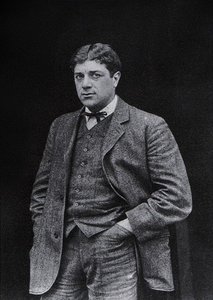 Georges Braque
Discover Georges Braque (1882-1963): Cubism pioneer & Fauvism master. Explore his innovative art, from 'Houses at L'Estaque' to stunning collages.
The transition from representing the world to constructing a new one began with a deliberate dismantling of perspective. For centuries, the canvas functioned as a window, utilizing light and shadow to simulate depth and volume. However, the arrival of Analytic Cubism in the early twentieth century, led by Pablo Picasso and Georges Braque, fundamentally altered this contract. By breaking objects into overlapping frontal surfaces held together by a linear grid, these artists stripped away the vestiges of visual reality.
This movement introduced the concept of the flat, painted shape as an independent entity rather than a mere imitation of nature. The subsequent Synthetic Cubist phase furthered this evolution through the use of collage and papier collé, emphasizing the physical reality of the canvas surface itself. This shift toward two-dimensional features provided the essential vocabulary for everything that followed in geometric abstraction. Today, when we observe works that prioritize the flatness of the picture plane, we are seeing the direct legacy of this Cubist destruction and subsequent reformation of space.
Spiritual Geometry: Malevich and the Search for Absolute Reality
While some artists used geometry to analyze physical objects, others turned to it to find a higher, non-material truth. In Russia, Kazimir Malevich pushed the boundaries of abstraction toward what he termed Suprematism. His approach was not a formalist exercise in mathematics but a pursuit of the "fourth dimension"—a spiritual reality that existed beyond the visible world. When he presented his Black Square in 1915, it functioned as a radical icon, a zero-point of painting that required no reference to the natural landscape. This era proved that the hard edge could serve a soft spirit. For Malevich, simple shapes were condensed dramas of cosmic forces. We see this same impulse in contemporary practices where geometry is used not for decoration, but as a meditative tool. The tension between the rational line and the intangible feeling remains a central pillar for collectors. Whether through the radical void of Malevich or the subtle, growing geometries of later artists like Elizabeth Gourlay, the goal remains the achievement of an internal, psychological resonance.The Logic of the Renowned Grid: De Stijl and Universal Balance
In Holland, the pursuit of abstraction took a more structured, almost architectural path through the De Stijl movement. Led by Piet Mondrian, this group sought to express "absolute reality" through a strict visual language. This language was defined by the vertical-horizontal principle, utilizing straight lines and primary colors—red, blue, and yellow—to create compositions that felt both stable and universal. For Mondrian, this was known as Neoplasticism, a method of purifying art from all personal or accidental references to the real world. The grid in De Stijl was intended to be a model for a balanced existence, reflecting an underlying order within the universe. This quest for clarity and the rejection of the "messiness" of emotion created a specific type of quiet intensity. We see this echo today in the works of artists like Pierre Muckenstürm, who construct objects through carefully calibrated forms. The intention is not to capture a fleeting moment, but to establish a permanent, concrete stability that offers a sanctuary of logic within a chaotic environment.Chromatic Tension: Albers and the Science of Color Perception
Beyond the structure of lines lies the profound impact of color as a structural element. In geometric abstraction, color does not exist to describe light or atmosphere; it exists to define form and create rhythm. Josef Albers became a primary figure in this investigation through his Homage to the Square series. His work focused on how one color changes when placed against another, demonstrating that color perception is entirely dependent on context. This scientific approach to the canvas mirrors the way we experience space in modern interiors. The goal was never merely to create a pleasing object, but to reveal a truth about visual experience. This legacy of studying the relationship between adjacent planes continues to influence how we understand balance and tension in contemporary painting. When an artist manages to achieve formal harmony—where the composition feels complete even if part of it is obscured—they are utilizing the foundational principles established by Albers.Constructed Realities: From Russian Constructivism to Modern Materiality
 Russian Troops under Suvorov Crossing the Alps (study)
Discover Vasili Ivanovich Surikov's 'Russian Troops under Suvorov Crossing the Alps (study)', a powerful 1899 masterpiece capturing historical heroism with realistic detail and dramatic intensity. Perfect for art collectors.


