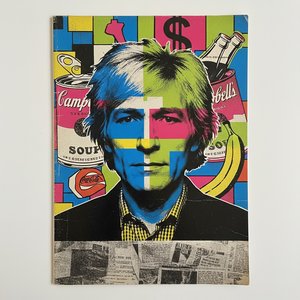
Acrylic On Canvas.

§ 1Στοιχεία καταλόγου


Το έργο αυτό προστατεύεται από πνευματικά δικαιώματα
Το έργο τέχνης που εμφανίζεται σε αυτή τη σελίδα προστατεύεται από τους νόμους περί πνευματικών δικαιωμάτων, γεγονός που σημαίνει ότι δεν μπορούμε νομικά να δημιουργήσουμε ή να πουλήσουμε μια ταυτόσημη αναπαραγωγή του. Αυτή η προστασία επιβάλλεται βάσει διεθνών συμφωνιών, όπως η Σύμβαση της Βέρνης καθώς και από τους εθνικούς νόμους, συμπεριλαμβανομένων αυτών που ορίζονται από το Νομοθεσία περί πνευματικών δικαιωμάτων των ΗΠΑ - Τίτλος 17. Όλα τα δικαιώματα κατοχυρωμένα. Απαγορεύεται η αναπαραγωγή χωρίς άδεια.
Ως μια σεβαστή και νόμιμη εναλλακτική, προσφέρουμε προσαρμοσμένα, χειροποίητα έργα τέχνης εμπνευσμένα από το πρωτότυπο. Οι έμπειροι και επαγγελματίες καλλιτέχνες μας μελετούν προσεκτικά το στυλ, τη διάθεση και την καλλιτεχνική ουσία του πρωτοτύπου, ώστε να δημιουργήσουν ένα νέο, μοναδικό έργο που προκαλεί την ίδια αίσθηση — παραμένοντας όμως μια πρωτότυπη δημιουργία από μόνη της.
Αυτή η μέθοδος συμμορφώνεται πλήρως με τους κανονισμούς περί πνευματικών δικαιωμάτων, καθώς δεν περιλαμβάνει την αντιγραφή ή την αναπαραγωγή του προστατευόμενου έργου. Αντίθετα, πρόκειται για μια δημιουργική ερμηνεία — ένα νέο έργο που επηρεάζεται από το πρωτότυπο, χωρίς όμως να είναι πανομοιότυπο με αυτό.
 Διαβάστε περισσότερα
§ 2Αφηρημένο
Περιγραφή Συλλεκτικού Αντικειμένου
Βιογραφικό Καλλιτέχνη
Ανακαλύψτε την εμβληματική ποπ αρτ του Άντι Γουόρχολ (1928-1987) – μεταξοτυπίες της Μάριν Μονρόε και των Κάμπελς Σούπ Κάνς. Εξερευνήστε τη διαρκή επίδρασή του στην τέχνη και τον πολιτισμό.
§ 3Σχολιασμός
A Moment Frozen in Pop: Andy Warhol’s Iconic Time Magazine Cover
Andy Warhol's reimagining of Michael Jackson for TIME magazine in 1983 isn’t merely a portrait; it’s a crystallized explosion of celebrity, pop culture, and the very essence of Warhol’s artistic philosophy. This striking image transcends its origins as a news cover, evolving into a potent symbol of an era – the late 1980s, a time of unprecedented media saturation and the rise of the superstar. The painting captures Jackson in a moment of serene confidence, his signature smile radiating an almost unsettling stillness. The deliberate simplicity of the composition—a close-up of his face against a vibrant, pulsating background of yellow and red – immediately draws the viewer in, demanding attention and prompting reflection on the nature of fame and representation.
Pop Art’s Bold Embrace: Technique and Style
Warhol's signature technique—the silkscreen print—is crucial to understanding this work. He employed a process borrowed from commercial printing, applying ink through a stencil onto the canvas. This method, while seemingly straightforward, lends an incredible level of precision and flatness to the image, characteristic of Pop Art. The bold, saturated colors are not meant to mimic reality but rather to evoke immediate recognition and emotional response. Notice how the yellow and red aren’t blended; they exist as distinct blocks, creating a dynamic tension within the composition. The meticulous layering of color, achieved through multiple screens, is a testament to Warhol's dedication to his craft – a dedication that transformed everyday imagery into works of art.
Echoes of History: Magazine Culture and Celebrity
To appreciate this piece fully, it’s essential to consider the context of 1983. TIME magazine was already a powerful force in shaping public opinion, and featuring Michael Jackson on its cover represented a monumental cultural event. Jackson's unprecedented popularity—fueled by his music, dance moves, and global appeal—made him an irresistible subject for Warhol. The painting cleverly mirrors the glossy, highly-produced aesthetic of contemporary magazines, utilizing similar color palettes and compositional strategies. It’s a deliberate engagement with the visual language of mass media, questioning its influence on our perception of reality and celebrity.
Symbolism and the Cult of Personality
The image is rich in symbolic meaning. Michael Jackson's smile, often interpreted as enigmatic or even slightly unsettling, reflects the complex nature of fame – a carefully constructed persona presented to the world. The bright colors contribute to an almost overwhelming sense of spectacle, mirroring the relentless media attention surrounding Jackson at the time. Furthermore, the painting can be seen as a commentary on the commodification of celebrity; Warhol reduces Jackson’s image to its most recognizable elements—his face and smile—transforming him into a mass-produced icon. The inclusion of the two indistinct figures in the background subtly suggests the audience – the viewers consuming this spectacle.
AllPaintingsStore offers meticulously crafted, hand-painted reproductions of Andy Warhol’s “Time Magazine Cover,” allowing you to bring this iconic piece into your home or office. Each reproduction captures the vibrancy and energy of the original while retaining the unique qualities of Warhol's distinctive style. Explore our collection today and own a piece of pop art history.
Ερωτήσεις και Απαντήσεις
Ποια είναι η ιστορική θέση του "Time Magazine Cover";
Ιστορικά, το έργο "Time Magazine Cover" αποτελεί ένα δείγμα της καλλιτεχνικής κατεύθυνσης Pop Art της ευρύτερης εποχής Contemporary.
Ποια χρωματική παλέτα χρησιμοποιεί το "Time Magazine Cover";
Το έργο "Time Magazine Cover" του Άντι Γουόρχολ χρησιμοποιεί μια χρωματική παλέτα Earthy, η οποία αποπνέει τον συνολικό χρωματικό χαρακτήρα του έργου.
Πώς το "Time Magazine Cover" εξισορροπεί το φως και το σκοτάδι;
Το έργο "Time Magazine Cover" έχει συνολική φωτεινότητα bright, ενώ η φωτεινότητά του (luminance) είναι Gentle Luminance.



 Μετάβαση σε Εκτυπώσεις


 Για έργα τέχνης ή αναπαραγωγές με πλευρά υπερβαίνουσα των 105 εκ. (περίπου 41 ίντσες), το πλαίσιο θα αποσταλεί αποσυναρμολογημένο, σε μορφή κιτ. Η μέθοδος αυτή διασφαλίζει την ασφαλή παράδοση και προλαμβάνει τυχόν ζημιές κατά τη μεταφορά.