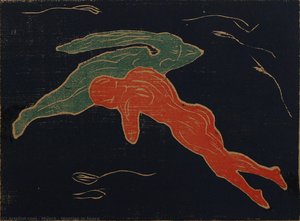
1899. Acrylic On Canvas, 141.0 x 120.0 cm.

§ 1Catalogue data
 Acrylic On Canvas
- WallArt
- Expressionism
 1899
1899 141.0 x 120.0 cm
§ 2Abstract
Περιγραφή Συλλεκτικού Αντικειμένου
Experience Edvard Munch's poignant 'Inheritance,' a portrait capturing maternal tenderness and quiet contemplation. Explore a stunning reproduction of this iconic Expressionist masterpiece.
 Περισσότερα
Βιογραφικό Καλλιτέχνη
Ο Έντβαρντ Μουνχ (1863-1944): Ένας Νορβηγός ζωγράφος, πρωτοπόρος του εξπρεσιονισμού. Διερεύνησε τον φόβο, την θλίψη και τη θνητότητα με έργα που προκαλούν έντονες συναισθηματικές αντιδράσεις.
§ 3Commentary
Inheritance: A Portrait Steeped in Melancholy
Edvard Munch’s “Inheritance” (1899) isn't merely a depiction of a woman cradling her child; it’s an embodiment of profound psychological exploration, firmly rooted within the anxieties that defined Expressionism and Munch’s own turbulent inner life. Painted during his formative years as an artist—a period marked by personal tragedy and intellectual ferment—the canvas captures a scene of quiet domesticity overlaid with an unsettling undercurrent of sorrow.
The composition itself is deceptively simple. A woman, rendered in muted tones – predominantly blacks and browns – dominates the frame, her gaze averted downwards as she holds her infant son close. The dark coat and hat contribute to a sense of isolation and vulnerability, mirroring Munch’s preoccupation with themes of loss and mortality. Behind her lies a dining table adorned with a book, suggesting a space for contemplation and perhaps hinting at the burdens of responsibility that accompany motherhood.
Style & Technique: Expressionist Resonance
Munch's masterful use of color—primarily somber hues—is characteristic of Expressionism, an artistic movement born from a desire to convey subjective experience rather than objective reality. Unlike Impressionists who sought to capture fleeting moments of light and color, Munch prioritized emotional intensity. Thick brushstrokes create texture and imbue the painting with palpable energy, conveying not just what is seen but how it feels.
The artist’s technique—particularly evident in the rendering of the woman's face—is imbued with a deliberate ambiguity. Munch eschewed precise anatomical detail, favoring instead expressive distortions that amplify emotional resonance. This stylistic choice aligns perfectly with his exploration of psychological states and reflects the influence of Symbolist ideas prevalent at the time.
Historical Context: The Shadow of Tuberculosis
"Inheritance" emerged from a deeply personal context—Munch’s own family history was scarred by tuberculosis, which claimed the lives of his mother and sister. This experience profoundly shaped his artistic vision, fueling an obsession with illness, decay, and the fragility of human existence. The painting speaks to broader anxieties surrounding familial responsibility and the inescapable awareness of mortality.
Furthermore, Munch’s work coincided with a burgeoning interest in psychoanalysis—particularly Sigmund Freud's theories—which championed the exploration of unconscious desires and emotions. “Inheritance” exemplifies this intellectual preoccupation, presenting a portrait not just of a woman but also of her inner turmoil—a subtle yet powerful reflection of Munch’s own psychological landscape.
Symbolism & Emotional Impact: Beyond Representation
The darkened hues and averted gaze of the woman symbolize grief and unspoken sorrow. The book on the dining table represents knowledge, perhaps wisdom gained through experience, but also serves as a reminder of life's inevitable passing. Munch’s aim wasn’t to depict reality faithfully; rather, he sought to evoke emotion—to capture the essence of human suffering and vulnerability.
"Inheritance" continues to resonate with viewers today because it transcends mere visual representation. It is a testament to Munch’s ability to distill complex psychological ideas into a single image—a hauntingly beautiful portrayal of maternal love intertwined with the pervasive melancholy that defines Munch's oeuvre. Its enduring power lies in its capacity to provoke contemplation on themes of loss, vulnerability, and the profound mysteries of human emotion.
Ερωτήσεις και Απαντήσεις
Τι συναίσθημα αποπνέει το "Inheritance" του Εδουάρδος Μουνχ;
Η ατμόσφαιρα του έργου "Inheritance" του Εδουάρδος Μουνχ είναι Dramatic, ενώ ο συναισθηματικός του τόνος είναι Melancholic.
Σε τι μέγεθος συνιστάται να εκτυπωθεί το "Inheritance";
Για το έργο "Inheritance" προτείνεται μέγεθος εκτύπωσης Large. Διατίθενται και άλλα μεγέθη με τις ίδιες αναλογίες.
Είναι το "Inheritance" διαθέσιμο ως εκτύπωση fine art;
Μπορείτε να παραγγείλετε ένα εκτύπωμα του έργου "Inheritance" του Εδουάρδος Μουνχ απευθείας από τη σελίδα Καλλιτεχνικό Έντυπο: ένα εκτύπωμα fine art σε βαμβακερό καμβά ή σε αρχειοθετητικό χαρτί καμβά.



 Μετάβαση σε Εκτυπώσεις


 Για έργα τέχνης ή αναπαραγωγές με πλευρά υπερβαίνουσα των 105 εκ. (περίπου 41 ίντσες), το πλαίσιο θα αποσταλεί αποσυναρμολογημένο, σε μορφή κιτ. Η μέθοδος αυτή διασφαλίζει την ασφαλή παράδοση και προλαμβάνει τυχόν ζημιές κατά τη μεταφορά.