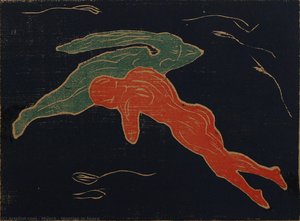
1895. Acrylic, 67.0 x 100.0 cm.

§ 1Στοιχεία καταλόγου

- 67.0 x 100.0 cm


§ 2Αφηρημένο
Περιγραφή Συλλεκτικού Αντικειμένου
Edvard Munch’s haunting ‘Jealousy,’ painted in 1895, captures profound emotional turmoil with its expressive brushstrokes and symbolic depiction of longing—a masterpiece from the Symbolist movement inviting you to explore its evocative beauty.
 Περισσότερα
Βιογραφικό Καλλιτέχνη
Ο Έντβαρντ Μουνχ (1863-1944): Ένας Νορβηγός ζωγράφος, πρωτοπόρος του εξπρεσιονισμού. Διερεύνησε τον φόβο, την θλίψη και τη θνητότητα με έργα που προκαλούν έντονες συναισθηματικές αντιδράσεις.
§ 3Σχολιασμός
A Portrait Steeped in Unease: Exploring Edvard Munch’s ‘Jealousy’
- Subject Matter: Edvard Munch's “Jealousy,” painted in 1895, presents a psychologically charged portrait depicting a man and woman within an intimate domestic setting. The composition focuses intently on the male figure’s gaze—directed outwards, away from the viewer—suggesting preoccupation with something unseen yet powerfully felt.
- Style: Munch's style aligns firmly with Expressionism, prioritizing emotional intensity over realistic representation. He abandons conventional perspective and employs distorted forms to convey inner turmoil and psychological distress. The painting eschews polished surfaces for a deliberately rough texture, mirroring the turbulent emotions depicted.
Technique: Color and Texture as Vehicles of Emotion
- Color Palette: Munch utilizes a muted color palette dominated by earthy tones—browns, ochres, and reds—creating an atmosphere of subdued melancholy. However, splashes of crimson appear prominently on the woman’s dress and vase, injecting bursts of passionate energy into the scene. These contrasting hues amplify the underlying tension and underscore the emotional core of the artwork.
- Brushwork: Munch employs loose, agitated brushstrokes that contribute significantly to the painting's expressive quality. Thick impasto—heavy application of paint—creates a palpable textural surface, emphasizing the artist’s desire to capture not just what he sees but how he feels. The visible brushstrokes convey movement and instability, mirroring the psychological state of the depicted individuals.
Historical Context: Fin-de-Siècle Anxiety and Munch's Personal Trauma
- The Zeitgeist: “Jealousy” emerged during the Fin-de-Siècle period—a time of profound social and intellectual upheaval characterized by anxieties about modernity, sexuality, and existential uncertainty. Munch’s work reflects this broader cultural preoccupation with psychological vulnerability and the darker side of human experience.
- Munch's Influences: Munch drew inspiration from Symbolism and Nietzschean philosophy, exploring themes of guilt, shame, and the subconscious mind. His own personal struggles—including his father’s mental illness and the loss of loved ones—fueled his artistic vision and informed his depiction of emotional distress.
Symbolism: Decoding Layers of Meaning
- The Woman's Dress: The woman’s scarlet dress serves as a visual emblem of passion, desire, and perhaps even repressed anger. Its bold color contrasts sharply with the muted tones of the room, highlighting her emotional intensity.
- The Vase: Positioned centrally within the composition, the vase symbolizes fertility and beauty—elements juxtaposed against the backdrop of unspoken jealousy. It represents a fragile ideal threatened by internal conflict.
Emotional Impact: A Window into Inner Turmoil
- Psychological Resonance: “Jealousy” transcends mere visual representation, immersing viewers in a realm of psychological discomfort and emotional vulnerability. Munch’s masterful use of color, texture, and composition compels contemplation on themes of insecurity, longing, and the corrosive effects of unresolved feelings.
- Legacy: This painting remains a cornerstone of Expressionist art, cementing Munch's reputation as one of the most influential artists of his era. Its enduring power lies in its ability to evoke profound empathy for the human condition—a testament to Munch’s unparalleled capacity to translate inner experience into visual form.
Ερωτήσεις και Απαντήσεις
Με τι άλλα ονόματα είναι γνωστός/η ο/η Εδουάρδος Μουνχ;
Ο/Η Εδουάρδος Μουνχ αναγνωρίζεται και με τα εναλλακτικά ονόματα Μουνχ.
Μπορώ να δω το έργο "Jealousy" του Εδουάρδος Μουνχ υπό διαφορετικό φωτισμό;
Η σελίδα Ακτινογραφική εξέταση του έργου "Jealousy" του Εδουάρδος Μουνχ αποτελεί έναν διαδραστικό προβολέα που σας επιτρέπει να περιηγείστε σε έντεκα οπτικά επίπεδα της εικόνας του έργου, συμπεριλαμβανομένης μιας προβολής σε στυλ ακτινογραφίας.
Προς ποιο καλλιτεχνικό ρεύμα ανήκει το έργο "Jealousy" του Εδουάρδος Μουνχ;
Το καλλιτεχνικό ρεύμα που συνδέεται με το "Jealousy" του Εδουάρδος Μουνχ είναι το Symbolist Expressionism. Αυτή η ταξινόμηση τοποθετεί το έργο ανάμεσα σε σχετικούς καλλιτέχνες και έργα τέχνης.


 Μετάβαση σε Εκτυπώσεις


 Για έργα τέχνης ή αναπαραγωγές με πλευρά υπερβαίνουσα των 105 εκ. (περίπου 41 ίντσες), το πλαίσιο θα αποσταλεί αποσυναρμολογημένο, σε μορφή κιτ. Η μέθοδος αυτή διασφαλίζει την ασφαλή παράδοση και προλαμβάνει τυχόν ζημιές κατά τη μεταφορά.