Εγγύηση επιστροφής χρημάτων · 100 ημέρες Δωρεάν Παγκόσμια Αποστολή
449.587έργα τέχνης 30.613καλλιτέχνες 4.660μουσεία 32Γλώσσες
Νόμισμα
    Γλώσσα
      Ατελιέ · Ίδρυση 2015 · Παρίσι, Γαλλία
      AllPaintingsStore
      allpaintingsstore.com
      Catalogue entry

      Hermits

      1912. Oil On Canvas.

      Fig. 1. Εγόν Σχιέλε, Hermits, 1912. Shown as the reproduction you are specifying: , .

      § 1Catalogue data

      § 2Abstract

      Περιγραφή Συλλεκτικού Αντικειμένου

      An unsettlingly intimate embrace of two figures defines this Austrian Expressionist masterpiece by Egon Schiele from 1912, capturing raw vulnerability and existential angst that invites you to explore his profound vision.

      Βιογραφικό Καλλιτέχνη

      Ο Εγόν Σχιέλε: Ένας εκφραστής της ψυχής με έντονα έργα, αυτοπροσωπογραφίες και απεικονίσεις θανάτου & σεξουαλικότητας. Ανακαλύψτε τις μοναδικές του αναπαραστάσεις!

      § 3Commentary

      A Portrait of Intimacy Amidst Existential Angst

      Egon Schiele’s “The Hermits,” completed in 1912, stands as a cornerstone of Austrian Expressionism and a profoundly unsettling meditation on human connection—a juxtaposition that continues to captivate audiences over a century later. Painted in oil on canvas, this deceptively simple composition belies the complex psychological landscape it portrays, reflecting Schiele’s preoccupation with themes of vulnerability, isolation, and the inescapable awareness of mortality.

      Composition and Style: A Balanced Embrace

      The painting depicts two figures positioned close together, their arms entwined around one another in an embrace that conveys both physical closeness and unspoken emotional resonance. Schiele meticulously crafted this scene, utilizing a square canvas to heighten its visual impact and emphasizing symmetry—a deliberate choice that underscores the balance between intimacy and unease inherent in the artwork. The figures are draped in robes or togas, hinting at religious iconography – perhaps referencing monks or saints – yet their postures are remarkably naturalistic, eschewing idealized representations for a palpable sense of physicality. Schiele’s masterful brushwork contributes significantly to the painting's expressive power; bold strokes and contrasting light and shadow sculpt the forms with remarkable precision, conveying a visceral immediacy that distinguishes him from earlier artistic traditions.

      Expressionism Unleashed: Beyond Realistic Representation

      Schiele’s stylistic allegiance firmly resides within Expressionism, rejecting the pursuit of objective visual accuracy in favor of capturing subjective emotional experience. This is powerfully evident in the figures' faces—particularly the gaze of the man on the left—which convey a disconcerting blend of vulnerability and apprehension. The artist deliberately exaggerates facial expressions and body language to amplify the psychological drama unfolding before the viewer’s eyes, mirroring Schiele’s broader artistic impulse to confront uncomfortable truths about human existence. Unlike Impressionists who sought to capture fleeting moments of beauty, Schiele aimed to distill profound emotions into a single image—a feat achieved with remarkable success.

      Historical Context: The Dawn of Expressionism

      “The Hermits” emerged during the formative years of Expressionism, a movement that reacted against the prevailing optimism and rationalism of the Belle Époque. Artists like Schiele sought to express inner turmoil and anxieties through distorted forms and jarring colors—a deliberate rejection of academic conventions. Influenced by Nietzsche’s philosophy of nihilism and grappling with personal struggles related to illness and loss (including his father's syphilis), Schiele channeled these experiences into his art, creating works that resonate with a deep sense of melancholy and existential dread. The painting reflects the broader cultural anxieties of its time—a period marked by rapid industrialization, social upheaval, and a growing awareness of psychological complexities.

      Symbolism and Emotional Resonance: A Silent Dialogue

      The embrace itself is laden with symbolic significance. It represents not merely physical affection but also an attempt to find solace in companionship amidst the pervasive feeling of isolation that characterizes Schiele’s oeuvre. The robes or togas serve as a visual shorthand for spirituality, yet their subdued colors contribute to the painting's overall atmosphere of quiet contemplation—a stark contrast to the turbulent emotions conveyed through facial expressions. Ultimately, “The Hermits” compels viewers to confront questions about human relationships and the inescapable confrontation with mortality—themes that continue to resonate powerfully in contemporary art and culture. It’s a haunting reminder that beauty can coexist with sorrow, and that true intimacy requires acknowledging the vulnerability inherent in our shared humanity.

      A Timeless Reflection: Why “The Hermits” Matters Today

      Schiele's masterful depiction of human connection transcends its historical context, offering an enduring meditation on the complexities of emotion and experience. Its stark simplicity belies a profound psychological depth—a characteristic that continues to inspire artists and captivate audiences alike. A high-quality reproduction of "The Hermits" can serve as a striking centerpiece in interior design schemes, injecting a dose of intellectual contemplation alongside aesthetic beauty. Consider framing it in a neutral tone to maximize its impact and allow the painting's evocative imagery to speak for itself—a testament to Schiele’s enduring legacy as one of Expressionism’s most poignant voices.

      Ερωτήσεις και Απαντήσεις

      Ποιον καλλιτέχνη αποδίδεται το "Hermits";

      Το έργο "Hermits" αποδίδεται στον/στην Εγόν Σχιέλε.

      Είναι το έργο "Hermits" του Εγόν Σχιέλε ιδιαίτερα δημοφιλές;

      Το έργο "Hermits" του Εγόν Σχιέλε έχει επίπεδο δημοφιλίας Iconic. Αυτή η κατάταξη αντικατοπτρίζει το πόσο ευρέως αναγνωρίσιμο είναι το έργο.

      Ποια ατμόσφαιρα προσφέρει το έργο "Hermits" του Εγόν Σχιέλε σε έναν εσωτερικό χώρο;

      Η Dramatic ατμόσφαιρα του έργου "Hermits" του Εγόν Σχιέλε ταιριάζει απόλυτα στον προτεινόμενο χώρο: ένα Living Room.
      § 4The artist

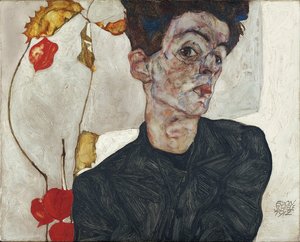
      Εγόν Σχιέλε

      Εγόν Σχιέλε

      1890 - 1918, Αυστρία

      Quick facts about Εγόν Σχιέλε

      • Artistic Movement Or Style: Εξπressionισμός
      • Artists Or Movements Influenced By This Artist: ['Εξπressionισμός']
      • Artists Who Influenced This Artist: ['Gustav Klimt']
      • Date Of Birth: 12 Ιουνίου 1890
      • Date Of Death: 31 Οκτωβρίου 1918
      • Full Name: Egon Leo Adolf Ludwig Schiele
      • Nationality: Αυστριακός
      • Notable Artworks:
        • Αυτοπροσωπογραφία
        • Ζευγάρι αγκαλιάζοντας
        • Τομέας τοπίων
      • Place Of Birth: Tulln, Αυστρία

      Βιογραφικό Καλλιτέχνη

      A Life Forged in Expression

      Egon Schiele’s life, a turbulent and intensely personal journey, unfolded within the vibrant yet shadowed landscape of early 20th-century Vienna. Born in Tulln an der Donau in 1890, his existence was immediately marked by profound loss – the untimely death of his father, Adolf Schiele, from syphilis when Egon was just fourteen years old. This tragedy cast a long shadow over his psyche, fueling a lifelong preoccupation with mortality and the fragility of human existence. Raised initially by his mother and then under the somewhat controlling guardianship of his uncle Leopold Czihaczek, Schiele’s childhood lacked the stability often associated with traditional upbringing, yet it fostered within him an independent spirit and a deep sensitivity to the world around him. From a young age, he displayed a remarkable aptitude for drawing, initially met with disapproval from his father who viewed it as a distraction from more practical pursuits. The early loss of his sister Elvira further deepened this sense of vulnerability and shaped his artistic vision. These formative experiences—illness, loss, and a yearning for autonomy—became the bedrock upon which Schiele’s distinctive artistic voice was built.

      The Crucible of Vienna: Artistic Development

      Schiele's formal artistic training began at the Kunstgewerbeschule (School of Arts and Crafts) in Vienna, but he quickly found himself stifled by its conservative approach. Seeking a more challenging environment, he transferred to the Akademie der bildenden Künste (Academy of Fine Arts), only to discover that even this institution’s rigid academic traditions failed to satisfy his artistic ambitions. Dissatisfied with the prevailing norms, Schiele ultimately abandoned formal training altogether, choosing instead to forge his own path—a bold decision that reflected his unwavering conviction and determination to express himself authentically. A pivotal influence during these early years was Gustav Klimt, a celebrated figure of the Viennese Secession. Schiele deeply admired Klimt’s decorative style and his exploration of symbolism, even receiving mentorship from the established artist. However, Schiele soon diverged significantly from Klimt's aesthetic, developing a uniquely personal style characterized by its stark honesty, psychological intensity, and unflinching portrayal of human vulnerability. He became a founding member of the *Neues Wiener Kunstgruppe* (New Viennese Art Group) in 1909, alongside other progressive artists who challenged the established artistic conventions of the time. This group provided a space for experimentation and innovation, allowing Schiele to further refine his distinctive vision.

      Raw Emotion and Unflinching Truth

      Egon Schiele’s art is immediately recognizable for its raw honesty and psychological depth. He fearlessly confronted themes often considered taboo – sexuality, death, anxiety, isolation – with an unflinching gaze. His distinctive style features elongated figures, contorted poses, and expressive lines that convey a sense of unease and emotional intensity. The human form, particularly the nude, became his primary subject, not as an object of idealized beauty but as a vehicle for exploring the complexities of human experience. Self-portraits constitute a significant portion of his oeuvre, offering intimate glimpses into his inner world—a world often marked by loneliness and self-doubt. He didn’t shy away from depicting himself in unflattering or vulnerable poses, revealing a profound level of self-awareness and introspection. Beyond self-portraiture, Schiele created numerous portraits of others, capturing their likenesses with an unsettling realism that seemed to penetrate beneath the surface. Recurring motifs like the *Physalis* plant – symbolizing death and transience with its delicate, papery husk – further underscore this preoccupation with mortality. His landscapes, while less central to his work than his figurative paintings, demonstrate his mastery of form and color, often reflecting the same emotional intensity as his portraits. The use of line is particularly striking in Schiele’s work; it's not merely a tool for defining shape but an expressive force that conveys emotion and psychological tension.

      A Legacy Cut Short: Achievements & Significance

      Despite facing censorship and legal challenges – including a brief imprisonment for allegedly corrupting minors with his art – Schiele gained recognition within Vienna’s avant-garde circles. His work challenged the conventions of the time, provoking both admiration and outrage. By the time of his untimely death during the Spanish flu pandemic in 1918 at the age of twenty-eight, he had established himself as a leading figure in Austrian Expressionism. Significant works such as *Self-Portrait with Physalis*, *Couple Embracing*, and *Field Landscape (Kreuzberg near Krumau)* stand as testaments to his artistic genius. His influence on subsequent generations of artists is undeniable, particularly those interested in exploring psychological themes and challenging conventional artistic norms. Schiele’s bold approach to form and subject matter continues to resonate with audiences today, making him one of the most important and influential figures in early 20th-century art. His paintings are now held in major museum collections worldwide, including the Leopold Museum in Vienna and the Egon Schiele Art Centrum in Český Krumlov, ensuring his artistic legacy endures. He left behind a body of work that is not merely aesthetically compelling but profoundly human—a testament to the power of art to confront the complexities of existence with honesty, courage, and unwavering vision.
      • Key Themes: Mortality, sexuality, isolation, psychological turmoil.
      • Influences: Gustav Klimt, Viennese Secession, personal trauma.
      • Style Characteristics: Elongated figures, contorted poses, expressive lines, raw emotion.

      § 5Comparanda

      § 6Questions

      Σημαντικά στοιχεία

      • Movement: Expressionism
      • Location: Leopold Museum, Vienna
      • Artistic style: Emotional depth; Intimate embrace
      • Subject or theme: Human connection; Religious figures
      • Notable elements or techniques: Bold brushstrokes; Contrasting light & shadow

      ΚВИΖ Τέχνης

      Για κάθε ερώτηση υπάρχει μόνο μία σωστή απάντηση.

      Ερώτηση 1:
      What artistic movement is Egon Schiele’s ‘Hermits’ primarily associated with?
      Ερώτηση 2:
      The painting depicts two men in robes, suggesting they might be:
      Ερώτηση 3:
      Schiele’s use of bold brushstrokes and contrasting light and shadow contributes to the painting's overall effect by:
      Ερώτηση 4:
      What is a key characteristic of Expressionist art as exemplified in ‘Hermits’?
      Ερώτηση 5:
      Why is ‘Hermits’ considered a significant work within Schiele's oeuvre?

      § 7Cite this entry

      AllPaintingsStore.com, “Εγόν Σχιέλε, Hermits (1912)”, https://allpaintingsstore.com/el/art/egon-schiele-hermits-6WHKGV-en/ArtistReproduction/ (accessed 2 Οκτώβριος 2026).

      § 8The reproduction

      Χειροποίητη Αναπαραγωγή σε Έλαιο

      Χειροποίητη ελαιογραφία σε καμβά στο δικό σας μέγεθος και πλαίσιο, κατά παραγγελία από τους καλλιτέχνες μας. ( Μετάβαση σε Εκτυπώσεις Μετάβαση σε Ψηφιακή Αποτέλεσμα)

      It is specified on the order sheet in the margin; the present state of that sheet reads as follows.

      Hermits

      Μέσο Αναπαραγωγής

      Διαστάσεις Αναπαραγωγής

      -

      Κορυφαίος Καλλιτέχνης

      Περισσότερη λεπτομέρεια, φινέτσα και επιπλέον χρόνος παραγωγής

      -

      Πλαίσιο Αναπαραγωγής

      -

      -

      Για έργα τέχνης ή αναπαραγωγές με πλευρά υπερβαίνουσα των 105 εκ. (περίπου 41 ίντσες), το πλαίσιο θα αποσταλεί αποσυναρμολογημένο, σε μορφή κιτ. Η μέθοδος αυτή διασφαλίζει την ασφαλή παράδοση και προλαμβάνει τυχόν ζημιές κατά τη μεταφορά.

      Απαιτείται επαγγελματικός συναρμολογητής - δεν πρόκειται για προϊόν αυτοσυναρμολογίας (DIY).
      Το κιτ πρέπει να συναρμολογηθεί και ο καμβάς να τεντωθεί από έμπειρο επαγγελματία πλαίσιο (framer), με τη χρήση κόλλας ξύλου (δεν περιλαμβάνεται), πένσας για ένταση καμβά και σφιγκτήρων, ώστε να διατηρηθεί η ορθογωνιότητα των δοκών κατά τη διάρκεια της ξędρανσης. Η λανθασμένη συναρμολόγηση ή η ανισόρροπη ένταση του καμβά μπορεί να προκαλέσει μόνιμη ζημιά στο έργο και δεν καλύπτεται από την εγγύησή μας.

      • Περιλαμβάνονται όλες οι μπάρες από μασίφ ξύλο, κομμένες με ακρίβεια στις διαστάσεις τους.

      • Συναρμολογείται με τις παρεχόμενες βίδες, καθώς και με κόλλα ξύλου για τις γωνιακές ενώσεις, η οποία δεν περιλαμβάνεται και θα πρέπει να προμηθευτεί από τον τεχνίτη σας.

      • Απαιτούνται επαγγελματικά εργαλεία που δεν περιλαμβάνονται: μια πένσα για σφίξιμο καμβά (τενωτήρας) και σφιγκτήρες για τη διατήρηση της ορθογωνιότητας των καρέ κατά τη διάρκεια της απορρόφησης της κόλλας.

      Σημαντικό:
      Οι γωνιακές ενώσεις απαιτούν κόλλα ξύλου, οι σπορ πρέπει να συγκρατούνται με σφιγκτήρες μέχρι να στεγνώσει πλήρως η κόλλα, και για την ένταση του καμβά στο συναρμολογημένο πλαίσιο απαιτείται μια πένσα για ένταση καμβά. Κανένα από αυτά δεν περιλαμβάνεται στο σετ. Παρακαλούμε συμβουλευτείτε έναν έμπειρο επαγγελματία κάδραρχο πριν παραγγείλετε αυτό το μέγεθος.

      Πληροφορίες έργου

      -

      -

      Βερνίκι Προστασίας

      Γυαλιστερό Βερνίκι (ενισχύει τα χρώματα, προστατεύει από το φως και την υγρασία)

      -

      Προσαρμογή του έργου μου

      Παραδείγματα αλλαγών που είναι δυνατές: Αντικατάσταση προσώπου με φωτογραφία του πελάτη· Προσθήκη κατοικίδιου (π.χ., αντικατάσταση γάτας με σκύλο)· Ενσωμάτωση κρυφού μηνύματος στο φόντο· Αλλαγή τοπίου ή στοιχείων στο φόντο.

      -

      Επείγουσα παραγγελία

      Παγκόσμια Αποστολή () σε 3-4 εβδομάδες αντί για τις συνήθεις 5 εβδομάδες. (30 Οκτώβριος). Χωρίς συμβιβασμούς στην ποιότητα.

      -

      Αποστολή Express

      Παγκόσμια Αποστολή () σε 5 εβδομάδες. (6 Νοέμβριος).

      Συμπεριλαμβάνεται

      Τελική Τιμή

      € 229

      Included with every order

      • Δωρεάν γρήγορη διεθνής αποστολή
      • Κάμβας από Λινό Υψηλής Ποιότητας
      • Πλήρης ασφάλιση μεταφοράς
      • Εγγύηση επιστροφής δασμών και φόρων εισαγωγής
      • Εγγύηση Απόλυτης Ομοιότητας Χρωμάτων
      • Πολιτική Επιστροφής 100 Ημερών (Μόνο σε περίπτωση ελαττωμάτων)
      • Εγγύηση επιστροφής 100% των χρημάτων
      • Προσφορά για πολλαπλές παραγγελίες
      Order sheet