

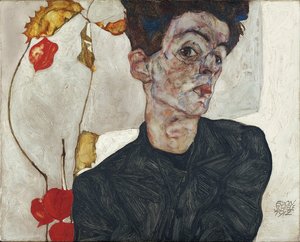
1913. Acrylic On Canvas, 89.0 x 90.0 cm.

§ 1Catalogue data

- 89.0 x 90.0 cm


§ 2Abstract
Περιγραφή Συλλεκτικού Αντικειμένου
Experience the raw emotion of Egon Schiele’s ‘The Bridge,’ a pivotal Expressionist masterpiece exploring themes of transition and introspection. Explore stunning reproductions at WikiArt.
 Περισσότερα
Βιογραφικό Καλλιτέχνη
Ο Εγόν Σχιέλε: Ένας εκφραστής της ψυχής με έντονα έργα, αυτοπροσωπογραφίες και απεικονίσεις θανάτου & σεξουαλικότητας. Ανακαλύψτε τις μοναδικές του αναπαραστάσεις!
§ 3Commentary
A Window Into Expressionism: Examining Egon Schiele’s “The Bridge”
Egon Schiele’s “The Bridge,” painted in 1913, stands as a cornerstone of early 20th-century Expressionist art—a movement that sought to convey raw emotion and psychological intensity rather than merely depicting the external world. More than just a landscape scene, it's a profound meditation on human experience, rendered with Schiele’s distinctive blend of bold lines and unsettling realism.
- Historical Context: The painting emerged during a period of seismic change in European art history. Artists like Schiele were reacting against the academic conventions of their time, rejecting idealized representations for unflinching portrayals of human vulnerability and anxiety. The influence of Cubism is palpable in the geometric structuring of the bridge itself, demonstrating Schiele’s willingness to experiment with innovative artistic approaches.
- Composition & Symbolism: Schiele meticulously crafted a scene dominated by two figures—one standing rigidly, one seated passively—positioned beneath a starkly rendered bridge. The bridge serves as a powerful symbol of transition and connection, representing the precarious balance between stability and upheaval. Its angular lines emphasize this duality, mirroring the internal struggles reflected in the postures of the subjects.
- Technique: Executed in oil on canvas, “The Bridge” showcases Schiele’s masterful control over texture and color. Thick impasto brushstrokes contribute to a palpable sense of physicality, conveying both vulnerability and resilience. The muted palette—primarily browns and reds—intensifies the emotional impact of the artwork, creating an atmosphere of quiet contemplation punctuated by moments of unsettling tension.
- The Figure’s Significance: Notably, the seated figure is often interpreted as Schiele's self-portrait, embodying introspection and confronting mortality. The posture conveys a sense of stillness amidst inner turmoil—a characteristic motif in Schiele’s oeuvre that speaks to his preoccupation with existential themes.
- Legacy & Influence: “The Bridge” cemented Schiele’s reputation as one of the most important artists of his generation and profoundly impacted subsequent artistic movements, including Surrealism and Absurdism. Its uncompromising honesty and psychological depth continue to resonate with viewers today, reminding us of art's capacity to explore the darkest recesses of human consciousness.
A reproduction of “The Bridge” offers an exceptional opportunity to bring Schiele’s visionary aesthetic into your home or workspace—capturing not only its striking visual qualities but also the enduring emotional power that defines this iconic masterpiece.
Ερωτήσεις και Απαντήσεις
Είναι ο/η Εγόν Σχιέλε, δημιουργός του/της "The Bridge", γνωστός/η και με άλλα ονόματα;
Άλλα ονόματα που καταγράφονται για τον/την Εγόν Σχιέλε, δημιουργό του/της "The Bridge", περιλαμβάνουν τα Egon Leo Adolf Ludwig Schiele, Λέο Αδάφ Λούνιν Σχιέλε.
Πώς περιγράφεται η ατμόσφαιρα του έργου "The Bridge" του Εγόν Σχιέλε;
Το έργο "The Bridge" αποπνέει μια Dramatic ατμόσφαιρα.
Πόσο έντονη είναι η παλέτα χρωμάτων του "The Bridge";
Το έργο "The Bridge" του Εγόν Σχιέλε παρουσιάζει κορεσμό με ένταση Balanced Soft.


 Μετάβαση σε Εκτυπώσεις


 Για έργα τέχνης ή αναπαραγωγές με πλευρά υπερβαίνουσα των 105 εκ. (περίπου 41 ίντσες), το πλαίσιο θα αποσταλεί αποσυναρμολογημένο, σε μορφή κιτ. Η μέθοδος αυτή διασφαλίζει την ασφαλή παράδοση και προλαμβάνει τυχόν ζημιές κατά τη μεταφορά.


