

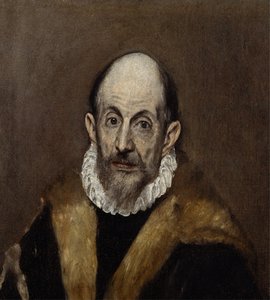
1575. Oil On Canvas, 66.0 x 48.0 cm. Hispanic Society Museum - Library.

§ 1Στοιχεία καταλόγου

- 66.0 x 48.0 cm


§ 2Αφηρημένο
Περιγραφή Συλλεκτικού Αντικειμένου
Experience the profound emotional intensity of El Greco's Pietà, a Mannerist masterpiece of distorted grace and spiritual sorrow that invites you to bring this timeless vision of devotion into your own collection.
 Περισσότερα
Βιογραφικό Καλλιτέχνη
Εντυπωσιακή αναπαράσταση του Αγίου Ιωάννη του Ευαγγελιστή από τον Έλ Greco στο Μουσείο Πρενδές με ιδιαίτερη έμφαση στην μανερίστικη τεχνική και την πνευματική ατμόσφαιρα της εποχής. Ανακαλύψτε την τέχνη του Μεγάλου Έλληνα!
§ 3Σχολιασμός
A Vision of Sorrow and Grace: The Ethereal World of El Greco’s Pietà
In the quiet intensity of 1575, Domenikos Theotokópoulos, known to history as El Greco, captured a moment that transcends the boundaries of mere religious iconography. His Pietà is not simply a depiction of biblical grief; it is a profound psychological landscape where the earthly and the divine collide. As we gaze upon the Virgin Mary cradling the lifeless body of Jesus, we are invited into a space where sorrow is transformed into something luminous and transcendent. This masterpiece stands as a monumental testament to Renaissance spirituality, filtered through the intensely personal and visionary lens of a Cretan master who would eventually redefine the trajectory of European art.
The painting serves as a hauntingly beautiful meditation on compassion and sacrifice. Unlike more literal interpretations of the Lamentation, El Greco’s vision focuses on the emotional resonance of the figures. The weight of Christ's body is felt not just through physical gravity, but through the spiritual heaviness that permeates the composition. For collectors and lovers of fine art, this piece offers a rare opportunity to possess a fragment of the Mannerist revolution—a period where the artist’s internal truth took precedence over the rigid anatomical accuracy of the High Renaissance.
The Mastery of Mannerist Distortion and Light
To understand the impact of this work, one must look closely at El Greco’s deliberate departure from reality. Embracing the Mannerist style, the artist employs expressive distortions to communicate a heightened emotional state. Observe how the figures are subtly elongated, creating an ethereal presence that seems to float above the earthly realm. The drapery does not merely hang; it swirls with a dramatic, turbulent movement that mirrors the internal agony of the mourners. This is not a mistake of proportion, but a sophisticated stylistic choice designed to serve as a conduit for spiritual truth.
The technique behind this luminous surface is nothing short of miraculous. El Greco utilized painstaking layers of translucent glazes over an underpainting, a method that allows light to appear as if it is emanating from within the canvas itself. His palette, dominated by somber blues and deep reds, evokes the traditional colors of mourning and penitence. These pigments are applied with strategic precision, concentrating brilliance on key areas to guide the viewer's eye through the drama of the scene. For an interior designer, such a piece provides a sophisticated focal point, bringing a sense of historical depth and a quiet, contemplative energy to any curated space.
A Legacy of Spiritual Intensity
The historical context of the Pietà is deeply intertwined with El Greco’s own journey from the Byzantine traditions of Crete to the vibrant artistic hubs of Venice and Rome, finally settling in the spiritual heart of Toledo, Spain. This synthesis of influences—the meticulous detail of his Greek roots combined with the dramatic chiaroscuro of Italy—results in a work that feels both ancient and startlingly modern. The painting’s ability to evoke such profound empathy is why it remains a cornerstone of Christian iconography and a highly sought-after subject for high-quality reproductions.
When integrating a reproduction of this magnitude into a home or gallery, one is not merely adding decoration; one is introducing a narrative of resilience and grace. The Pietà invites the viewer to reflect on themes of maternal devotion and the enduring power of faith. It is a piece that demands attention through its subtle complexities, rewarding the observant eye with new layers of meaning upon every viewing. Whether placed in a sunlit study or a more formal setting, El Greco’s vision continues to captivate, offering an eternal window into the human soul.
Ερωτήσεις και Απαντήσεις
Για ποιον χώρο προτείνεται το "Pietà" του Ελ Γκρέκο;
Το έργο "Pietà" του Ελ Γκρέκο προτείνεται για το Living Room. Αυτή η πρόταση βασίζεται στο θέμα, τα χρώματα και τη διάθεση του έργου.
Σε ποιο καλλιτεχνικό ρεύμα ανήκει το "Pietà";
Το έργο "Pietà" ανήκει στο καλλιτεχνικό ρεύμα Baroque Revival, το οποίο ορίζει την καλλιτεχνική παράδοση στην οποία εντάσσεται.
Ποια είναι η τεχνική και οι διαστάσεις του έργου "Pietà" του Ελ Γκρέκο;
Το πρωτότυπο έργο "Pietà" του Ελ Γκρέκο είναι μια δημιουργία με τεχνική Oil On Canvas και διαστάσεις 66 x 48 cm. Η τεχνική και το μέγεθος περιγράφουν το αυθεντικό αντικείμενο.


 Μετάβαση σε Εκτυπώσεις


 Για έργα τέχνης ή αναπαραγωγές με πλευρά υπερβαίνουσα των 105 εκ. (περίπου 41 ίντσες), το πλαίσιο θα αποσταλεί αποσυναρμολογημένο, σε μορφή κιτ. Η μέθοδος αυτή διασφαλίζει την ασφαλή παράδοση και προλαμβάνει τυχόν ζημιές κατά τη μεταφορά.


