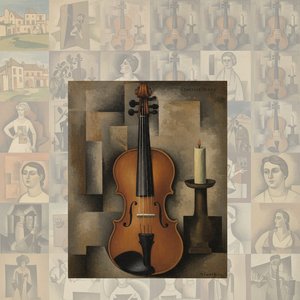
1949. Acrylic.

§ 1Catalogue data


Το έργο αυτό προστατεύεται από πνευματικά δικαιώματα
Το έργο τέχνης που εμφανίζεται σε αυτή τη σελίδα προστατεύεται από τους νόμους περί πνευματικών δικαιωμάτων, γεγονός που σημαίνει ότι δεν μπορούμε νομικά να δημιουργήσουμε ή να πουλήσουμε μια ταυτόσημη αναπαραγωγή του. Αυτή η προστασία επιβάλλεται βάσει διεθνών συμφωνιών, όπως η Σύμβαση της Βέρνης καθώς και από τους εθνικούς νόμους, συμπεριλαμβανομένων αυτών που ορίζονται από το Νομοθεσία περί πνευματικών δικαιωμάτων των ΗΠΑ - Τίτλος 17. Όλα τα δικαιώματα κατοχυρωμένα. Απαγορεύεται η αναπαραγωγή χωρίς άδεια.
Ως μια σεβαστή και νόμιμη εναλλακτική, προσφέρουμε προσαρμοσμένα, χειροποίητα έργα τέχνης εμπνευσμένα από το πρωτότυπο. Οι έμπειροι και επαγγελματίες καλλιτέχνες μας μελετούν προσεκτικά το στυλ, τη διάθεση και την καλλιτεχνική ουσία του πρωτοτύπου, ώστε να δημιουργήσουν ένα νέο, μοναδικό έργο που προκαλεί την ίδια αίσθηση — παραμένοντας όμως μια πρωτότυπη δημιουργία από μόνη της.
Αυτή η μέθοδος συμμορφώνεται πλήρως με τους κανονισμούς περί πνευματικών δικαιωμάτων, καθώς δεν περιλαμβάνει την αντιγραφή ή την αναπαραγωγή του προστατευόμενου έργου. Αντίθετα, πρόκειται για μια δημιουργική ερμηνεία — ένα νέο έργο που επηρεάζεται από το πρωτότυπο, χωρίς όμως να είναι πανομοιότυπο με αυτό.
 Διαβάστε περισσότερα
§ 2Abstract
Περιγραφή Συλλεκτικού Αντικειμένου
Georges Braque’s Studio captures a serene monochrome composition reflecting Cubist principles—a meticulously arranged vase alongside complementary vessels evokes geometric abstraction and humanist observation within the early 1950s.”
Βιογραφικό Καλλιτέχνη
Ο Γιώργος Μπραγκέ (1882-1963): Πρωτοπόρος του Κυβισμού & του Φαουβισμού. Εξερευνήστε την καινοτόμο τέχνη του, τα έργα όπως το "Σπίτια στην L'Estaque" και τις εντυπωσιακές συλλεκτικές του δημιουργίες.
§ 3Commentary
A Still Life Reverie: Georges Braque’s “The Studio”
- Georges Braque's "The Studio" (II), painted in 1949, stands as a testament to the artist’s mastery of Cubist principles and his profound engagement with the aesthetic concerns of postwar Europe. This deceptively simple composition—a monochrome depiction of a studio interior—holds within it layers of intellectual and artistic significance that continue to resonate with viewers today.
- The painting's stylistic core resides in Braque’s unwavering commitment to Cubism, specifically Analytical Cubism developed alongside Pablo Picasso during their formative years. Unlike Impressionistic explorations of fleeting light and color, Braque sought to represent objects from multiple viewpoints simultaneously, fracturing them into geometric planes that overlap and interpenetrate. This technique isn't merely a stylistic choice; it’s an epistemological one—a deliberate attempt to challenge traditional notions of perspective and representation.
Compositional Harmony and Fragmented Reality
- The central focus is undeniably a vase, positioned prominently on a table. However, Braque doesn’t present this vase as a singular entity but rather dissects it into fragmented planes—a hallmark of Cubist methodology. Surrounding the main vase are several other vases scattered throughout the scene, creating a visual dialogue that emphasizes the multiplicity of perception.
- Alongside the vases is a bowl and a cup, meticulously arranged on the table surface. These objects contribute to the overall sense of stillness despite the fractured geometry dominating the composition. Braque’s careful placement guides the viewer's eye across the canvas, fostering contemplation about how we perceive and interpret visual information.
Figures Within Stillness: Presence and Observation
- Two figures inhabit the studio space—one positioned closer to the left side of the image and another situated centrally. Their presence introduces an element of human observation into what might otherwise appear as a purely formal exercise. Braque’s inclusion of these individuals subtly underscores the idea that art is not merely about depicting objects but also about capturing the act of seeing itself.
- The figures are rendered in muted tones, mirroring the monochrome palette of the painting and reinforcing its contemplative mood. They serve as anchors within the geometric abstraction, grounding the visual experience and inviting viewers to consider their own role as observers.
Symbolism and Contextual Significance
- "The Studio" reflects the broader artistic currents of the postwar period—a time marked by a renewed interest in abstraction and a desire to grapple with the trauma of World War II. Braque’s deliberate simplification of form aligns with the movement's rejection of sentimentalism and its embrace of intellectual rigor.
- The vases themselves can be interpreted as symbols of artistic creation—representing vessels for ideas, inspirations, and creative endeavors. Their repetition reinforces this thematic concern, prompting viewers to consider the role of art in shaping our understanding of the world.
Emotional Resonance: Quiet Contemplation
- Despite its geometric abstraction, “The Studio” possesses a remarkable emotional resonance. The subdued palette and careful composition evoke a sense of quiet contemplation—a stillness that invites viewers to pause and reflect on the beauty of form and structure. It’s a painting that speaks not to the senses but to the intellect, fostering an appreciation for the power of visual art to convey profound ideas.
Ερωτήσεις και Απαντήσεις
Με τι τεχνική έχει δημιουργηθεί το "The Studio (II)";
Ο/Η Γεώργιος Μπρακής χρησιμοποίησε την τεχνική του/της Acrylic για το έργο "The Studio (II)". Η τεχνική αυτή ορίζει τη υλική φύση του πρωτότυπου έργου.
Ποια είναι η διάταξη του έργου "The Studio (II)" του Γεώργιος Μπρακής;
Το σχήμα του "The Studio (II)" είναι Landscape. Αυτό είναι χρήσιμο όταν σχεδιάζετε την τοποθέτηση μιας αναπαραγωγής.
Είναι το "The Studio (II)" συνολικά πιο φωτεινό ή πιο σκοτεινό;
Το έργο "The Studio (II)" έχει συνολική φωτεινότητα shadow, ενώ η φωτεινότητά του (luminance) είναι Soft Shadow.


 Μετάβαση σε Εκτυπώσεις


 Για έργα τέχνης ή αναπαραγωγές με πλευρά υπερβαίνουσα των 105 εκ. (περίπου 41 ίντσες), το πλαίσιο θα αποσταλεί αποσυναρμολογημένο, σε μορφή κιτ. Η μέθοδος αυτή διασφαλίζει την ασφαλή παράδοση και προλαμβάνει τυχόν ζημιές κατά τη μεταφορά.