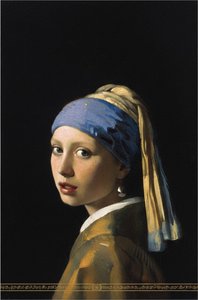
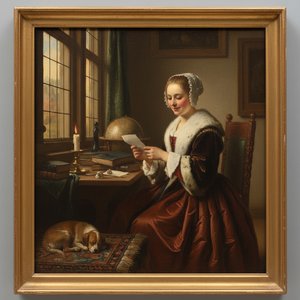
1663. Acrylic On Canvas, 102.0 x 82.0 cm. Μουσείο του Λούβρου.

§ 1Catalogue data

- 102.0 x 82.0 cm


§ 2Abstract
Περιγραφή Συλλεκτικού Αντικειμένου
Admire Gerrit Dou’s ‘The Silver Ewer,’ a Baroque masterpiece showcasing exquisite detail and dramatic chiaroscuro. Explore a stunning reproduction at AllPaintingsStore.com & discover the legacy of Leiden's finest painter.
 Περισσότερα
Βιογραφικό Καλλιτέχνη
Εξερευνήστε τα εκθαμβωτικά έργα τέχνης της Ολλανδικής Χρυσής Εποχής του Γερικού Ντεου (1613-1675). Γνωστός για το λεπτομερές στυλ των ΦινςΣχίλτερ και τις σκηνές καθημερινότητας φωτισμένων από κεριά. Ανακαλύψτε την κληρονομιά του και τα έργα του!
§ 3Commentary
The Silver Ewer: A Masterpiece of Baroque Still Life
“The Silver Ewer,” painted by Gerrit Dou in 1663, stands as a testament to the Dutch Golden Age’s unparalleled artistic achievement. More than just an image of objects—a gleaming silver ewer resting upon a delicately draped white cloth and illuminated by soft candlelight—it embodies the Baroque aesthetic's profound exploration of light, texture, and psychological nuance.
Artist Background & Style: Gerrit Dou (1613-1675), a founding member of Leiden’s Fine Painters Guild, was arguably Rembrandt’s most astute pupil. Unlike Rembrandt’s dramatic chiaroscuro, Dou favored a meticulous approach—the ‘fijnschilder’ style—characterized by painstaking detail and an obsessive pursuit of realism. His canvases aren't merely representations; they are immersive experiences designed to capture the very essence of their subjects.
Composition & Technique: The painting’s central focus is undeniably the silver ewer, expertly rendered with a masterful understanding of reflectivity. Dou skillfully employs chiaroscuro—the dramatic interplay between light and shadow—to sculpt the ewer's surface, creating an illusion of volume that draws the viewer’s eye inwards. Delicate folds in the white cloth contribute to the scene’s depth and elegance, hinting at a luxurious interior setting. The artist’s palette is restrained, prioritizing dark tones against the brilliant silver and white, maximizing visual impact.
Historical Context & Symbolism: Dou's work emerged during a period of intellectual ferment in Amsterdam—the Dutch Golden Age—where scientific inquiry mingled with artistic innovation. Still life paintings like “The Silver Ewer” served as more than mere decorative objects; they functioned as meditations on mortality and beauty, reflecting the Baroque fascination with capturing fleeting moments and conveying profound emotional resonance. The ewer itself could symbolize purity or hospitality, while the candlelight evokes contemplation and spiritual illumination.
Availability & Reproduction: For those captivated by Dou’s artistry, AllPaintingsStore.com offers exceptional reproductions crafted using traditional techniques—oil paints on canvas—preserving the original artwork's vibrancy and detail. To delve deeper into Gerrit Dou’s life and oeuvre, visit Wikipedia.
Concluding Remarks: “The Silver Ewer” remains a timeless masterpiece—a stunning demonstration of Baroque artistry that continues to inspire admiration for its technical brilliance and emotional depth. Its quiet grandeur invites contemplation, reminding us of the enduring power of art to transcend time and communicate universal truths.
Ερωτήσεις και Απαντήσεις
Ποια είναι η φωτεινότητα του έργου "The Silver Ewer" του Γεώργιος Ντε Βου;
Τα χρώματα του "The Silver Ewer" παρουσιάζουν μια φωτεινότητα επιπέδου Dark.
Σε ποια χρονιά δημιουργήθηκε το "The Silver Ewer" του Γεώργιος Ντε Βου;
Το έργο "The Silver Ewer" του Γεώργιος Ντε Βου δημιουργήθηκε το 1663.
Μπορώ να προβιβάσω το "The Silver Ewer" σε μορφή διαφάνειας σε πλήρη οθόνη;
Διαθέσιμη διαδοχική προβολή: η σελίδα Παρουσίαση διαφάνειων του έργου "The Silver Ewer" του Γεώργιος Ντε Βου.


 Μετάβαση σε Εκτυπώσεις


 Για έργα τέχνης ή αναπαραγωγές με πλευρά υπερβαίνουσα των 105 εκ. (περίπου 41 ίντσες), το πλαίσιο θα αποσταλεί αποσυναρμολογημένο, σε μορφή κιτ. Η μέθοδος αυτή διασφαλίζει την ασφαλή παράδοση και προλαμβάνει τυχόν ζημιές κατά τη μεταφορά.