


 Προεπισκόπηση σε πραγματική κλίμακα
 Αποστολή
 Κοινοποίηση
 Λεπτομέρειες
 Οδηγός

 Λήψη
Λήψη
 Παρόμοια αντικείμενα συλλογής
 Ακτινογραφία
 Παρουσίαση
 Q&A
Q&A Στατιστικά
untitled (5500)

 Περισσότερα
Giclée / Εκτυπώσεις Τέχνης
Εκτύπωση giclée ή σε καμβά ποιότητας μουσείου με γρήγορη παραγωγή και ευέλικτες επιλογές φινιρίσματος. ( Αγορά χειροποίητου πίνακα Μετάβαση σε Ψηφιακή Αποτέλεσμα)




P118B €10

P118H €10

P118W €10

P438Z €10

P508JH €12

P508YH €12

P805H €10

P805Z €10

P919BZ €10

P919G €10

P919XJ €10

P959ZH €10

P968JZ €12

W106C €8

W218G €10

W218JH €8

W218Y €10

W307PJ €10

W316G €10

W316PJ €8

W316Y €10

W398PJ €8

W4111J €10

W500HY €15

W500JH €15

W692G €12

W849H €8

W940BG €15

W953PJ €8




Επιλέξτε από τις προκαθορισμένες διαστάσεις μας που διατηρούν τις αρχικές αναλογίες του έργου τέχνης.

Εισάγετε το πλάτος και το ύψος που επιθυμείτε, ώστε να ταιριάζουν στο κάδሮ ή στον τοίχο σας. Μια εκτύπωση μπορεί μόνο να υποστεί κοψίμό και ποτέ να μην γίνει μεγαλύτερη από την αρχική εικόνα, επομένως η επιλογή μεγέθους με διαφορετικό σχήμα συνεπάγεται απώλεια ενός μέρους της εικόνας. Σας στέλνουμε ένα ψηφιακό mockup για έγκριση πριν προχωρήσουμε σε οποιαδήποτε εκτύπωση. Η εικόνα που εμφανίζεται σε αυτή τη σελίδα δεν δείχνει την πραγματική κοπή — μόνο το mockup την παρουσιάζει.
Παγκόσμια Αποστολή () σε 2 εβδομάδες αντί για τις συνήθεις 4/5 εβδομάδες. (30 Οκτώβριος)

Δωρεάν γρήγορη διεθνής αποστολή

Κάμβας από Λινό Υψηλής Ποιότητας

Πλήρης ασφάλιση μεταφοράς

Εγγύηση επιστροφής δασμών και φόρων εισαγωγής

Εγγύηση Απόλυτης Ομοιότητας Χρωμάτων

Πολιτική Επιστροφής 100 Ημερών (Μόνο σε περίπτωση ελαττωμάτων)

Εγγύηση επιστροφής 100% των χρημάτων

Προσφορά για πολλαπλές παραγγελίες
 Η επιλογή με γυαλί είναι διαθέσιμη μόνο για μεγέθη κάτω από 110 εκ.

untitled (5500)
Giclée / Εκτυπώσεις Τέχνης
Διαστάσεις Αναπαραγωγής
-


Τελική Τιμή
€ 57
A Window into Tudor Intrigue: Hans Holbein’s “Untitled (5500)”
Hans Holbein the Younger's "Untitled (5500)" is not merely a group portrait; it’s a meticulously crafted tableau of power, faith, and subtle symbolism—a frozen moment within the opulent world of 16th-century England. This remarkable painting, depicting Jesus surrounded by his disciples at a shared meal, transcends simple representation to offer a profound glimpse into the political and religious currents of its time. The sheer scale of the composition – an unknown size but undoubtedly commanding – immediately draws the viewer in, inviting them to become part of this intimate scene. Holbein’s mastery is evident not just in his astonishingly realistic depiction of each figure, but also in the way he uses light and shadow to create a palpable sense of depth and atmosphere, reminiscent of the masterful works of Jan van Eyck.
The painting unfolds around a richly appointed dining table, laden with bowls, knives, and various instruments of learning – a deliberate arrangement that speaks volumes about the intellectual climate of the Tudor court. Three bowls are strategically placed, hinting at shared sustenance and fellowship, while the knife suggests both practicality and perhaps, a subtle undercurrent of tension. The figures themselves are rendered with an almost unsettling level of detail; each face is etched with individual character, reflecting not just likeness but also personality and status. The seated disciples, ranging from the youthful to the seasoned, embody a diverse group united by their devotion to Jesus. Notably, Jesus himself is positioned at the head of the table, asserting his central role within this community.
Renaissance Realism and Psychological Depth
Holbein’s artistic genius lies in his ability to capture not just outward appearances but also the inner lives of his subjects. This painting exemplifies his signature style – a blend of meticulous observation and psychological insight. He was renowned for his portraits, particularly those commissioned by Henry VIII and Anne Boleyn, and this work demonstrates his skill at conveying character through subtle gestures, expressions, and clothing choices. The use of oil paints allowed him to achieve an unprecedented level of detail and luminosity, capturing the textures of fabrics, the sheen of metal, and the nuances of skin tones with remarkable accuracy.
The technical brilliance is further enhanced by Holbein’s innovative approach to perspective and composition. He masterfully employs atmospheric perspective – creating a sense of distance through variations in color and detail – to draw the viewer's eye into the scene. The arrangement of figures around the table, with Jesus at its center, establishes a clear hierarchy while simultaneously fostering a feeling of intimacy and shared experience. It’s a carefully orchestrated visual narrative that invites contemplation.
Symbolism and Historical Context
Beyond its aesthetic qualities, “Untitled (5500)” is rich in symbolic meaning. The inclusion of scientific instruments – globes, sundials, and quadrants – reflects the burgeoning interest in astronomy and navigation during the Renaissance, a period marked by both exploration and intellectual curiosity. The reference to Rome through the Cosmati pavement pattern, likely incorporated as a gift for Anne Boleyn, subtly alludes to the political tensions between England and the Papal States. The lute with its broken string is a potent symbol of discord, perhaps representing the religious divisions that were fracturing Europe at the time.
The presence of Martin Luther’s hymnbook, open on facing pages referencing Law and Grace, adds another layer of complexity to the painting's interpretation. It suggests a dialogue between faith and reason, tradition and reform – themes that were central to the Protestant Reformation. Even the seemingly simple act of sharing a meal becomes imbued with significance, representing not just sustenance but also fellowship, community, and spiritual nourishment.
A Timeless Masterpiece: Reproduction Possibilities
AllPaintingsStore offers meticulously crafted hand-painted reproductions of Hans Holbein’s “Untitled (5500),” allowing you to bring this extraordinary artwork into your home or office. Our skilled artisans replicate Holbein's intricate details, vibrant colors, and atmospheric depth with unparalleled precision. Whether you are an art collector, a design enthusiast, or simply someone who appreciates the beauty of Renaissance art, our reproduction provides a stunning and authentic representation of this iconic masterpiece. Explore the available sizes and canvas options to find the perfect way to experience the power and allure of “Untitled (5500).”
Ερωτήσεις και Απαντήσεις
Είναι το έργο "untitled (5500)" του Χανς Χολμπίν Ο Νέος φωτεινό ή σκοτεινό;
Η αισθητή φωτεινότητα του έργου "untitled (5500)" του Χανς Χολμπίν Ο Νέος είναι balanced. Μπορεί να συνδυαστεί με το φως του προορισμένου χώρου.
Ποιον καλλιτέχνη αποδίδεται το "untitled (5500)";
Το έργο "untitled (5500)" δημιουργήθηκε από τον/την Χανς Χολμπίν Ο Νέος. Οι πληροφορίες σε αυτή τη σελίδα περιγράφουν το πρωτότυπο έργο του/της Χανς Χολμπίν Ο Νέος.
Πού μπορώ να βρω χειροποίητα αντίγραφα του "untitled (5500)" του Χανς Χολμπίν Ο Νέος;
Μπορείτε να παραγγείλετε μια χειρόγραφα ζωημένη αναπαραγωγή του έργου "untitled (5500)" του Χανς Χολμπίν Ο Νέος απευθείας από τη σελίδα Αντιγραφή με Χειρόχειρο Ζωγράφισμα: αναπαραγωγή με ζωγραφισμένο με λάδι σε καμβά λινου, κατασκευασμένη κατόπιν παραγγελίας.
Σχετικά Έργα Τέχνης


Βιογραφικό Καλλιτέχνη
Hans Holbein the Younger (1497-1543): Northern Renaissance Master of Realistic Portraiture, Famed for Painting Tudor Royalty and Intricate Detail
Hans Holbein the Younger (1497-1543) remains one of the most celebrated figures in Northern Renaissance art—a painter whose unparalleled skill in portraiture cemented his place as a titan of artistic innovation and psychological insight. Born around 1497 in Augsburg, Germany, he descended from a family steeped in artistic tradition; his father, Hans Holbein the Elder, was a respected painter and printmaker who instilled in young Hans an unwavering dedication to meticulous observation and masterful technique—a commitment that would define his entire career. This formative upbringing wasn’t merely about mastering brushstrokes or blending pigments; it was about cultivating a profound understanding of *seeing*, capturing not just physical likeness but the very essence of a subject's character and inner life—a distinction that distinguishes Holbein’s work from many of his contemporaries.Early Artistic Training and Basel Years
Holbein’s artistic journey commenced within the Elder’s workshop, where he honed his skills alongside his father before embarking on expeditions to Switzerland and ultimately establishing himself in Basel. During these formative years, he produced a remarkable array of artworks—spanning portraits, religious depictions, and striking woodcut designs, most notably the chilling *Dance of Death* series. These early pieces served as crucial stepping stones toward mastering compositional principles and developing an acute sensitivity to human emotion—traits that would become hallmarks of his mature style. The *Dance of Death*, a macabre allegory exploring mortality and universal human experience, exemplifies Holbein’s ability to convey complex ideas through visual symbolism, demonstrating a level of sophistication rarely achieved by artists of the period. His meticulous attention to detail in rendering textures and facial expressions foreshadowed his later triumphs as a portraitist—a testament to his unwavering commitment to artistic excellence.The Tudor Court: A Patronage That Shaped His Legacy
Fate intervened decisively in 1526 when Holbein arrived in England, invited by Erasmus of Rotterdam—a connection that swiftly propelled him into the orbit of influential Tudor figures like Sir Thomas More and Henry VIII himself. This patronage afforded Holbein unparalleled access to royal circles and provided him with opportunities to produce some of his most iconic portraits—images that continue to fascinate historians and art enthusiasts alike. His depiction of Henry VIII, arguably the most enduring portrait of the king, captures not only physical grandeur but also a subtle psychological complexity—a feat achieved through masterful use of chiaroscuro (light and shadow) and expressive facial gestures. Holbein’s portraits elevated Tudor royalty to an unprecedented level of artistic prestige, establishing him as one of the foremost artists of his time.Technique and Artistic Innovation: The Holbein Method
Holbein's distinctive artistic style—often referred to as “the Holbein method”—was characterized by a revolutionary approach to portraiture. Unlike many painters who relied on idealized representations or superficial embellishments, Holbein pursued realism with obsessive precision. He employed a technique known as *sfumato*, blurring edges and softening contours to create an illusion of depth and atmosphere—a masterful manipulation of light and shadow that rendered subjects with astonishing lifelike quality. Furthermore, he meticulously studied anatomy and musculature, incorporating scientific accuracy into his depictions of the human form. This dedication to observation and anatomical understanding distinguishes Holbein’s work from many of his peers and underscores his profound intellectual curiosity. His meticulous layering of glazes—thin translucent coats of paint applied over multiple layers—produced surfaces that shimmered with luminosity and conveyed subtle nuances of color—a technique that would become influential throughout the Renaissance.A Lasting Impression: Symbolism, Influence, and Enduring Fame
Holbein’s artistic legacy extends far beyond his technical achievements; it resides in his profound understanding of symbolism and his ability to infuse his paintings with deeper meanings. As exemplified by *The Ambassadors*, Holbein employed visual metaphors—such as the anamorphic skull—to convey philosophical concepts related to mortality and human existence—a daring stylistic choice that challenged conventional artistic norms. His influence permeated subsequent generations of artists, shaping the trajectory of portraiture and inspiring painters across Europe. He remains one of the most admired and studied figures in Renaissance art—a testament to his unparalleled skill, intellectual curiosity, and enduring contribution to Western artistic heritage. His meticulous attention to detail ensured that Holbein’s portraits transcended mere likeness; they captured moments in time, preserving them for posterity.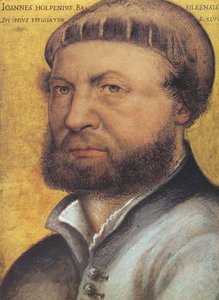
Χανς Χολμπίν Ο Νέος
1497 - 1543 , Γερμανία
Γρήγορα στοιχεία
- Artistic Movement Or Style: Αναγέννηση Βόρειας
- Artists Or Movements Influenced By This Artist: ['Μετέπειτα καλλιτέχνες πορτρέτου']
- Artists Who Influenced This Artist: ['Άλbrecht Ντύρερ']
- Date Of Birth: c. 1497
- Date Of Death: October or November 1543
- Full Name: Hans Holbein der Jüngere
- Nationality: Γερμανός-Ελβετικός
- Notable Artworks:
- Οι Πρεσβύτεροι
- Ανέπτυξη μελέτης για την ένταση: αποκάλυψη του εικαστικού πορτρέτου του Χανς Χολμπίν του Νεότερου
- Μανώλη η Μαρία
- Place Of Birth: Augsburg, Germany
Σχετικά άρθρα

Αισθητική Γαστρονομία: Ο Ρόλος των Επιμελημένων Συλλογών Τέχνης στη Διαμόρφωση της Αντίληψης των Εμπειριών Δείπνου σε Εστιατόρια με Αστέρια Michelin
Ανακαλύψτε πώς οι επιμελημένες συλλογές τέχνης διαμορφώνουν την αντίληψη της γαστρονομικής εμπειρίας σε εστιατόρια Michelin. Εμπνευστείτε για design και ατμόσφαιρα υψηλού επιπέδου.

Οπτική Γαστρονομία: Επιμέλεια Εμπειριών Τέχνης στους Χώρους Εστίασης – Μια Προσέγγιση Tasting Menu στον Σχεδιασμό Bar, Lounge & Εστιατορίου
Ανακαλύψτε πώς η οπτική γαστρονομία μεταμορφώνει τους χώρους εστίασης! Εμπνευσμένες ιδέες σχεδιασμού, έμφαση στην ιαπωνική αισθητική & συμβουλές για μια αξέχαστη εμπειρία. Δημιουργήστε την τέλεια ατμόσφαιρα.

Η Παλέτα και ο Καμβάς: Εξερευνώντας την Ψυχολογική Επίδραση του Οπτικού Σχεδιασμού στην Αντίληψη της Γεύσης και της Όρεξης
Εξερευνήστε την ψυχολογική επίδραση του οπτικού σχεδιασμού στην αντίληψη της γεύσης και της όρεξης. Εμπνευστείτε για να δημιουργήσετε αξέχαστες εμπειρίες φαγητού στον χώρο σας. Expert συμβουλές & ιστορική αναδρομή.

Cultivating Ambiance: Selecting Art Reproductions for the Dining Room – A Historical & Aesthetic Guide
Elevate your dining room with expertly curated art reproductions! Explore historical context, aesthetic considerations & modern applications for a captivating space. Discover the perfect artwork to inspire conversation and enhance every meal.

Hans Holbein the Younger: A Renaissance Portraitist's Mastery of Realism & Psychological Insight
Explore the life & art of Hans Holbein the Younger, a Renaissance master renowned for his strikingly realistic portraits and psychological insight. Discover iconic works like 'The Ambassadors' and delve into his lasting legacy.


![Διπλό Πορτρέτο του Ζαν ντε Ντιντέβιλ και του Γεώργιου ντε Σέλβε (γνωστό και ως Οι Αποστολοί) [λεπτομέρεια]](/media/artworks/images-thumb/bb/ab/bbab7ce77b7dd15d23d21114a63b51a4.jpg)


