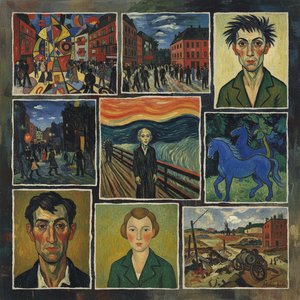
1974. Oil On Canvas, 71.0 x 71.0 cm.

§ 1Στοιχεία καταλόγου

- 71.0 x 71.0 cm


Το έργο αυτό προστατεύεται από πνευματικά δικαιώματα
Το έργο τέχνης που εμφανίζεται σε αυτή τη σελίδα προστατεύεται από τους νόμους περί πνευματικών δικαιωμάτων, γεγονός που σημαίνει ότι δεν μπορούμε νομικά να δημιουργήσουμε ή να πουλήσουμε μια ταυτόσημη αναπαραγωγή του. Αυτή η προστασία επιβάλλεται βάσει διεθνών συμφωνιών, όπως η Σύμβαση της Βέρνης καθώς και από τους εθνικούς νόμους, συμπεριλαμβανομένων αυτών που ορίζονται από το Νομοθεσία περί πνευματικών δικαιωμάτων των ΗΠΑ - Τίτλος 17. Όλα τα δικαιώματα κατοχυρωμένα. Απαγορεύεται η αναπαραγωγή χωρίς άδεια.
Ως μια σεβαστή και νόμιμη εναλλακτική, προσφέρουμε προσαρμοσμένα, χειροποίητα έργα τέχνης εμπνευσμένα από το πρωτότυπο. Οι έμπειροι και επαγγελματίες καλλιτέχνες μας μελετούν προσεκτικά το στυλ, τη διάθεση και την καλλιτεχνική ουσία του πρωτοτύπου, ώστε να δημιουργήσουν ένα νέο, μοναδικό έργο που προκαλεί την ίδια αίσθηση — παραμένοντας όμως μια πρωτότυπη δημιουργία από μόνη της.
Αυτή η μέθοδος συμμορφώνεται πλήρως με τους κανονισμούς περί πνευματικών δικαιωμάτων, καθώς δεν περιλαμβάνει την αντιγραφή ή την αναπαραγωγή του προστατευόμενου έργου. Αντίθετα, πρόκειται για μια δημιουργική ερμηνεία — ένα νέο έργο που επηρεάζεται από το πρωτότυπο, χωρίς όμως να είναι πανομοιότυπο με αυτό.
 Διαβάστε περισσότερα
§ 2Αφηρημένο
Περιγραφή Συλλεκτικού Αντικειμένου
Explore Lucian Freud’s ‘Ali,’ a powerful Expressionist portrait capturing vulnerability & emotion. Thick brushstrokes & muted tones define this iconic 1974 masterpiece.
Βιογραφικό Καλλιτέχνη
Ανακαλύψτε τον έντονο ρεαλισμό του Λουκιάαν Φρέιντ (1922-2011), διάσημου Βρετανού ζωγράφου που ξεχωρίζει για τις αμυδρές αναπαραστάσεις του ανθρώπου σχήματος και την ψυχική βάθος στις σκληρές πίνακες του. Εξερευνήστε το έργο του.
§ 3Σχολιασμός
A Study in Vulnerability: The Raw Emotion of Lucian Freud's Ali
In the pantheon of twentieth-century portraiture, few works possess the visceral, psychological weight found in Lucian Freud’s 1974 masterpiece, Ali. This evocative oil on canvas is far more than a mere depiction of a seated figure; it is an intimate encounter with the human condition. Through his signature approach to Expressionism, Freud transcends the boundaries of traditional portraiture to present a subject that feels both profoundly exposed and deeply introsive. The painting captures a woman seated in an armchair, her shirt slightly open, a detail that heightens the sense of raw, unvarnished reality. There is an unmistakable air of discomfort or perhaps a quiet, heavy displeasure radiating from her posture, drawing the viewer into a silent dialogue with her internal struggle.
The technical execution of Ali serves as a testament to Freud’s unparalleled mastery of the medium. Eschewing the polished smoothness of classical realism, Freud employs thick, heavy brushstrokes that lend a sculptural quality to the flesh and fabric. This impasto technique creates a tactile surface where the paint itself seems to pulse with life. The color palette is intentionally muted, dominated by somber tones of beige, grey, and white, which directs all emotional energy toward the subject's facial expression. These subtle hues, combined with the soft, diffused lighting, create delicate shadows that trace the contours of her face, emphasizing the physical reality of her form while maintaining a haunting, atmospheric stillness.
The Architecture of Introspection
Beyond the immediate emotional impact, the composition of Ali demonstrates Freud’s sophisticated use of space to evoke psychological depth. The arrangement of two chairs flanking the subject creates a structured, almost stage-like environment that provides a sense of dimensionality within the domestic setting. This careful placement prevents the portrait from feeling flat, instead creating a hollowed-out space that mirrors the emptiness or contemplation felt by the sitter. The organic, flowing lines of the woman’s body and hair stand in stark contrast to the rigid, geometric structure of the armchair, a visual tension that echoes the conflict between the softness of human vulnerability and the cold permanence of our surroundings.
For collectors and interior designers alike, this piece offers a profound opportunity to introduce a focal point of intellectual and emotional gravity into a space. Ali is not merely a decoration; it is an anchor for thought. Its ability to command attention through its intense, dramatic atmosphere makes it an ideal centerpiece for curated collections or sophisticated living environments that value art with narrative depth. To possess a reproduction of this work is to invite the haunting beauty of Freud’s vision into one's home—a constant reminder of the complex, beautiful, and often unsettling layers of the human psyche.
Ερωτήσεις και Απαντήσεις
Ποια είναι η ιστορική θέση του "Ali";
Το έργο "Ali" του Λουκιάνος Φρέιντ ανήκει στο καλλιτεχνικό κίνημα Expressionism, εντός της περιόδου Modern. Μαζί, προσδίδουν στο έργο τη θέση του στην ιστορία της τέχνης.
Μπορώ να δω το έργο "Ali" του Λουκιάνος Φρέιντ στον δικό μου τοίχο πριν από την αγορά;
Η σελίδα Προεπισκόπηση σε AR για το έργο "Ali" του Λουκιάνος Φρέιντ χρησιμοποιεί την τεχνολογία augmented reality για να σας δείξει το έργο στον δικό σας χώρο, μέσω μιας συμβατής συσκευής.
Ποια ατμόσφαιρα αποπνέει το "Ali";
Η συνολική ατμόσφαιρα του έργου "Ali" του Λουκιάνος Φρέιντ είναι Dramatic. Η διάθεση αυτή αποπροσδίδει το γενικό κλίμα του έργου.


 Μετάβαση σε Εκτυπώσεις


 Για έργα τέχνης ή αναπαραγωγές με πλευρά υπερβαίνουσα των 105 εκ. (περίπου 41 ίντσες), το πλαίσιο θα αποσταλεί αποσυναρμολογημένο, σε μορφή κιτ. Η μέθοδος αυτή διασφαλίζει την ασφαλή παράδοση και προλαμβάνει τυχόν ζημιές κατά τη μεταφορά.