

Acrylic On Canvas.

§ 1Catalogue data

Το έργο αυτό προστατεύεται από πνευματικά δικαιώματα
Το έργο τέχνης που εμφανίζεται σε αυτή τη σελίδα προστατεύεται από τους νόμους περί πνευματικών δικαιωμάτων, γεγονός που σημαίνει ότι δεν μπορούμε νομικά να δημιουργήσουμε ή να πουλήσουμε μια ταυτόσημη αναπαραγωγή του. Αυτή η προστασία επιβάλλεται βάσει διεθνών συμφωνιών, όπως η Σύμβαση της Βέρνης καθώς και από τους εθνικούς νόμους, συμπεριλαμβανομένων αυτών που ορίζονται από το Νομοθεσία περί πνευματικών δικαιωμάτων των ΗΠΑ - Τίτλος 17. Όλα τα δικαιώματα κατοχυρωμένα. Απαγορεύεται η αναπαραγωγή χωρίς άδεια.
Ως μια σεβαστή και νόμιμη εναλλακτική, προσφέρουμε προσαρμοσμένα, χειροποίητα έργα τέχνης εμπνευσμένα από το πρωτότυπο. Οι έμπειροι και επαγγελματίες καλλιτέχνες μας μελετούν προσεκτικά το στυλ, τη διάθεση και την καλλιτεχνική ουσία του πρωτοτύπου, ώστε να δημιουργήσουν ένα νέο, μοναδικό έργο που προκαλεί την ίδια αίσθηση — παραμένοντας όμως μια πρωτότυπη δημιουργία από μόνη της.
Αυτή η μέθοδος συμμορφώνεται πλήρως με τους κανονισμούς περί πνευματικών δικαιωμάτων, καθώς δεν περιλαμβάνει την αντιγραφή ή την αναπαραγωγή του προστατευόμενου έργου. Αντίθετα, πρόκειται για μια δημιουργική ερμηνεία — ένα νέο έργο που επηρεάζεται από το πρωτότυπο, χωρίς όμως να είναι πανομοιότυπο με αυτό.
 Διαβάστε περισσότερα
§ 2Abstract
Περιγραφή Συλλεκτικού Αντικειμένου
Βιογραφικό Καλλιτέχνη
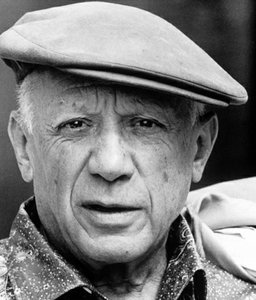
Ο Πάμπλο Πικάσο (1881-1973) ήταν επαναστατικός Ισπανός ζωγράφος και γλύπτης, συνιδρυτής του κυβισμού και δάσκαλος πολλαπλών στυλ. Γνωστός για έργα όπως το Γκέρνικα, η κληρονομιά του συνεχίζει να εμπνέει.
§ 3Commentary
The Absinthe Drinker: A Portrait of Parisian Melancholy
Pablo Picasso’s “The Absinthe Drinker,” completed in 1901, stands as a pivotal work within the artist's burgeoning Cubist exploration and a haunting reflection of the anxieties simmering beneath the surface of Belle Époque Paris. More than just a depiction of a woman enjoying a drink—though the meticulous observation of her posture and gaze is undeniably striking—the painting embodies a profound psychological complexity that continues to fascinate art historians.
- Subject Matter: The portrait portrays a solitary female figure seated at a table, illuminated by diffused light. Her downward gaze conveys introspection and perhaps sorrow, contrasting sharply with the upward tilt of her head as she observes the absinthe glass before her.
- Style & Technique: Picasso’s masterful application of Cubist principles is immediately apparent. The woman's face and torso are fragmented into geometric planes—a technique pioneered by Picasso alongside Georges Braque—creating a simultaneous representation of multiple perspectives. This deliberate distortion challenges traditional notions of realism, prioritizing conceptual exploration over accurate visual depiction.
- Color Palette: Dominated by muted earthy tones – ochre, brown, and grey – the palette contributes to the painting’s melancholic atmosphere. Picasso employs subtle color gradations to sculpt form and texture, emphasizing the materiality of the surfaces depicted. The use of complementary colors—primarily greens and reds—adds visual interest without overwhelming the overall mood.
Historical Context: “The Absinthe Drinker” emerged during a period marked by social unrest and intellectual ferment in Paris. Absinthe, a potent anise-flavored liqueur popular among artists and intellectuals of the time, symbolized decadence, disillusionment, and escape from societal pressures. Picasso’s choice to depict this drink—and its drinker—reflects the pervasive mood of uncertainty and introspection that characterized the era.
Symbolism: The absinthe glass itself serves as a potent symbol of contemplation and detachment. Its positioning beneath the woman's gaze suggests she is wrestling with internal thoughts, attempting to find solace in solitude amidst the bustling city life outside. Furthermore, Picasso’s stylistic choices—the fragmentation of form and the muted color palette—mirror the psychological state of his subject, conveying a sense of emotional vulnerability.
Emotional Impact: “The Absinthe Drinker” transcends mere visual representation; it evokes a palpable feeling of melancholy and quiet contemplation. Picasso’s ability to capture the subtleties of human emotion—the unspoken sadness lurking beneath the surface—solidifies his place as one of the most influential artists of the 20th century. It remains a compelling testament to the power of art to explore the complexities of the human psyche.
Ερωτήσεις και Απαντήσεις
Για τι χρήση συνιστάται μια αναπαραγωγή του έργου "The absinth drinker" του Πάμπλο Πικάσο;
Η προτεινόμενη χρήση μιας εκτύπωσης του "The absinth drinker" είναι η Accent.
Πώς μπορώ να κατεβάσω την εικόνα του έργου "The absinth drinker" του Πάμπλο Πικάσο;
Η λήψη είναι διαθέσιμη για το "The absinth drinker": στη σελίδα Λήψη ψηφιακού αρχείου του έργου μπορείτε να κάνετε λήψη ψηφιακής εικόνας υψηλής ανάλυσης.
Ποιος δημιούργησε το "The absinth drinker";
Ο καλλιτέχνης πίσω από το "The absinth drinker" είναι ο/η Πάμπλο Πικάσο. Το έργο καταχωρείται υπό το όνομα του/της Πάμπλο Πικάσο.


 Μετάβαση σε Εκτυπώσεις


 Για έργα τέχνης ή αναπαραγωγές με πλευρά υπερβαίνουσα των 105 εκ. (περίπου 41 ίντσες), το πλαίσιο θα αποσταλεί αποσυναρμολογημένο, σε μορφή κιτ. Η μέθοδος αυτή διασφαλίζει την ασφαλή παράδοση και προλαμβάνει τυχόν ζημιές κατά τη μεταφορά.


