


 Προεπισκόπηση σε πραγματική κλίμακα
 Αποστολή
 Κοινοποίηση
 Λεπτομέρειες
 Οδηγός

 Λήψη
Λήψη
 Παρόμοια αντικείμενα συλλογής
 Ακτινογραφία
 Παρουσίαση
 Στατιστικά
Untitled


 Περισσότερα
Το έργο τέχνης που εμφανίζεται σε αυτή τη σελίδα προστατεύεται από τους νόμους περί πνευματικών δικαιωμάτων, γεγονός που σημαίνει ότι δεν μπορούμε νομικά να δημιουργήσουμε ή να πουλήσουμε μια ταυτόσημη αναπαραγωγή του. Αυτή η προστασία επιβάλλεται βάσει διεθνών συμφωνιών, όπως η Σύμβαση της Βέρνης καθώς και από τους εθνικούς νόμους, συμπεριλαμβανομένων αυτών που ορίζονται από το Νομοθεσία περί πνευματικών δικαιωμάτων των ΗΠΑ - Τίτλος 17. Όλα τα δικαιώματα κατοχυρωμένα. Απαγορεύεται η αναπαραγωγή χωρίς άδεια.
Ως μια σεβαστή και νόμιμη εναλλακτική, προσφέρουμε προσαρμοσμένα, χειροποίητα έργα τέχνης εμπνευσμένα από το πρωτότυπο. Οι έμπειροι και επαγγελματίες καλλιτέχνες μας μελετούν προσεκτικά το στυλ, τη διάθεση και την καλλιτεχνική ουσία του πρωτοτύπου, ώστε να δημιουργήσουν ένα νέο, μοναδικό έργο που προκαλεί την ίδια αίσθηση — παραμένοντας όμως μια πρωτότυπη δημιουργία από μόνη της.
Αυτή η μέθοδος συμμορφώνεται πλήρως με τους κανονισμούς περί πνευματικών δικαιωμάτων, καθώς δεν περιλαμβάνει την αντιγραφή ή την αναπαραγωγή του προστατευόμενου έργου. Αντίθετα, πρόκειται για μια δημιουργική ερμηνεία — ένα νέο έργο που επηρεάζεται από το πρωτότυπο, χωρίς όμως να είναι πανομοιότυπο με αυτό.
Χειροποίητη Αναπαραγωγή σε Έλαιο
Χειροποίητη ελαιογραφία σε καμβά στο δικό σας μέγεθος και πλαίσιο, κατά παραγγελία από τους καλλιτέχνες μας. ( Μετάβαση σε Εκτυπώσεις Μετάβαση σε Ψηφιακή Αποτέλεσμα)




































Επιλέξτε από τις προκαθορισμένες διαστάσεις μας που διατηρούν τις αρχικές αναλογίες του έργου τέχνης.

Πληκτρολογήστε το πλάτος και το ύψος που επιθυμείτε, ώστε να ταιριάζουν στο κάδሮ ή στον τοίχο σας. Ε เนื่องจาก πρόκειται για χειροποίητη ζωγραφική, σε περίπτωση διαστάσεων με διαφορετικό σχήμα, ο καλλιτέχνης μπορεί να ζωγραφίσει λίγο παραπάνω γύρω από το έργο ή να αφαιρέσει ένα μέρος — η επιλογή είναι δική σας. Σας στέλνουμε ένα ψηφιακό mockup για έγκριση πριν ξεκινήσει η δημιουργία του έργου. Η εικόνα που εμφανίζεται σε αυτή τη σελίδα δεν δείχνει το τελικό αποτέλεσμα — μόνο το mockup το αναδεικνύει.
Μετά την παραγγελία, η ομάδα του AllPaintingsStore.com θα στείλει email στον πελάτη με οδηγίες και θα παρέχει μια προεπισκόπηση προσχεδίου
Παγκόσμια Αποστολή () σε 3-4 εβδομάδες αντί για τις συνήθεις 5 εβδομάδες. (27 Οκτώβριος). Χωρίς συμβιβασμούς στην ποιότητα.

Δωρεάν γρήγορη διεθνής αποστολή

Κάμβας από Λινό Υψηλής Ποιότητας

Πλήρης ασφάλιση μεταφοράς

Εγγύηση επιστροφής δασμών και φόρων εισαγωγής

Εγγύηση Απόλυτης Ομοιότητας Χρωμάτων

Πολιτική Επιστροφής 100 Ημερών (Μόνο σε περίπτωση ελαττωμάτων)

Εγγύηση επιστροφής 100% των χρημάτων

Προσφορά για πολλαπλές παραγγελίες
 Η επιλογή με γυαλί είναι διαθέσιμη μόνο για μεγέθη κάτω από 110 εκ.

Untitled
Μέσο Αναπαραγωγής
Διαστάσεις Αναπαραγωγής
-


Τελική Τιμή
€ 227
The Soul of Overtown Captured in Ink
In the raw, unfiltered strokes of Purvis Young’s Untitled (1980), one does not merely observe art; one witnesses the heartbeat of a community. This evocative piece serves as a profound window into the social fabric of Miami’s Overtown neighborhood, a place once vibrant with Jamaican heritage and now etched with the scars of urban displacement. Young, an autodidact who honed his vision through the study of masters like Van Gogh and Picasso while incarcerated, possessed a singular ability to transform the discarded into the divine. In this work, the medium itself tells a story of resilience, as the artist utilizes found surfaces—the very detritus of daily life—to reconstruct a world that was being systematically dismantled by the construction of Interstate 395.
The composition is a masterful display of expressionistic layering, where figures emerge from a chaotic, textured landscape. Through a delicate yet urgent application of ink and wash, Young populates his canvas with a multitude of souls. We see individuals in various states of existence: some standing in quiet contemplation, others reclining in repose, and groups gathered in what feels like a communal ritual. The presence of a solitary chair near the center of one scene acts as a poignant symbol of both presence and absence, anchoring the swirling energy of the crowd with a moment of stillness. This technique creates a sense of depth that is not merely spatial but emotional, pulling the viewer into a dense, monochromatic narrative where every line vibrates with the tension of urban life.
A Tapestry of Resilience and Memory
To encounter this artwork is to engage with a powerful form of visual archaeology. Young’s technique of utilizing old books, manila folders, and discarded correspondence allows the history of the medium to merge with the history of the subject. The weathered, antique feel of the underlying surfaces adds a layer of temporal weight, suggesting that these memories are being unearthed from the very archives of the streets. The style sits at a breathtaking intersection of expressionist surrealism and social realism; while the figures are rendered with a certain abstraction, their struggles, joys, and rituals are palpably real. There is an unsettling yet beautiful quality to the way text and imagery collide, mirroring the fragmented nature of memory and the trauma of community loss.
For the discerning collector or interior designer, Untitled offers more than just a striking visual element; it provides a profound conversational centerpiece. Its monochromatic palette and high-contrast textures allow it to integrate seamlessly into sophisticated, modern environments, providing a soulful counterpoint to minimalist decor. Whether placed in a gallery setting or a curated residential space, the piece radiates an undeniable emotional gravity. It invites contemplation on themes of survival, the sanctity of the everyday, and the enduring power of the human spirit to create beauty from the margins of society. Owning a reproduction of such a significant work is an opportunity to preserve a vital chapter of American art history and to surround oneself with the enduring legacy of Purvis Young.
Ερωτήσεις και Απαντήσεις
Πού συνιστάται να τοποθετηθεί το έργο "Untitled" στο format Landscape;
Με το σχήμα του (Landscape), μια αναπαραγωγή του "Untitled" προτείνεται για ένα Coffee Shop.
Ποια χρήση και ποιος χώρος προτείνονται για το "Untitled" του Πούρβις Γιουνγκ;
Οι προτάσεις για τη χρήση (Conversation) και τον χώρο (Coffee Shop) που καταγράφονται για το "Untitled" του Πούρβις Γιουνγκ είναι δύο.
Ποιο χρώμα κυριαρχεί στο "Untitled";
Το χρώμα που ξεχωρίζει περισσότερο στο "Untitled" είναι το Putty (#d0c3a5). Το κυρίαρχο χρώμα είναι χρήσιμο όταν συνδυάζετε ένα έργο τέχνης με έναν εσωτερικό χώρο.
Σχετικά Έργα Τέχνης


Βιογραφικό Καλλιτέχνη
A Life Forged in Overtown: The Story of Purvis Young
Purvis Young’s art wasn't born in a sterile studio, but rather blossomed on the gritty streets of Miami’s Overtown neighborhood—a place he didn’t merely depict, but truly *embodied* and breathed life into. Born in Liberty City in 1943, his journey was one sculpted by hardship, keen observation, and an unwavering dedication to translating the soul of his community onto any surface available to him. He wasn't a product of formal art education; his schooling came from immersing himself in the pages of art books during a period of incarceration, followed by relentless study at Miami’s public libraries—a testament to his self-directed pursuit of knowledge and artistic understanding. This autodidacticism became the very cornerstone of his artistic identity – a deliberate rejection of established norms, mirroring the remarkable resilience of Overtown itself. His early life was marked by significant challenges, including time spent incarcerated for breaking and entering, an experience that profoundly shaped his worldview, igniting within him a creative fire he would carry throughout his career. Upon his release, he didn’t seek out galleries or the patronage of established art dealers; instead, he turned inward, finding inspiration in the decaying beauty and vibrant humanity surrounding him—a testament to his independent spirit and unwavering commitment to his artistic vision.The Alchemy of Found Objects
Young's artistic process was as unique and unconventional as his perspective. He wasn’t driven by a desire for pristine canvases or expensive materials; rather, he scoured Overtown – a neighborhood undergoing dramatic transformation and decline – for discarded wood, scrap metal, old books, fragments of wallpaper, and anything else that caught his eye. These weren't simply *materials*; they were the very essence of the community he sought to capture and represent. He transformed these castoffs—the remnants of lives lived and businesses abandoned—into powerful assemblages, layering drawings, paintings, and text in a chaotic yet strangely harmonious manner. This wasn’t merely an act of resourcefulness; it was a deliberate and profound reclamation – giving voice to the forgotten and overlooked inhabitants of Overtown. His work frequently featured recurring motifs: horses symbolizing freedom and hope, angels representing spirituality and faith, and fragmented figures engaged in ritualistic acts—all rendered with a raw intensity that conveyed both despair and an enduring spirit of resilience. The surfaces themselves were textured, layered, and often deliberately distressed, mirroring the physical and emotional landscape of Overtown – its beauty intertwined with its struggles. He didn’t just paint *about* the neighborhood; he painted *with* it, incorporating its very fabric into his art, creating a visual dialogue between the artist and his surroundings.Echoes of Influence and a Singular Voice
While largely self-taught, Young wasn't entirely isolated from artistic currents. The mural movement of the 1960s – with its emphasis on community engagement and social commentary – resonated deeply with him, inspiring him to create large-scale works directly within Overtown—transforming dilapidated walls into vibrant canvases that documented the lives and struggles of its residents. He absorbed influences from a wide range of sources – from Western art history to folk traditions – evident in his eclectic style, yet he never simply imitated. His work possesses a distinct aesthetic – a raw energy, a chaotic beauty, and a poignant social commentary that sets him apart. Some critics have noted echoes of Expressionism and Surrealism in his imagery, but these are filtered through the unique lens of his personal experience and cultural context. He wasn’t interested in replicating existing styles; he was intent on forging his own visual language – one that could capture the complexities of urban life and the resilience of the human spirit.Recognition and Lasting Legacy
For years, Young's work circulated primarily within a devoted local following—a testament to its immediate power and emotional resonance. Collectors like Jane Fonda, Damon Wayans, Jim Belushi, and Dan Aykroyd recognized the originality and depth of his vision early on, providing crucial support during a time when mainstream art institutions largely overlooked him. The documentary *Purvis of Overtown*, produced in 2006, brought wider attention to his life and work, showcasing his process and revealing the profound connection he had with his community. However, it was ultimately the increasing recognition from prestigious museums – including the American Folk Art Museum, the Pérez Art Museum Miami, and the Smithsonian American Art Museum – that solidified his place in art history. In 2018, he was posthumously inducted into the Florida Artists Hall of Fame—a remarkable honor recognizing his enduring impact on the state’s artistic heritage.A Chronicle of a Community
Purvis Young's significance extends far beyond mere aesthetics. His work serves as an invaluable historical document, preserving the memory of Overtown during a period of profound transformation and social upheaval. He captured the essence of a community facing displacement, poverty, and systemic injustice – giving voice to those who were often marginalized and ignored. His art is a powerful commentary on the African American experience in the South, exploring themes of resilience, spirituality, and the enduring search for dignity. Moreover, his success as a self-taught artist challenges conventional notions of artistic training, demonstrating that true creativity can flourish outside the confines of academia. He reminds us that art isn’t just about technical skill; it's about vision, passion, and the courage to tell your story—even when that story is difficult or uncomfortable. His legacy continues to inspire artists and viewers alike, urging us to look beyond the surface and engage with the complexities of the world around us.
Πούρβις Γιουνγκ
1943 - 2010 , Ηνωμένες Πολιτείες της Αμερικής
Γρήγορα στοιχεία
- Artistic Movement Or Style: Εκφρατισμός
- Date Of Birth: 4 Φεβρουαρίου 1943
- Date Of Death: 20 Απριλίου 2010
- Full Name: Purvis Young
- Nationality: Αμερικανός
- Notable Artworks:
- Untitled (1980)
- Untitled (1978)
- Place Of Birth: Liberty City, ΗΠΑ
Σχετικά άρθρα
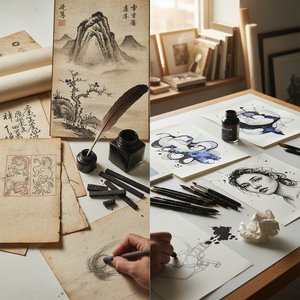
Ephemeral Expressions: Exploring the Nuances of Ink on Paper Through History & Contemporary Art
Explore the captivating world of ink wash painting – from its ancient origins to contemporary masters. Discover techniques, symbolism & conservation insights with AllPaintingsStore.com.

Ephemeral Lines: Exploring Emotional Resonance in Ink Sketching Traditions
Explore the profound art of ink sketching! Discover techniques to express emotion, master line work, and cultivate artistic sensitivity. Learn from historical masters & unlock your creative potential.
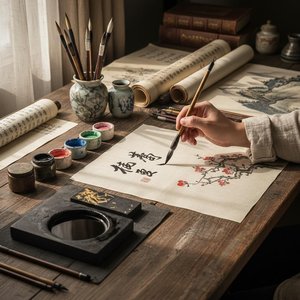
The Alchemy of Ink: Mastering the Timeless Beauty and Art History of Paper and Brush
Embark on a sophisticated exploration of ink wash painting and Sumi-e. Uncover the profound historical lineages, Zen philosophies, and technical mastery behind this timeless medium in our authoritative guide for fine art enthusiasts.

Mastering the Flow: The Timeless Art of Ink on Paper and the Legacy of Calligraphic Mastery
Explore the profound elegance of ink on paper. From the rhythmic running script of the Ming Dynasty to Zen-inspired haiku, discover the history, technique, and meditative mastery behind the world's most timeless calligraphic traditions.

Mastering Ink on Paper: The Timeless Art of Precision, Flow, and Calligraphic Heritage
Explore the profound mastery of ink on paper. From Japanese haiku traditions to Ming Dynasty calligraphy, discover the delicate balance of precision and flow that defines this timeless art form through an expert historical lens.


