

Oil On Canvas.

§ 1Catalogue data


Το έργο αυτό προστατεύεται από πνευματικά δικαιώματα
Το έργο τέχνης που εμφανίζεται σε αυτή τη σελίδα προστατεύεται από τους νόμους περί πνευματικών δικαιωμάτων, γεγονός που σημαίνει ότι δεν μπορούμε νομικά να δημιουργήσουμε ή να πουλήσουμε μια ταυτόσημη αναπαραγωγή του. Αυτή η προστασία επιβάλλεται βάσει διεθνών συμφωνιών, όπως η Σύμβαση της Βέρνης καθώς και από τους εθνικούς νόμους, συμπεριλαμβανομένων αυτών που ορίζονται από το Νομοθεσία περί πνευματικών δικαιωμάτων των ΗΠΑ - Τίτλος 17. Όλα τα δικαιώματα κατοχυρωμένα. Απαγορεύεται η αναπαραγωγή χωρίς άδεια.
Ως μια σεβαστή και νόμιμη εναλλακτική, προσφέρουμε προσαρμοσμένα, χειροποίητα έργα τέχνης εμπνευσμένα από το πρωτότυπο. Οι έμπειροι και επαγγελματίες καλλιτέχνες μας μελετούν προσεκτικά το στυλ, τη διάθεση και την καλλιτεχνική ουσία του πρωτοτύπου, ώστε να δημιουργήσουν ένα νέο, μοναδικό έργο που προκαλεί την ίδια αίσθηση — παραμένοντας όμως μια πρωτότυπη δημιουργία από μόνη της.
Αυτή η μέθοδος συμμορφώνεται πλήρως με τους κανονισμούς περί πνευματικών δικαιωμάτων, καθώς δεν περιλαμβάνει την αντιγραφή ή την αναπαραγωγή του προστατευόμενου έργου. Αντίθετα, πρόκειται για μια δημιουργική ερμηνεία — ένα νέο έργο που επηρεάζεται από το πρωτότυπο, χωρίς όμως να είναι πανομοιότυπο με αυτό.
 Διαβάστε περισσότερα
§ 2Abstract
Περιγραφή Συλλεκτικού Αντικειμένου
René Magritte’s *Le Printemps* (“Spring”) captivates viewers with its paradoxical beauty. This iconic painting showcases a bird in flight juxtaposed against a lush tree, embodying Surrealism's challenge to perception and reality. Explore Magritte’s masterful technique—smooth surfaces, blended colors—and discover the profound symbolism within this unforgettable artwork.
Βιογραφικό Καλλιτέχνη
Ο Ρενέ Μαγκρίτ (1898-1967): Ένας εκκεντρικός Βέλγος ζωγράφος που αμφισβητεί την πραγματικότητα με σουρεαλιστικά έργα. Ανακαλύψτε τα εμβληματικά του έργα, όπως «Οι Αγαπώμενοι»!
§ 3Commentary
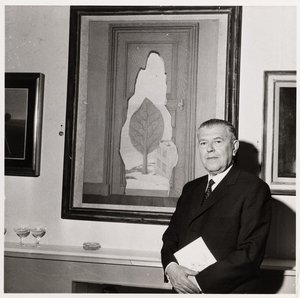
A Glimpse of Renewal: Exploring René Magritte’s *Le Printemps*
René Magritte's *Le Printemps* (“Spring”) is a captivating example of his signature Surrealist style, offering a poetic and subtly unsettling vision of nature and rebirth. Painted sometime during his prolific career (1898-1967), this work transcends a simple depiction of birds and trees, inviting viewers into a realm where the familiar becomes wonderfully strange.Subject & Composition
The painting centers around a vibrant bird in mid-flight, dominating much of the canvas. Its colorful plumage immediately draws the eye, creating a focal point that suggests energy and movement. A lush tree with verdant leaves provides a backdrop, grounding the scene while simultaneously enhancing its dreamlike quality. Two smaller birds are subtly integrated into the composition – one perched near the upper left corner, the other in the middle right – adding depth and a sense of quiet observation to the dynamic central image. The arrangement isn’t merely representational; Magritte carefully balances elements to guide the viewer's gaze and evoke a specific emotional response.Style & Technique
*Le Printemps* exemplifies Magritte’s meticulous approach to painting. While his earlier works showed Impressionistic tendencies, by this point he had fully embraced Surrealism. He employs a precise, almost hyperrealistic technique, rendering the bird and foliage with remarkable clarity. This sharp detail contrasts beautifully with the illogical juxtaposition of elements – a hallmark of Surrealist art. Magritte’s style isn't about showcasing brushwork or texture; it’s about creating an *illusion* of reality that is simultaneously believable and profoundly unsettling. He favored smooth surfaces and carefully blended colors, contributing to the painting’s polished, almost photographic quality.Historical Context & Surrealism
Magritte was a key figure in the Surrealist movement, which emerged in the aftermath of World War I. Surrealism sought to liberate thought, language, and human experience from the constraints of reason, drawing heavily on the theories of Sigmund Freud. Artists like Magritte aimed to unlock the power of the unconscious mind through unexpected imagery and illogical combinations. *Le Printemps*, while seemingly innocent, embodies this spirit by presenting a familiar scene – birds in spring – with an undercurrent of mystery and ambiguity. It’s important to note that Magritte distinguished himself from other Surrealists; he wasn't interested in automatic writing or purely abstract expression but rather in creating meticulously rendered images that challenged our perceptions of reality.Symbolism & Interpretation
The symbolism within *Le Printemps* is open to interpretation, a characteristic feature of Magritte’s work. The bird, traditionally a symbol of freedom and hope, takes on a more complex meaning here. Its large size and prominent position could suggest an overwhelming force or the power of imagination. Spring itself represents renewal and rebirth, but Magritte doesn't offer a straightforward celebration of these themes. The painting invites contemplation about the nature of reality, perception, and the hidden meanings embedded within everyday life. Is this spring as we know it, or a dreamlike representation? The seemingly simple scene becomes a philosophical inquiry.Emotional Impact & Aesthetic Appeal
*Le Printemps* evokes a sense of quiet wonder mixed with subtle unease. The painting’s serene color palette and graceful composition are aesthetically pleasing, yet the illogical nature of the image prevents complete relaxation. It's this tension – between beauty and strangeness – that makes Magritte’s work so compelling. For interior designers, this piece offers a sophisticated touch of Surrealism, adding intellectual depth and visual interest to any space. Its calming yet thought-provoking nature makes it suitable for living rooms, studies, or bedrooms. *Le Printemps* is more than just a painting; it’s an invitation to question the world around us and embrace the power of imagination.Ερωτήσεις και Απαντήσεις
Σε ποιο καλλιτεχνικό ρεύμα ανήκει το "Le printemps" του Ρενέ Μαγκρίτ;
Το έργο "Le printemps" ανήκει στο καλλιτεχνικό ρεύμα Surrealism, το οποίο ορίζει την καλλιτεχνική παράδοση στην οποία εντάσσεται.
Πώς συνδέει το "Le printemps" του Ρενέ Μαγκρίτ το Surrealism με τη χώρα καταγωγής του καλλιτέχνη;
Το έργο του ή της Surrealism "Le printemps" δημιουργήθηκε από καλλιτέχνη που γεννήθηκε στην/στο Βέλγιο.
Είναι το "Le printemps" μια καλή ιδέα για δώρο;
Το έργο "Le printemps" του Ρενέ Μαγκρίτ προτείνεται ως δώρο για το Seasonal Gift. Μια αναπαραγωγή του έργου αποτελεί μια εξαιρετική επιλογή δώρου.


 Μετάβαση σε Εκτυπώσεις


 Για έργα τέχνης ή αναπαραγωγές με πλευρά υπερβαίνουσα των 105 εκ. (περίπου 41 ίντσες), το πλαίσιο θα αποσταλεί αποσυναρμολογημένο, σε μορφή κιτ. Η μέθοδος αυτή διασφαλίζει την ασφαλή παράδοση και προλαμβάνει τυχόν ζημιές κατά τη μεταφορά.





