


 Προεπισκόπηση
 Αποστολή
 Κοινοποίηση
 Λεπτομέρειες
 Οδηγός

 Λήψη
Λήψη
 Παρόμοια αντικείμενα συλλογής
 Ακτινογραφία
 Παρουσίαση
 Στατιστικά
Galatea


 Περισσότερα λεπτομέρεια
Χειροποίητη Αναπαραγωγή σε Έλαιο
Χειροποίητη ελαιογραφία σε καμβά στο δικό σας μέγεθος και πλαίσιο, κατά παραγγελία από τους καλλιτέχνες μας. ( Μετάβαση σε Εκτυπώσεις Μετάβαση σε Ψηφιακή Εικόνα)




P118B €10

P118H €10

P118W €10

P438Z €10

P508JH €12

P508YH €12

P805H €10

P805Z €10

P919BZ €10

P919G €10

P919XJ €10

P959ZH €10

P968JZ €12

W106C €8

W218G €10

W218JH €8

W218Y €10

W307PJ €10

W316G €10

W316PJ €8

W316Y €10

W398PJ €8

W4111J €10

W500HY €15

W500JH €15

W692G €12

W849H €8

W940BG €15

W953PJ €8




Επιλέξτε από τις προκαθορισμένες διαστάσεις μας που διατηρούν τις αρχικές αναλογίες του έργου τέχνης.

Πληκτρολογήστε το πλάτος και το ύψος που επιθυμείτε, ώστε να ταιριάζουν στο κάδሮ ή στον τοίχο σας. Ε เนื่องจาก πρόκειται για χειροποίητη ζωγραφική, σε περίπτωση διαστάσεων με διαφορετικό σχήμα, ο καλλιτέχνης μπορεί να ζωγραφίσει λίγο παραπάνω γύρω από το έργο ή να αφαιρέσει ένα μέρος — η επιλογή είναι δική σας. Σας στέλνουμε ένα ψηφιακό mockup για έγκριση πριν ξεκινήσει η δημιουργία του έργου. Η εικόνα που εμφανίζεται σε αυτή τη σελίδα δεν δείχνει το τελικό αποτέλεσμα — μόνο το mockup το αναδεικνύει.
Μετά την παραγγελία, η ομάδα του AllPaintingsStore.com θα στείλει email στον πελάτη με οδηγίες και θα παρέχει μια προεπισκόπηση προσχεδίου
Παγκόσμια Αποστολή () σε 3-4 εβδομάδες αντί για τις συνήθεις 5 εβδομάδες. (22 Οκτώβριος). Χωρίς συμβιβασμούς στην ποιότητα.

Δωρεάν γρήγορη διεθνής αποστολή

Κάμβας από Λινό Υψηλής Ποιότητας

Πλήρης ασφάλιση μεταφοράς

Εγγύηση επιστροφής δασμών και φόρων εισαγωγής

Εγγύηση Απόλυτης Ομοιότητας Χρωμάτων

Πολιτική Επιστροφής 100 Ημερών (Μόνο σε περίπτωση ελαττωμάτων)

Εγγύηση επιστροφής 100% των χρημάτων

Έκπτωση για πολλαπλές παραγγελίες
 Η επιλογή με γυαλί είναι διαθέσιμη μόνο για μεγέθη κάτω από 110 εκ.

Galatea
Τεχνική Αναπαραγωγής
Διαστάσεις Αναπαραγωγής
-


Συνολικό Κόστος
€ 226
Robert Le Lorrain: A Vision of Mythic Beauty
Giovanni Francesco Barbieri, universally known as Il Guercino (1591-1666), stands as a pivotal figure in the transition between Mannerism and Baroque painting. Born in Cento, a small town near Bologna, Italy, his early life was marked by a physical condition – a pronounced squint that earned him the nickname “il guercino,” meaning ‘the squinter.’ This visual impairment profoundly shaped his artistic vision, fostering an intense sensitivity to light, shadow, and form, ultimately leading to a distinctive style characterized by dramatic contrasts and a powerful emotional resonance. Unlike many artists of his time who relied on idealized beauty and classical restraint, Guercino embraced a more visceral approach, drawing inspiration from Caravaggio’s revolutionary use of tenebrism – the stark juxtaposition of light and dark – while simultaneously developing a unique expressive language. He wasn't merely depicting figures; he was conveying feeling—a palpable drama that distinguishes his oeuvre from its predecessors.- Early Influences: Guercino’s formative years were steeped in the artistic traditions of Bologna, where Mannerist principles – emphasizing stylized forms and attenuated colors – held sway. However, he quickly absorbed the burgeoning Baroque fervor emanating from Rome, particularly Caravaggio's groundbreaking technique of chiaroscuro, which would become a cornerstone of his own style. This encounter proved transformative, propelling him toward a bolder aesthetic that prioritized emotional intensity over meticulous realism.
- Technique and Style: Guercino’s mastery lay in his ability to manipulate light and shadow with breathtaking precision. He employed tenebrism extensively, creating scenes bathed in pools of luminous illumination against oppressive darkness—a deliberate strategy designed to heighten dramatic effect and evoke profound psychological states. His brushstrokes were loose and expressive, conveying movement and texture without sacrificing compositional clarity.
- Galatea: A Mythological Emblem The subject matter of “Galatea” – the mythological tale of Galatea and Perseus – embodies Guercino’s preoccupation with classical themes infused with humanist sensibilities. The sculpture depicts Galatea, a nymph from Greek mythology, being rescued by Perseus from Medusa's gaze. This narrative serves as an allegory for overcoming adversity and achieving spiritual enlightenment—a common motif in Baroque art reflecting the era’s fascination with moral philosophy and religious symbolism.
- Compositional Drama: Notice the careful arrangement of figures against a dark backdrop, emphasizing Galatea’s serene beauty amidst turbulent circumstances. The sculptor skillfully utilizes perspective to create depth and illusion, drawing viewers into the scene's emotional core. The subtle interplay of light and shadow sculpts form and enhances the narrative impact—a testament to Guercino’s artistic genius.
- Legacy: Robert Le Lorrain’s “Galatea” remains a celebrated exemplar of Baroque art, admired for its expressive power and masterful execution. Its enduring appeal testifies to Guercino's ability to capture not only the visual splendor of classical mythology but also the profound psychological complexities inherent in human experience—a timeless masterpiece that continues to inspire artists and collectors alike.
Provenance and Historical Context
The sculpture’s journey through history began at Académie Royale, Paris, in 1701, where it was acquired by Louis XIV's court. Subsequently, it transitioned into the possession of Jean-Baptiste Henry Collin de Sussy, a prominent French aristocrat, before finding its way to the Samuel H. Kress Foundation and eventually becoming part of the National Gallery’s collection. This provenance underscores the sculpture’s significance as a symbol of artistic patronage during the Enlightenment—a period characterized by intellectual curiosity and aesthetic refinement. The artwork's presence in prestigious institutions reflects its enduring value as an exemplar of Baroque artistry and its contribution to European cultural heritage.Further Exploration
To delve deeper into Robert Le Lorrain’s artistic vision, explore these resources:Recommended Reproduction
Consider commissioning a high-quality reproduction of “Galatea” to bring this iconic Baroque sculpture into your home or workspace—a beautiful reminder of Guercino’s artistic brilliance and the enduring power of classical mythology.Ερωτήσεις & Απαντήσεις
Ποιο είναι το κυρίαρχο χρώμα του "Galatea" του Robert Le Lorrain;
Το χρώμα που ξεχωρίζει περισσότερο στο "Galatea" είναι το Putty (#c5bbb3). Το κυρίαρχο χρώμα είναι χρήσιμο όταν συνδυάζετε ένα έργο τέχνης με έναν εσωτερικό χώρο.
Σε ποιο καλλιτεχνικό movement και σε ποια εποχή τοποθετείται το "Galatea" του Robert Le Lorrain;
Το "Galatea" ανήκει στο movement Baroque, και ο δημιουργός του εργάστηκε στην εποχή Early Modern.
Τι επίπεδα κορεσμού και έντασης παρουσιάζει το "Galatea" του Robert Le Lorrain;
Το έργο "Galatea" του Robert Le Lorrain καταγράφεται με κορεσμό Muted και ένταση Monochromatic.
Παρόμοια Έργα Τέχνης


Βιογραφικό Καλλιτέχνη
Giovanni Francesco Barbieri, ‘Il Guercino’ – A Master of Dramatic Light and Shadow
Giovanni Francesco Barbieri, universally known as Il Guercino (1591-1666), stands as a pivotal figure in the transition between Mannerism and Baroque painting. Born in Cento, a small town near Bologna, Italy, his early life was marked by a physical condition – a pronounced squint that earned him the nickname “il guercino,” meaning ‘the squinter.’ This visual impairment profoundly shaped his artistic vision, fostering an intense sensitivity to light, shadow, and form, ultimately leading to a distinctive style characterized by dramatic contrasts and a powerful emotional resonance. Unlike many artists of his time who relied on idealized beauty and classical restraint, Guercino embraced a more visceral approach, drawing inspiration from Caravaggio’s revolutionary use of tenebrism – the stark juxtaposition of light and dark – while simultaneously developing a unique expressive language.- Early Influences: Guercino's artistic journey began largely through self-study, though he received crucial instruction from Benedetto Gennari, a prominent Bolognese painter. His early works demonstrate a clear debt to the Carracci brothers, particularly Ludovico, whose emphasis on naturalism and dynamic composition served as a foundational influence.
- Rome and the Papal Court: A pivotal moment in his career arrived when he was summoned to Rome by Pope Gregory XV in 1621. This invitation provided him with access to significant commissions and exposed him to the vibrant artistic milieu of the city, further refining his technique and broadening his subject matter.
- A Varied Style: Guercino’s style evolved considerably throughout his career, reflecting both external influences and internal experimentation. His early works are characterized by a refined elegance and a meticulous attention to detail, while later paintings exhibit a greater sense of dynamism, emotional intensity, and a looser brushstroke.
The Dramatic Power of Light and Shadow
Guercino’s most distinctive contribution to the art world lies in his masterful manipulation of light and shadow – a technique he honed through years of careful observation and relentless experimentation. Unlike many of his contemporaries who employed chiaroscuro as a mere stylistic device, Guercino used it to convey profound psychological states and heighten the dramatic impact of his scenes. He meticulously studied the way light interacts with surfaces, creating an illusion of depth and volume that draws the viewer into the heart of the composition.- Tenebrism’s Influence: While not a direct follower of Caravaggio, Guercino absorbed many of the principles of tenebrism, employing strong contrasts between light and dark to create a sense of mystery and drama.
- Modeling and Shading: His approach extended beyond simple darkness; he skillfully used subtle gradations of shading to model forms, creating a remarkable illusion of three-dimensionality.
- Emotional Resonance: Guercino’s use of light and shadow was not merely decorative but served as a powerful tool for communicating emotion – conveying feelings of anguish, ecstasy, or profound contemplation.
Key Works and Patronage
Guercino's prolific output spanned a wide range of subjects, including biblical scenes, mythological narratives, portraits, and allegorical compositions. His most celebrated works include *Jacob Blessing the Sons of Joseph* (1620), a monumental altarpiece housed in the National Gallery of Ireland, and *The Cumaean Sibyl* (c. 1638), a dramatic depiction of the prophetess foretelling the birth of Christ. He also produced numerous drawings, which are highly valued for their technical brilliance and expressive power.- Ecclesiastical Commissions: A significant portion of Guercino’s work was commissioned by churches and religious institutions, reflecting his commitment to serving the Catholic Church.
- Portraiture: He also produced a number of portraits, often characterized by their psychological depth and subtle nuances of expression.
- The National Gallery Collection: The National Gallery in London holds an exceptional collection of Guercino’s works, providing invaluable insight into the evolution of his style and artistic vision.
Legacy and Historical Significance
Despite facing criticism during his lifetime for stylistic shifts and a perceived decline in quality, Guercino's influence on subsequent generations of artists is undeniable. His innovative use of light and shadow, combined with his dramatic compositions and profound emotional intensity, paved the way for future developments in Baroque painting. He stands as a testament to the power of individual vision and the enduring legacy of a truly remarkable artist.- Influence on Later Artists: Guercino’s work inspired artists such as Frans Hals and influenced Impressionist painters like Monet and Van Gogh.
- A Bridge Between Styles: He represents a crucial link between Mannerism and Baroque, embodying the dynamism and expressive potential of both styles.
- Rediscovery in the 20th Century: Guercino’s work experienced a significant revival in the 20th century, thanks to the efforts of scholars like Sir Denis Mahon, who meticulously researched his life and oeuvre, ensuring that his artistic achievements would be recognized and appreciated by a wider audience.

Robert Le Lorrain
1666 - 1743 , France
Στοιχεία καλλιτέχνη
- Full Name: Giovanni Francesco Barbieri, called Guercino
- Nationality: Italian
- Date Of Birth: 1666
- Date Of Death: 1743
- Place Of Birth: Paris, France
- Notable Artworks:
- Jacob blessing the sons of Joseph
- King David
- The Cumaean Sibyl
- Hagar and Ishmael
- Artistic Movement Or Style: Baroque
- Artists Who Influenced This Artist:
- Caravaggio
- Ludovico Carracci
- Artists Or Movements Influenced By This Artist:
- Frans Hals
- Impressionists
Σχετικά άρθρα

The Enduring Form: Sculpture Across History, Technique & Emotional Resonance
Explore the rich history of sculpture with AllPaintingsStore. Discover key techniques, influential artists & investment potential for discerning collectors. Expert insights into valuing and collecting timeless masterpieces.

The Enduring Form: Exploring Themes & Techniques in Sculpture Across Historical Periods
Explore the rich history of sculpture from ancient masterpieces to contemporary innovations. Discover key techniques, influential artists & investment potential for discerning art collectors.

Theatricality & Triumph: Baroque Drama in Painting & Sculpture
Explore the dramatic world of Baroque art! Discover its history, defining characteristics, & lasting influence on painting & sculpture. Expert insights into Caravaggio, Zurbarán, and Bernini – plus high-quality reproductions at AllPaintingsStore.

Οι 10 Κορυφαίοι Χάλκινοι Θρύλοι που Άλλαξαν την Τέχνη – Έμπνευση για το Σπίτι σας
Ανακαλύψτε τα 10 θρυλικά χάλκινα γλυπτά που επαναπροσδιόρισαν την τέχνη! Ιστορίες από Rodin, Degas & άλλους μεγάλους καλλιτέχνες. Βρείτε αναπαραγωγές υψηλής ποιότητας για να εμπνεύσετε το σπίτι σας. Εξερευνήστε τη συλλογή στο AllPaintingsStore.com.
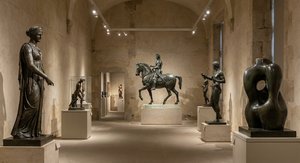
Οι 10 Κορυφαίοι Χάλκινοι Αγάλματα που Άλλαξαν την Ιστορία της Τέχνης | AllPaintingsStore.gr
Ανακαλύψτε τα 10 θρυλικά χάλκινα αγάλματα που διαμόρφωσαν την τέχνη! Από τον Rodin στον Michelangelo, εξερευνήστε ιστορίες, τεχνικές & αισθητική. Βρείτε αντίγραφα υψηλής ποιότητας για το σπίτι σας στην AllPaintingsStore.com.

