

Oil On Canvas.

§ 1Catalogue data


§ 2Abstract
Περιγραφή Συλλεκτικού Αντικειμένου
Discover Dr Thomas Herring by William Hogarth – a captivating 18th-century painting of a distinguished gentleman. Explore its intricate details & historical significance.
 Περισσότερα
Βιογραφικό Καλλιτέχνη
Ο William Hogarth (1697-1764) ήταν ζωγράφος & γλύπτης που δημιούργησε σατιρικές ιστορίες για την εποχή του, με έργα όπως το «Α Χαμένη Αλήθεια». Ανακαλύψτε τον!
§ 3Commentary
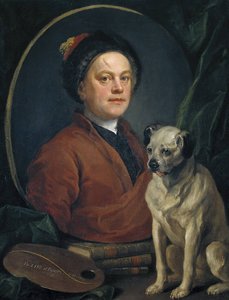
A Portrait of Authority: William Hogarth’s Dr. Thomas Herring
- Subject & Composition: This striking portrait depicts Dr. Thomas Herring, who would later become Archbishop of Canterbury, seated in a contemplative pose. The composition is classically formal; Herring is positioned centrally, his gaze directed outward with an air of quiet authority. He’s clad in the vestments befitting his clerical status – a dark robe and voluminous wig – and holds a book open on his lap, suggesting intellectual pursuit and scholarly dedication. His clasped hands convey both piety and control.
- Style & Technique: Painted by William Hogarth, this work exemplifies the artist’s mastery of realistic portraiture. While known for his satirical “modern moral subjects,” Hogarth was equally adept at capturing the likeness and character of individuals. The painting demonstrates meticulous attention to detail – from the texture of the fabrics to the subtle nuances of Herring's facial expression. Hogarth employs a restrained palette, relying on shades of black, grey, and white to create depth and form. His brushwork is precise, contributing to the overall sense of dignity and gravitas.
- Historical Context: Created sometime before Herring’s ascent to Archbishop in 1747, this portrait likely commemorates his earlier role as Bishop of Bangor (appointed 1738) or shortly after his appointment as Archbishop of York (1743). The mid-18th century was a period of significant religious and political upheaval in England. Herring himself became a prominent figure during the Jacobite rising of 1745, delivering a powerful sermon that rallied support for the Hanoverian monarchy. Hogarth’s portraits often served to document the leading figures of his time, offering insights into the social and cultural values of the era.
- Symbolism & Meaning: The open book held by Herring is a potent symbol of learning, faith, and intellectual authority. It suggests that he is not merely a religious leader but also a scholar and thinker. His attire reinforces his position within the Church hierarchy. The overall impression is one of stability, wisdom, and moral rectitude – qualities highly valued in a clergyman of the period. The somewhat austere setting focuses attention entirely on Herring’s character.
- Emotional Impact & Interpretation: Hogarth's portrait evokes a sense of respect and contemplation. Herring appears as a man of serious purpose, deeply engaged with his faith and responsibilities. The painting is not overtly emotional; rather, it conveys a quiet strength and intellectual depth. It invites viewers to consider the role of religion and leadership in 18th-century England. The portrait’s enduring appeal lies in its ability to capture the essence of a complex individual within a historically significant context.
Ερωτήσεις και Απαντήσεις
Πώς εντάσσεται το "Dr Thomas Herring" στα θέματα και το στυλ του/της Βίλλιαμ Χόγκαρθ;
Το "Dr Thomas Herring" ανήκει στο έργο του Βίλλιαμ Χόγκαρθ με την καλλιτεχνική κατεύθυνση Neoclassicism, των οποίων τα αναγνωρίσιμα θέματα περιλαμβάνουν το neoclassical influence, portraiture tradition, 18th-century society, moralizing subject matter, royal patronage context, artist's established style, formal, restrained aesthetic.
Με τι υλικά είναι φτιαγμένο το "Dr Thomas Herring" και σε ποιο στυλ;
Το έργο "Dr Thomas Herring" είναι φτιαγμένο με την τεχνική Oil On Canvas, σε στυλ Neoclassicism.
Σε ποια περίοδο της καριέρας του/της Βίλλιαμ Χόγκαρθ ανήκει το "Dr Thomas Herring";
Το έργο "Dr Thomas Herring" ανήκει στην περίοδο Late Medieval της καριέρας του Βίλλιαμ Χόγκαρθ. Αυτή η ταξινόμηση συνδέει το έργο με την εξέλιξη του καλλιτέχνη.


 Μετάβαση σε Εκτυπώσεις


 Για έργα τέχνης ή αναπαραγωγές με πλευρά υπερβαίνουσα των 105 εκ. (περίπου 41 ίντσες), το πλαίσιο θα αποσταλεί αποσυναρμολογημένο, σε μορφή κιτ. Η μέθοδος αυτή διασφαλίζει την ασφαλή παράδοση και προλαμβάνει τυχόν ζημιές κατά τη μεταφορά.


