Alfred Edmund Dyer: A Victorian Master of Copyist Technique
Alfred Edmund Dyer (1884 – 1955) stands as a testament to the enduring legacy of Victorian portraiture and meticulous artistic craftsmanship. Born in Stow-on-the-Wold, Gloucestershire, Dyer’s career was largely devoted to replicating celebrated paintings by luminaries like William Dobson and John Singer Sargent, establishing him as one of Britain's foremost copyists during his era. His work isn’t merely imitation; it’s a profound engagement with artistic tradition and an unwavering commitment to capturing the essence of original masterpieces.- Early Life & Education: Dyer received his formative artistic training at Marlborough College, where he honed his skills in drawing and painting under influential tutors. This grounding in classical art principles would prove invaluable as he embarked on his professional journey.
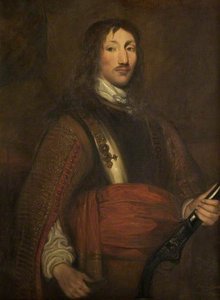
- Career Highlights: Dyer’s reputation grew steadily throughout the early 20th century, securing commissions to reproduce iconic artworks for private collectors and institutions alike. Notably, he undertook a significant project replicating Dobson's ‘Portrait of Sir Jacob Astley,’ demonstrating an exceptional understanding of compositional balance and tonal gradation.
The Art of Replication: Dyer’s Methodological Approach
Dyer’s artistic philosophy centered on the belief that mastering a painting demanded more than simply reproducing its surface appearance. He meticulously studied the original artwork, analyzing brushstrokes, lighting effects, and color palettes to reconstruct them faithfully in his own canvases. This painstaking process wasn't driven by mere technical proficiency; it was underpinned by an intellectual appreciation for the artist’s vision and creative intent. His copies weren’t simply reproductions—they were dialogues with artistic history.- Technical Skill: Dyer possessed remarkable control over pigment mixing, brushwork, and layering techniques – skills honed through years of dedicated practice. He prioritized accuracy in capturing subtle nuances of tone and texture, striving to convey the same atmospheric qualities as the original.
- Influence of Dobson & Sargent: Dyer’s artistic sensibilities were profoundly shaped by the works of William Dobson and John Singer Sargent, two masters of portraiture who championed academic realism and dramatic lighting. He absorbed their stylistic innovations, adapting them to his own distinctive approach.
Notable Reproductions & Artistic Legacy
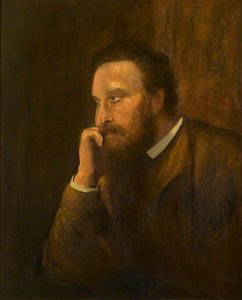
Among Dyer’s most celebrated achievements was his meticulous copy of John Singer Sargent's ‘The Right Honourable Weetman Dickinson Pearson,’ 1st Viscount Cowdray. This portrait exemplifies Dyer’s mastery of tonal modulation and directional illumination, successfully recreating Sargent’s masterful rendering of light and shadow—a feat that cemented Dyer’s place in the annals of British art history. His reproductions continue to be admired for their technical precision and artistic sensitivity.- The Captain Christie Crawfurd Collection: Dyer's work found its home within The Captain Christie Crawfurd English Civil War Collection, showcasing his dedication to preserving historical artistry.
Conclusion: A Quiet Champion of Artistic Tradition
Alfred Edmund Dyer’s contribution to Victorian art lies not in groundbreaking innovation but in unwavering devotion to upholding artistic standards. He served as a conduit for transmitting the spirit and technique of celebrated painters, ensuring that their masterpieces endured across generations. Dyer's legacy resides in his meticulous reproductions—testaments to his profound understanding of artistic craftmanship and his enduring respect for the heritage of British painting.Ερωτήσεις και Απαντήσεις
Πού μπορώ να δω όλα τα έργα του/της Alfred Edmund Dyer;
Μπορείτε να περιηγηθείτε σε όλα τα έργα του/της Alfred Edmund Dyer στο αυτή η ιστοσελίδα μέσω της σελίδας με την πλήρη συλλογή τους (Όλα τα έργα).
Πώς μπορώ να βρω έργα του/της Alfred Edmund Dyer με ένα συγκεκριμένο θέμα;
Για να βρείτε έργα του Alfred Edmund Dyer με συγκεκριμένο θέμα, επισκεφθείτε τη σελίδα Με Λέξεις-Κλειδιά του καλλιτέχνη, η οποία ομαδοποιεί τα έργα ανά λέξη-κλειδί.
Με τι άλλα ονόματα ή ψευδώνυμα είναι γνωστός/η Alfred Edmund Dyer;
Ο/Η Alfred Edmund Dyer είναι γνωστός/η επίσης ως Edmund Dyer.