

High Medieval καλλιτέχνες at a glance
Famous High Medieval Καλλιτέχνες — Top 96 List
Τζόττο (1267–1337) is the most famous High Medieval καλλιτέχνης, best known for Μάδονα σε Μαέστα (Μάδονα Ογνιαντίνι) και Αρ. 19 Σκηνές από τη Ζωή του Χριστού: 3. Η Παρουσίαση του Χριστού στο Ναό. Then Ντούτσιο ντι Μπουονινσένια, Τσιμαμπούε, Τσαο Μενγκφού και Zhu Xi. The list covers 96 καλλιτέχνες born between 970 and 1269 in 25 countries, from Xu Daoning to Huang Gongwang.
Method. Scope: artists filed under High Medieval in our catalogue. Order: our artist fame ranking. Excluded: artists born after 1955 without a Wikidata identifier. Wikipedia figure: languages with an article, out of our 32.


Key data
High Medieval: key data
- 96Καλλιτέχνες
- 970–1269Έτη γέννησης
- 25Χώρες γέννησης
- 3Γυναίκες
- 3Ζωντανοί καλλιτέχνες
- 1.429Έργα στον κατάλογό μας
- Μουσεία που διαθέτουν τα περισσότερα σημαντικά έργα
- Μετροπολιτικό Μουσείο Τέχνης (12), Εθνικό Παλατιωκό Μουσείο (8), The Palace Museum (8), Μουσείο Τέχνης Κλίβελαντ (7)
- Οι γυναίκες αυτής της λίστας
- Herrad of Landsberg, Guan Daosheng, Hildegard von Bingen
Ranked list
96 High Medieval Καλλιτέχνες, ranked with key works


2/ 96
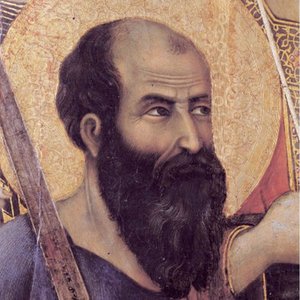
Ντούτσιο ντι Μπουονινσένια 1255–1319
Ιταλιάνος b. Σιένα Σιενέζικη Σχολή, Γοτθικό Τρεκέντο Wikipedia 31/32


3/ 96
Τσιμαμπούε 1240–1302
Ιταλός b. Φλωρεντία Βυζαντινή & Αναγέννηση Wikipedia 28/32
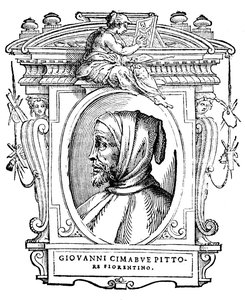
He was a child of the Florentine streets, growing up in a landscape where the heavy, golden formality of the East met a new, restless desire for something more human. This was followed by the Crucifix at San Domenico in Arezzo, dating around 1270, where the body of Christ appears to buckle under the weight of his own agony.
Location To follow the path of his brush is to travel across the great cities of Europe and beyond.


4/ 96
Τσαο Μενγκφού 1254–1322
Κινέζος b. Χούτζου Ζωγραφική Literati; Ζωγραφική Τοπίου Wikipedia 18/32

Zhao Mengfu (1254–1322) stands as a monumental figure in Yuan Dynasty art and arguably the progenitor of modern Chinese landscape painting. Born into a noble Song lineage, Zhao’s early life was marked by privilege but also shaped by turbulent political times—the Mongol conquest profoundly altering the cultural landscape of China.


5/ 96
Zhu Xi 1130–1200
Κινέζος b. Φουτζιαν Wikipedia 31/32

Zhu Xi was a Chinese philosopher, historian, politician, poet, and calligrapher of the Southern Song dynasty. Born in Fujian, he was a leading figure in the development of Neo-Confucianism, seeking to integrate moral self-cultivation, classical interpretation, ritual practice, and cosmological theory into a coherent framework.
Key works · Top 100 works
6/ 96
Ma Yuan 1160–1225
Κινέζος b. Χανγκζού Σχολή Ma-Xia, Δυναστεία Νότιας Song Wikipedia 19/32

In works like Scholar Viewing a Waterfall, the ink wash is layered with precision, using subtle tonal gradations to build depth and atmosphere without relying on heavy outlines. Ma Yuan was born into a family where painting was a professional necessity.


7/ 96
Guo Xi 1020–1090
Κινέζος b. Yancheng Ζωγραφική Τοπίου της Βόρειας Song Wikipedia 16/32

Unlike preceding styles which often prioritized stylized representations, Guo Xi championed a revolutionary approach—the “angle of totality,” or “floating perspective”—that sought to capture the illusion of depth and atmosphere with unprecedented realism. This monumental painting exemplifies his mastery of “floating perspective,” transporting the viewer into a breathtaking vista of snow-capped peaks and verdant valleys.


8/ 96
Αυτοκράτορας Χουϊτζονγκ Της Ντιναστίας Σονγκ 1082–1135
Chinese b. Κάιφέν Song Dynasty; Slender Gold calligraphy Wikipedia 19/32

Born Zhao Ji in 1082, he ascended to the throne during a period of unparalleled cultural flowering, yet his reign would ultimately become synonymous with the decline of the Northern Song dynasty. As a patron, he transformed the imperial court into a sanctuary for talent, establishing the Hanlin Imperial Painting House to gather the finest masters from across the empire.


9/ 96
Μουκί 1210–1269
Κινέζος b. Σιτσουάν Ζωγράφιση Chan Wikipedia 14/32

In the quiet, mist-shrouded landscapes of the thirteenth century, a monk emerged from the Sichuan province whose brushstrokes would forever alter the course of East Asian aesthetics. Muqi Fachang, known to history by his art name Muqi or Muxi, was not merely a painter but a spiritual conduit, translating the profound silences of Chan Buddhism into the language of ink and paper.
Key works · Top 100 works


10/ 96
Γκουίντο της Σιένα 1230–1290
Γαλλός b. Ιταλία Μεσαιωνική αρχιτεκτονική/σχεδίαση Wikipedia 17/32


12/ 96
Master Mateo 1161–1217
Spanish Romanesque Sculpture

While his contemporaries often relied on stylized, flat figures, Mateo meticulously studied human anatomy and the complex behavior of drapery, achieving an astonishing accuracy in his depictions.


14/ 96
Mi Fei 1051–1107
Κινέζος b. Τσιανγκσού Τέχνη της Δυναστείας Song Wikipedia 17/32

Zhao Mengfu: Riders Leading a White Horse (Μουσείο Τέχνης Indianapolis, μετάξι) – ένα έργο που αναδεικνύει την τεράστια επιρροή του Mi Fei στις επόμενες γενιές καλλιτεχνών.


15/ 96
Lorenzo Maitani 1255–1330
Italian b. Siena Gothic & Renaissance

These works include: Scenes from Genesis: Intricate reliefs that capture the primordial beginnings of humanity with a sense of movement and grace.


16/ 96
Li Gonglin 1049–1106
b. Tongcheng Song Dynasty painting Wikipedia 9/32

Instead, he turned to the works of artists like Zhan Ziqian, known for his precise depictions of horses, and Fan Kuan, celebrated for his monumental landscapes.


17/ 96
Μα Λιν 1180–1256
Κινέζος b. Baoding Τεχνική ζωγραφικής 'χωρίς ορίους' (boneless) Wikipedia 7/32

ma lin, a prominent chinese court painter, flourished during the early to mid 13th century (c. 1180 - 1256). as the son of the renowned artist ma yuan, ma lin was immersed in the art world from a young age, learning the intricacies of painting from his illustrious father.


18/ 96
Yi Kyu-Bo 1168–1241
Korean Confucianism

This dual commitment to tradition and creativity distinguishes Yi Kyu-Bo as a singular voice in Korean literary history—a figure who simultaneously honored the past while forging new paths toward artistic excellence.
19/ 96
Gislebertus 1120–1135
French Romanesque Sculpture

While biographical details remain scarce, scholars believe he was trained at Cluny Abbey, arguably the epicenter of European monastic art and intellectual life at the time.


20/ 96
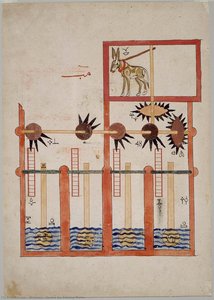
Badīʿ Az-Zaman Abu L-ʿIzz Ibn IsmāʿĪl Ibn Ar-Razāz Al-Jazarī 1136–1206
Muslim b. Jazirat Ibn Omar Islamic Golden Age Engineering

Born in Jazirat Ibn Omar, Turkey, around 1136 and passing away in 1206, Badīʿ az-Zaman Abu l-ʿizz ibn Ismāʿīl ibn ar-razāz al-jazarī – often simply known as al-Jazari – stands as a towering figure in the history of science, engineering, and art. Al-Jazari’s life unfolded within the vibrant, multicultural city of Jazira (modern-day Mosul), a crucial crossroads in the Artuqid dynasty's sphere of influence.


21/ 96
Giunta Pisano 1190–1260
Italian b. Pisa Renaissance style Wikipedia 10/32

Byzantine Influence: His early works show clear traces of Byzantine iconography, particularly in the composition and rendering of Christ’s figure. The Crucifix of San Raniero, housed in the Museo Nazionale di San Matteo in Pisa, exemplifies his groundbreaking approach.


22/ 96
Xia Gui 1195–1224
Song dynasty b. Hangzhou Wikipedia 16/32

The surviving works of Xia Gui include various genres, such as small album leaves and hand scrolls. Notable examples of his work include: His influence extended far beyond his own era, impacting the Japanese master Sesshū Tōyō, who was influenced by Xia's idiom and made studies of his landscape fans.


24/ 96
Li Tang 1050–1130
Song dynasty b. Meng Prefecture Academy-style landscape Wikipedia 15/32

Through this precision, his approach became the foundation for what is recognized as the academy-style landscape of the Southern Song. The inscription identifies the work as being painted by Li Tang of Ho-yang during the spring of the chia-ch'en year of the Hsüan-ho Reign of the Great Song.
Location The physical remnants of Li Tang's brushwork reside primarily within major institutional collections.

25/ 96
Qian Xuan 1235–1305
Chinese b. Wuxing District Fur and feathers painting; Song realism blended with archaic Tang style Wikipedia 12/32

In the turbulent transition between the Southern Song and the Yuan Dynasty, few figures embody the quiet resilience of the Chinese scholar-official as poignantly as Qian Xuan. Born around 1235 in the serene landscape of Zhuzhou, within the modern Wuxing District, Qian Xuan’s life was a profound study in the tension between worldly ambition and spiritual retreat.


26/ 96
Matthew Paris 1200–1259
English Medieval Art

To step into the world of Matthew Paris is to traverse a threshold of eight centuries, entering a vibrant and meticulously documented era of thirteenth-century England. A Benedictine monk at the renowned St Albans Abbey, Paris was far more than a mere silent observer of history; he was its most vivid architect.


27/ 96
Jingdezhen Ceramic Kiln γεννημένος το 1004
Chinese b. Jingdezhen Imperial porcelain

This transformative power finds its most sublime expression in the Jingdezhen ceramic kiln, an institution of artistry established around 1004 CE during the reign of Emperor Zhenzong. While archaeological evidence confirms that pottery production existed in the region as early as the sixth century CE, it was during the Yuan Dynasty (1271–1368) that the kilns truly ascended to global prominence.

28/ 96
Herrad of Landsberg 1130–1196
Wikipedia 16/32

Under the patronage of the Holy Roman Emperor Frederick Barbarossa, the Hohenburg Abbey flourished, providing Herrad with access to the most comprehensive education available to women of her time.


29/ 96
Fujiwara No Teika, Fujiwara No Sadaie 1162–1241
Japanese b. Kyoto Waka poetry

In the twilight of the Heian era and the burgeoning dawn of the Kamakura period, a figure emerged from the heart of Kyoto whose creative spirit would forever define the Japanese aesthetic. Born in 1162, Fujiwara no Teika—often known by his name Fujiwara no Sadaie—was far more than a mere scholar; he was a weaver of emotions and a master of the ephemeral.

30/ 96
Joannes Koulix γεννημένος το 1101
Byzantine b. standardized city name Manuscript illumination

Parchment, made from animal skin, was prepared meticulously before receiving the artist’s hand.

31/ 96
Břetislav I 1002–1055
Czech Medieval Coin Art

In the turbulent tapestry of medieval Europe, few figures loom as large or as formidable as Bretislav I, a ruler whose very name evokes the strength and strategic brilliance of the Přemyslid dynasty. Often whispered of in historical chronicles as the "Bohemian Achilles," Bretislav was far more than a mere conqueror; he was the visionary architect who reshaped the political landscape of Bohemia and Moravia.
32/ 96
Villard De Honnecourt 1200–1266
French Gothic architecture

He clearly drew upon the established traditions of medieval architecture, particularly the Cistercian style prevalent in northern France.


33/ 96
Fujiwara No Sadanaga 1139–1202
Japanese b. Kyoto Waka poetry

His most famous poem, included in the renowned Hyakunin Isshu anthology, vividly depicts mist rising over dew-kissed pines on an autumn evening—a motif that resonated deeply with later artists and poets.

34/ 96
Zhang Zeduan 1085–1145
Chinese Empire b. Zhucheng shan shui Wikipedia 15/32

By employing these precise boundaries, he captured the complexity of the Song dynasty's social and commercial infrastructure. Zhang Zeduan’s reputation rests primarily on a single, massive handscroll: Along the River During the Qingming Festival.
Location Tracing the physical presence of Zhang Zeduan's output requires looking toward two major institutions in East Asia.
Key works · Top 100 works
35/ 96
Sū Hànchén 1094–1172
Chinese b. Kaifeng Song Dynasty painting

He wasn't a prolific artist leaving behind an extensive body of work, but those pieces that have survived are testaments to his exceptional skill and sensitivity.

36/ 96
Saigyō Hōshi 1118–1190
Japanese b. Kyoto

Saigyō Hōshi, born in Kyoto in 1118, was far more than a mere monk; he was a wandering poet whose verses captured the very heartbeat of the Japanese wilderness. The essence of Saigyō’s work lies in his mastery of waka, a classical form of Japanese poetry characterized by its delicate emotional resonance and rhythmic elegance.


37/ 96
Gaddo Gaddi 1240–1312
Italian b. Florence Gothic Art

Born around 1240, Gaddi emerged from a lineage deeply rooted in the artisanal soul of Tuscany. He was the father of Taddeo Gaddi, one of Giotto’s most talented pupils, and a vital link in a chain of artists that would define the Florentine school.


38/ 96
Huang Gongwang 1269–1354
Yuan dynasty b. Changzhou Literati painters (wenrenhua) Wikipedia 12/32

This technical mastery was not merely intuitive; he sought to codify his understanding of the medium in his treatise, Secrets of Landscape Painting (寫山水訣, Xiě Shānshuǐ Jué). This period of experimentation continued through the 1330s and early 1340s with compositions such as Dwelling in the Fu-chun Mountains (about 1338), Clearing After Sudden Snow (about 1340), and Stone Cliff at the Pond of Heaven (about 1341).


40/ 96
Meliore Of Jacopo 1255–1285
Italian Medieval Italian art

This work, depicting Christ alongside the Virgin, Saint Peter, Saint Paul, and Saint John the Evangelist, represents a significant departure from his earlier geometric roots, embracing a style that is reminiscent of the great Cimabue.
41/ 96
Guan Daosheng 1262–1319
Chinese b. Huzhou Bamboo painting, Calligraphy Wikipedia 15/32

Among them shone Guan Zhongji (管道昇), also known as Lady Zhongji – a name that resonates through Chinese art history as a beacon of female accomplishment. Her life unfolded during a period of transition, following the Song Dynasty’s fall and under Mongol rule, a context that subtly informed her artistic choices and perhaps fueled her dedication to expressing inner resilience through nature.


42/ 96
Philippe le Bel 1268–1314
French b. Fontainebleau

Born in 1268 at the royal residence of Fontainebleau, his life unfolded during a period of immense transformation for France, a shift from medieval feudalism towards a more centralized state. His reign, stretching from 1285 to 1314, wasn't marked by patronage in the traditional sense—he didn’t commission grand paintings or sculptures for personal glory.

43/ 96
Coppo di Marcovaldo 1225–1276
Italian b. Florence Italo-Byzantine Art Wikipedia 12/32

Born in Florence around 1225, Coppo operated during an era of profound cultural shifts, where the solemnity of Byzantine iconography began to encounter the burgeoning naturalism of Italian sensibilities. His life was not merely one of quiet contemplation in a studio; historical records, such as those found in the Book of Montaperti, suggest he was even caught in the violent currents of Florentine military campaigns against Siena in 1260.


44/ 96
Fujiwara No Tadaie(Teika) 1033–1091
Japanese b. Kyoto Heian period art

Fujiwara no Tadaie, born in Kyoto in 1033 and passing away on December 19th, 1091, was a quintessential figure of the Japanese Heian period—a time celebrated for its refined aesthetic sensibilities and intricate courtly life. Serving under Emperors Go-Reizei, Shirakawa, and Horikawa, he steadily climbed to the Senior Second Rank—a prestigious position signifying high honor—and ultimately attained the office of Dainagon, or Major Counselor.

45/ 96
Kuo, River 1031–1095
Chinese b. Hangzhou Song Dynasty Science & Philosophy

While history often remembers the name Shen Kuo as the towering intellectual giant of the Song Dynasty—a man whose mind spanned the celestial mechanics of the stars and the magnetic pull of the earth—the contemporary artistic identity of River Kuo breathes new life into this ancestral legacy.


47/ 96
Μουχάμαντ Ιμπν Αμάρ 1031–1086
Βρετανίδα b. Σίλβες Βοτανική εικονογράφηση

(view on AllPaintingsStore). for a deeper understanding of ibn ammar's life and work, refer to his biography on wikipedia.org.


49/ 96
Sakyō No Daibu Akisuke 1090–1155
American b. Kyoto Hip Hop/Electronic

The artist known as 1090 Blokk Boyz, a name that simultaneously evokes the raw energy of Detroit’s underground hip-hop scene and hints at a deeper, almost ritualistic approach to creation, remains a somewhat shrouded figure. While biographical details are scarce – primarily gleaned from online music platforms like Last.fm and Popnable – his work speaks volumes about a dedication to sonic exploration and a unique visual aesthetic.

50/ 96
Magnus Sigurdsson Or Sigurd Haraldsson 1115–1155
Norwegian b. Oslo Medieval Kingship

At the heart of this tumultuous era stood two figures inextricably linked: Magnus Sigurdsson, known as Magnus the Blind, and Sigurd Haraldsson, often called Sigurd Munn. Born in Oslo around 1115, both were sons of Harald Gille, a king whose own ascent to the throne was steeped in controversy, and his mistress Thora Guttormsdotter.

51/ 96
Kamo No Shigeyasu 1119–1191
Japanese b. Kyoto Waka poetry

Born in Kyoto in 1119, Kamo no Shigeyasu (賀茂重保) was a figure of profound subtlety and quiet influence within the vibrant cultural landscape of 12th-century Japan. More than simply a poet, he served as head priest of the Kamo Shrine, a position that deeply intertwined his spiritual life with his artistic endeavors.

53/ 96
Hemachandra 1088–1172
b. Dhandhuka Wikipedia 10/32

Hemachandra was a prolific scholar and monk of the Śvetāmbara school of Jainism. Born in Dhandhuka, India, he was a man of immense intellect, earning the title kalikālasarvajña, meaning "the knower of all knowledge in his times." His vast contributions spanned numerous disciplines, including mathematics, history, philosophy, poetry, and grammar.
Key works · Top 100 works
 Leaf from a Jain Manuscript: Yoga-shastra: Jain monk with Disciple and Two Laymen, Two Nuns and a Laywoman below (verso)
 Rishabha enthroned, folio 1 (verso) from a Yoga-shastra of Hemachandra
 Leaf from a Jain Manuscript: Yoga-shastra: Text (recto); Leaf from a Jain Manuscript: Yoga-shastra: Jain monk with Disciple and Two Laymen, Two Nuns and a Laywoman below (verso)
- 66 works by Hemachandra
54/ 96
Bolesław Iv The Curly 1138–1173
Polish b. Krakow Medieval Art

In the turbulent landscape of twelfth-century Poland, where the echoes of the Piast dynasty's greatness still resonated, Bolesław IV the Curly emerged not merely as a ruler, but as a transformative force. Following the untimely passing of his elder brothers, Leszek and Casimir, Bolesław ascended to the dukedom of Masovia, stepping into a political arena fraught with tension and the looming shadow of his half-brother, Władysław II the Exile.

55/ 96
Fujiwara No Koreyuki 1139–1175
Japanese b. Zama Heian calligraphy & poetry

He is best known for his exquisite calligraphy on scrolls featuring poems from the Wakan Roeishu, a renowned anthology of Japanese and Chinese verses compiled in the early eleventh century.


56/ 96
Adelhog 1170–1190
German b. Hildesheim Medieval Art

Cultural Connectivity: Through his education in Toulouse, he acted as a conduit for French artistic influences within the German ecclesiastical tradition.
57/ 96
Urtu Saqaltu 1190–1244
Khitan b. Beijing Literati painting, Confucian tradition

Crucially, Chucai’s work was inseparable from his calligraphy. Despite the passage of centuries, several of Yelü Chucai's paintings offer glimpses into his artistic vision and the tumultuous world he inhabited.

58/ 96
Fernando Martins De Bulhões 1195–1231
Portuguese b. Lisbon Religious Art

This image symbolizes his deep love for Christ and his role as a protector of children.

59/ 96
Lanxi Daolong 1213–1278
Chinese b. Lanxi Zen Buddhism, Calligraphy

Born Ran Xī in 1213 in the verdant province of Sichuan during the Southern Song dynasty, his life was not one of worldly ambition but an unfolding quest for spiritual understanding. His arrival in Hakata, Kyushu, quickly drew attention, and he soon found himself invited by Hōjō Tokiyori, the powerful regent of Japan, to establish a Zen presence within the nation’s borders.

60/ 96
Master Of Bigallo γεννημένος το 1218
Italian Proto-Renaissance

Early evidence suggests he was already active by 1230, producing a “ Madonna and Child ” panel now housed in the Fiesole Cathedral.
61/ 96
Master Of Cabestany 1130–1180
Italian Romanesque

Unlike many artists of the period who were tied to a specific location or patron, the Master appears to have been remarkably mobile, leading a workshop that traversed considerable distances.


62/ 96
Hōgen En’I 1240–1300
Japanese b. Kyoto Yamato-e & Emakimono

En’i’s early training, steeped in the sacred iconography of Buddhism and the subtle nuances of the natural world, prepared him to become a singular voice in an age of transformation, turning the act of painting into a meditative bridge between the earthly and the divine.

63/ 96
Issan Ichinei 1247–1317
Chinese b. Linhai Zen Buddhism, Gozan Bungaku

Issan Ichinei, born Hu in 1247 in Linhai, Zhejiang province, China, stands as a pivotal figure in the transmission of Zen Buddhism from its native land to Japan. This initial exploration led him through various schools, including Tiantai, before he found his true calling in Chan Buddhism—the school we know as Zen in the West.
64/ 96
Xianyu Shu 1256–1301
Chinese b. Yuyang Yuan Dynasty Poetry & Calligraphy

Xianyu Shu, also known as Boji (1256-1301), stands as a compelling figure bridging the worlds of poetry, calligraphy, connoisseurship, and official life during the Yuan Dynasty. Born in Yuyang, Hebei province – a region steeped in northern traditions – his journey reflects a fascinating cultural exchange between the Mongol court and the established Han Chinese elite.
65/ 96
Μπενεντέτο Αντελάμι 1150–1230
b. Πόχλαμ Romanesque

This evolution is evident in masterpieces such as the Deposition from the Cross, where dramatic relief carving and poignant religious scenes showcase a burgeoning Gothic influence.


66/ 96
Saionji Kinhira 1264–1315
Japanese b. Kyoto Calligraphy

Saionji Kinhira, born into the esteemed lineage of the Japanese kuge – the aristocratic court class – in Kyoto in 1264, was a figure whose life epitomized the delicate balance between spiritual devotion and refined aesthetic sensibility.

67/ 96
Qingmao Gulin 1262–1329
Chinese b. Leying Zen Calligraphy, Wanshi-ha Poetry

Wanshi-ha Poetry Movement: Qingmao Gulin was an integral part of the Wanshi-ha poetry movement, known for its unique writing style influenced by the Sōtō monk-poet Hongzhi Zhengjue. Cultural Property: The recognition of “ Chinese Farewell Verse ” as an Important Cultural Property underscores its historical and artistic value within China and beyond.

68/ 96
Hildegard von Bingen 1098–1179
German

The themes of spiritual combat and the triumph of virtue are further explored in The Book of the Rewards of Life.


69/ 96
Fachang 1210–1269
Chinese b. Beijing Chan Buddhist Painting

In the quietude of the thirteenth century, amidst the shifting political landscapes of the Southern Song dynasty, a singular voice emerged from the monastic retreats of China to redefine the boundaries of visual expression. Fachang, known more intimately to history by his pseudonym Muqi, was not merely a painter but a practitioner of the Chan Buddhist path, whose brushstrokes served as an extension of meditative contemplation.


70/ 96
Filippo Rusuti 1255–1325
Italian Roman School

Filippo Rusuti (c. 1255 – c. 1325) stands as a cornerstone figure in the late thirteenth-century Roman school, an artistic movement that irrevocably transformed European painting and cemented Rome’s position as a center for artistic innovation.

71/ 96
Τόμπα Σότζο 1053–1140
Γάλλος b. Τόμπα Ρεαλισμός Wikipedia 10/32

toba sōjō is renowned for his works in both buddhist art and satirical cartoon. a confirmed example of his work includes fudōmyō'ō-ritsuzō at daigo-ji, an important cultural property of japan, showcasing his mastery over diverse artistic mediums. prince shōtoku at age sixteen (gold, 82.6cm x 52.2cm), a testament to his skill in capturing the essence of historical figures. his works are held in the permanent collections of the metropolitan museum of art and the university of michigan museum of art, reflecting his enduring impact on the art world.
Key works · Top 100 works

72/ 96
Memmo di Filippuccio 1263–1326
Italian b. Siena International Gothic

In the golden light of the early fourteenth century, amidst the rising humanism of Tuscany, the name Memmo di Filippuccio emerged as a vital voice in the Sienese school. Born around 1263 into a family deeply rooted in the prestigious goldsmithing traditions of Siena, Memmo’s artistic sensibilities were forged through the meticulous precision of metalwork and the delicate artistry of his father, Filippuccio.

73/ 96
Su Dongpo 1037–1101
Chinese b. Meishan Song Dynasty calligraphy and poetry

Su Dongpo, also known by his courtesy name Zizhan and his art name Householder Dongpo, was far more than a mere painter; he was a towering figure of the Song dynasty, a polymath whose influence stretched across literature, calligraphy, and gastronomy. Born in Meishan, China, into a prominent literary family, he was the son of Su Xun and brother to Su Zhe.


74/ 96
Yi Yuanji 1000–1064
Chinese b. Changsha Northern Song Dynasty Wikipedia 7/32

Born in the scenic region of Changsha, Hunan, around the year 1000, this master painter emerged from a cultural milieu deeply influenced by the contemplative depths of Buddhist philosophy and the organic aesthetics of Daoism.

75/ 96
Nicolas Of Verdun 1130–1205
Flemish [Gothic art](https://www.britannica.com/art/Gothic-art)[Romanesque art](https://www.britannica.com/art/Romanesque-art)[Mosan school](https://www.britannica.com/topic/Mosan-school)

Around 1205, Nicolas turned his attention to Cologne Cathedral, undertaking the creation of the Shrine of the Three Kings—a reliquary intended to house the bones of the biblical Magi.


76/ 96
Wuxue Zuyuan 1226–1286
Chinese b. Hangzhou Zen Buddhist ink art and calligraphy

Wuxue Zuyuan, known in Japan as Mugaku Sogen, was far more than a mere practitioner of the brush; he was a profound 13th-century Zen Buddhist monk whose life and legacy bridged the worlds of China and Japan. Born in Ningbo, Zhejiang, during the Song dynasty, his existence was defined by the spiritual rigors of the Linji school of Chan Buddhism.


78/ 96
Lombard Master 1096–1160
Italian b. Novara Late Gothic to Renaissance Art

Known to history as the Lombard Master, or Peter Lombard, this Italian painter and theologian possessed a rare duality of spirit. Born in Novara, Italy, around 1096, his life was a tapestry woven from the intellectual rigor of the cathedral schools and the luminous devotion of sacred iconography.


79/ 96
Liu Songnian 1174–1224
Chinese b. Hangzhou Southern Song Dynasty Wikipedia 7/32

Born around 1174 in what is now Hangzhou, China, Liu Songnian (also known as Liu Sung-nien) stands as a pivotal figure in the artistic landscape of the early Southern Song Dynasty (1127–1279). He entered the Southern Song Imperial Academy of Painting as a student in 1189, a prestigious institution that served as the training ground for all official court artists.


80/ 96
Master of Taüll 1100–1199
b. Roda de Isábena Wikipedia 7/32

The name of the person who painted the walls of Sant Climent remains lost to time, leaving only the title of the Master of Taüll to mark their presence. The focus remained on the central figure, a Christ in Majesty, seated upon a throne and surrounded by the symbols of the four Evangelists.


81/ 96
Wen Tong 1018–1079
Song dynasty b. Yanting County Scholar's painting (shi ren hua) Wikipedia 10/32

In the Northern Song dynasty, a period defined by intellectual rigor and aesthetic refinement, Wen Tong emerged as a figure of profound simplicity. Born in Sichuan, he lived a life that prioritized the internal landscape over external accolades.
Key works · Top 100 works
82/ 96
Wang Xi 1096–1119
Chinese Blue-green landscape Wikipedia 10/32

Wang Ximeng was a Chinese painter active during the Northern Song dynasty. A remarkable prodigy, he was a student at the imperial court's school of paintings. His talent was recognized by Emperor Huizong of Song, who saw his potential and personally taught him.
83/ 96
Fujiwara Nobuzane 1176–1266
Japanese b. Kyoto Nise-e, Yamato-e, Kamakura period Wikipedia 8/32

The nise-e style relied on thin, angular outlines to define form. Beyond the poetry sets, several other works are attributed to his hand or influenced by his direction: Portrait of Sugawara no Michizane in Formal Attire: A study in the dignity of courtly dress.


85/ 96
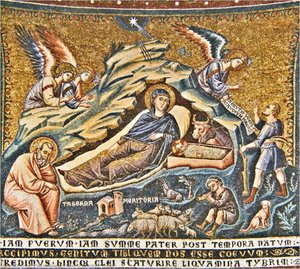
Naumburg Master 1200–1300
French High Gothic Wikipedia 10/32

He was active in the towns of Noyon, Amiens, and Reims around 1225, absorbing the High Gothic style that defined the era.
Location Tracing the physical remains of his hand requires traveling across several locations.
86/ 96
Li Jie 1035–1110
Chinese b. Xinzheng Tribal Art Wikipedia 9/32

However, these symbols transcend mere decoration; they serve as vehicles for conveying spiritual truths—a hallmark of Daoist art alongside Buddhist principles.


87/ 96
Dietisalvi di Speme 1201–1291
b. Siena Wikipedia 8/32

The evolution of Dietisalvi's style is visible through his surviving works, moving toward a greater similarity with the work of Giunta Pisano and Cimabue, as well as the freer strokes of Guido da Siena. Some of his attributed works include: His later career is associated with a cross in the Museo delle pie disposizioni, which shows influence from Cimabue's Maestà.
88/ 96
Margaritone d'Arezzo 1240–1290
Italian b. Arezzo Byzantine influence Wikipedia 8/32

The very fact that Giorgio Vasari dedicated space to him in The Lives of the Artists, though often colored by inaccuracies regarding chronology, underscores Margarito’s importance within the local art historical consciousness. Madonna and Child Enthroned: Perhaps his most iconic work, showcasing the characteristic gold leaf background and stylized figures.


89/ 96
Gao Kegong 1248–1310
Chinese Landscapes Wikipedia 9/32

Gao Kegong remains a significant figure for anyone studying the shifting aesthetics of the Yuan dynasty. His technical foundation was built upon the heavy influence of Mi Fu and Mi Youren. The stylistic influence of Dong Yuan and Ju Ran.
Key works · Top 100 works

90/ 96
Cui Bai 1000–1074
Chinese b. Fengyang County Northern Song Dynasty painting Wikipedia 8/32

Cui Bai (崔白), a name synonymous with the delicate vitality of the Northern Song Dynasty, stands as a pivotal figure whose brushwork breathed new life into the classical traditions of China. Naturalistic Atmosphere: A skill for setting scenes that feel grounded in the physical reality of the Chinese landscape.
Key works · Top 100 works
91/ 96
Su Hanchen 1101–1161
Song dynasty b. Kaifeng Wikipedia 7/32

Su Hanchen lived during the Song dynasty, a period of significant change in China. Born in Kaifeng, he spent much of his life in Zhejiang. His talent was recognized early by the imperial court, where he served as a Painter-in-Attendance for Emperor Huizong.


92/ 96
Xu Daoning 970–1052
Chinese b. Xi'an Northern Song Dynasty Wikipedia 7/32

His early works, such as “ Snow-covered Mountains ” (雪山), demonstrate this clear influence; the composition is characterized by broad washes of ink, suggesting vast distances and an ethereal quality. This monumental mural, now housed in the National Palace Museum in Taipei, exemplifies his artistic maturity and technical skill.

93/ 96
Zhao Boju 1120–1182
Chinese Blue-and-green landscape painting Wikipedia 6/32

Zhao Boju’s brushwork was defined by a meticulous precision that bridged the gap between different eras of Chinese tradition. His ability to render the physical world is seen in the depiction of mountains and pavilions, as seen in Immortal Mountains and Pavilions.


94/ 96
Fujiwara no Takanobu 1142–1205
Japanese b. Kyoto nise-e (likeness picture) portraits Wikipedia 7/32

He is the half-brother of Fujiwara no Sadaie, a man whose name carries the weight of Japan's greatest poetic traditions. His most significant achievement survives in the likeness of Minamoto no Yoritomo. The portrait captures the founder of the Kamakura government, a man who reshaped the political structure of Japan.
95/ 96
Ren Renfa 1254–1327
b. China Tang dynasty style Wikipedia 6/32

Another significant work is Five Drunken Princes Returning on Horseback, a two-metre scroll depicting five princes on horseback with four attendants.


96/ 96
Kōkei
Wikipedia 7/32

Inside the temples of Tōdai-ji and Kōfuku-ji, Kōkei moves through a landscape of wood and chisel. As the head of the emerging Kei school, his hands guide the transition from the ethereal stillness of the He Heian period toward something far more grounded.
Key works · Top 100 works

Best-known works
Famous High Medieval paintings by artist
Chronology
High Medieval chronology
- 1055
- 1072
- 1085
- 1110
- 1124
- 1180
- 1188
- 1201
- 1203
- 1206
- 1230
- 1235
- 1240
- 1250
Statistics
Counts by country, period and museum
| Japan | 13 |
|---|---|
| People's Republic of China | 12 |
| China | 12 |
| Italy | 11 |
| Ιταλία | 9 |
| Λαϊκή Δημοκρατία της Κίνας | 6 |
| France | 3 |
| Song dynasty | 3 |
| 10thος thếχνου | 1 |
|---|---|
| 11thος thếχνου | 24 |
| 12thος thếχνου | 31 |
| 13thος thếχνου | 39 |
| Μετροπολιτικό Μουσείο Τέχνης | 12 |
|---|---|
| Εθνικό Παλατιωκό Μουσείο | 8 |
| The Palace Museum | 8 |
| Μουσείο Τέχνης Κλίβελαντ | 7 |
| Duomo | 3 |
| Yale University Art Gallery | 3 |
| Tokugawa Art Museum | 3 |
| Galleria degli Uffizi | 2 |
Index
Full list of 96 famous High Medieval καλλιτέχνες
- 1
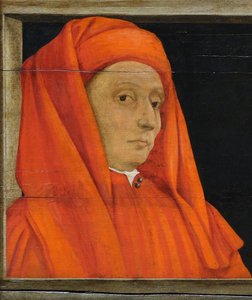 Τζόττο1267–1337
- 2Ντούτσιο ντι ΜπουονινσένιαΙταλιάνος · 1255–1319
- 3ΤσιμαμπούεΙταλός · 1240–1302
- 4Τσαο ΜενγκφούΚινέζος · 1254–1322
- 5Zhu XiΚινέζος · 1130–1200
- 6Ma YuanΚινέζος · 1160–1225
- 7Guo XiΚινέζος · 1020–1090
- 8Αυτοκράτορας Χουϊτζονγκ Της Ντιναστίας ΣονγκChinese · 1082–1135
- 9ΜουκίΚινέζος · 1210–1269
- 10Γκουίντο της ΣιέναΓαλλός · 1230–1290
- 11
 Μποναβεντούρα ΜπερλινγκιέριΙταλικός · 1210–1287
- 12Master MateoSpanish · 1161–1217
- 13
 Τζιοβάννι ΠισάνοΙταλός · 1248–1318
- 14Mi FeiΚινέζος · 1051–1107
- 15Lorenzo MaitaniItalian · 1255–1330
- 16Li Gonglin1049–1106
- 17Μα ΛινΚινέζος · 1180–1256
- 18Yi Kyu-BoKorean · 1168–1241
- 19GislebertusFrench · 1120–1135
- 20Badīʿ Az-Zaman Abu L-ʿIzz Ibn IsmāʿĪl Ibn Ar-Razāz Al-JazarīMuslim · 1136–1206
- 21Giunta PisanoItalian · 1190–1260
- 22Xia GuiSong dynasty · 1195–1224
- 23
 Νικολά ΠισάνοΙταλός · 1230–1284
- 24Li TangSong dynasty · 1050–1130
- 25Qian XuanChinese · 1235–1305
- 26Matthew ParisEnglish · 1200–1259
- 27Jingdezhen Ceramic KilnChinese · γεννημένος το 1004
- 28Herrad of Landsberg1130–1196
- 29Fujiwara No Teika, Fujiwara No SadaieJapanese · 1162–1241
- 30Joannes KoulixByzantine · γεννημένος το 1101
- 31Břetislav ICzech · 1002–1055
- 32Villard De HonnecourtFrench · 1200–1266
- 33Fujiwara No SadanagaJapanese · 1139–1202
- 34Zhang ZeduanChinese Empire · 1085–1145
- 35Sū HànchénChinese · 1094–1172
- 36Saigyō HōshiJapanese · 1118–1190
- 37Gaddo GaddiItalian · 1240–1312
- 38Huang GongwangYuan dynasty · 1269–1354
- 39
 Ραΐ ΚουνιγύκηςΙαπωνικός · 1219–1298
- 40Meliore Of JacopoItalian · 1255–1285
- 41Guan DaoshengChinese · 1262–1319
- 42Philippe le BelFrench · 1268–1314
- 43Coppo di MarcovaldoItalian · 1225–1276
- 44Fujiwara No Tadaie(Teika)Japanese · 1033–1091
- 45Kuo, RiverChinese · 1031–1095
- 46
 Αρνόλφο Ντι ΚάμπιοΚινέζος · 1245–1310
- 47Μουχάμαντ Ιμπν ΑμάρΒρετανίδα · 1031–1086
- 48
 Zheng Yuan1056–1093
- 49Sakyō No Daibu AkisukeAmerican · 1090–1155
- 50Magnus Sigurdsson Or Sigurd HaraldssonNorwegian · 1115–1155
- 51Kamo No ShigeyasuJapanese · 1119–1191
- 52
 Fujiwara no TameyoriJapanese · 1128–1201
- 53Hemachandra1088–1172
- 54Bolesław Iv The CurlyPolish · 1138–1173
- 55Fujiwara No KoreyukiJapanese · 1139–1175
- 56AdelhogGerman · 1170–1190
- 57Urtu SaqaltuKhitan · 1190–1244
- 58Fernando Martins De BulhõesPortuguese · 1195–1231
- 59Lanxi DaolongChinese · 1213–1278
- 60Master Of BigalloItalian · γεννημένος το 1218
- 61Master Of CabestanyItalian · 1130–1180
- 62Hōgen En’IJapanese · 1240–1300
- 63Issan IchineiChinese · 1247–1317
- 64Xianyu ShuChinese · 1256–1301
- 65Μπενεντέτο Αντελάμι1150–1230
- 66Saionji KinhiraJapanese · 1264–1315
- 67Qingmao GulinChinese · 1262–1329
- 68Hildegard von BingenGerman · 1098–1179
- 69FachangChinese · 1210–1269
- 70Filippo RusutiItalian · 1255–1325
- 71Τόμπα ΣότζοΓάλλος · 1053–1140
- 72Memmo di FilippuccioItalian · 1263–1326
- 73Su DongpoChinese · 1037–1101
- 74Yi YuanjiChinese · 1000–1064
- 75Nicolas Of VerdunFlemish · 1130–1205
- 76Wuxue ZuyuanChinese · 1226–1286
- 77
 Buonamico Buffalmacco1262–1340
- 78Lombard MasterItalian · 1096–1160
- 79Liu SongnianChinese · 1174–1224
- 80Master of Taüll1100–1199
- 81Wen TongSong dynasty · 1018–1079
- 82Wang XiChinese · 1096–1119
- 83Fujiwara NobuzaneJapanese · 1176–1266
- 84
 Πιέτρο ΚαβαλίνιΙταλός · 1240–1330
- 85Naumburg MasterFrench · 1200–1300
- 86Li JieChinese · 1035–1110
- 87Dietisalvi di Speme1201–1291
- 88Margaritone d'ArezzoItalian · 1240–1290
- 89Gao KegongChinese · 1248–1310
- 90Cui BaiChinese · 1000–1074
- 91Su HanchenSong dynasty · 1101–1161
- 92Xu DaoningChinese · 970–1052
- 93Zhao BojuChinese · 1120–1182
- 94Fujiwara no TakanobuJapanese · 1142–1205
- 95Ren Renfa1254–1327
- 96Kōkei
FAQ
High Medieval: quick answers
Who was the greatest High Medieval καλλιτέχνης?
Τζόττο (#1) comes first, ahead of Ντούτσιο ντι Μπουονινσένια (#2) and Τσιμαμπούε (#3).
Which five High Medieval καλλιτέχνες should everyone know?
Τζόττο (#1), Ντούτσιο ντι Μπουονινσένια (#2), Τσιμαμπούε (#3), Τσαο Μενγκφού (#4) και Zhu Xi (#5).
Which country produced the most High Medieval καλλιτέχνες?
Japan: 13 of the 96 καλλιτέχνες in this list were born there, then People's Republic of China (12) και China (12).
Which High Medieval καλλιτέχνες from Japan are the most famous?
The highest-ranked καλλιτέχνες born in Japan are Fujiwara No Teika, Fujiwara No Sadaie (#29), Fujiwara No Sadanaga (#33), Saigyō Hōshi (#36), Fujiwara No Tadaie(Teika) (#44) και Sakyō No Daibu Akisuke (#49).
Who are the most famous living High Medieval καλλιτέχνες?
The highest-ranked living καλλιτέχνες in this list are Jingdezhen Ceramic Kiln (#27), Joannes Koulix (#30) και Master Of Bigallo (#60).
Which city produced the most High Medieval καλλιτέχνες?
Kyoto: 12 of the καλλιτέχνες in this list were born there.
Which techniques define High Medieval art?
“Here, he learned to command the delicate medium of egg tempera and the demanding art of mosaic design, skills that would define his long career as both a painter and a designer of mosaics.” — from our biography of Τσιμαμπούε (#3).
Who was the first High Medieval καλλιτέχνης?
The earliest-born καλλιτέχνης in this list is Xu Daoning (#92), born in 970.
Where can I see High Medieval art?
The museums holding the most key works of this list are Μετροπολιτικό Μουσείο Τέχνης (12), Εθνικό Παλατιωκό Μουσείο (8) και The Palace Museum (8).
Which women High Medieval καλλιτέχνες are the most famous?
3 women are in this ranking: Herrad of Landsberg (#28), Guan Daosheng (#41) και Hildegard von Bingen (#68).
In which period did High Medieval art flourish?
Most καλλιτέχνες in this list were born in the 13thος thếχνου (39 of 96), between 970 and 1269 overall.
Where can I buy High Medieval art?
Our catalogue holds 1,429 works by these καλλιτέχνες. Each one can be ordered as a hand-painted oil reproduction or a print.
Guides
AllPaintingsStore.com guides
Other lists
Famous artists by movement
 Σημαντοί καλλιτέχνες BaroqueRembrandt van Rijn · Ρέμπραντ
 Σημαντοί καλλιτέχνες Contemporary RealistΟι Συλλέκτριες · Ζαν Φρανσουά Μιγέ
 Σημαντοί καλλιτέχνες ImpressionistΗ Νύχτα Πλούσια Στα Άστρα (Νέα Υόρκη, MoMA) · Βίνσεντ Βαν Γκογκ
 Σημαντοί καλλιτέχνες RomanticistΚρόνος να καταβροχθίζει τον Γιο του · Φρανθίσκο Γκόγια
 Σημαντοί καλλιτέχνες NeoclassicistΗ Σταυροφόρος του Μαρά · Ζακ-Λουί Νταβίντ
 Σημαντοί καλλιτέχνες RealistΗ Αρχή του Κόσμου · Γκυστάβ Κουρμπέ
 Σημαντοί καλλιτέχνες RenaissanceΜόνα Λίζα (La Gioconda) · Λεονάρντο Ντα Βίντσι
 Σημαντοί καλλιτέχνες Dutch Golden AgeΤο Κορίτσι με το Μαργαριτάρι · Γιοχάνες Βερμέερ
 Σημαντοί καλλιτέχνες ExpressionistΣύνθεση Ζ · Βασίλι Καντίνσκι
 Σημαντοί καλλιτέχνες RococoΗ Πρώτη Επίσκεψη στην Κύθηρα · Αντουάν Βαττώ
By period
Famous artists by period
 Σημαντοί καλλιτέχνες Early MedievalSnowy River · Wáng Wéi
 Σημαντοί καλλιτέχνες Late MedievalΗ Αναγγελία και οι Δύο Άγιοι · Σιμόνε Μαρτίνι
 Σημαντοί καλλιτέχνες RenaissanceΗ Δημιουργία του Αδάμ · Μιχαήλ Άγγελος
 Σημαντοί καλλιτέχνες Early ModernΗ Κλήση του Ματθαίου · Καραβάτζο
 Σημαντοί καλλιτέχνες 19th CenturyΝυφάδες του Νερού (ή Λιλιές του Νερού) · Κλόντ Μονέ
 Σημαντοί καλλιτέχνες ModernΓκουέρνικα · Πάμπλο Πικάσο
 Σημαντοί καλλιτέχνες ContemporaryWind Sculpture III (one in a series of nine) · Yinka Shonibare
Related lists