


 Ver en contexto
 Enviar
 Compartir
 Detalles
 Guía
Guía

 Descargar
 Similares
 Radiografía
 Presentación de diapositivas
 Estadísticas
Pavilion
 Oil On Canvas
- WallArt
- Bengal School of Art
 23.0 x 16.0 cm
 Victoria Memorial Hall
 Ver más
Giclée / Impresión de arte
Impresiones giclée o en lienzo de calidad de museo con producción rápida y opciones de acabado flexibles. ( Comprar pintura hecha a mano Cambiar a imagen digital)




P118B €10

P118H €10

P118W €10

P438Z €10

P508JH €12

P508YH €12

P805H €10

P805Z €10

P919BZ €10

P919G €10

P919XJ €10

P959ZH €10

P968JZ €12

W106C €8

W218G €10

W218JH €8

W218Y €10

W307PJ €10

W316G €10

W316PJ €8

W316Y €10

W398PJ €8

W4111J €10

W500HY €15

W500JH €15

W692G €12

W849H €8

W940BG €15

W953PJ €8




Elija entre nuestros tamaños predefinidos que respetan las proporciones originales de la obra.

Introduzca el ancho y el alto que necesite para adaptarse a su marco o pared. Una impresión solo puede recortarse, nunca hacerse más grande que la imagen original, por lo que un tamaño con una forma distinta perderá parte de la obra. Le enviaremos una maqueta digital para su aprobación antes de realizar cualquier impresión. La imagen que se muestra en esta página no refleja el recorte real; solo la maqueta lo hace.
Envío a todo el mundo () en 2 semanas en lugar de las 4/5 semanas estándar. (26 octubre)

Envío exprés gratuito a todo el mundo

Lienzo de lino de alta calidad

Seguro de envío total

Garantía de reembolso de aranceles aduaneros

Garantía de fidelidad cromática exacta

Política de devolución de 100 días (solo por defectos)

Garantía de devolución del 100% del dinero

Descuento por cantidad
 La opción de vidrio solo está disponible en tamaños inferiores a 110 cm.

Pavilion
Giclée / Impresión de arte
Dimensiones de la reproducción
-


Precio total final
€ 56
Abanindranath Tagore’s “Pavilion”: A Bridge Between East and West
The artwork presented here, Abanindranath Tagore's "Pavilion," isn’t merely a depiction of a building; it’s a carefully constructed visual poem, a pivotal moment in the history of Indian art. Painted in 1907, during a period of intense nationalistic fervor and artistic experimentation, this work represents Tagore’s audacious attempt to synthesize traditional Indian aesthetics with Western influences – a strategy that fundamentally reshaped the landscape of modern Indian painting. It's a piece brimming with symbolism, inviting viewers to contemplate themes of spirituality, identity, and the evolving relationship between tradition and modernity.
Tagore, deeply influenced by the Japanese aesthetic—particularly its emphasis on calligraphy and flattened perspective—and inspired by the Mughal and Rajput miniature traditions, sought to create an art form that resonated with Indian sensibilities. He deliberately rejected the academic realism prevalent in Western art schools, which he viewed as cold and devoid of spiritual depth. Instead, he drew upon the rich visual vocabulary of ancient India – its vibrant colors, stylized forms, and symbolic imagery—and infused it with a distinctly modern sensibility. “Pavilion” exemplifies this approach perfectly; it’s not a photographic representation but rather an evocative interpretation, prioritizing mood and feeling over strict adherence to reality.
A Symphony of Color and Symbolism
The painting immediately captivates the eye with its rich palette—a deliberate departure from the muted tones favored by Western artists. Deep blues and greens dominate the composition, evoking a sense of tranquility and spirituality, while bursts of crimson, gold, and saffron inject vibrancy and energy. These colors aren’t simply decorative; they carry profound symbolic weight. Blue represents the heavens and spiritual realms, red signifies passion and life force, and gold embodies divinity and enlightenment. The use of these hues is deeply rooted in Hindu iconography and reflects Tagore's desire to reconnect with India’s ancient spiritual heritage.
The pavilion itself—a structure reminiscent of Mughal palaces but imbued with a distinctly Indian character—is rendered with a flattened perspective, echoing the style of Japanese woodblock prints. The arched doorway, framed by intricate floral motifs and stylized clouds, serves as a focal point, drawing the viewer’s eye into the heart of the composition. Notice the deliberate simplification of forms – a hallmark of both Mughal and Japanese art—which contributes to the painting's serene and contemplative atmosphere. The figures depicted within the pavilion are not realistically rendered but rather presented as stylized silhouettes, further emphasizing the work’s symbolic nature.
Historical Context and Artistic Significance
“Pavilion” was created during a crucial period in Indian history—the early 20th century—a time marked by growing nationalist sentiment and a desire to reclaim India's cultural identity after centuries of colonial rule. Tagore’s art played a significant role in this movement, providing a visual language for expressing Indian values and traditions. He founded the Bengal School of Art, which championed a distinctly Indian style of painting that drew inspiration from both ancient and contemporary sources. This school challenged the dominance of Western artistic styles and paved the way for a new generation of Indian artists.
Tagore’s work wasn't without its critics. Some accused him of diluting traditional Indian art by incorporating Western elements, while others praised his innovative approach to blending Eastern and Western aesthetics. However, “Pavilion” remains a testament to Tagore’s artistic vision—a bold and ambitious attempt to create an art form that was both deeply rooted in India's cultural heritage and open to new influences. It stands as a pivotal work in the development of modern Indian painting, demonstrating the power of art to shape national identity and express complex ideas.
A Timeless Masterpiece for Your Space
Reproduced on high-quality canvas or paper, Abanindranath Tagore’s “Pavilion” offers a captivating glimpse into India's rich artistic heritage. Its serene composition, vibrant colors, and evocative symbolism make it an ideal addition to any home or office space. Whether you are drawn to its spiritual depth, its historical significance, or simply its aesthetic beauty, this artwork is sure to inspire contemplation and add a touch of timeless elegance to your surroundings. Consider commissioning a hand-painted reproduction from AllPaintingsStore.com for a truly authentic experience.
Preguntas y respuestas
¿Es "Pavilion" de Abanindranath Tagore una composición en formato vertical, horizontal o cuadrado?
"Pavilion" de Abanindranath Tagore tiene un formato Portrait. El formato describe las proporciones de la composición.
¿Qué tamaño de impresión de "Pavilion" de Abanindranath Tagore se adapta mejor a la habitación recomendada?
Para un Living Room, se recomienda imprimir "Pavilion" en un tamaño de Medium.
¿Cómo se integra "Pavilion" en los temas y el estilo de Abanindranath Tagore?
"Pavilion" pertenece a la etapa Bengal School of Art de Abanindranath Tagore, cuyos temas recurrentes incluyen mughal, rajput, indian traditions, swadeshi values, nationalist art, colonial calcutta, urban life, tagore’s artistic synthesis”.
Obras relacionadas


Biografía del artista
Vida Temprana y Antecedentes
- Nacimiento: 7 de mayo de 1861, Joransanko, Calcuta, India Británica
- Fallecimiento: 5 de diciembre de 1951
- Familia: Miembro de la distinguida familia Tagore; sobrino de Rabindranath Tagore. Su abuelo fue Girindranath Tagore y su padre Gunendranath Tagore.
- Educación: Estudió en el Colegio Sanskrit de Calcuta en la década de 1880 y luego asistió a la Escuela de Arte de Calcuta.
Desarrollo Artístico e Influencias
- Primeros Estudios: Aprendió pasteles de O. Ghilardi y pintura al óleo de Charles Palmer en la Escuela de Arte de Calcuta.
- Estilos Mughal y Rajput: Buscó modernizar estos estilos, rechazando los modelos occidentales.
- Valores Swadeshi: Incorporó valores Swadeshi en su arte, promoviendo las tradiciones indias.
- Aestheticismo de Whistler: Influenciado por los principios estéticos de Whistler.
- Influencia Japonesa: Más tarde incorporó tradiciones caligráficas chinas y japonesas a su estilo después de conocer a los artistas Tikan y Hesida.
Obras Principales y Contribuciones Artísticas
- Rohini II: Una obra notable que muestra su habilidad artística.
- El Paso de Shah Jahan: Otra pintura significativa que refleja su estilo.
- Flor de Temporada en un Jarrón: Demuestra su dominio de la técnica y el tema.
- Serie de Las Mil y Una Noches (1930): Considerada uno de sus logros más destacados, utilizando historias de Las Mil y Una Noches para explorar Calcuta colonial.
- Bharat Mata: Una pintura significativa que simboliza a la Madre India.
- Fundador de la Escuela Bengalí de Arte: Desempeñó un papel fundamental en la configuración de la pintura india moderna y la promoción del arte nacionalista.
- Sociedad de Arte Oriental Indio (1907): Fundó esta sociedad para promover las formas tradicionales de arte indio.
Legado y Significado Histórico
- Pionero de la Pintura India Moderna: Reconocido como una figura clave en el desarrollo del arte indio moderno.
- Influencia en Artistas Posteriores: Mentor de artistas notables como Nandalal Bose, Asit Halder, Kshitindranath Majumdar y Jamini Roy.
- Revival de Formas de Arte Tradicionales: Abogó por un retorno a las técnicas y estilos indios tradicionales.
- Impacto en la Literatura Infantil Bengalí: Escribió libros infantiles influyentes como Rajkahini, Budo Angla, Nalak y Khirer Putul.
- Tesoro Nacional de Arte: Sus obras son consideradas Tesoros Nacionales de Arte.

Abanindranath Tagore
1871 - 1951 , India
Datos clave
- Artistas Influenciados:
- Nandalal Bose
- Kshitindranath Majumdar
- Jamini Roy
- Artistas Que Influyeron:
- Whistler
- Mughal artistas
- Rajput artistas
- Fecha De Fallecimiento: 5 de diciembre de 1951
- Fecha De Nacimiento: 7 de mayo de 1871
- Lugar De Nacimiento: Jorasanko, India
- Movimiento Artístico: Bengal School of Art
- Nacionalidad: Indio
- Nombre Completo: Abanindranath Tagore
- Obras Notables:
- Rohini II
- Paso de Shah Jahan
- Flor de temporada
Artículos relacionados

Raja Ravi Varma: Bridging Tradition & Modernity in 19th-Century Indian Art
Explore the life & art of Raja Ravi Varma, a pioneer who fused European techniques with Indian iconography. Discover his iconic paintings, lasting legacy, and influence on modern Indian art at AllPaintingsStore.
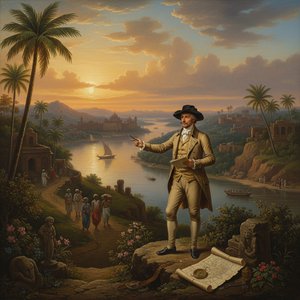
Thomas Daniell: Navigating Light, Landscape & Cultural Exchange in Early 19th-Century India
Explore the captivating landscapes of Thomas Daniell, a pioneering artist who documented India's beauty in the 19th century. Discover his 'Oriental Scenery,' aquatint technique & lasting legacy. Hand-painted reproductions available at AllPaintingsStore.

Joseph Henry Sharp: Capturing the Spirit of the Plains – Life, Art & Legacy
Explore the life & art of Joseph Henry Sharp, a founding member of the Taos Society of Artists renowned for his realistic depictions of Native American culture and Western landscapes. Discover his legacy with AllPaintingsStore.
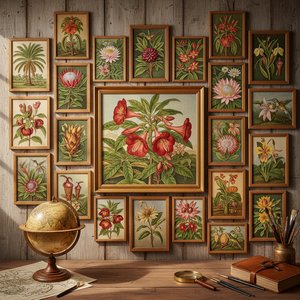
Marianne North: Las 25 Obras Maestras de una Artista Victoriana en AllPaintingsStore
Descubre las 25 obras maestras de Marianne North, la artista victoriana que capturó la belleza exótica de la botánica. Pinturas vibrantes y llenas de historia. Reproducciones de arte exclusivas en AllPaintingsStore.com.
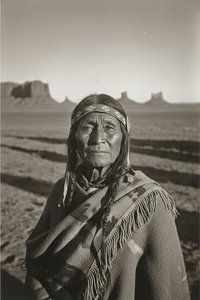
Shadow Catcher: Edward S. Curtis & the Ethnographic Portraiture of a Vanishing West
Explore the life & work of Edward S. Curtis, the 'Shadow Catcher,' and his groundbreaking photographic documentation of Native American cultures. Discover iconic images from *The North American Indian* and a critical look at his lasting legacy.

