


 Vista previa
 Compartir
 Compartir
 Ver detalles
 Guía
Guía

 Descargar
 Ver artículos similares
 Radiografía
 Presentación de diapositivas
 Estadísticas
The Bridge
 Oil On Canvas
- WallArt
- Impressionistic Landscape
 1880
1880- 19th Century
 25.0 x 68.0 cm
 Museo Metropolitano de Arte
 Leer más
Giclée / Impresión de arte
Impresiones giclée o en lienzo de calidad de museo con producción rápida y opciones de acabado flexibles. ( Encargar reproducción pintada a mano Ver versión en imagen digital)




P118B €10

P118H €10

P118W €10

P438Z €10

P508JH €12

P508YH €12

P805H €10

P805Z €10

P919BZ €10

P919G €10

P919XJ €10

P959ZH €10

P968JZ €12

W106C €8

W218G €10

W218JH €8

W218Y €10

W307PJ €10

W316G €10

W316PJ €8

W316Y €10

W398PJ €8

W4111J €10

W500HY €15

W500JH €15

W692G €12

W849H €8

W940BG €15

W953PJ €8




Elija entre nuestros tamaños predefinidos que respetan las proporciones originales de la obra.

Introduzca el ancho y el alto que necesite para adaptarse a su marco o pared. Una impresión solo puede recortarse, nunca hacerse más grande que la imagen original, por lo que un tamaño con una forma distinta perderá parte de la obra. Le enviaremos una maqueta digital para su aprobación antes de realizar cualquier impresión. La imagen que se muestra en esta página no refleja el recorte real; solo la maqueta lo hace.
Envío a todo el mundo () en 2 semanas en lugar de las 4/5 semanas estándar. (25 octubre)

Envío exprés gratuito a todo el mundo

Lienzo de lino de alta calidad

Seguro de envío completo

Garantía de reembolso de impuestos aduaneros

Garantía de fidelidad cromática exacta

Política de devolución de 100 días (solo por defectos)

Garantía de devolución del 100% del dinero

Oferta por volumen
 La opción de vidrio solo está disponible en tamaños inferiores a 110 cm.

The Bridge
Giclée / Impresión de arte
Tamaño de la reproducción
-


Precio total
€ 56
A Vision of Urban Serenity: Exploring "The Bridge"
To gaze upon Albert Pinkham Ryder's "The Bridge" is to step into a moment suspended between the wild romance of nature and the burgeoning ambition of the modern metropolis. This panoramic landscape, executed on gilded leather, possesses an immediate, captivating resonance. It is not merely a depiction of scenery; it feels like a memory—a beautifully curated recollection of a day spent observing life unfold from a privileged vantage point. The composition itself suggests a confluence of disparate elements: the stately presence of a large oak tree anchoring the foreground, providing a cool, shaded sanctuary for scattered figures, while beyond its leafy embrace, the suggestion of an expansive skyline rises against the distance.
Technique and Modernist Echoes
Ryder’s handling of paint here is remarkably delicate, characterized by a thin application that allows the underlying richness of the gilded leather to contribute to the overall luminosity. This technique lends the piece an ethereal quality, as if the scene itself is illuminated from within. While the subject matter—the visible structures and the flowing expanse implied by "The Bridge"—might evoke specific geographical markers known to Ryder, such as parts of New York’s Central Park or the span of High Bridge over the Harlem River, the artist masterfully elevates it beyond mere topographical record. Instead, the work leans into an imaginative space, foreshadowing a modernist detachment from strict realism. It invites the viewer to contemplate structure and atmosphere rather than simply cataloging what is seen.
The Human Element in the Landscape
Scattered throughout this peaceful tableau are figures enjoying the outdoors. We see people gathered near the shade of the oak, their presence suggesting leisure and quiet communion with the environment. Adding a touch of pastoral grace to the scene are two horses—one positioned centrally, another drifting toward the right edge. These elements ground the painting in a tangible reality of daily life, yet they coexist harmoniously with the monumental backdrop. The overall atmosphere is one of profound tranquility; it captures that perfect pause on a warm day when the hustle of urbanity recedes, leaving only the rhythm of nature and gentle companionship.
Symbolism and Emotional Resonance for Your Space
For those considering bringing this piece into your home or design space, "The Bridge" offers more than just decoration; it offers an emotional anchor. It speaks to the enduring human need to find pockets of sublime calm amidst complexity. The interplay between the solid, rooted tree, the fleeting activity of the people and horses, and the distant promise of the skyline creates a visual metaphor for balance—the necessary equilibrium between civilization and wilderness. Reproducing this work allows one to infuse an interior with a sense of storied depth and contemplative peace, transforming a room into a sanctuary reminiscent of a perfect, sun-dappled afternoon.
Preguntas y respuestas
¿A qué edad creó Albert Pinkham Ryder "The Bridge"?
Cuando se creó "The Bridge" en 1880, Albert Pinkham Ryder —nacido/a en 1847— tenía 33 años.
¿Es "The Bridge" de Albert Pinkham Ryder una composición en formato retrato, paisaje o cuadrado?
"The Bridge" de Albert Pinkham Ryder tiene un formato Panoramic. El formato describe las proporciones de la composición.
¿Qué saturación e intensidad muestra "The Bridge" de Albert Pinkham Ryder?
"The Bridge" de Albert Pinkham Ryder está registrado con una saturación de Balanced Soft y una intensidad de Balanced.
Obras relacionadas


Biografía del artista
Primeros años y formación
Albert Pinkham Ryder, pintor estadounidense, nació el 19 de marzo de 1847 en New Bedford, Massachusetts. Sus primeros años son algo misteriosos, con poca información sobre su infancia. Sin embargo, se documenta que comenzó a pintar paisajes mientras aún vivía en New Bedford. En 1867 o 1868, la familia Ryder se mudó a Nueva York, donde el hermano de Albert administraba el Hotel Albert, un punto de referencia del Greenwich Village.Desarrollo artístico e influencias
La primera formación artística de Ryder fue con el pintor William Edgar Marshall en Nueva York. De 1870 a 1873 y nuevamente de 1874 a 1875, estudió en la National Academy of Design, donde expuso su primera pintura en 1873 y conoció al artista Julian Alden Weir, quien se convirtió en su amigo de toda la vida. En 1877, Ryder realizó el primer de sus cuatro viajes a Europa, estudiando la escuela Barbizon francesa y la escuela La Haya holandesa, lo que impactó significativamente su obra.Estilo artístico y obras notables
El estilo característico de Ryder se caracteriza por formas amplias, a veces indefinidas, o figuras estilizadas situadas en una tierra o paisaje marino onírico. Sus escenas a menudo están iluminadas por luz solar tenue o luz de luna brillante proyectada a través de nubes extrañas. Obras notables incluyen Misty Moonlight (Crystal Bridges Museum of American Art, Bentonville, Estados Unidos), que se deriva de recuerdos de su infancia en la costa de New Bedford, Massachusetts.Vida posterior y legado
Después de 1900, la creatividad de Ryder disminuyó drásticamente. Pasó el resto de su vida re-elaborando pinturas existentes y murió el 28 de marzo de 1917. Se celebró una exposición conmemorativa de su obra en el Metropolitan Museum of Art de Nueva York en 1918. A pesar del paso del tiempo, la reputación artística de Ryder se ha mantenido en gran medida intacta debido a su estilo único y vanguardista.- Ver las obras de Albert Pinkham Ryder en AllPaintingsStore
- Comprar reproducciones de arte de museos de pinturas famosas
- Explore la Asociación Histórica de Cape Ann (Estados Unidos) y su colección de arte en AllPaintingsStore

Albert Pinkham Ryder
1847 - 1917 , Estados Unidos de América
Datos clave
- Artistas Que Influyeron:
- Barbizon School
- Hague School
- Fecha De Fallecimiento: 28 de marzo de 1917
- Fecha De Nacimiento: 19 de marzo de 1847
- Influenciado A Artistas: ['Jackson Pollock']
- Lugar De Nacimiento: New Bedford, EE. UU.
- Movimiento Artístico: Tonalismo y Simbolismo
- Nacionalidad: Estadounidense
- Nombre Completo: Albert Pinkham Ryder
- Obras Notables: ['Misty Moonlight']
Artículos relacionados

Albert Bierstadt: Luminosity, Landscape & the American Ideal
Explore the breathtaking landscapes of Albert Bierstadt, master of the American West & a leading figure in the Hudson River School. Discover his luminous style and iconic paintings – a timeless investment for art lovers.
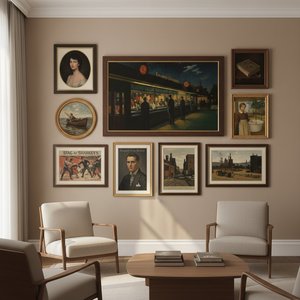
Realismo Estadounidense: 10 Obras Maestras que Cambiaron el Arte y la Decoración
Descubre 10 obras maestras del Realismo Estadounidense: Winslow Homer, Edward Hopper y más. Explora la historia, técnica y emoción de estos icónicos cuadros. Encuentra reproducciones de arte de museo en AllPaintingsStore.com.
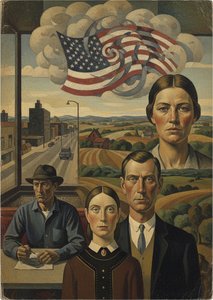
Ecos del Lugar: Regionalismo e Identidad Americana en el Arte Entre Guerras
Descubra el Regionalismo americano: un movimiento artístico que capturó la esencia de la identidad rural y la vida en Estados Unidos entre guerras. Análisis experto, obras clave y legado cultural.
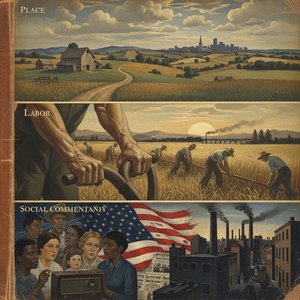
Regionalismo Americano: Un Crisol de Identidad en el Arte y la Sociedad
Explora el Regionalismo Americano: su historia, artistas clave como Benton y Wood, y su profundo compromiso con la sociedad de la Gran Depresión. Un análisis exhaustivo para amantes del arte.

Grant Wood & American Regionalism: Identity, Myth & the Rural Landscape
Explore the world of Grant Wood & American Regionalism with AllPaintingsStore. Discover the symbolism behind 'American Gothic', recurring themes, and the movement's lasting impact on art history. High-quality reproductions available.


