Vista previa
 Compartir
 Compartir
 Ver detalles
 Guía
Guía

 Descargar
 Ver artículos similares
 Radiografía
 Presentación de diapositivas
 Estadísticas
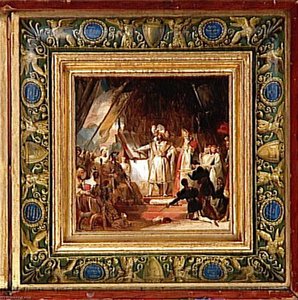
François Ier, accompagné de la reina Navarra, su hermana, y rodeado de su corte, recibía los cuadros y esculturas repatriados de Italia por Le Primatice


 Leer más
Reproducción al óleo hecha a mano
Óleo sobre lienzo pintado a mano en el tamaño y marco de su elección, realizado por encargo por nuestros artistas. ( Cambiar a formato impreso Ver versión en imagen digital)




P118B $10

P118H $10

P118W $10

P438Z $10

P508JH $12

P508YH $12

P805H $10

P805Z $10

P919BZ $10

P919G $10

P919XJ $10

P959ZH $10

P968JZ $12

W106C $8

W218G $10

W218JH $8

W218Y $10

W307PJ $10

W316G $10

W316PJ $8

W316Y $10

W398PJ $8

W4111J $10

W500HY $15

W500JH $15

W692G $12

W849H $8

W940BG $15

W953PJ $8




Elija entre nuestros tamaños predefinidos que respetan las proporciones originales de la obra.

Puede ingresar sus propias dimensiones para adaptarse a un marco o espacio específico. Si el tamaño seleccionado no coincide con las proporciones de la imagen original, recortaremos la obra o extenderemos la pintura con elementos adicionales pintados a mano. Se le enviará una maqueta digital para su aprobación antes de comenzar la producción.
Tenga en cuenta que la vista previa en pantalla no refleja el recorte o la extensión reales. Solo la maqueta mostrará con precisión la composición final.
Si bien existen tamaños personalizados, recomendamos seleccionar una dimensión de la lista predefinida para preservar las proporciones originales.
Tras realizar el pedido, el equipo de AllPaintingsStore.com enviará un correo electrónico al cliente para solicitar instrucciones y proporcionarle una vista previa del boceto.
Envío a todo el mundo () en 3-4 semanas en lugar de las 5 semanas estándar. (21 septiembre). Sin comprometer la calidad.

Envío exprés gratuito a todo el mundo

Lienzo de lino de alta calidad

Seguro de envío completo

Garantía de reembolso de impuestos aduaneros

Garantía de fidelidad cromática exacta

Política de devolución de 100 días (solo por defectos)

Garantía de devolución del 100% del dinero

Oferta por volumen
 La opción de vidrio solo está disponible en tamaños inferiores a 110 cm.

François Ier, accompagné de la reina Navarra, su hermana, y rodeado de su corte, recibía los cuadros y esculturas repatriados de Italia por Le Primatice
Técnica de reproducción
Tamaño de la reproducción
-


Precio total
$ 258
Un Encuentro Regalado por Italia: Análisis de “François Ier, accompagné de la reine de Navarre, sa soeur, et entoure de sa cour, reçoit les tableaux et les statues rapportés d’Italie par Le Primatice”
Este impresionante cuadro de Alexandre-Évariste Fragonard captura un momento clave en la historia francesa del siglo XVIII: el regreso triunfal de los artistas italianos y sus obras maestras después de una ambiciosa expedición patrocinada por Luis XIV, padre de François Ier. Más que una simple representación pictórica, “François Ier, accompagné de la reine de Navarre, sa soeur, et entoure de sa cour, reçoit les tableaux et les statues rapportés d’Italie par Le Primatice” es un testimonio del espíritu artístico y político de la época, donde el poder monárquico buscaba proyectar una imagen de grandeza y sofisticación.El Estilo Rococo: Elegancia Fluida y Juego Luminoso
Fragonard, como hijo directo de Jean-Honoré Fragonard, heredó un estilo característico del movimiento rococó que dominaba París en ese período. Esta estética se distingue por una composición dinámica y aparentemente despreocupada, donde las líneas curvas predominan sobre las rectas, creando una sensación de movimiento suave y armonía visual. Los colores son ricos y luminosos, aplicados con pinceladas delicadas para lograr efectos impresionantes de transparencia y brillo –una técnica esencial para transmitir la atmósfera alegre y festiva que anuncia el cuadro. Observamos cómo Fragonard utiliza la luz como elemento clave para resaltar las figuras principales y crear profundidad en el espacio pictórico, una característica común en toda la obra maestra del artista.Una Escena Histórica Cargada de Simbolismo
La pintura no solo celebra el regreso artístico italiano sino que también está llena de símbolos que reflejan los valores culturales y políticos de la época. François Ier, vestido con pompa regia y acompañado por su hermana, la reina Navarra, ocupa un lugar central en la composición, representando la autoridad monárquica y la importancia del matrimonio político como herramienta para asegurar el bienestar del reino. Los artistas italianos, figuras clave en el desarrollo artístico europeo, son recibidos con entusiasmo por la corte francesa, simbolizando el interés por el conocimiento clásico y la renovación estética que buscaban impulsar los gobernantes ilustrados. Incluso el perro presente en la escena puede interpretarse como un símbolo de lealtad y protección, valores fundamentales para la nobleza francesa del siglo XVIII.Técnica Magistral: Detalles Finos y Aplicación Innovadora
Fragonard demuestra una habilidad técnica excepcional al capturar los detalles más minuciosos de la escena, desde las expresiones faciales de los personajes hasta la textura de los tejidos y el brillo de los objetos decorativos. Su uso innovador del óleo permite lograr efectos especiales de iluminación y transparencia que enriquecen la imagen y transmiten una sensación de realidad sorprendente para su época. La aplicación meticulosa de pintura en capas sucesivas, combinada con una comprensión profunda de la perspectiva y el dibujo anatómico, demuestra el dominio absoluto del artista sobre los principios técnicos del rococo. Esta maestría artística es evidente en cada pincelada, convirtiendo esta obra en un ejemplo perfecto de la belleza estética y la precisión científica que caracterizan al movimiento artístico francés del siglo XVIII.Un Legado Duradero: Emoción y Belleza Eternas
Más allá de su valor histórico y técnico, “François Ier, accompagné de la reine de Navarre, sa soeur, et entoure de sa cour, reçoit les tableaux et les statues rapportés d’Italie par Le Primatice” sigue emocionando a los espectadores modernos por su capacidad para transmitir una sensación de alegría, celebración y belleza eterna. La composición equilibrada y armoniosa, junto con el uso magistral del color y la luz, crean una atmósfera que invita a la contemplación y al disfrute sensorial. Esta obra maestra permanece como un testimonio del espíritu creativo de Fragonard y del legado artístico del movimiento rococó, ofreciendo inspiración para artistas y amantes de la belleza en todo el mundo.Obras relacionadas


![Leyenda De San Francisco - [02] - San Francisco Dando Su Manto A Un Pobre — Giotto Di Bondone, Gothic](/media/artworks/images-thumb/1f/84/1f842a0319a02eaaa27d431c94a53fd1.jpg)


![La Leyenda De San Francisco - [11] - San Francisco Ante El Sultán (el Juicio Por Fuego) — Giotto Di Bondone, Early Renaissance](/media/artworks/images-thumb/0d/32/0d328acfb6c90f7ef32707586e86044b.jpg)

![Vida De San Francisco - [01] - Estigmación De San Francisco — Giotto Di Bondone, Renacimientotemprano](/media/artworks/images-thumb/fd/6a/fd6ae2a8f5e88e0ace6b86a21d020ded.jpg)

Biografía del artista
A Legacy Bridging Eras: Alexandre-Évariste Fragonard
Born into the radiant world of Rococo artistry in Grasse, France, on October 26, 1780, Alexandre-Évariste Fragonard inherited a legacy that both propelled and subtly challenged his artistic path. As the son of Jean-Honoré Fragonard, the great rococo painter, and Marie-Anne Fragonard, he was immersed from infancy in an atmosphere of creative fervor, where brushstrokes danced with light and emotion. This familial connection wasn’t merely one of lineage; it was a foundational education, a direct transmission of technical skill and a sensibility for evocative subject matter that would shape his early development. However, Alexandre-Évariste wouldn’t simply replicate his father’s style. His journey would be marked by a fascinating negotiation between the fading elegance of the Rococo and the rising tide of Neoclassicism, ultimately forging a distinctive voice within the evolving landscape of 19th-century French art. He passed away in Paris on November 10, 1850, leaving behind a body of work that offers valuable insights into an era defined by political upheaval and shifting aesthetic ideals.Primeros Años y Orígenes Familiares
Alexandre-Évariste Fragonard’s formative years were steeped in artistic tradition. Growing up under the watchful eye of his father, Jean-Honoré, he experienced firsthand the influence of a master whose style epitomized the opulent grandeur and playful ornamentation characteristic of Rococo art. Marie-Anne Fragonard, equally devoted to the arts, nurtured Alexandre’s innate talent for observation and representation—skills that would prove invaluable throughout his artistic life. This familial environment fostered not only technical proficiency but also a profound appreciation for beauty and emotion—values that permeated his creative endeavors. From a young age, Jean-Honoré instilled in him the principles of disegno (drawing) and colore (painting), emphasizing precision, balance, and an ability to capture fleeting moments with breathtaking detail. This early training established a stylistic foundation that would inform his artistic vision for decades to come.Formación Artística e Influencias
Recognizing the importance of broadening his artistic horizons beyond Rococo conventions, Jean-Honoré Fragonard brought Alexandre under the tutelage of Jacques-Louis David, arguably the most influential figure in Neoclassicism. David’s rigorous approach—characterized by clarity, symmetry, and a focus on idealized forms—challenged Alexandre to transcend the decorative excesses of his father’s style. This encounter proved transformative, introducing him to new compositional techniques and fostering an intellectual engagement with classical ideals. The influence of David extended beyond mere stylistic imitation; it instilled in Alexandre a belief that art should serve as a vehicle for moral instruction and civic virtue—a conviction that would resonate throughout his oeuvre. Furthermore, Marguerite Gérard, Jean-Honoré’s aunt and fellow artist, provided invaluable guidance on artistic expression and emotional depth, shaping Alexandre’s understanding of the role of feeling in creative endeavors.Estilo Artístico y Obras Maestras
Alexandre-Évariste Fragonard primarily adhered to the Troubadour style—a movement that flourished in France during the early 19th century and celebrated historical narratives infused with romanticism and dramatic emotion. Unlike the restrained elegance of Neoclassicism, Troubadour painting embraced vibrant color palettes, dynamic brushstrokes, and theatrical gestures—elements that conveyed a sense of immediacy and passion. His artistic output spanned diverse mediums, including easel paintings, monumental sculptures, architectural designs, and decorative prints—demonstrating his versatility as an artist and his willingness to experiment with innovative techniques. Among his most celebrated works are:- François Ier armado caballero por Bayard: This depiction of Francis I receiving knighting by Bayard captures the chivalric spirit of the era, employing a masterful blend of color and composition to convey both grandeur and solemnity.
- Vivant Denon Replacing El Cid's Remains in Their Tombs: A haunting portrayal of mortality and grief, this sculpture confronts viewers with the fragility of human existence—a poignant meditation on themes of loss and remembrance.
- Cardinal Mazarin at Deathbed: This evocative scene illustrates a moment of profound emotional intensity, utilizing subtle shading and expressive brushwork to convey the palpable sorrow surrounding Mazarin’s final days.
Contexto Histórico y Comisiones
Alexandre-Évariste Fragonard’s artistic career unfolded during a period of momentous upheaval in France—the French Revolution and the Napoleonic era—a context that profoundly shaped his creative output. He received commissions from Napoleon Bonaparte himself, reflecting the emperor’s patronage of artists who could effectively communicate national ideals and commemorate historical events. These projects demanded an understanding of political symbolism and a commitment to portraying heroism and grandeur—qualities that Fragonard skillfully incorporated into his paintings. His artistic endeavors served as a reflection of the broader cultural currents of the time—a response to the seismic shifts occurring in French society and politics. The Troubadour style, with its emphasis on dramatic narrative and emotive expression, perfectly suited the sensibilities of an audience eager for art that engaged both intellect and emotion. ## Legado e Importancia Despite not achieving the same level of fame as his father, Jean-Honoré, Alexandre-Évariste Fragonard nonetheless left a significant mark on French art history. He successfully bridged the stylistic divide between Rococo and Neoclassicism—creating a distinctive artistic voice that resonated with contemporaries and continues to inspire artists today. His paintings and sculptures provide invaluable insights into the aesthetic preferences and intellectual preoccupations of his era—a period marked by both artistic innovation and political turbulence. Fragonard’s legacy resides in his ability to capture the spirit of his time—to convey the grandeur, drama, and emotional depth that characterized French culture during the 19th century.
alexandre évariste fragonard
1780 - 1850 , Francia
Datos clave
- Artistic Movement Or Style: *Troubadour*
- Artists Who Influenced This Artist:
- Jean-Honoré Fragonard
- Jacques-Louis David
- Date Of Birth: October 26, 1780
- Date Of Death: November 10, 1850
- Full Name: Alexandre-Évariste Fragonard
- Nationality: French
- Notable Artworks:
- François Ier armé chevalier
- Vivant Denon Replacing El Cid's Remains
- Cardinal Mazarin at Deathbed
- Place Of Birth: Grasse, France
Artículos relacionados

Crowns of History: A Definitive Guide to Iconic Artworks Featuring Majestic Headdresses and Royal Regalia
Explore the profound symbolism of crowns and regalia in art history. From Baroque grandeur to Renaissance portraits, discover how iconic headdresses communicate power and status through museum-quality oil reproductions and custom commissions.

Coronas y Conquista: 10 Obras Maestras que Definen la Realeza
Viaja por la historia con 10 obras maestras que capturan el esplendor de la realeza. Desde el barroco de Rigaud hasta el neoclasicismo de David, descubre la elegancia del arte clásico y reproducciones de museo para tu hogar. Explora la colección completa en AllPaintingsStore.com.

El grito del alma: Las 25 obras maestras de Francis Bacon
Explora la intensidad visceral de Francis Bacon a través de sus 25 obras maestras. Un viaje por el expresionismo y la emoción pura. Encuentra reproducciones de calidad museo para tu colección o diseño de interiores. Explora la colección completa en AllPaintingsStore.com.