Vista previa
 Compartir
 Compartir
 Ver detalles

 Descargar
 Ver similares
 Radiografía
 Presentación de diapositivas
untitled (8662)


 Leer más
Giclée / Impresión de arte
Impresiones giclée o en lienzo de calidad de museo con producción rápida y opciones de acabado flexibles. ( Encargar reproducción pintada a mano Comprar descarga)




P118B $10

P118H $10

P118W $10

P438Z $10

P508JH $12

P508YH $12

P805H $10

P805Z $10

P919BZ $10

P919G $10

P919XJ $10

P959ZH $10

P968JZ $12

W106C $8

W218G $10

W218JH $8

W218Y $10

W307PJ $10

W316G $10

W316PJ $8

W316Y $10

W398PJ $8

W4111J $10

W500HY $15

W500JH $15

W692G $12

W849H $8

W940BG $15

W953PJ $8




Elija entre nuestros tamaños predefinidos que respetan las proporciones originales de la obra.

Puede introducir sus propias dimensiones para adaptarse a un marco o espacio específico. Si el tamaño seleccionado no coincide con las proporciones de la imagen original, recortaremos la obra de arte o extenderemos la imagen con un borde con efecto espejo o de color sólido. Se enviará una maqueta digital para su aprobación antes de que comience la producción.
Tenga en cuenta que la vista previa en pantalla no refleja el recorte o la extensión real. Solo la maqueta mostrará con precisión la composición final.
Aunque existen tamaños personalizados, recomendamos seleccionar una dimensión de la lista predefinida para preservar las proporciones originales.
Envío a todo el mundo () en 2 semanas en lugar de las 4/5 semanas estándar. (20 agosto)

Envío exprés gratuito a todo el mundo

Lienzo de lino de alta calidad

Seguro de envío completo

Garantía de reembolso de aranceles aduaneros

Garantía de fidelidad cromática exacta

Política de devolución de 60 días (solo por defectos)

Garantía de devolución del 100% del dinero

Oferta por volumen
 La opción de vidrio solo está disponible en tamaños inferiores a 110 cm.

untitled (8662)
Giclée / Impresión de arte
Tamaño de la reproducción
-


Precio total
$ 64
Descripción de la pieza
A Snapshot of Domestic Surrealism
Andy Warhol's "untitled (8662)" presents a deceptively simple tableau—a woman seated in a bathtub, gazing outwards—yet it encapsulates the core tenets of Pop Art and Warhol’s singular vision for exploring the intersection between art and everyday life. Created around 1967, this silkscreen print exemplifies Warhol's masterful manipulation of repetition and appropriation, transforming familiar domestic imagery into an emblem of cultural fascination. The artwork’s muted palette—primarily shades of pale pink and beige—contrasts subtly with the bold red shower curtain, immediately establishing a visual tension that mirrors the psychological complexities inherent in the scene. As one gazes upon this piece, there is an immediate sense of being a voyeur to a private moment, a feeling that makes it such a captivating subject for modern interior curation.
The bathroom itself serves as more than just a setting; it functions symbolically as a space for introspection and contemplation. Traditionally, bathrooms have been associated with purification and vulnerability—a place where one sheds inhibitions and confronts oneself. Warhol’s woman, staring out from the tub, invites us to consider the boundary between the public persona and the private self. The presence of scattered bottles on the countertop and the starkness of the background elements ground the piece in a tangible reality, yet the flattened, almost dreamlike quality of the colors elevates it into the realm of domestic surrealism. It is this delicate balance between the mundane and the profound that allows the work to resonate so deeply with contemporary viewers.
The Revolutionary Silkscreen Process
To understand the impact of this work, one must appreciate Warhol’s revolutionary technique. Rather than painstakingly layering paint onto canvas like traditional artists, he utilized a silkscreen printing process—a method borrowed from commercial advertising—to achieve astonishing precision and scale. This process involved transferring an image onto a stencil, which was then pressed onto fabric or paper, resulting in multiple identical prints simultaneously. The flatness of the surface achieved through this technique deliberately rejects illusionistic depth, mirroring Warhol’s rejection of academic conventions and prioritizing visual impact over narrative complexity.
This deliberate choice speaks to Warhol’s fascination with mass production and his desire to democratize art by making it accessible to a wider audience. For collectors and designers, this aesthetic offers a unique versatility; the graphic nature of the silkscreen allows the piece to integrate seamlessly into various decor styles, from mid-century modern to ultra-contemporary minimalism. The way the bold red of the curtain interacts with the softer tones creates a focal point that can anchor an entire room, providing both a conversation starter and a sophisticated layer of color.
An Icon of Pop Art Heritage
As a leading figure in the Pop art movement, Warhol’s work explores the relationship between advertising, consumerism, mass media, and celebrity culture. "untitled (8662)" stands as a testament to his ability to take the "low" culture of everyday objects and elevate them to the status of "high" art. By utilizing imagery that feels intimately familiar—a bathtub, a shower curtain, toiletries—he bridges the gap between the museum gallery and the living room. This piece is not merely a reproduction of an image; it is a window into the 20th-century American psyche, reflecting the era's burgeoning consumerism and its obsession with the captured moment.
For those seeking to bring a piece of art history into their homes, this work offers more than just visual beauty. It provides an emotional connection to the legacy of Andy Warhol, one of the most influential artists of the modern era. Whether placed in a quiet study or as a bold statement in a vibrant living space, the painting continues to challenge our perceptions of what is ordinary, turning a simple moment of domesticity into an enduring icon of artistic brilliance.
Obras relacionadas
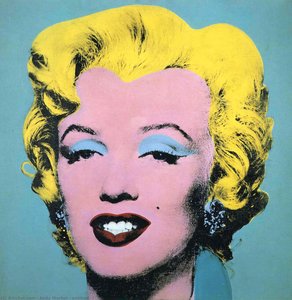


Biografía del artista
Andy Warhol: Una Vida en el Arte Pop
Primeros Años y Educación
- Nacido: 6 de agosto de 1928, en Pittsburgh, Pensilvania.
- La vida temprana de Warhol estuvo marcada por una enfermedad infantil – corea de Sídenham (Danza de San Vitoreo) – que provocó períodos prolongados de confinamiento y fomentó su interés por el arte.
- Estudió diseño pictórico en la Carnegie Institute of Technology (ahora Universidad Carnegie Mellon), graduándose en 1949.
- Tras graduarse, se mudó a la ciudad de Nueva York para seguir una carrera como ilustrador comercial.
Arte Comercial y Carrera Temprana
- Inicialmente, Warhol trabajó en ilustraciones para revistas y publicidad, logrando éxito con sus dibujos lineales distintivos para publicaciones de moda.
- Desarrolló una comprensión profunda de la producción en masa y la comunicación visual a través de su trabajo comercial, lo que influiría fuertemente en su estilo artístico más adelante.
- Sus primeras obras se centraron a menudo en objetos cotidianos y bienes de consumo, anticipando los temas que exploraría en el Arte Pop.
El Auge del Arte Pop
- En la década de 1960, Warhol se convirtió en una figura destacada del movimiento Arte Pop, desafiando las nociones tradicionales del arte.
- El Arte Pop abrazaba la cultura popular – publicidad, cómics y objetos producidos en masa – como sujetos legítimos para la expresión artística.
- Obras clave de este período incluyen: Campbell’s Soup Cans (1962) y Marilyn Diptych (1962).
- La técnica de Warhol de serigrafía le permitió la producción masiva de imágenes, reflejando la cultura del consumidor que representaba.
La Fábrica y Producción Artística
- Warhol estableció “The Factory”, un espacio de estudio que se convirtió en un centro para artistas, músicos, cineastas y socialités.
- La Fábrica no fue solo un lugar de trabajo sino también una escena: fomentó la colaboración y la experimentación entre diversas disciplinas artísticas.
- Warhol abrazó el concepto del arte como negocio, difuminando las líneas entre la alta cultura y el comercialismo.
- Exploró temas de celebridad, muerte y desastre en su obra, a menudo utilizando la repetición y colores audaces para crear efectos visuales impactantes.
Obras Maestras y Estilo Artístico
- Obras notables: Che Guevara, Nan Kempner, Mona Lisa, Flowers, Portada del álbum Velvet Underground & Nico.
- El estilo de Warhol se caracteriza por el uso de la serigrafía, colores audaces y repetición.
- A menudo apropiaba imágenes de la cultura popular, transformándolas en obras de arte icónicas.
- Sus retratos de celebridades – Marilyn Monroe, Elvis Presley, Elizabeth Taylor – capturaron la fascinación por la fama y la imagen en la sociedad estadounidense.
Legado e Importancia Histórica
- La obra de Andy Warhol tuvo un profundo impacto en el mundo del arte, desafiando las definiciones tradicionales del arte y allanando el camino para nuevos movimientos artísticos.
- También fue una figura cultural significativa: abiertamente gay antes del Movimiento por la Liberación Gay.
- Su exploración del consumismo, la cultura de la celebridad y los medios masivos sigue resonando en el público actual.
- La influencia de Warhol se puede ver en el arte contemporáneo, la moda, la música y el cine.
- Sus obras se exhiben en importantes museos de todo el mundo, incluido el Museo Andy Warhol en Pittsburgh.
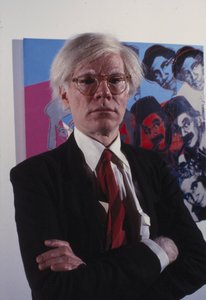
Andy Warhol
1928 - 1987 , Estados Unidos de América
Datos clave
- Fecha De Muerte: 1987
- Fecha De Nacimiento: 6 de agosto de 1928
- Lugar De Nacimiento: Pittsburgh, EE.UU.
- Movimiento Artístico: Pop Art
- Nacionalidad: Estadounidense
- Nombre Completo: Andy Warhol
- Obras Notables:
- Campbell’s Soup Cans
- Marilyn Diptych
- Che Guevara
- Flowers
- Velvet Underground & Nico
Artículos relacionados

The Mass Media Muse: How Pop Art Redefined the Modern Masterpiece
Explore how Pop Art revolutionized the modern masterpiece by embracing mass media and consumer culture. Discover the profound impact of Warhol and Lichtenstein on contemporary art history and design through this expert-led deep dive into the era of the mass media muse.