


 Ver en contexto
 Enviar
 Compartir
 Detalles
 Guía
Guía

 Descargar
 Similares
 Radiografía
 Presentación de diapositivas
 Q&A
Q&A Estadísticas
Three acts
 Oil On Canvas
- WallArt
- German Expressionism
 1913
1913- Modern
 82.0 x 51.0 cm
 Ver más
Giclée / Impresión de arte
Impresiones giclée o en lienzo de calidad de museo con producción rápida y opciones de acabado flexibles. ( Comprar pintura hecha a mano Cambiar a imagen digital)




P118B €10

P118H €10

P118W €10

P438Z €10

P508JH €12

P508YH €12

P805H €10

P805Z €10

P919BZ €10

P919G €10

P919XJ €10

P959ZH €10

P968JZ €12

W106C €8

W218G €10

W218JH €8

W218Y €10

W307PJ €10

W316G €10

W316PJ €8

W316Y €10

W398PJ €8

W4111J €10

W500HY €15

W500JH €15

W692G €12

W849H €8

W940BG €15

W953PJ €8




Elija entre nuestros tamaños predefinidos que respetan las proporciones originales de la obra.

Introduzca el ancho y el alto que necesite para adaptarse a su marco o pared. Una impresión solo puede recortarse, nunca hacerse más grande que la imagen original, por lo que un tamaño con una forma distinta perderá parte de la obra. Le enviaremos una maqueta digital para su aprobación antes de realizar cualquier impresión. La imagen que se muestra en esta página no refleja el recorte real; solo la maqueta lo hace.
Envío a todo el mundo () en 2 semanas en lugar de las 4/5 semanas estándar. (29 octubre)

Envío exprés gratuito a todo el mundo

Lienzo de lino de alta calidad

Seguro de envío total

Garantía de reembolso de aranceles aduaneros

Garantía de fidelidad cromática exacta

Política de devolución de 100 días (solo por defectos)

Garantía de devolución del 100% del dinero

Descuento por cantidad
 La opción de vidrio solo está disponible en tamaños inferiores a 110 cm.

Three acts
Giclée / Impresión de arte
Dimensiones de la reproducción
-


Precio total final
€ 56
A Symphony of Color and Form
In the vibrant tapestry of German Expressionism, few works capture the ephemeral beauty of life as poignantly as August Macke’s Three Acts. Painted in 1913, this masterpiece serves as a window into a world where color is not merely a descriptive tool but an emotional language. The canvas presents a breathtaking scene of three naked women standing amidst a lush, natural setting, their forms harmoniously integrated with the surrounding trees and foliage. There is an undeniable sense of rhythm in the composition; the way the figures are positioned—one partially obscuring another—creates a captivating visual dance that draws the eye through the depth of the forest. This arrangement does more than just showcase the human form; it establishes an intimate connection between the subjects, suggesting a shared moment of peace and profound togetherness.
The technique employed by Macke is nothing short of luminous. Utilizing bold brushstrokes and a palette of rich, saturated hues, he breathes life into the canvas, imbuing the scene with a palpable energy. The interplay of light and shadow across the skin of the women and the verdant leaves of the backdrop creates a sense of movement, as if a gentle breeze is passing through the clearing. For the discerning collector or interior designer, this painting offers a dynamic focal point that can transform a room, bringing an infusion of vitality and warmth to any sophisticated space.
The Spirit of Expressionism and Historical Resonance
To understand Three Acts, one must look toward the historical currents that shaped Macke’s brief but brilliant career. As a key figure associated with the Der Blaue Reiter movement, Macke was deeply influenced by the avant-garde explorations of his contemporaries, such as Franz Marc and Robert Delaunay. His work sits at a fascinating intersection of Fauvism and Orphism, where the structural integrity of form meets the wild, uninhibited use of color. This specific piece, created just a year before Macke’s untimely death in the First World War, embodies the optimistic, experimental spirit of pre-war European modernism.
The symbolism within the painting transcends the literal depiction of a pastoral scene. The "three acts" suggested by the title can be interpreted as a celebration of the cycles of nature or perhaps a metaphorical representation of stages of life and connection. By stripping the figures of clothing, Macke removes the distractions of social class or era, presenting a universalized vision of humanity in its most natural state. This raw, unadorned beauty, paired with the distorted yet graceful forms characteristic of Expressionism, evokes an emotional intensity that resonates deeply with the viewer, inviting contemplation on the harmony between the human spirit and the natural world.
An Invitation to Timeless Elegance
Owning a piece of art history is a profound experience, and a high-quality reproduction of Three Acts offers an opportunity to bring this era of German Expressionism into the modern home. Whether you are an art historian captivated by the technical nuances of Macke’s brushwork or an interior designer seeking to add a layer of sophisticated narrative to a curated collection, this artwork provides endless inspiration. The painting's ability to balance vibrant energy with a serene, meditative atmosphere makes it a versatile treasure for any decor style, from contemporary minimalism to classic luxury.
Investing in a hand-painted reproduction allows the enduring legacy of August Macke to live on within your personal sanctuary. Each stroke of the brush in a faithful recreation seeks to honor the original's texture and light, ensuring that the emotional impact of those three figures in the forest remains as potent today as it was in 1913. It is more than just a decoration; it is an invitation to experience a moment of eternal summer, frozen in a masterpiece of color and soul.
Preguntas y respuestas
¿Dónde puedo encontrar estadísticas sobre "Three acts" de Augusto Macke?
Existe una página de Estadísticas para "Three acts". En ella se detallan las visitas mensuales de la obra y de otras piezas del artista, con desgloses por país e idioma.
¿De qué país es la obra del German Expressionism "Three acts"?
"Three acts" fue creada por Augusto Macke, nacido en Alemania, dentro del movimiento German Expressionism. El origen del artista vincula la obra al German Expressionism tal como lo practicaban los artistas de Alemania.
¿Qué tan armoniosos son los colores de "Three acts" de Augusto Macke?
"Three acts" de Augusto Macke presenta una armonía de color Discordant Palette.
Obras relacionadas


Biografía del artista
Primeros años y carrera artística
August Robert Ludwig Macke, un renombrado pintor expresionista alemán, nació el 3 de enero de 1887 en Meschede, Westfalia. Su viaje artístico comenzó en la Kunstakademie Düsseldorf (1904-1906), bajo la tutela de Adolf Maennchen. El estilo de Macke fue moldeado por el impresionismo francés y el postimpresionismo, influenciado posteriormente por el fauvismo.Influencias artísticas y estilo
El encuentro de Macke con Robert Delaunay en París (1912) lo introdujo al cubismo cromático, también conocido como orfismo. Esta influencia se puede apreciar en su pintura tiendas ventanas, una interpretación personal del estilo de Delaunay combinada con la simultaneidad de imágenes encontrada en el futurismo italiano. Macke formó parte del grupo expresionista alemán *Der Blaue Reiter* (El Jinete Azul), junto a Wassily Kandinsky, Franz Marc y Paul Klee. Sus pinturas, como chicas bañándose con el pueblo al fondo (100 x 80 cm, Staatsgalerie Moderner Kunst, Múnich, Alemania), exhiben su estilo único caracterizado por colores vivos y un dibujo audaz.Obras destacadas y legado
- Mujer con una chaqueta verde (1913, Museo Ludwig Colonia, Alemania), una pieza ejemplar del expresionismo.
- Paisaje con vacas y camello (1914, Kunsthaus Zúrich, Suiza), un ejemplo esencial de su estilo.
- Türkisches Café (1914), una obra maestra que muestra su enfoque luminista durante su último período.
Fin trágico e impacto duradero
La vida de Macke se truncó cuando murió el 26 de septiembre de 1914, en el frente en Champagne, Francia. Su última pintura, despedida, captura el estado de ánimo de tristeza que se cernía sobre Europa durante la Primera Guerra Mundial.Contexto Histórico y Evolución Artística
Macke desarrolló su arte en un período de profundos cambios sociales y políticos en Alemania. El auge del expresionismo reflejó una creciente inquietud por la industrialización, la urbanización y la guerra inminente. Su participación en *Der Blaue Reiter* lo conectó con otros artistas que buscaban romper con las convenciones artísticas tradicionales y explorar nuevas formas de expresión. A través de su experimentación con el color, la forma y la composición, Macke contribuyó significativamente al desarrollo del expresionismo alemán y dejó un legado duradero en la historia del arte moderno. Su obra sigue siendo admirada por su vitalidad, originalidad y capacidad para transmitir emociones profundas.
Augusto Macke
1887 - 1914 , Alemania
Datos clave
- Artistas Que Influyeron:
- Robert Delaunay
- Paul Klee
- Franz Marc
- Wassily Kandinsky
- Fecha De Muerte: 26 de septiembre de 1914
- Fecha De Nacimiento: 3 de enero de 1887
- Lugar De Nacimiento: Meschede, Alemania
- Movimiento Artístico: Expresionismo alemán
- Movimientos Influenciados:
- Orfismo
- Fauvismo
- Futurismo italiano
- Nacionalidad: Alemán
- Nombre Completo: August Macke
- Obras Notables:
- Mujer con una chaqueta verde
- Paisaje con vacas y camello
- Chicas bañándose...
- La Tienda de Sombreros
- Türkisches Café
Artículos relacionados

Expresionismo Alemán: 10 Obras Maestras que Transformaron el Arte | AllPaintingsStore
Descubre las 10 obras maestras del Expresionismo Alemán: Kirchner, Munch y más. Explora la historia, técnica y emoción detrás de estos lienzos icónicos. Reproducciones de arte de museo en AllPaintingsStore.com. ¡Inspira tu hogar con arte!
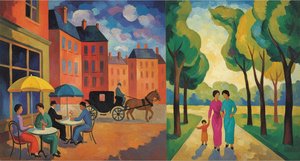
August Macke: Expressionist Visions of Harmony & Modern Life
Explore the vibrant Expressionist paintings of August Macke (1887-1914). Discover his key role in Der Blaue Reiter, Fauvist influences, and captivating depictions of modern life. A comprehensive guide for art enthusiasts & collectors.

Unmasking Emotion: A Journey Through the Raw Power and Visceral Beauty of German Expressionism
Explore the raw emotional power of German Expressionism. From Kirchner to Die Brücke, discover how artists used distortion and vibrant color to unmask the human psyche. A deep dive into art history for the discerning collector and enthusiast.

El Grito Visceral de una Nación: Explorando la Emoción y la Distorsión en el Expresionismo Alemán
Descubre el expresionismo alemán en profundidad. Analizamos sus orígenes, artistas clave como Kirchner y Kandinsky, técnicas innovadoras y su impacto duradero en el arte moderno. Guía para coleccionistas.

Las 25 mejores obras de Pierre-Auguste Renoir: El alma del Impresionismo
Explora las 25 mejores obras de Renoir y la luz del impresionismo. ¡Descubre estas obras maestras en AllPaintingsStore.com!


