


 Vista previa
 Compartir
 Compartir
 Ver detalles
 Guía
Guía

 Descargar
 Ver artículos similares
 Radiografía
 Presentación de diapositivas
 Estadísticas
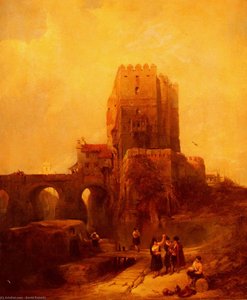
The Siege (Defense of a Church Courtyard During the Thirty Years’ War)
 Oil
Oil- WallArt
- Düsseldorf School
 1848
1848- 19th Century
 1766.0 x 1165.0 cm
 Kunstpalast
 Leer más
Reproducción al óleo hecha a mano
Óleo sobre lienzo pintado a mano en el tamaño y marco de su elección, realizado por encargo por nuestros artistas. ( Cambiar a formato impreso Ver versión en imagen digital)




P118B $10

P118H $10

P118W $10

P438Z $10

P508JH $12

P508YH $12

P805H $10

P805Z $10

P919BZ $10

P919G $10

P919XJ $10

P959ZH $10

P968JZ $12

W106C $8

W218G $10

W218JH $8

W218Y $10

W307PJ $10

W316G $10

W316PJ $8

W316Y $10

W398PJ $8

W4111J $10

W500HY $15

W500JH $15

W692G $12

W849H $8

W940BG $15

W953PJ $8




Elija entre nuestros tamaños predefinidos que respetan las proporciones originales de la obra.

Puede ingresar sus propias dimensiones para adaptarse a un marco o espacio específico. Si el tamaño seleccionado no coincide con las proporciones de la imagen original, recortaremos la obra o extenderemos la pintura con elementos adicionales pintados a mano. Se le enviará una maqueta digital para su aprobación antes de comenzar la producción.
Tenga en cuenta que la vista previa en pantalla no refleja el recorte o la extensión reales. Solo la maqueta mostrará con precisión la composición final.
Si bien existen tamaños personalizados, recomendamos seleccionar una dimensión de la lista predefinida para preservar las proporciones originales.
Tras realizar el pedido, el equipo de AllPaintingsStore.com enviará un correo electrónico al cliente para solicitar instrucciones y proporcionarle una vista previa del boceto.
Envío a todo el mundo () en 3-4 semanas en lugar de las 5 semanas estándar. (21 septiembre). Sin comprometer la calidad.

Envío exprés gratuito a todo el mundo

Lienzo de lino de alta calidad

Seguro de envío completo

Garantía de reembolso de impuestos aduaneros

Garantía de fidelidad cromática exacta

Política de devolución de 100 días (solo por defectos)

Garantía de devolución del 100% del dinero

Oferta por volumen
 La opción de vidrio solo está disponible en tamaños inferiores a 110 cm.

The Siege (Defense of a Church Courtyard During the Thirty Years’ War)
Técnica de reproducción
Tamaño de la reproducción
-


Precio total
$ 258
A Masterpiece of Drama and Devotion
In the sweeping, atmospheric canvas of The Siege (Defense of a Church Courtyard During the Thirty Years’ War), Carl Friedrich Lessing invites the viewer into a moment of profound historical tension. Painted in 1848, this work stands as a monumental achievement of the Düsseldorf School, masterfully synthesizing the grandeur of history painting with the raw, emotive power of landscape. The scene unfolds beneath a somber, tempestuous sky that seems to mirror the chaos unfolding on the ground. As the eye traverses the rugged terrain, it encounters a world caught in the throes of conflict, where the architectural remnants of a monastery—partially consumed by fire—serve as a haunting backdrop to the struggle for survival.
The composition is a triumph of narrative structure, guiding the observer through a carefully orchestrated sequence of events. Along the curved diagonal of the fortress wall, Lessing leads our gaze into the vast, brooding countryside, creating a sense of immense scale and isolation. On the ridges, the presence of arquebusiers and lansquenets provides a rhythmic pulse of military movement, yet the true heart of the painting lies in its intimate, tragic foreground. Here, the artist captures a moment of spiritual gravity: a monk administering the Last Sacraments to a dying soldier. This poignant intersection of violence and piety creates a profound emotional resonance, reminding us of the fragile sanctity of life amidst the devastation of war.
Technique and the Spirit of an Era
Lessing’s technical prowess is evident in his ability to manipulate light and atmosphere to evoke a specific psychological state. Drawing from his extensive studies in the Eifel region, he employs a palette of muted, earthy tones and stormy grays that imbue the work with a sense of impending doom. The brushwork, while precise enough to render the intricate details of period weaponry and clothing, possesses an atmospheric fluidity that allows the smoke of battle and the heavy clouds to blend seamlessly. This mastery of light not only illuminates the central drama but also creates a sense of depth that pulls the viewer into the very center of the siege.
Beyond its immediate visual impact, the painting carries deep historical symbolism. Created during the turbulent year of the 1848 Revolution, the work resonates with the contemporary anxieties of Lessing’s time. The destruction of the monastery and the desperate defense of the courtyard can be read as an allegory for the fragility of social and religious institutions during periods of political upheaval. For the discerning collector or interior designer, this piece offers more than mere decoration; it provides a window into the human condition, making it a commanding centerpiece for any collection that values historical depth, narrative complexity, and the enduring power of Romanticism.
Obras relacionadas



Biografía del artista
Early Life and Education
Carl Friedrich Lessing, a luminary of German Romanticism, was born on February 15, 1808, in Wrocław (now Poznań), Poland—a city steeped in Prussian history and artistic tradition. His lineage traced back to Gotthold Ephraim Lessing, the celebrated poet and dramatist whose humanist ideals profoundly shaped German intellectual life. Lessing’s formative years instilled within him a deep appreciation for both literature and visual arts, preparing him for his remarkable artistic journey. He pursued architectural studies at the Berlin Bauakademie in 1822, honing his technical skills alongside an understanding of spatial composition—a foundation that would prove invaluable to his later landscape paintings. Subsequently, he enrolled at the Königlich-Preussische Akademie der Wissenschaften (Royal Prussian Academy of Sciences) from 1823 to 1826, immersing himself in scientific inquiry and broadening his intellectual horizons. This rigorous academic training fostered a meticulous observation of nature and informed his artistic vision.Artistic Career and Influences
Lessing’s artistic career blossomed under the tutelage of Friedrich Wilhelm von Schadow, arguably the most influential figure in Düsseldorf School painting—a movement characterized by its atmospheric landscapes and psychological depth. Schadow recognized Lessing's innate talent and guided him toward mastering the techniques of tonal painting, prioritizing subtle gradations of color to convey mood and emotion. In 1830, Lessing’s canvases debuted at the Berlin Art Exhibition, garnering immediate acclaim for their masterful blend of historical narrative and evocative landscape vistas—a hallmark of Düsseldorf School aesthetics. His paintings captured scenes from Hussite Wars and biblical narratives with a sensitivity that resonated deeply with contemporary audiences. Notably, “Landscape with Castle Ruins and Riders” (1878) exemplifies Lessing’s ability to infuse his compositions with symbolic meaning, reflecting the grandeur of bygone eras while simultaneously conveying a profound contemplation of human existence against the backdrop of majestic scenery.Notable Works
Lessing's oeuvre is distinguished by its unwavering commitment to Romantic ideals—a fascination for sublime landscapes and an exploration of spiritual themes. Among his most celebrated paintings are:- “Soldiers at Rest” (1877): This poignant depiction captures the quiet dignity of soldiers weary from battle, rendered with meticulous detail and bathed in soft light—a testament to Lessing’s mastery of tonal painting and his ability to convey psychological nuance.
- “Motif From The Harz Mountains” (1870): Lessing's portrayal of the Harz mountains embodies the Romantic fascination for untamed wilderness, conveying a sense of awe and reverence for nature’s power.
- Landscape (1862): This serene landscape showcases Lessing’s meticulous observation of natural forms and his skillful use of color to evoke tranquility and contemplation.
- Upper Rhine Chapel (1860): Lessing's depiction of the Upper Rhine Chapel demonstrates his ability to capture architectural grandeur while simultaneously conveying a spiritual atmosphere—a hallmark of Düsseldorf School painting.
Leadership and Legacy
Lessing’s artistic pursuits extended beyond individual canvases; he actively championed the advancement of art education and fostered collaboration among fellow artists. In 1848, he co-founded Malkasten (Paint Box)—an artist association dedicated to promoting artistic innovation and fostering a supportive environment for creative expression—a pioneering initiative that anticipated the burgeoning role of collective artistic endeavors in shaping cultural discourse. From 1858 until his death in 1880, Lessing served as Director of the Grand Ducal Painting Gallery and Print Collection in Karlsruhe—a position he utilized to cultivate an enduring appreciation for German art history and to champion the preservation of artistic treasures. His legacy continues to inspire artists today, cementing his place as a pivotal figure in the Romantic movement and a cornerstone of Düsseldorf School painting’s distinctive aesthetic tradition.
Carlos Friedrich Lessing
1808 - 1880 , Polonia
Datos clave
- Artistic Movement Or Style: Escuela Düsseldorf
- Artists Or Movements Influenced By This Artist: ['Romanticismo']
- Artists Who Influenced This Artist: ['Friedrich Wilhelm von Schadow']
- Date Of Birth: 15 febrero 1808
- Date Of Death: 4 enero 1880
- Full Name: Karl Friedrich Lessing
- Nationality: Germano
- Notable Artworks: ['Paisaje con ruinas de castillo y jinetes']
- Place Of Birth: Wrocław, Polonia
Artículos relacionados

Epic Battles on Canvas: A Visual Journey Through Art History's Most Powerful War Paintings
Embark on a visual journey through history's most powerful war paintings. Explore the dramatic mastery of Romanticism and Realism through expert analysis of epic battle scenes on canvas, celebrating the profound emotion and artistry behind art history's greatest military masterpieces.

Vasily Vereshchagin: Realism, War & Subversion in 19th-Century Russian Painting
Explore the powerful realism of Vasily Vereshchagin's war paintings & Central Asian scenes. Discover how this Russian master challenged artistic conventions and offered a brutal, honest depiction of 19th-century conflict. Learn about his legacy for discerning collectors.

Echoes of a Turning Tide: Artistic Responses to 1916 – A Year of Conflict & Transformation
Explore the profound artistic responses to the tumultuous year of 1916. Discover how WWI shaped movements like Futurism & Expressionism, and delve into masterpieces by Kandinsky, Matisse, Nevinson & more. Learn about art history at AllPaintingsStore.

La Escuela de La Haya: Realismo, Atmósfera y el Amanecer del Impresionismo Holandés
Descubre la Escuela de La Haya: el movimiento realista que revolucionó la pintura holandesa del siglo XIX. Analizamos a sus artistas clave, su técnica atmosférica y su influencia en el impresionismo. ¡Un viaje por el arte y la historia!

William Owen: A Poetic Vision of War & Landscape in British Modernism
Explore the poignant war poetry of Wilfred Owen, a key figure in British Modernism. Discover his innovative style, themes of loss & camaraderie, and lasting impact on 20th-century literature. Analysis & historical context included.

