Garantía de devolución · 100 días Envío gratuito a todo el mundo
449 587obras de arte 30 613artistas 4 660museos 32Idiomas
Catalogue entry

The Night Train

1849. Acrylic On Canvas, 280.0 x 380.0 cm. Galería de Arte de la Ciudad.

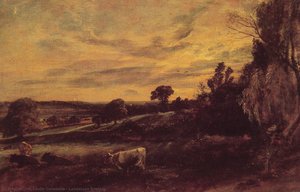
Fig. 1. David Cox, The Night Train, 1849. Shown as the reproduction you are specifying: , .

§ 1Catalogue data

Dimensiones
280.0 x 380.0 cm

§ 2Abstract

Descripción del objeto

Discover 'The Night Train' (1849) by David Cox – a stunning watercolor capturing a dramatic British landscape. Explore the romanticism and atmospheric detail of this iconic piece.

Biografía del artista

Descubra a David Cox (1783-1859), un pintor paisajista inglés fundamental y precursor del Impresionismo. Explore sus emotivas acuarelas, pinturas al óleo del campo británico y su influencia en el arte del siglo XIX.

§ 3Commentary

The Night Train: A Watercolor’s Evocative Journey

David Cox's "The Night Train," painted in 1849, isn’t merely a depiction of a locomotive traversing the countryside; it’s a profound meditation on movement, atmosphere, and the sublime power of nature. Created during a pivotal period of artistic evolution – bridging the Romantic era with nascent influences of Impressionism – this watercolor captures a fleeting moment imbued with both drama and tranquility. Cox, a key figure in the Birmingham School of painting, masterfully employed loose brushstrokes and a muted color palette to evoke not just what he saw, but how he *felt* observing the scene.

The composition immediately draws the eye into a dynamic landscape dominated by a swirling, almost turbulent sky. Dark, brooding clouds – rendered with remarkable sensitivity to light and shadow – press down upon the viewer, hinting at an impending storm while simultaneously illuminating the distant horizon. Below this dramatic expanse unfolds a rolling countryside, painted in washes of deep greens, browns, and blues. The artist’s technique is deliberately loose; individual brushstrokes are visible, contributing to the sense of movement and immediacy. This approach was revolutionary for its time, moving away from the rigid detail favored by earlier landscape painters.

A Glimpse into a Romantic Vision

“The Night Train” firmly resides within the Romantic tradition, a movement that prioritized emotion, imagination, and the awe-inspiring power of nature. Unlike the Neoclassical emphasis on reason and order, Romantic artists sought to capture subjective experiences – feelings of wonder, terror, and spiritual connection – in their work. Cox’s painting embodies this spirit perfectly. The train itself, a symbol of progress and industrialization, is presented not as a triumph but as an element within a larger, more ancient landscape. It's a reminder of humanity’s place within the vastness of nature.

The inclusion of figures on the train – two individuals observing the scene – adds another layer of interpretation. Are they travelers seeking adventure? Or perhaps simply observers contemplating the beauty and power of the natural world? Their presence invites the viewer to project their own experiences and emotions onto the scene, transforming it into a shared moment of contemplation.

Symbolism and Emotional Resonance

Beyond its immediate visual appeal, “The Night Train” is rich in symbolism. The train, as mentioned, represents progress but also carries an element of displacement – a journey away from familiar surroundings. The turbulent sky suggests both the potential for destruction and renewal, while the horses galloping across the foreground embody untamed energy and instinct. Cox’s masterful use of light and shadow creates a powerful emotional atmosphere, evoking feelings of mystery, anticipation, and perhaps even a touch of melancholy.

The painting's overall effect is one of profound beauty and quiet drama. It’s not simply a landscape; it’s an experience – a journey into the heart of nature’s power and the human spirit’s capacity for wonder. “The Night Train” remains a testament to David Cox’s artistic vision and his ability to capture the essence of a fleeting moment with remarkable skill and sensitivity.

Reproductions & Artistic Legacy

High-quality reproductions of “The Night Train” are available, offering art enthusiasts a chance to bring this evocative masterpiece into their homes. Considerations for framing should complement the painting’s atmospheric qualities – a simple, natural wood frame would best enhance its romantic feel. The watercolor's delicate washes and subtle details benefit from archival-quality paper and printing techniques to preserve its original beauty.

Cox’s influence extends beyond this single work; he is considered a precursor to Impressionism, paving the way for artists who sought to capture fleeting moments of light and color. Studying “The Night Train” provides valuable insight into the development of landscape painting and the enduring power of Romantic art.

Preguntas y respuestas

¿Cuáles son las dimensiones de la obra original "The Night Train" de David Cox?

Las dimensiones registradas de "The Night Train" de David Cox son 280 x 380 cm. Se pueden solicitar reproducciones en otros tamaños manteniendo las mismas proporciones.

¿Se puede ver "The Night Train" de David Cox en una presentación de diapositivas?

Disponible una presentación de diapositivas: la página Galería de imágenes de "The Night Train" de David Cox.

¿Qué proporciones tiene "The Night Train" de David Cox y cuáles son sus dimensiones?

"The Night Train" de David Cox es una composición en Square con unas dimensiones de 280 x 380 cm en su formato original.

§ 4The artist

David Cox

David Cox

1783 - 1859, Reino Unido

Quick facts about David Cox

  • Artistic Movement Or Style: Edad Dorada de la Acuarela Inglesa; Impresionismo temprano
  • Artists Or Movements Influenced By This Artist: ['Impresionismo']
  • Artists Who Influenced This Artist:
    • John Constable
    • Thomas Gainsborough
  • Date Of Birth: 29 abril 1783
  • Date Of Death: 7 junio 1859
  • Full Name: David Cox
  • Nationality: Inglés
  • Notable Artworks:
    • El Viento en la Vega
    • Cabaña en Herefordshire
    • Confluencia del Severn y el Wye con Chepstow a lo lejos
    • Paisaje Lunar
  • Place Of Birth: Birmingham, Reino Unido

Biografía del artista

David Cox: Una Vida en el Paisaje

Primeros Años y Formación

  • Nacimiento: 29 de abril de 1783, en Deritend, Birmingham, Reino Unido.
  • El padre de David Cox era herrero y artesano, encargado de suministrar componentes a la industria de armas de Birmingham. Su madre, proveniente de un entorno agrícola, poseía una educación superior y un carácter firme.
  • Inicialmente, se matriculó en la academia de Joseph Barber en Great Charles Street, donde conoció a sus compañeros de estudios Charles Barber y William Radclyffe.
  • A los 15 años, Cox comenzó su aprendizaje con Albert Fielder, un pintor de Birmingham especializado en miniaturas de retratos y pinturas decorativas para objetos como cajas de rapé. Esta formación temprana le proporcionó las habilidades fundamentales para su futuro.

Desarrollo de su Carrera y Viaje Artístico

    En 1804, Cox se trasladó a Londres y contrajo matrimonio con Mary Ragg, la hija de su casero.
  • Un viaje trascendental a Gales en 1805 junto a Charles Barber marcó el inicio de numerosas expediciones de bocetaje que realizaría a lo largo de su vida. Estos viajes influyeron profundamente en su estilo artístico.
  • Desde 1805, exhibió regularmente en la Royal Academy, ganándose inicialmente la vida como maestro de dibujo. El coronel Hon. H. Windsor se convirtió en uno de sus primeros alumnos en 1808.
  • La obra temprana de Cox se centró en paisajes detallados en acuarela, representando a menudo escenas rurales y temas arquitectónicos.

Estilo Artístico e Influencias

  • El estilo de Cox evolucionó con el tiempo, transitando desde representaciones topográficas precisas hacia un enfoque mucho más expresivo y atmosférico.
  • Influencias: Aunque las influencias específicas son objeto de debate, su obra demuestra una afinidad por los pintores de paisajes holandeses del siglo XVII y una aguda observación de la naturaleza que recuerda a Constable.
  • Se hizo conocido por su pincelada suelta, sus colores vibrantes y su capacidad para capturar los efectos de la luz y el clima. Sus pinturas al óleo de etapas posteriores fueron particularmente innovadoras.

Grandes Logros y Legado

  • Hacia el final de su carrera, Cox pintó más de 300 obras al óleo, lo que hoy se reconoce como “uno de los mayores, pero menos reconocidos, logros de cualquier pintor británico”.
  • Es considerado uno de los más grandes pintores de paisajes ingleses y una figura fundamental de la Edad Dorada de la acuarela inglesa.
  • Su obra influyó significativamente en las generaciones posteriores de artistas del paisaje.
  • Obras Notables: The Wind on the Heath, Cottage in Herefordshire, Junction of the Severn and the Wye with Chepstow in the distance y Moonlight Landscape se encuentran entre sus pinturas más celebradas.

Significado Histórico

  • David Cox es reconocido como un precursor temprano del Impresionismo. Su énfasis en capturar efectos atmosféricos fugaces y su pincelada suelta anticiparon muchas de las técnicas que más tarde adoptarían los impresionistas.
  • Desempeñó un papel crucial en la consolidación de la pintura de paisaje británica como un género distinto, alejándose de las representaciones puramente topográficas hacia interpretaciones más expresivas y emocionales de la naturaleza.
  • Su obra continúa siendo admirada por su belleza, sensibilidad y atractivo perdurable.

§ 5Comparanda

§ 6Questions

Datos clave

  • Movement: Romanticism
  • Artist: David Cox the elder
  • Title: The Night Train
  • Subject or theme: Rural scene, travel
  • Influences: British landscape

Test de conocimientos artísticos

Cada pregunta tiene una única respuesta correcta.

Pregunta 1:
What is the primary subject matter depicted in David Cox’s ‘The Night Train’?
Pregunta 2:
In what artistic movement is ‘The Night Train’ primarily classified?
Pregunta 3:
What year was David Cox's painting ‘The Night Train’ created?
Pregunta 4:
Based on the image description, what is a key characteristic of Cox’s use of color in this painting?
Pregunta 5:
David Cox was known for his work in what type of landscape painting?

§ 7Cite this entry

AllPaintingsStore.com, “David Cox, The Night Train (1849)”, https://allpaintingsstore.com/es/art/david-cox-the-night-train-8Y37PP-en/ (accessed 4 octubre 2026).

§ 8The reproduction

Reproducción al óleo hecha a mano

Óleo sobre lienzo pintado a mano en el tamaño y marco de su elección, realizado por encargo por nuestros artistas. ( Cambiar a impresiones Cambiar a imagen digital)

It is specified on the order sheet in the margin; the present state of that sheet reads as follows.

The Night Train

Técnica de reproducción

Dimensiones de la reproducción

-

Selección de artistas premium

Mayor nivel de detalle, delicadeza y tiempo de producción adicional

-

Enmarcado de reproducción

-

-

Para obras de arte o reproducciones que midan más de 105 cm (aproximadamente 41 pulgadas) en cualquiera de sus lados, el marco se enviará como un kit desmontado. Este método garantiza una entrega segura y evita daños durante el transporte.

Se requiere montaje profesional: este no es un producto para hacer usted mismo (DIY).
El kit debe ser ensamblado y el lienzo tensado por un enmarcador profesional con experiencia, utilizando cola para madera (no incluida), una tenaza para tensar lienzos y sargentos para mantener los bastidores alineados mientras la cola se seca. Un montaje incorrecto o una tensión desigual del lienzo pueden dañar la obra de arte de forma permanente y no están cubiertos por nuestra garantía.

  • Se incluyen todos los listones de madera maciza, cortados con precisión según las medidas.

  • Se ensambla con los tornillos incluidos, además de cola para madera para las uniones de las esquinas, la cual no se incluye y debe ser proporcionada por su enmarcador.

  • Se requieren herramientas profesionales que no están incluidas: un alicate para tensar lienzos (tensor) y abrazaderas para mantener los bastidores alineados mientras se seca el pegamento.

Importante:
Las uniones de las esquinas requieren cola para madera, los listones deben sujetarse con prensas hasta que la cola esté completamente seca, y para tensar el lienzo en el bastidor ensamblado se requiere una pinza para tensar lienzos. Ninguno de estos elementos está incluido en el kit. Por favor, contacte con un profesional del enmarcado con experiencia antes de realizar un pedido de este tamaño.

Cartela

-

-

Barniz protector

Barniz brillante (realza los colores y protege contra la luz y la humedad)

-

Personalizar mi obra

Ejemplos de lo que se puede personalizar: sustituir el rostro por una foto del cliente; añadir una mascota (por ejemplo, cambiar un gato por un perro); incluir un mensaje oculto en el fondo; cambiar el paisaje o los elementos del fondo.

-

Envío urgente

Envío a todo el mundo () en 3 o 4 semanas, en lugar de las 5 semanas habituales. (1 noviembre). Sin comprometer la calidad.

-

Envío urgente

Envío internacional () en 5 semanas. (8 noviembre).

Incluido

Precio total final

€ 229

Included with every order

  • Envío exprés gratuito a todo el mundo
  • Lienzo de lino de alta calidad
  • Seguro de envío total
  • Garantía de reembolso de aranceles aduaneros
  • Garantía de fidelidad cromática exacta
  • Política de devolución de 100 días (solo por defectos)
  • Garantía de devolución del 100% del dinero
  • Descuento por cantidad
Order sheet